Malik Shah I (1055–1092) was the third Great Seljuk sultan, ruling from 1072 to 1092. With his father’s vizier Nizam al-Mulk running the government, he held an empire from Anatolia and Syria to Samarkand, made Isfahan its capital and sponsored the reformed Jalali calendar; his death in 1092, weeks after Nizam al-Mulk’s murder, began the break-up of the Seljuk state.
| Full name | Jalal al-Dawla Abu’l-Fath Malik Shah ibn Alp Arslan |
|---|---|
| Born | 1055 |
| Reign | 1072–1092 |
| Capital | Isfahan |
| Vizier | Nizam al-Mulk (to 1092) |
| Empire at its height | From the Mediterranean coast of Syria and central Anatolia to Transoxiana |
| Died | November 1092, Baghdad, aged about 37 |
A teenage sultan
Malik Shah was about seventeen when his father Alp Arslan was killed on campaign in 1072. His claim was immediately challenged by his uncle Qavurt, the Seljuk ruler of Kerman, who argued as Turkish custom allowed that the senior male of the family should inherit. Their armies met near Hamadan in 1073. Qavurt was defeated and put to death, and Kerman was left to his sons as a dependent branch.
The young sultan owed much of his success to Nizam al-Mulk, who kept the army paid and the administration loyal. Sources say Malik Shah honoured him with the Turkish title atabeg, “father-lord”, and for most of the reign the vizier governed while the sultan led the army, hunted and moved his court between Isfahan, Rey, Baghdad and the plains where his horses grazed.
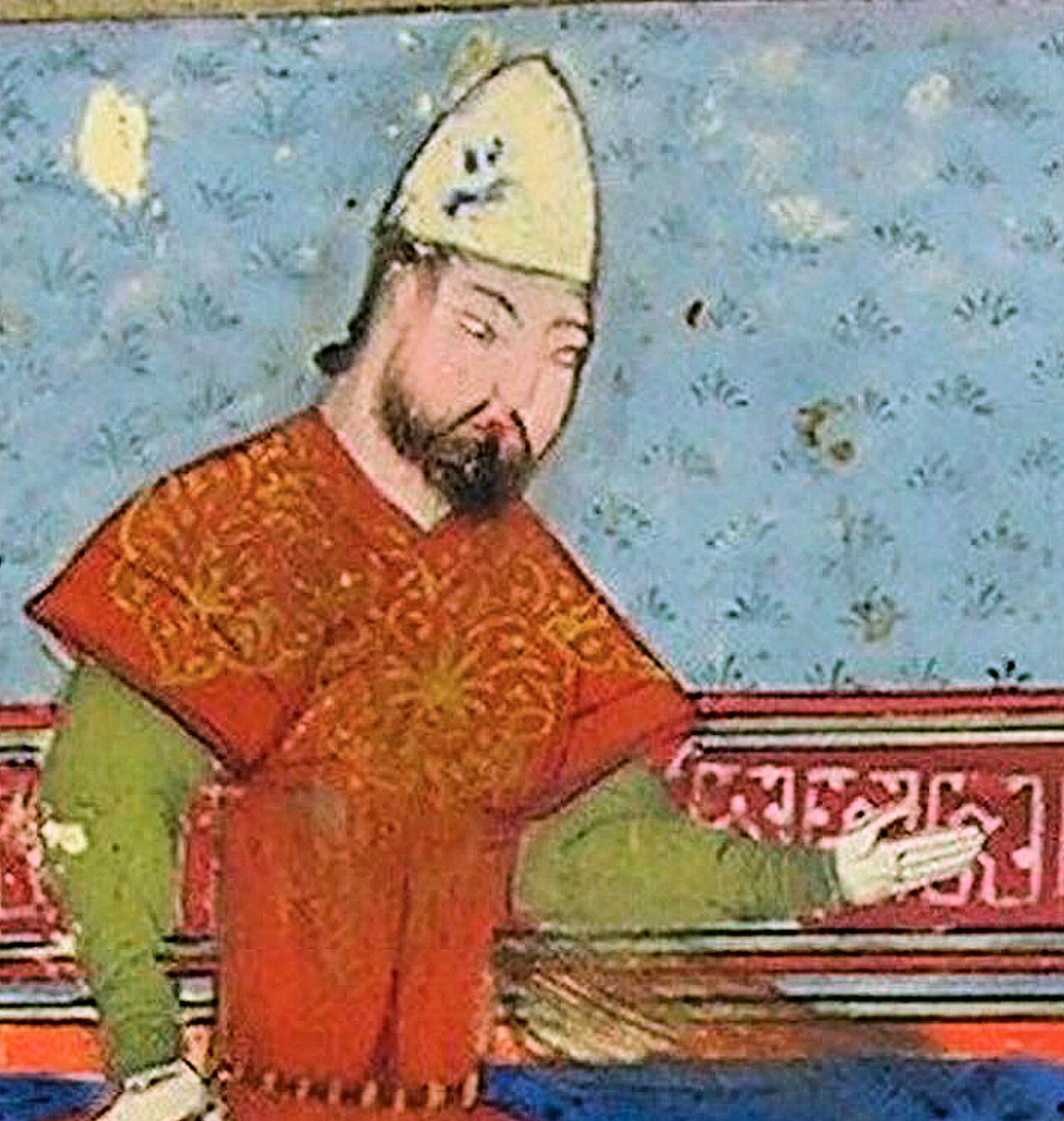

Isfahan as capital
Tughril had already used Isfahan as a capital, but under Malik Shah it became the centre of the empire. The city grew, and the sultan, his vizier and his officials competed as builders. The two great domes of the Friday Mosque date from these years: the south dome, built for Nizam al-Mulk around 1086–87, and the north dome, paid for by his rival Taj al-Mulk in 1088–89 (see The Seljuk Domes of Isfahan’s Jameh Mosque).
Isfahan was also the home of an observatory where a group of astronomers, among them Omar Khayyam, worked on a new solar calendar. Adopted in 1079 and named Jalali after the sultan’s title Jalal al-Dawla, it fixed the new year at the spring equinox and corrected the drift of earlier calendars. The modern Iranian calendar is its descendant (see the Persian calendar).
West: Syria, Anatolia and the Mediterranean
In the west the empire grew mostly through semi-independent Turkish commanders and Seljuk princes. A Turkmen chief, Atsiz, took Damascus from the Fatimids in 1076. Malik Shah sent his brother Tutush to rule Syria, and Tutush had Atsiz killed. In Anatolia, Sulayman son of Qutalmish, a distant cousin, built his own state and took Antioch in 1084, until Tutush defeated and killed him in 1086.
In 1086–87 Malik Shah came west in person, received the submission of Aleppo and Antioch and, according to the chroniclers, rode down to the Mediterranean shore to give thanks that his rule now ran from sea to sea. He also arranged the marriage of his daughter to the caliph al-Muqtadi, tying the Abbasid house to his family.
East: Samarkand and the Qarakhanids
In 1089 Malik Shah crossed the Oxus, took Bukhara and Samarkand from the Qarakhanid ruler Ahmad, and received the submission of the khan of Kashgar. The Ghaznavid sultan Ibrahim, ruling from Ghazni, remained at peace with him. This was the widest extent of Seljuk power: from the Mediterranean to Kashgar on the edge of the Tarim Basin, all nominally under one sultan in Isfahan.
Strains inside the empire
The empire was large but loosely held. Provinces and towns were assigned to commanders as iqta, grants of revenue in return for military service, which tied the soldiers to the sultan but also gave them local power bases. Members of the Seljuk family held whole regions. In 1090 an Ismaili missionary, Hasan Sabbah, seized the castle of Alamut in the Alborz mountains, the start of a movement the Seljuks never managed to destroy (see Hassan-i Sabbah and the Fortress of Alamut).
At court, the long dominance of Nizam al-Mulk created enemies. The sultan’s wife Terken Khatun, a Qarakhanid princess, wanted her small son Mahmud named heir; Nizam al-Mulk favoured the eldest son, Barkyaruq. Her ally Taj al-Mulk pressed the sultan to remove the old vizier. By 1092 relations between sultan and vizier had broken down.
The fatal year, 1092
In October 1092 Nizam al-Mulk was stabbed to death near Nahavand by an assassin generally said to have been sent by the Ismailis; some contemporaries suspected that the sultan’s circle was involved. A few weeks later, in November 1092, Malik Shah died in Baghdad, aged about 37, after a short illness. Rumours of poison circulated at once, but nothing was proved.
His death left no agreed heir. Terken Khatun had the four-year-old Mahmud proclaimed, and Barkyaruq fought for the throne. More than a decade of civil war followed between the sultan’s sons and brothers, and during it the Crusaders arrived in Syria and took Jerusalem in 1099. The unified Seljuk empire did not return in the same form, though Malik Shah’s son Sanjar later restored a strong state in the east (see Sultan Sanjar and the Qara Khitai).
- 1072 Accession after Alp Arslan’s death
- 1073 Defeat of Qavurt near Hamadan
- 1079 Jalali calendar adopted
- 1086–87 Campaign in Syria; south dome of the Isfahan mosque built
- 1089 Bukhara and Samarkand taken
- 1090 Hasan Sabbah seizes Alamut
- Oct 1092 Murder of Nizam al-Mulk
- Nov 1092 Malik Shah dies in Baghdad
Persian words from this page
| ملکشاه | Malekshâh | Malik Shah |
| اصفهان | Esfahân | Isfahan |
| تقویم جلالی | taghvim-e Jalâli | Jalali calendar |
| اقطاع | eghtâ’ | iqta, a revenue grant |
| سمرقند | Samarghand | Samarkand |
| ترکان خاتون | Torkân Khâtun | Terken Khatun |
Sources and further reading
- Ibn al-Athir, The Annals of the Saljuq Turks, trans. D. S. Richards (London, 2002).
- The History of the Seljuq Turks from the Jami al-Tawarikh, trans. K. A. Luther, ed. C. E. Bosworth (Richmond, 2001).
- A. C. S. Peacock, The Great Seljuk Empire (Edinburgh, 2015).
- C. E. Bosworth, “The Political and Dynastic History of the Iranian World (A.D. 1000–1217)”, in The Cambridge History of Iran, vol. 5 (1968).
- Ann K. S. Lambton, Continuity and Change in Medieval Persia (London, 1988).
Want to learn Persian? Get the free Starter Pack
Get the 14-page printable Starter Pack (all 32 letters, a 7-day reading plan, 100 core words and 20 survival phrases) and a short 5-email course. Free.
More in Ghaznavids, Seljuks and Khwarazmshahs (977–1231)
- The Ghaznavid Empire
- Mahmud of Ghazni
- The Rise of the Seljuks
- The Battle of Dandanaqan (1040)
- Tughril Beg Enters Baghdad
- Alp Arslan
- Seljuk Architecture: Tomb Towers and Caravanserais
- The Battle of Manzikert (1071)
- Malik Shah I
- The Seljuks of Kerman
- Nizam al-Mulk and the Siyasatnama
- The Seljuk Domes of Isfahan’s Jameh Mosque
- Omar Khayyam: Poet and Scientist
- Al-Ghazali
- Sana’i of Ghazni
- Hassan-i Sabbah and the Fortress of Alamut
- The Nizari Ismailis and the “Assassins” Legend
- Sultan Sanjar and the Qara Khitai
- The Battle of Qatwan (1141)
- Anvari and Seljuk Court Poetry
- Seljuk Decline and the Atabegs
- The Ghurids
- Attar of Nishapur
- Nizami Ganjavi
- The Khwarazmian Empire
- Ala al-Din Muhammad II
- The Otrar Incident (1218): How Khwarazm Provoked Genghis Khan
- Jalal al-Din Mingburnu