The Battle of Manzikert was fought on 26 August 1071 near Malazgirt, north of Lake Van in eastern Turkey, between the Seljuk sultan Alp Arslan and the Byzantine emperor Romanos IV Diogenes. The Byzantine army broke and Romanos was captured, the first Byzantine emperor taken prisoner by a Muslim ruler; the civil war that followed in Constantinople let Turkmen tribes settle across Anatolia, the start of the land’s Turkish history.
| Date | 26 August 1071 |
|---|---|
| Place | Near Manzikert (Malazgirt), north of Lake Van |
| Seljuks | Sultan Alp Arslan |
| Byzantines | Emperor Romanos IV Diogenes |
| Numbers | Disputed. Modern estimates: Byzantines c. 40,000 at the start of the campaign, many detached or deserted before the battle; Seljuks perhaps 20,000–50,000. Medieval figures of 200,000 or more are not credible. |
| Result | Seljuk victory; Romanos captured and released on terms |
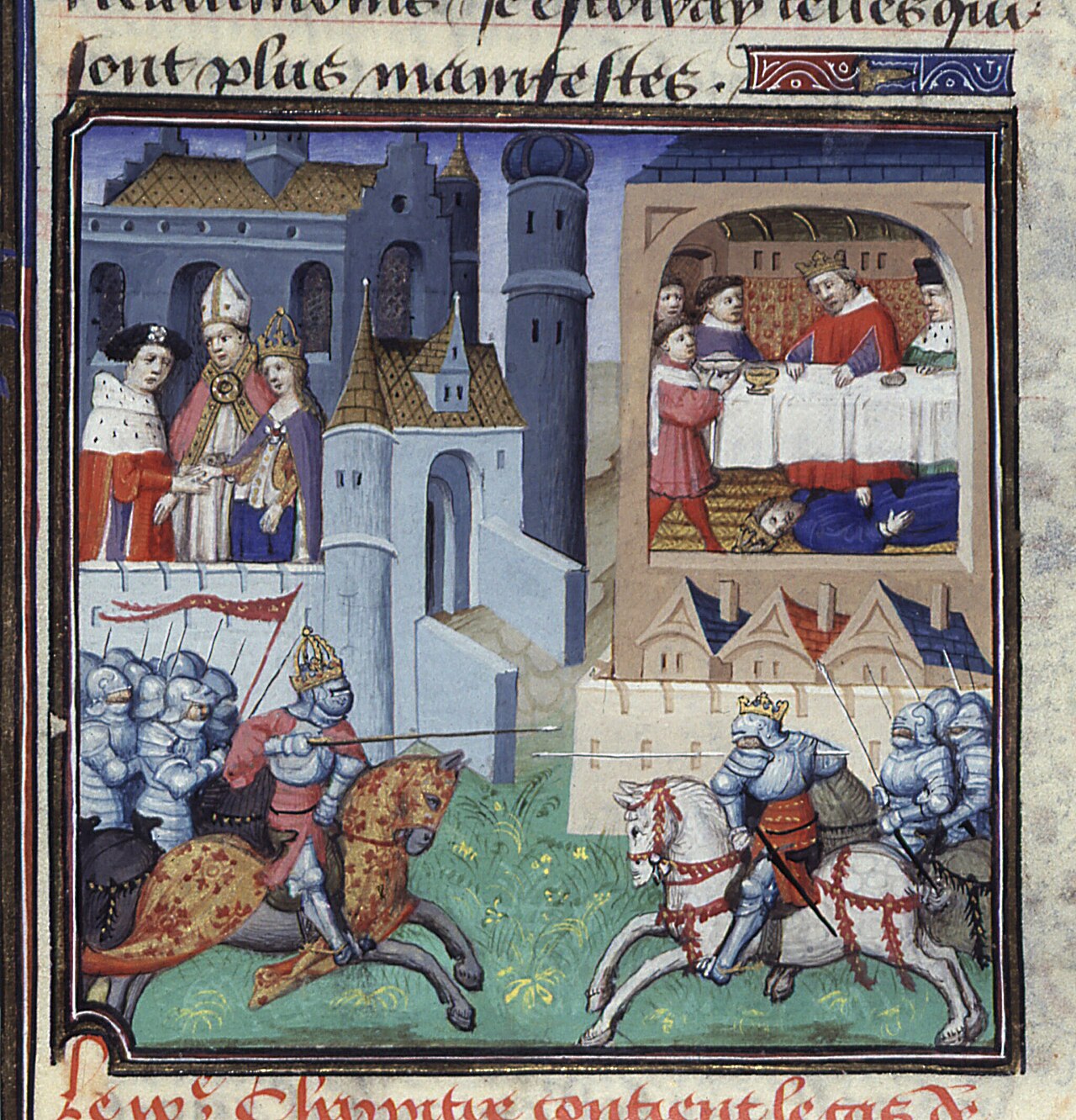

Two empires on the Armenian frontier
By the 1060s Turkmen bands were raiding deep into Byzantine Armenia and central Anatolia every year. Some were under the sultan’s orders; many were not. In 1064 Alp Arslan himself had taken Ani, and in 1067 raiders sacked Caesarea (Kayseri). Byzantium had weakened its own eastern defences in the previous decades, disbanding local forces to save money and relying on mercenaries.
Romanos IV, a general from a military family, became emperor in 1068 by marrying the widowed empress Eudokia. He was distrusted by the powerful Doukas family, relatives of the previous emperor, and needed military success. In spring 1071 he led a large mixed army east: Byzantine troops, Armenians, Norman and Frankish mercenaries, and Turkic Pechenegs and Uzes (Oghuz) from the steppe.
Alp Arslan was not looking for this fight. He had just received the submission of Aleppo and seems to have been planning a move against Fatimid Egypt. When he heard of the Byzantine advance he hurried north with the troops he had at hand.
The campaign
Romanos split his forces. He sent a large part of the army, under Joseph Tarchaneiotes and with the Norman mercenaries of Roussel de Bailleul, to the fortress of Khliat (Ahlat) on Lake Van, while he himself retook Manzikert, which surrendered quickly. The detached force never rejoined him; what happened to it is unclear in the sources, and it may simply have retreated. Some of the Turkic mercenaries in the Byzantine camp went over to the Seljuks, their kin.
Alp Arslan is reported to have offered a truce. Romanos, wanting a decisive victory, refused.
26 August 1071
The battle was fought in the open plain near Manzikert. Through the afternoon the Byzantine line advanced and the Seljuk horse archers fell back before it, shooting as they went, the classic steppe tactic. The Byzantines took the Seljuk camp but could not catch the enemy. Toward evening Romanos ordered a turn back toward his own camp. In the confusion of the manoeuvre, the rearguard under Andronikos Doukas, a son of the emperor’s rival, did not cover the withdrawal but marched off the field, and rumours spread that the emperor had fallen.
The Seljuks turned and attacked. The wings broke, the centre around the emperor was surrounded, and Romanos, wounded, was captured. The chronicler Michael Attaleiates, a Byzantine official who was with the army, gives the most detailed eyewitness account and blames betrayal as much as the enemy.
The emperor in the sultan’s tent
Romanos was brought before Alp Arslan. Both Byzantine and Muslim sources describe a scene of formal humiliation followed by generous treatment: the sultan placed his foot on the emperor’s neck, then raised him, seated him at his side and kept him as an honoured guest for about a week. Muslim chroniclers report a dialogue in which Alp Arslan asks Romanos what he would have done as victor, and Romanos admits he would have had the sultan beaten; the story may be literary, but it shows how the event was remembered.
The terms reported in the sources include a large ransom, an annual tribute, the release of Muslim prisoners, a marriage alliance and the surrender of some frontier towns. Figures vary between sources; one commonly cited version gives 1.5 million gold pieces as ransom and 360,000 a year as tribute. Romanos was then released with an escort.
Defeat at home
The treaty was never carried out. In Constantinople the Doukas party had already declared Romanos deposed and put Michael VII Doukas on the throne. Romanos raised troops, was defeated, surrendered on a promise of safety and was blinded in 1072. He died of his wounds soon after.
Modern historians stress that the losses at Manzikert itself were moderate. Most of the army survived, and many prisoners were released. What turned a defeat into a catastrophe was the decade of civil war that followed, in which rival Byzantine commanders hired Turkish bands and left the eastern frontier undefended. By about 1080 Turkmen groups had settled across central and western Anatolia. A Seljuk prince, Sulayman son of Qutalmish, established himself at Nicaea, only about a hundred kilometres from Constantinople, laying the foundations of the Seljuk Sultanate of Rum.
Memory and myth
For Alp Arslan, Manzikert was a frontier victory, and Seljuk sources treat it as one success among many. Its meaning grew later. Byzantine writers saw it as the beginning of the empire’s decline, and the Byzantine appeal for help from the West two decades later led to the First Crusade. In modern Turkey, Malazgirt is remembered as the opening of Anatolia to the Turks, and the anniversary is marked each August. Carole Hillenbrand’s study of the battle traces how it moved from history into national myth.
For Iran, the battle shows the reach of a Seljuk state whose centre was in Isfahan and Khorasan. The sultan who won it ruled through a Persian vizier, Nizam al-Mulk, and his son Malik Shah would make Isfahan the capital of an empire stretching from Anatolia to Central Asia.
Persian words from this page
| ملازگرد | Malâzgerd | Manzikert |
| نبرد | nabard | battle |
| روم | Rum | Byzantium; later Anatolia |
| قیصر | Gheysar | Caesar, the Byzantine emperor |
| اسیر | asir | captive, prisoner |
Sources and further reading
- Michael Attaleiates, The History, trans. Anthony Kaldellis and Dimitris Krallis (Cambridge, MA, 2012).
- Michael Psellos, Chronographia (English trans. E. R. A. Sewter, Fourteen Byzantine Rulers).
- Carole Hillenbrand, Turkish Myth and Muslim Symbol: The Battle of Manzikert (Edinburgh, 2007).
- Ibn al-Athir, The Annals of the Saljuq Turks, trans. D. S. Richards (London, 2002).
- A. C. S. Peacock, The Great Seljuk Empire (Edinburgh, 2015).
Want to learn Persian? Get the free Starter Pack
Get the 14-page printable Starter Pack (all 32 letters, a 7-day reading plan, 100 core words and 20 survival phrases) and a short 5-email course. Free.
More in Ghaznavids, Seljuks and Khwarazmshahs (977–1231)
- The Ghaznavid Empire
- Mahmud of Ghazni
- The Rise of the Seljuks
- The Battle of Dandanaqan (1040)
- Tughril Beg Enters Baghdad
- Alp Arslan
- Seljuk Architecture: Tomb Towers and Caravanserais
- The Battle of Manzikert (1071)
- Malik Shah I
- The Seljuks of Kerman
- Nizam al-Mulk and the Siyasatnama
- The Seljuk Domes of Isfahan’s Jameh Mosque
- Omar Khayyam: Poet and Scientist
- Al-Ghazali
- Sana’i of Ghazni
- Hassan-i Sabbah and the Fortress of Alamut
- The Nizari Ismailis and the “Assassins” Legend
- Sultan Sanjar and the Qara Khitai
- The Battle of Qatwan (1141)
- Anvari and Seljuk Court Poetry
- Seljuk Decline and the Atabegs
- The Ghurids
- Attar of Nishapur
- Nizami Ganjavi
- The Khwarazmian Empire
- Ala al-Din Muhammad II
- The Otrar Incident (1218): How Khwarazm Provoked Genghis Khan
- Jalal al-Din Mingburnu