The Seljuks of Kerman were a branch of the Seljuk family who ruled the province of Kerman in south-eastern Iran, with Makran and for a time Oman across the sea, from the 1040s until 1186. Founded by Qavurt, a son of Chaghri Beg and elder brother of Alp Arslan, the line lasted longer than the Great Seljuk sultanate itself and gave Kerman its first long period of settled, prosperous rule since the Buyids.
| Founder | Qara Arslan Qavurt, son of Chaghri Beg (died 1073) |
|---|---|
| Period | 1040s (sources give dates between 1041 and 1048) to 1186 |
| Capital | Bardasir, the city now called Kerman |
| Territory | Kerman, Bam, Jiroft, Makran; Oman at times |
| Longest reign | Arslan Shah I, 1101–1142 |
| End | Kerman taken by the Oghuz chief Malik Dinar, 1186 |
Qavurt takes Kerman
When the Seljuk brothers divided the lands they had taken in the 1040s (their rise is told on the page on the rise of the Seljuks), Chaghri Beg’s son Qavurt was sent south. He drove out the governors of the Buyid ruler Abu Kalijar and made Kerman his own, nominally under his uncle Tughril. The new state had a long, poorly defended frontier with Sistan and the Baluch country, and Qavurt spent years subduing the mountain tribes of the region.
He also looked to the sea. Kerman’s ports faced Hormuz and Oman, and Qavurt crossed the Persian Gulf in ships hired from the ruler of Hormuz, removed the Buyid governor of Oman and brought it under Seljuk overlordship. This gave his little kingdom a stake in the trade of the Indian Ocean.

A rebel uncle
Qavurt was the senior surviving member of his generation, and when his brother Alp Arslan died in 1072 he claimed the sultanate against his young nephew Malik Shah. Hurrying back from Oman, he lost ships and men in the crossing, then marched north. In May 1073 Malik Shah’s army, organised by the vizier Nizam al-Mulk, defeated him near Hamadan. Qavurt was captured and, after a short hesitation by the sultan, put to death. Malik Shah nevertheless left Kerman to Qavurt’s sons, who remained there as a separate branch (see the page on Malik Shah I).
Rulers of the Kerman line
The dynasty was shaken by several quick successions in its early years, then settled into long reigns.
- Qavurt (1040s–1073)
- Kerman Shah (1073–1074) and Sultan Shah (1074–1075)
- Husayn Umar (1075–1084)
- Turan Shah I (1084–1096), remembered as a builder in Bardasir
- Iranshah (1096–1101), deposed and killed after being accused of Ismaili sympathies
- Arslan Shah I (1101–1142), the dynasty’s longest and most prosperous reign
- Muhammad I (1142–1156) and Tughril Shah (1156–1169)
- Bahram Shah, Arslan Shah II, Turan Shah II and Muhammad Shah, rival sons of Tughril Shah (1169–1186)
Trade, towns and a century of peace
Under Arslan Shah I and his successors Kerman did well. It lay on the routes from the Persian Gulf ports, Hormuz and Tiz on the Makran coast among them, to Khorasan and Central Asia, and the Seljuk rulers protected the caravan traffic. Merchants from India, Egypt and the Gulf came to the markets of Jiroft and Bardasir. Bam, with its fortress on the edge of the Lut desert, was the gateway east to Sistan.
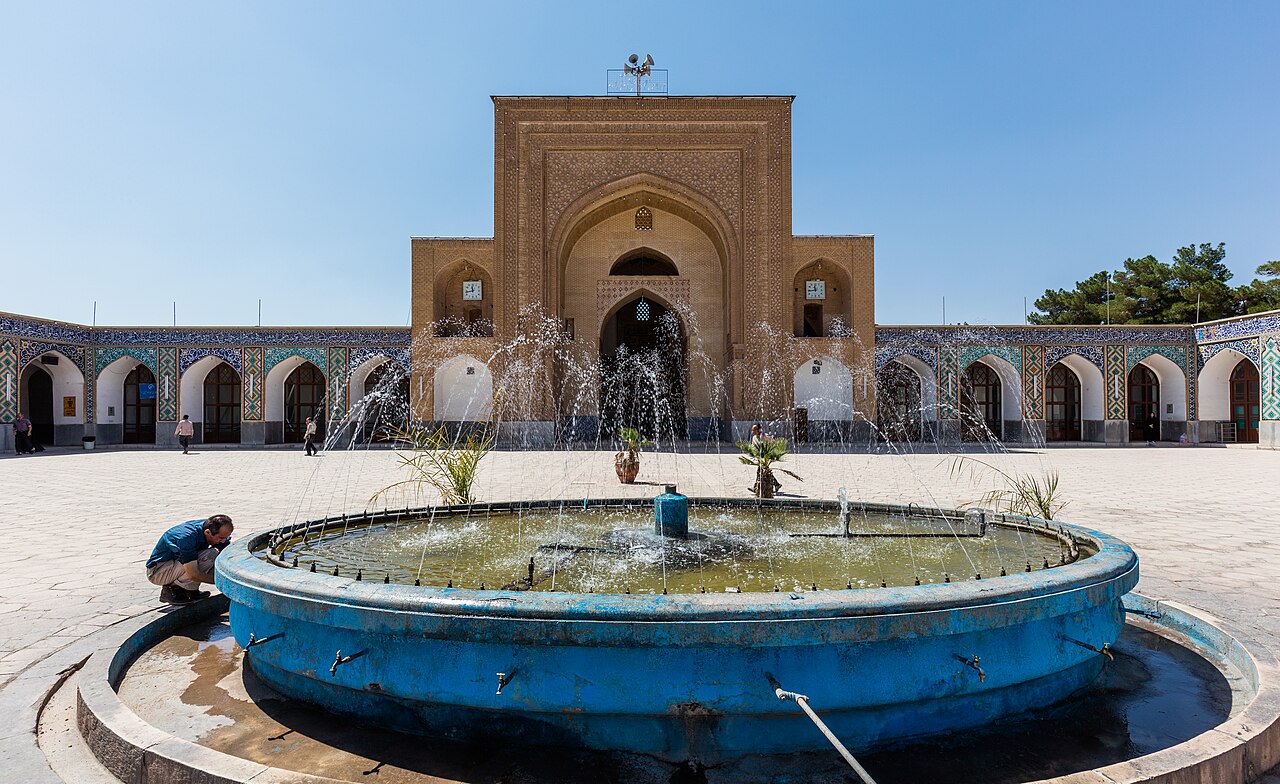
The Malek Mosque (Masjed-e Malek) in Kerman is traditionally attributed to Turan Shah I, though most of what visitors see today belongs to later rebuilding. The local historians credit some of the later shahs with founding schools and gathering scholars at court, which made Kerman a modest regional centre of learning far from Baghdad and Isfahan. Visitors to the city today can read more on the page on Kerman.
Civil war and the Oghuz
The end came from within. When Tughril Shah died in 1169 his sons fought each other for seventeen years, each in turn calling in outside help from Fars, Khorasan or Iraq. Kerman was looted by rival armies again and again.
The decisive outsiders were the Oghuz, the Turkmen nomads who had defeated and captured Sultan Sanjar in Khorasan in 1153. Bands of them drifted south into Kerman in the 1170s and 1180s, and the rival princes hired them or fought them in turn. The local historian Afzal al-Din Kermani, who lived through these years, describes famine, disease and villages emptied of their farmers in harrowing detail. In 1186 the last Seljuk ruler, Muhammad Shah, gave up the struggle and left Kerman, and the Oghuz chief Malik Dinar took over.
Malik Dinar’s rule was short. After his death in the 1190s Kerman was contested by the atabegs of Fars and the Khwarazmshahs, and in the 1220s a former Qara Khitai officer, Buraq Hajib, founded the Qutlugh-Khanid dynasty there, which accepted Mongol overlordship.
How we know their story
Most of what is known comes from local histories rather than the great Seljuk chronicles, which paid Kerman little attention. Afzal al-Din Kermani wrote his histories of the province in the late twelfth century, some of them for Malik Dinar. His work survives partly through a later compilation, the Tarikh-i Saljuqiyan-i Kerman of Muhammad ibn Ibrahim, written in the seventeenth century. The founding date of the state and the exact reign lengths of the early rulers differ between these sources.
Persian words from this page
| سلجوقیان کرمان | Saljuqiyân-e Kermân | the Seljuks of Kerman |
| قاورد | Qâvord | Qavurt |
| بردسیر | Bardasir | Bardasir, old name of Kerman city |
| جیرفت | Jiroft | Jiroft |
| عمان | Omân | Oman |
| مسجد ملک | Masjed-e Malek | Malek Mosque |
Sources and further reading
- Afzal al-Din Kermani, Bada’i’ al-azman fi vaqa’i’-i Kerman, reconstructed by Mahdi Bayani.
- Muhammad ibn Ibrahim, Tarikh-i Saljuqiyan-i Kerman, edited by M. Th. Houtsma.
- C. E. Bosworth, “The Political and Dynastic History of the Iranian World (A.D. 1000–1217)”, in The Cambridge History of Iran, vol. 5.
- A. C. S. Peacock, The Great Seljuk Empire (Edinburgh University Press, 2015).
Want to learn Persian? Get the free Starter Pack
Get the 14-page printable Starter Pack (all 32 letters, a 7-day reading plan, 100 core words and 20 survival phrases) and a short 5-email course. Free.
More in Ghaznavids, Seljuks and Khwarazmshahs (977–1231)
- The Ghaznavid Empire
- Mahmud of Ghazni
- The Rise of the Seljuks
- The Battle of Dandanaqan (1040)
- Tughril Beg Enters Baghdad
- Alp Arslan
- Seljuk Architecture: Tomb Towers and Caravanserais
- The Battle of Manzikert (1071)
- Malik Shah I
- The Seljuks of Kerman
- Nizam al-Mulk and the Siyasatnama
- The Seljuk Domes of Isfahan’s Jameh Mosque
- Omar Khayyam: Poet and Scientist
- Al-Ghazali
- Sana’i of Ghazni
- Hassan-i Sabbah and the Fortress of Alamut
- The Nizari Ismailis and the “Assassins” Legend
- Sultan Sanjar and the Qara Khitai
- The Battle of Qatwan (1141)
- Anvari and Seljuk Court Poetry
- Seljuk Decline and the Atabegs
- The Ghurids
- Attar of Nishapur
- Nizami Ganjavi
- The Khwarazmian Empire
- Ala al-Din Muhammad II
- The Otrar Incident (1218): How Khwarazm Provoked Genghis Khan
- Jalal al-Din Mingburnu