The Iranian diaspora is the community of Iranians and people of Iranian descent living outside Iran, estimated in 2021 by Iran’s own foreign ministry at about four million people. It grew in waves: students before 1979, people leaving the revolution and the Iran–Iraq War in the 1980s, and educated professionals and political exiles ever since. Its largest centres are in the United States, Canada, Germany, the United Kingdom, Sweden, Turkey and the Persian Gulf states.
| Size | About 4 million (Iranian Ministry of Foreign Affairs, 2021, including people of Iranian descent); other estimates differ widely |
|---|---|
| Largest community | United States, especially southern California |
| Other centres | Toronto, Vancouver, London, Berlin, Hamburg, Stockholm, Paris, Dubai, Istanbul, Sydney |
| Main waves | 1960s–1970s students; 1979–1988 revolution and war; 1990s–today professionals, students and exiles |
Before 1979: students and merchants
Iranians have lived abroad for centuries. Merchants from Fars and the coast settled in the ports of the Persian Gulf, in India and in East Africa, and Iranian workers went to the oil fields of Baku in the Russian Empire around 1900. The modern diaspora began with students. Under Mohammad Reza Shah the government sent thousands to universities in Europe and the United States, and many more went at their families’ expense. By the late 1970s Iranians were the largest single group of foreign students in American universities. Most planned to return, and many did.
Revolution and war: the great departure
The 1979 revolution turned temporary residence into exile. Officials of the old regime, the wealthy, secular professionals and families who feared the new order left, as did large numbers from religious minorities: Jews, Armenians, Assyrians, Zoroastrians and above all Baha’is, who faced persecution. Many students already abroad decided not to go home. During the Iran–Iraq War, young men left to avoid conscription, often crossing illegally into Turkey or Pakistan, and members of left-wing groups and the MEK fled the crackdowns of the early 1980s. Western Europe, particularly West Germany, Sweden, France and Britain, took in many as refugees.
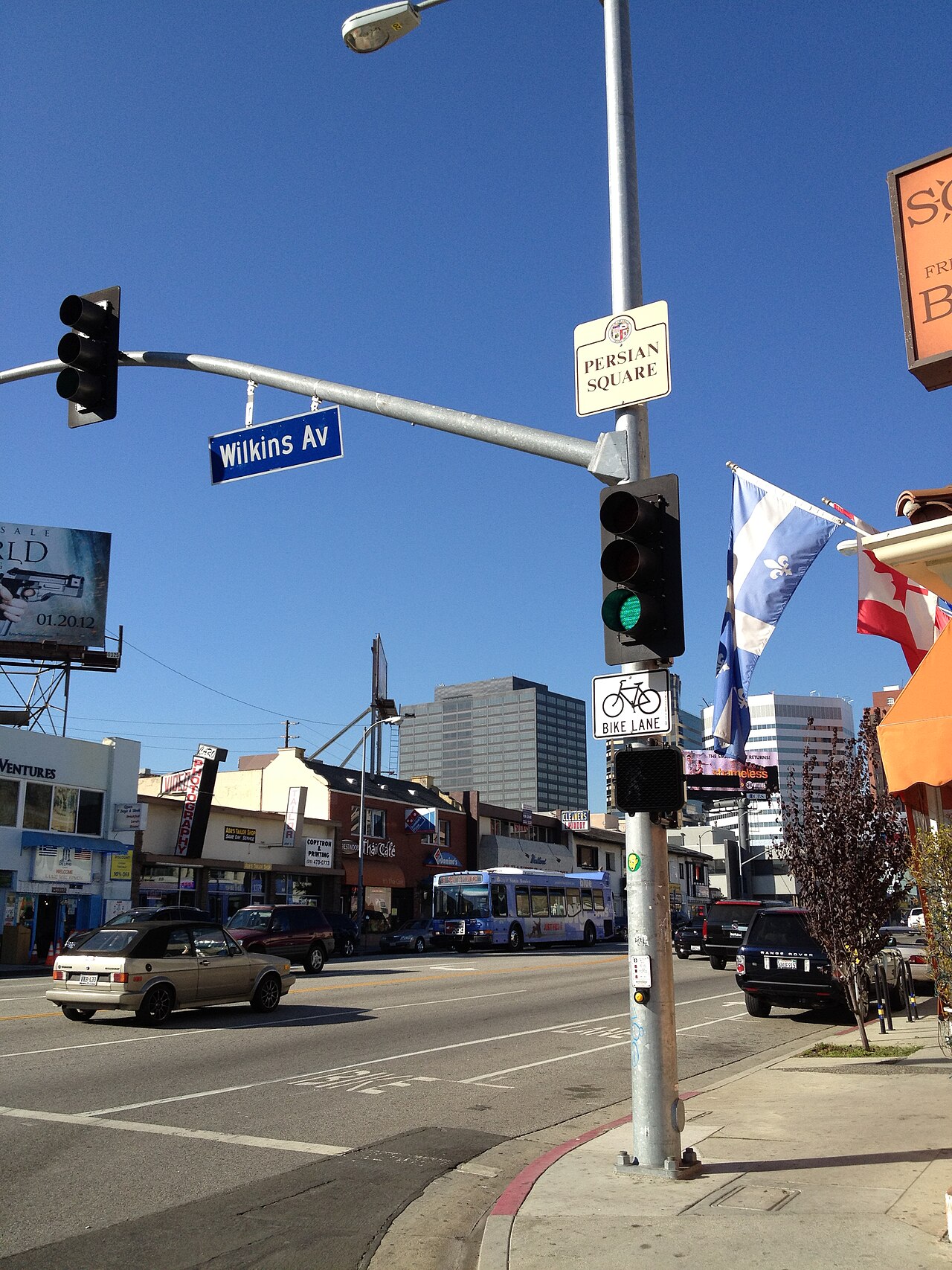
The United States, which had cut relations with Iran during the hostage crisis, became the main destination for those with money or family ties. Los Angeles, with its climate and existing student community, drew so many that Iranians joked about “Tehrangeles” (تهرانجلس). Westwood Boulevard filled with Persian bookshops, bakeries and travel agents, and Beverly Hills became home to a large Iranian Jewish community.

Brain drain and later waves
From the 1990s emigration became steadier and more educated. Each year thousands of Iranian graduates, especially engineers, doctors and scientists, left for postgraduate study or work in North America, Europe and Australia, a loss Iranian officials and economists describe as فرار مغزها (farâr-e maghz-hâ), “the flight of brains”. Canada became a major destination, with large communities in Toronto, nicknamed “Tehranto”, and Vancouver. Economic crises under sanctions, the crackdown after the 2009 election, and the suppression of the 2022 protests each produced new departures of journalists, activists, artists and young professionals. Turkey, the United Arab Emirates and Armenia, easy to reach without a visa or with a simple one, became first stops for many.
How many Iranians live abroad
Numbers are hard to pin down. In 2021 Iran’s foreign ministry put the total at about 4 million, a figure that includes people of Iranian descent in the Gulf states and elsewhere. United States census surveys count roughly half a million people who report Iranian ancestry, but community organisations argue the real number is one million or more, because many people of mixed or minority background do not tick the box or describe themselves as “Persian”. Counts in Europe vary with each country’s methods.
Life in the diaspora
Diaspora Iranians are, on average, highly educated, and many have prominent careers: the mathematician Maryam Mirzakhani, who in 2014 became the first woman to win the Fields Medal; the engineer Anousheh Ansari, who flew to the International Space Station in 2006; the author and filmmaker Marjane Satrapi; and business leaders such as Dara Khosrowshahi of Uber. Persian-language television and radio, including stations in Los Angeles and London-based channels such as BBC Persian and Iran International, broadcast into Iran by satellite. Nowruz and the fire-jumping festival of Chaharshanbe Suri are celebrated in parks and city squares from Toronto to Stockholm (see Nowruz, the Persian New Year).
Language is a constant theme. First-generation emigrants speak Persian at home, but many children grow up understanding more than they speak, and weekend Persian schools and online courses serve “heritage learners” who want to read Hafez or talk to grandparents. Persian words for the emotional side of emigration are common in diaspora music and writing: غربت (ghorbat), the loneliness of living far from home, and دلتنگی (deltangi), homesickness.
Politics at a distance
The diaspora is politically diverse: monarchists who look to Reza Pahlavi, the son of the last Shah; republicans and secular liberals; leftists; supporters of the MEK; ethnic movements; and many with no organised politics who simply oppose the government or keep their distance. During the 2022 protests, diaspora rallies drew some of the largest crowds in Iranian exile history, including a march in Berlin in October 2022 that police estimated at about 80,000 people. The diaspora also argues bitterly within itself about sanctions, military action against Iran and who speaks for Iranians.
The Islamic Republic’s attitude is mixed. It courts expatriate investors and professionals and holds conferences for “Iranians abroad”, but it does not recognise dual nationality, and dual nationals visiting Iran have been arrested and held for years, cases that rights groups describe as hostage-taking. For the history of the United States connection, see Iran and the United States; for minority communities, the Jews of Iran and the Baha’i faith in Iran.
Persian words from this page
| مهاجرت | mohâjerat | emigration |
| مهاجر | mohâjer | emigrant, migrant |
| تبعید | tab’id | exile |
| غربت | ghorbat | life far from home |
| دلتنگی | deltangi | homesickness, longing |
| فرار مغزها | farâr-e maghz-hâ | brain drain |
Sources and further reading
- Mehdi Bozorgmehr, “Diaspora viii. Diaspora in the Post-revolutionary Period”, Encyclopaedia Iranica.
- Halleh Ghorashi, Ways to Survive, Battles to Win: Iranian Women Exiles in the Netherlands and the United States (Nova Science, 2003).
- Hamid Naficy, The Making of Exile Cultures: Iranian Television in Los Angeles (University of Minnesota Press, 1993).
- Iranian Ministry of Foreign Affairs, statistics on Iranians abroad (2021).
- Institute of International Education, Open Doors reports on international students in the United States.
Want to learn Persian? Get the free Starter Pack
Get the 14-page printable Starter Pack (all 32 letters, a 7-day reading plan, 100 core words and 20 survival phrases) and a short 5-email course. Free.
More in The Islamic Revolution and the Islamic Republic (1979–present)
- Causes of the 1979 Revolution
- Khomeini’s Return and the Fall of the Monarchy
- Ruhollah Khomeini
- The 1979 Referendum and the New Constitution
- The Iran Hostage Crisis (1979–1981)
- Power Struggles after the Revolution
- The Cultural Revolution and University Closures
- The Iran–Iraq War: Causes and Iraqi Invasion
- Khorramshahr: Fall and Liberation
- The Iran–Iraq War, 1982–1986
- The Basij and Child Soldiers in the Iran–Iraq War
- Chemical Weapons in the Iran–Iraq War
- The Tanker War and Iran Air Flight 655
- The Iran–Contra Affair
- The End of the Iran–Iraq War (1988)
- The 1988 Executions of Political Prisoners
- The Death of Khomeini and the Succession of Khamenei (1989)
- Ali Khamenei
- Rafsanjani and Post-War Reconstruction (1989–1997)
- Khatami and the Reform Era (1997–2005)
- The 1999 Student Protests (18 Tir)
- The Ahmadinejad Presidency (2005–2013)
- The 2009 Election and the Green Movement
- Iran’s Nuclear Program
- Sanctions on Iran
- Rouhani and the Nuclear Deal (JCPOA)
- The Protests of 2017–2018 and November 2019
- The Killing of Soleimani and Flight 752 (January 2020)
- Iran and the COVID-19 Pandemic
- The Raisi Presidency and His Death (2021–2024)
- The 2022 Mahsa Amini Protests: “Woman, Life, Freedom”
- Iran and Israel: From Allies to Open Conflict
- The Pezeshkian Presidency
- The Twelve-Day War of June 2025
- The Protests of Late 2025 and January 2026
- The 2026 War with the United States and Israel
- The Killing of Ali Khamenei (28 February 2026)
- Mojtaba Khamenei and the 2026 Succession
- The Iranian Diaspora
- Iran and Hezbollah
- Major Earthquakes in Modern Iran
- Iranian Cinema after 1979