Jews have lived in Iran for about 2,700 years, longer than in almost any other country outside the Land of Israel. Their history begins with the exiles of the eighth and sixth centuries BCE and the decree of Cyrus the Great, runs through Sasanian Babylonia, where the Talmud was compiled, and centuries as a protected minority under Islam, and continues today with a community of several thousand, the largest in the Middle East outside Israel.
| First communities | 8th–6th centuries BCE, after Assyrian and Babylonian deportations |
|---|---|
| Language | Persian; historically also Judeo-Persian, Persian written in Hebrew letters |
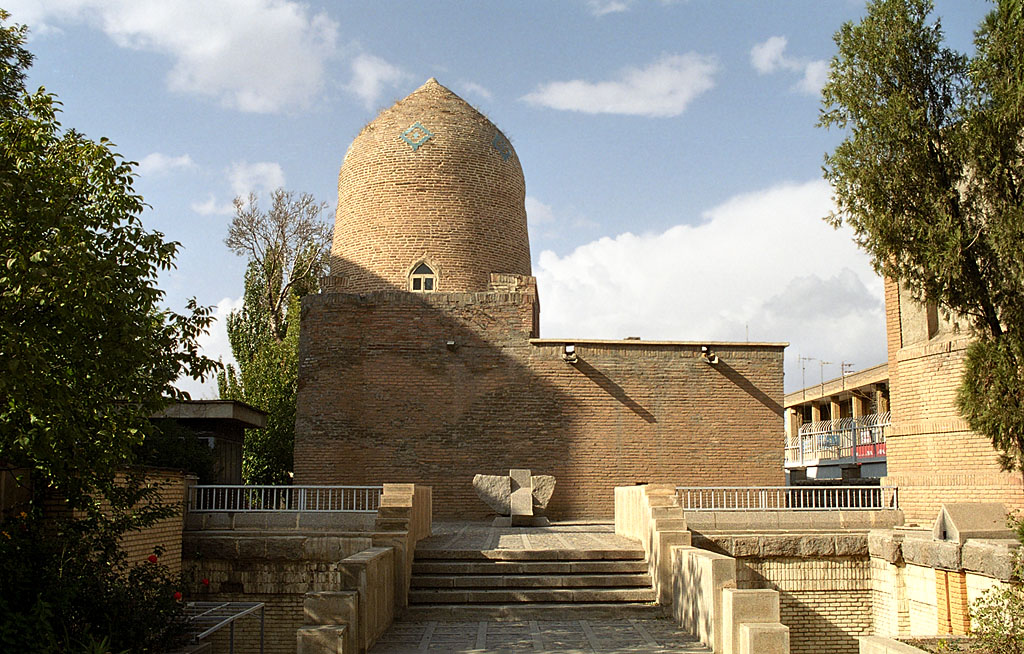
| Holy sites | Tomb of Esther and Mordecai (Hamadan), Tomb of Daniel (Shush) |
| Population in 1979 | about 80,000–100,000 (estimates) |
| Population today | 8,756 in the 2011 census; community estimates are higher |
| Parliament | One reserved seat in the Majlis |
Exile and Cyrus
The Bible records that the Assyrians settled deported Israelites “in the cities of the Medes” in the late eighth century BCE, and after Nebuchadnezzar destroyed Jerusalem in 587/586 BCE many Judeans lived in Babylonia. When Cyrus the Great took Babylon in 539 BCE, the Book of Ezra says he allowed the exiles to return and rebuild the Temple. Cyrus became one of the very few non-Jews praised in the Hebrew Bible, where Isaiah calls him the Lord’s anointed. How far the biblical decree reflects an actual Persian document is debated; the Cyrus Cylinder describes a general policy of restoring temples and peoples but does not mention the Jews. The fuller story is on Cyrus and the return of the Jews.
Many Jews stayed in the Persian empire. The Book of Esther, set at the court of Susa under a king called Ahasuerus, usually identified with Xerxes I, tells how Queen Esther and her cousin Mordecai saved the Jews from a plot, the origin of the festival of Purim. Most historians read Esther as a story rather than a record, but its setting shows how familiar the Persian court was to Jewish writers.

Under the Parthians and Sasanians
The great Jewish centre of late antiquity lay in Mesopotamia, then part of the Parthian and Sasanian empires. Its leader, the Exilarch, claimed descent from King David and was recognised by the Persian kings. The rabbinic academies of Sura and Pumbedita produced the Babylonian Talmud between the third and sixth centuries, and the rabbis’ famous ruling that “the law of the kingdom is the law” was made with the Sasanian state in mind. Relations varied by reign: Jews suffered under the high priest Kartir in the third century, while Yazdegerd I (399–420) was remembered as friendly, and a later Persian tradition gave him a Jewish queen, Shushandukht.
A minority under Islam
After the Arab conquest, Jews, like Christians and Zoroastrians, became dhimmis, protected subjects who paid a poll tax. Early Islamic Isfahan grew next to a Jewish town known as Yahudiyya. Jews wrote Persian in Hebrew letters, and Judeo-Persian texts are among the earliest evidence for New Persian. In the fourteenth century the poet Shahin of Shiraz retold the stories of the Torah in Persian epic verse, much as Ferdowsi had retold the history of the kings.
Conditions worsened under the Safavids, whose Shi’a clergy stressed ritual impurity of non-Muslims. Under Shah Abbas II, between about 1656 and 1661, Jews in Isfahan and other cities were forced to convert; a Judeo-Persian chronicle by Babai ibn Lutf records the events, and many returned to Judaism afterwards. In 1839 the Jews of Mashhad were forced to convert after a riot known as the Allahdad incident; many lived for generations as outward Muslims while practising Judaism in secret. In the Qajar era Jews faced restrictions and outbreaks of violence, and many lived in poverty in the mahalle, the Jewish quarters of Tehran, Isfahan, Shiraz and Hamadan.
Emancipation and prosperity, 1900–1979
The French-Jewish Alliance Israélite Universelle opened modern schools in Tehran and other cities from 1898. The Constitutional Revolution gave Jews a seat in the Majlis. Under the Pahlavis legal discrimination ended, and Jews moved into commerce, medicine, education and the professions; by 1979 an estimated 80,000 to 100,000 lived in Iran, most of them in Tehran. Iran and Israel had close, if unofficial, ties in this period.
After the revolution
The revolution brought a sharp break. In May 1979 the prominent Jewish industrialist Habib Elghanian was executed after a revolutionary court convicted him, among other charges, of contacts with Israel, and the trial alarmed the community. Ayatollah Khomeini received Jewish leaders and drew a distinction between Jews, whom he said would be protected, and Zionism, which the new state opposed. The constitution recognises Judaism and keeps one parliamentary seat for Jews, and synagogues, kosher butchers, schools and the Jewish Dr Sapir Hospital in Tehran continue to operate. Most of the community nonetheless emigrated, chiefly to the United States and Israel; Los Angeles became home to one of the largest Iranian-Jewish communities. In 1999 the arrest of thirteen Jews in Shiraz and Isfahan on charges of spying for Israel drew international protest; they were tried in 2000 and the last were released in 2003. Community spokespeople inside Iran stress their loyalty to the country, while emigrant groups and human rights organisations report pressure and restrictions, a tension that has grown as conflict between Iran and Israel has intensified (see Iran and Israel).
Places to see
The domed Tomb of Esther and Mordecai in Hamadan is the best-known Jewish pilgrimage site in Iran; tradition places Esther there, though the building is medieval and the attribution is not historically verifiable. The Tomb of Daniel at Shush is venerated by Jews and Muslims alike. For the wider religious picture, see religion in Iran.
Persian words from this page
| یهودی | yahudi | Jew, Jewish |
| کلیمی | kalimi | Jew (polite term used in Iran) |
| کنیسه | kanise | synagogue |
| محله | mahalle | quarter, neighbourhood |
| استر و مردخای | Ester va Mordekhây | Esther and Mordecai |
| دانیال نبی | Dâniyâl-e Nabi | the prophet Daniel |
Sources and further reading
- Hebrew Bible: 2 Kings 17:6, Isaiah 45:1, Ezra 1, the Book of Esther.
- Habib Levy, Comprehensive History of the Jews of Iran: The Outset of the Diaspora (English ed., 1999).
- Houman Sarshar (ed.), Esther’s Children: A Portrait of Iranian Jews (2002).
- Vera B. Moreen, Iranian Jewry’s Hour of Peril and Heroism: A Study of Babai ibn Lutf’s Chronicle (1987).
- Encyclopaedia Iranica, “Judeo-Persian Communities” (multi-part article).
- Lior B. Sternfeld, Between Iran and Zion: Jewish Histories of Twentieth-Century Iran (2018).
Want to learn Persian? Get the free Starter Pack
Get the 14-page printable Starter Pack (all 32 letters, a 7-day reading plan, 100 core words and 20 survival phrases) and a short 5-email course. Free.
More in Themes Across Iranian History (3000 BCE–today)
- A History of the Persian Language
- Zoroastrianism through the Ages
- Shi’a Islam in Iranian History
- The Jews of Iran
- The Armenians of Iran
- Christians of Iran
- The Baha’i Faith in Iran
- The Kurds in Iranian History
- Azerbaijanis in Iranian History
- The History of the Iranian Calendar
- Nowruz through History
- The Persian Garden (Pardis) through History
- Qanats: Iran’s Ancient Water Tunnels
- A History of Persian Carpets
- A History of Persian Architecture
- A History of Persian Painting
- A History of Persian Music
- Science in Iranian History
- Women in Iranian History
- Iran and the Silk Road
- Iran and China through History
- Iran and India through History
- Iran and Greece: Perceptions and Exchanges
- Persia and Rome: Seven Centuries of Rivalry
- Iran and the Ottoman Empire
- Iran and Russia through History
- Iran and Britain through History
- Iran and the United States
- How Iran’s Borders Changed
- The Capitals of Iran through History
- Coins of Iran through History: From the Daric to the Rial
- Flags and Symbols of Iran through History
- Myth and History in the Shahnameh: The Epic’s Kings and the Real Past
- Timeline of Iranian History: Key Dates from Elam to Today
- A History of Persian Cuisine: From Royal Banquets to Chelow Kabab
- A History of Persian Poetry: From Rudaki to Forough
- Wine in Iranian History: From Hajji Firuz to Hafez and Prohibition
- Sports in Iranian History: Polo, the Zurkhaneh and Wrestling
- List of Iranian Dynasties and Rulers