Alamut Castle is the ruined mountain fortress in the Alborz range north-east of Qazvin that Hassan-i Sabbah seized in 1090 and made the centre of the Nizari Ismaili state until the Mongols took it in 1256. Little more than walls, cisterns and cuttings in the rock survive, but the setting is spectacular, and in July 2026 Alamut and six related fortresses were added to the UNESCO World Heritage List.
| Persian name | قلعه الموت (Ghal’e-ye Alamut) |
|---|---|
| Location | Above the village of Gazor Khan, Alamut valley, Qazvin province |
| Nizari centre | 1090–1256 |
| Height | On a narrow rock about 180 m above the surrounding ground |
| UNESCO | Alamut Castle and Related Fortifications, World Heritage List, 2026 |
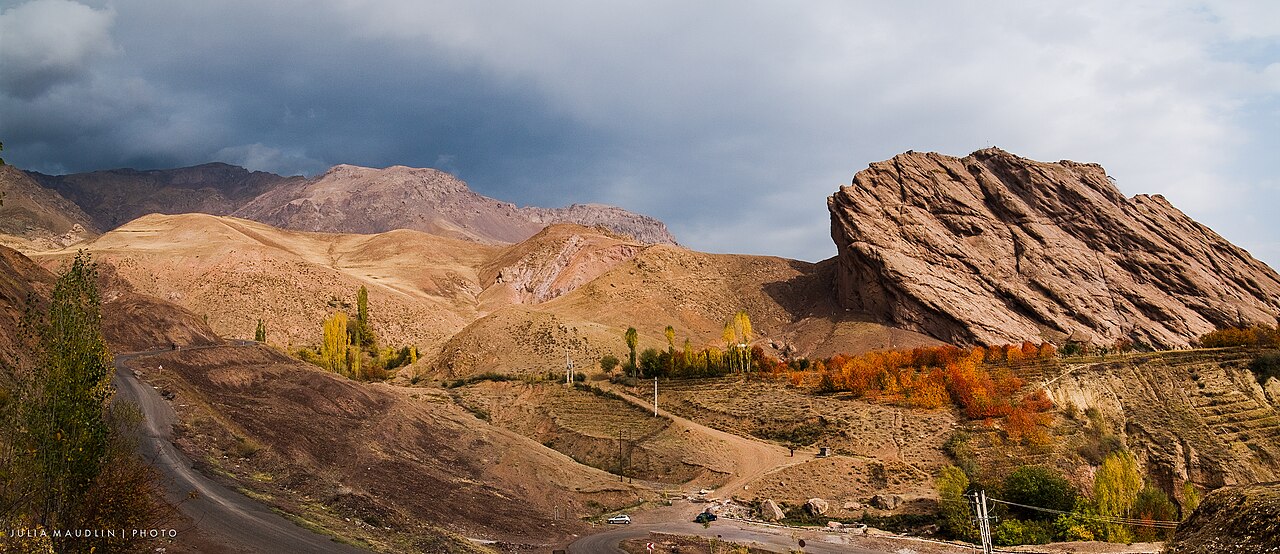

The eagle’s nest and its owners
The fortress is older than its famous owners. Medieval sources say it was built in the 9th century by a ruler of Daylam, Wahsudan ibn Marzuban of the Justanid family, who chose the rock after seeing an eagle land on it. The name is usually explained from the local Daylami language as “eagle’s teaching” or “eagle’s nest”.
In 1090 the Ismaili missionary Hassan-i Sabbah took the castle without a battle, by winning over its garrison. From here he and his successors ran a network of fortresses in Iran and Syria that resisted the Seljuks for more than 160 years. How that happened, and why the Nizaris became known in Europe as the “Assassins”, is told on our pages on Hassan-i Sabbah and the fortress of Alamut and the Nizari Ismailis and the “Assassins” legend.
In late 1256 the last imam of Alamut, Rukn al-Din Khurshah, surrendered to Hulagu Khan, and the castle was handed over and slighted. The historian Juvayni, who served the Mongols, went through its famous library before it was burned and kept some works he judged valuable. The siege and its aftermath are covered in the fall of Alamut. Excavations led by the Iranian archaeologist Hamideh Chubak from 2004 found evidence of later occupation and destruction, including in the Safavid period.
The climb and what you see
The castle sits on a long, narrow outcrop that rises steeply above Gazor Khan. A path and a long flight of steps lead up from the village; the climb takes most visitors between 20 minutes and an hour, depending on fitness, and the last part is steep. Archaeological work has gone on for years, and parts of the top may be covered by protective roofs or closed off.
On the summit you can trace the plan of the fortress along the ridge: stretches of stone and mortar wall, rock-cut rooms, and the cisterns and channels that collected water. Water was the key to holding out against a siege, and Juvayni himself was struck by the size of the stores he found. The approach also shows why the place was so hard to take. The rock falls away on almost every side, and the only practical approach is narrow.
The view is the other reward. To the north the high peaks of the Alborz, including Alam Kuh, close the valley; below you are the green fields and orchards of the Alamut river, which feel very far from the dry plain around Qazvin.
The other fortresses and the valley
The UNESCO property is a group of seven sites: Alamut itself and the fortifications of Lambesar, Navizarshah, Shams Kelayeh, Qostinlar, Shirkuh and Ilan, spread across the Alamut valley. Of these, Lambesar (Lambsar), on a rock above the village of Razmian further west, is the one most visitors see after Alamut; it was the second great Nizari stronghold of the region and is a larger site with remains of walls and cisterns. The Shirkuh gorge at the western entrance of the valley shows how well the landscape protected it.
Many travellers also stop at Lake Ovan (Evan), a small lake in the hills of the valley, popular with Iranian families for picnics in summer.
Practical notes
- The usual base is Qazvin. The drive into the valley crosses a mountain ridge on a winding road and takes a few hours each way, so a full day is needed. Some visitors stay overnight in village guesthouses.
- Wear proper shoes for the steps and bring water. In winter snow can close the higher roads and make the climb dangerous.
- Arrangements for visiting and any tickets may change after the UNESCO listing; check current information locally.
Persian words from this page
| الموت | Alamut | Alamut |
| قلعه | ghal’e | castle, fortress |
| حسن صباح | Hasan-e Sabbâh | Hassan-i Sabbah |
| اسماعیلیه | Esmâ’iliye | the Ismailis |
| قزوین | Ghazvin | Qazvin |
| دریاچه | daryâche | lake |
Sources and further reading
- UNESCO World Heritage Centre, Alamūt Castle and Related Fortifications.
- Ata-Malik Juvayni, Tarikh-i Jahangushay, trans. J. A. Boyle as The History of the World-Conqueror (Manchester, 1958).
- Peter Willey, Eagle’s Nest: Ismaili Castles in Iran and Syria (London, 2005).
- Farhad Daftary, The Isma’ilis: Their History and Doctrines (2nd edn, Cambridge, 2007).
- Freya Stark, The Valleys of the Assassins (1934), an early travel account of the valley.
Want to learn Persian? Get the free Starter Pack
Get the 14-page printable Starter Pack (all 32 letters, a 7-day reading plan, 100 core words and 20 survival phrases) and a short 5-email course. Free.
More in Top Places to Visit in Iran
- Naqsh-e Jahan Square
- Shah (Imam) Mosque, Isfahan
- Sheikh Lotfollah Mosque
- Ali Qapu Palace
- Jameh Mosque of Isfahan
- Si-o-se Pol and Khaju Bridge
- Vank Cathedral
- Hasht Behesht Palace
- Naqsh-e Rostam
- Eram Garden, Shiraz
- Nasir al-Molk (Pink) Mosque
- Tomb of Hafez (Hafezieh)
- Tomb of Saadi (Saadieh)
- Shah Cheragh Shrine
- Arg of Karim Khan
- Fin Garden, Kashan
- Historic Houses of Kashan
- Jameh Mosque of Yazd
- Yazd Fire Temple and Towers of Silence
- Dowlatabad Garden and Windcatcher
- Amir Chakhmaq Complex
- Golestan Palace
- National Museum of Iran
- Treasury of National Jewels
- Tehran Grand Bazaar
- Milad Tower
- Imam Reza Shrine, Mashhad
- Tomb of Ferdowsi, Tus
- Tomb of Omar Khayyam, Neyshabur
- Tomb of Avicenna, Hamadan
- Ganjnameh Inscriptions, Hamadan
- Behistun (Bisotun): Visiting the Site
- Taq-e Bostan: Visiting the Site
- Tabriz Historic Bazaar
- Takht-e Soleyman
- Armenian Monastic Ensembles of Iran
- Sheikh Safi al-Din Shrine, Ardabil
- Dome of Soltaniyeh
- Alamut Castle
- Falak-ol-Aflak Castle
- Shushtar Historical Hydraulic System
- Chogha Zanbil: Visiting the Ziggurat
- Susa Archaeological Site
- Arg-e Bam
- Ganjali Khan Complex, Kerman
- Shazdeh Garden, Mahan
- Rayen Castle
- Dasht-e Lut (Lut Desert)
- Maranjab Desert and Caravanserai
- Varzaneh Desert
- Mount Damavand
- Hyrcanian Forests
- Lake Urmia
- Badab-e Surt Springs
- Ali Sadr Cave
- The Kaluts of Shahdad
- Qeshm Geopark
- Hormuz Island Colours
- Visiting Persepolis: A Day Trip from Shiraz
- Visiting Pasargadae
- Persian Caravanserais
- The Qanat of Gonabad
- Meymand Village
- Sasanian Sites of Fars: Firuzabad, Bishapur and Sarvestan
- Gonbad-e Qabus: Visiting the Tower
- Zayandeh Rud and Isfahan’s Bridges
- Tochal and Darband: Hiking Above Tehran
- Mount Sabalan
- Skiing in Iran: Dizin and Shemshak
- Golestan National Park