Articles (94)
The Iran–Contra Affair
The Iran–Contra affair was the secret sale of American weapons to Iran in 1985–86, while Iran was at war with Iraq and under a US arms…
The Tanker War and Iran Air Flight 655
The Tanker War was the campaign of attacks on merchant ships in the Persian Gulf during the Iran–Iraq War, which escalated sharply from 1984 and drew…
Chemical Weapons in the Iran–Iraq War
Iraq used chemical weapons on a large scale during the Iran–Iraq War, from 1983 until the ceasefire of 1988, first against Iranian soldiers and later against…
The Iran–Iraq War, 1982–1986
After recapturing Khorramshahr in May 1982, Iran carried the war into Iraq, aiming to overthrow Saddam Hussein. From 1982 to 1986 it launched a series of…
Khorramshahr: Fall and Liberation
Khorramshahr, a port on the Shatt al-Arab in Khuzestan, fell to the Iraqi army in late October 1980 after more than a month of street fighting,…
Saadi of Shiraz
Saadi of Shiraz (c. 1210–1291 or 1292), سعدی, is one of the greatest Persian poets and the master of Persian prose. After studying in Baghdad and…
The Iran–Iraq War: Causes and Iraqi Invasion
The Iran–Iraq War began on 22 September 1980, when Iraq under Saddam Hussein bombed Iranian airfields and sent its army across the border into the oil…
The Cultural Revolution and University Closures
Iran's Cultural Revolution (انقلاب فرهنگی, enqelab-e farhangi) was a campaign from 1980 to 1983 to purge the universities of left-wing, secular and Western influences and rebuild…
Power Struggles after the Revolution
Between 1979 and 1983 the broad coalition that overthrew the shah broke apart, and the clerics of the Islamic Republic Party (IRP), backed by Khomeini, defeated…
The Iran Hostage Crisis (1979–1981)
The Iran hostage crisis began on 4 November 1979, when Iranian students loyal to Ayatollah Khomeini stormed the United States embassy in Tehran. Fifty-two American diplomats…
The 1979 Referendum and the New Constitution
On 30 and 31 March 1979 Iranians voted in a referendum on a single question: should Iran become an Islamic Republic? The official result was 98.2…
Ruhollah Khomeini
Ayatollah Ruhollah Khomeini (1902–1989) was the Shi'a cleric who led the 1979 revolution and became the first Supreme Leader of the Islamic Republic of Iran. His…
Khomeini’s Return and the Fall of the Monarchy
Ayatollah Ruhollah Khomeini flew back to Tehran from exile in France on 1 February 1979, two weeks after the shah had left the country. Ten days…
Causes of the 1979 Revolution
The Iranian Revolution of 1978–79 overthrew Mohammad Reza Shah Pahlavi and ended some 2,500 years of monarchy in Iran. It grew out of a mix of…
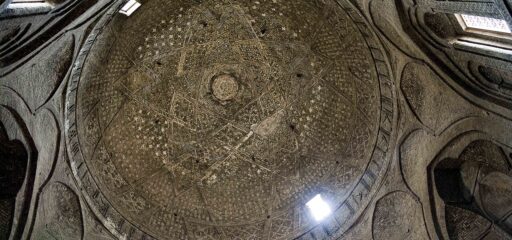
The Seljuk Domes of Isfahan’s Jameh Mosque
The Friday Mosque (Masjed-e Jame) of Isfahan was rebuilt under the Seljuks when the city was their capital. Two brick domes survive from the reign of…
Ghazan Khan and the Conversion to Islam
Ghazan (1271–1304), Ilkhan of Iran from 1295, publicly converted to Islam in June 1295 and made the Mongol state in Iran a Muslim monarchy. With his…
Salman the Persian
Salman the Persian, Salman al-Farisi in Arabic, was an Iranian convert who became a companion of the Prophet Muhammad in Medina in the 620s. Muslim tradition…
Peroz III and the Sasanian Exiles in China
Peroz III was the son of Yazdegerd III, the last Sasanian king of Persia. After his father was killed near Merv in 651, Peroz tried for…
Religion and Culture in Parthian Iran
Religion in Parthian Iran (c. 247 BCE–224 CE) was Zoroastrian at its core but open and varied: the Arsacid kings honoured Ahura Mazda, Mithra and Anahita,…
Rostam Farrokhzad
Rostam Farrokhzad was the most powerful general of the last Sasanian years, a Parthian-descended nobleman who made and unmade queens in the civil wars of 630–632…