Articles (45)
Zayandeh Rud and Isfahan’s Bridges
The Zayandeh Rud (زایندهرود, "the life-giving river") is the largest river of the central Iranian plateau and the reason Isfahan exists. It rises in the Zagros…
Gonbad-e Qabus: Visiting the Tower
Gonbad-e Qabus (گنبد قابوس) is a 53-metre brick tomb tower built in 1006–07 for the Ziyarid prince Qabus ibn Voshmgir, and it stands today in a…
Persian Caravanserais
A caravanserai (کاروانسرا, kârvânsarâ) was a walled roadside inn where caravans, pilgrims and couriers could water their animals, store goods and sleep in safety. Thousands were…
Coins of Iran through History: From the Daric to the Rial
Iran has made its own money for about 2,500 years, from the gold daric of Darius the Great to the rial of today. The names on…
Kamal al-Din Behzad and Persian Miniature Painting
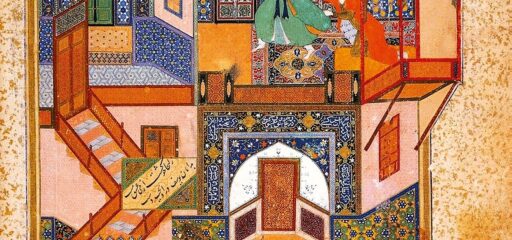
Kamal al-Din Behzad (c. 1455/60–c. 1535) was the most celebrated painter of Persian miniatures, head of the royal library-workshop of Sultan Husayn Bayqara in Herat and…
Shazdeh Garden, Mahan
Shazdeh Garden, the "Prince's Garden", is a walled Qajar garden just outside the town of Mahan, about 35 km south-east of Kerman. Built mainly in the…
A History of Persian Painting
Persian painting, called negârgari in Persian and often "Persian miniature" in English, is the tradition of small, brilliantly coloured paintings made to illustrate manuscripts of poetry…
A History of Persian Architecture
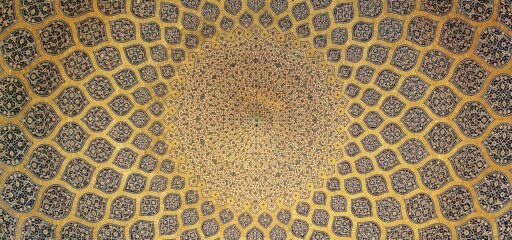
Persian architecture is the building tradition of Iran from the Elamite ziggurat of Chogha Zanbil, around 1250 BCE, to the towers of modern Tehran. Its lasting…
A History of Persian Carpets
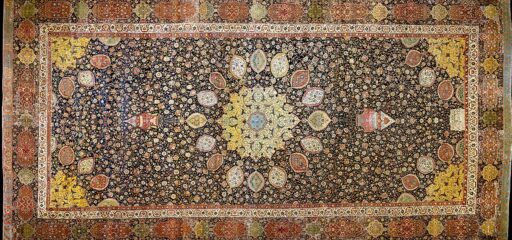
Persian carpets are hand-knotted pile rugs woven in Iran for at least five centuries of surviving examples and much longer by tradition. The oldest known pile…
The Persian Garden (Pardis) through History
The Persian garden is a walled, irrigated garden, usually divided into four parts by water channels and walkways, with a pavilion at its heart. The form…
Tomb of Avicenna, Hamadan
The Tomb of Avicenna (آرامگاه بوعلی سینا, Ârâmgâh-e Bu-Ali Sinâ) in Hamadan is the burial place of the philosopher and physician Ibn Sina, who died in…
Tomb of Omar Khayyam, Neyshabur
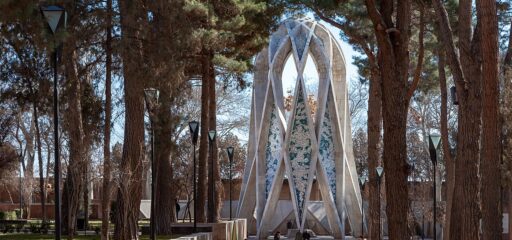
The Tomb of Omar Khayyam (آرامگاه خیام, Ârâmgâh-e Khayyâm) in Neyshabur is a 22-metre open lattice of concrete and tile, designed by the architect Houshang Seyhoun…
Tomb of Ferdowsi, Tus
The Tomb of Ferdowsi (آرامگاه فردوسی, Ârâmgâh-e Ferdowsi) stands in a garden at Tus, about 25 km north-west of Mashhad, over the grave of the poet…
Seljuk Architecture: Tomb Towers and Caravanserais
Two building types sum up the Seljuk age outside the great mosques: the brick tomb tower, a tall memorial raised over the grave of a ruler…
Golestan Palace
Golestan Palace (کاخ گلستان) in central Tehran is what remains of the royal citadel of the Qajar shahs, who ruled Iran from Tehran from 1786 to…
Dowlatabad Garden and Windcatcher
Dowlatabad Garden (باغ دولتآباد) in Yazd was laid out around 1750 as the residence and seat of government of Mohammad Taqi Khan, who ruled Yazd after…
Ilkhanid Art and the Great Mongol Shahnameh
Ilkhanid art is the art of Iran under Mongol rule, roughly 1256 to 1353. Contact with China across a single empire brought new motifs and ways…
Yazd Fire Temple and Towers of Silence
Yazd is the centre of Iran's Zoroastrian community, and two of its sites are the most visited Zoroastrian places in the country: the Atash Bahram fire…
Fin Garden, Kashan
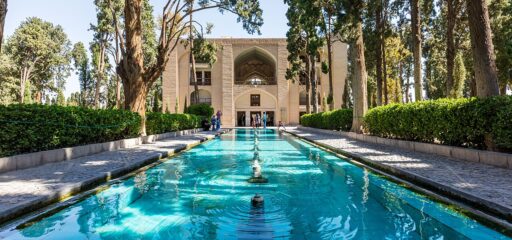
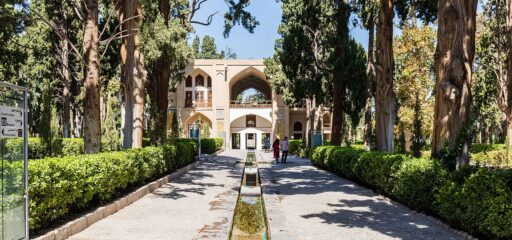
Fin Garden (باغ فین, Bâgh-e Fin), on the edge of Kashan, is a walled Persian garden laid out in its present form under Shah Abbas I…
Tomb of Saadi (Saadieh)
The Tomb of Saadi, known in Shiraz as the Saadieh (سعدیه), is the garden mausoleum of the 13th-century poet Saadi, author of the Golestan and the…