Iran’s Cultural Revolution (انقلاب فرهنگی, enqelab-e farhangi) was a campaign from 1980 to 1983 to purge the universities of left-wing, secular and Western influences and rebuild them on Islamic lines. Iran’s universities were closed in June 1980 and reopened gradually from 1982 to 1983, after thousands of students and lecturers had been expelled and the curriculum rewritten. Its main body, now the Supreme Council of the Cultural Revolution, still shapes education policy.
| Dates | April 1980 to about 1983 |
|---|---|
| Trigger | Khomeini’s attack on the universities, April 1980, and clashes on campuses |
| Universities closed | June 1980; reopened in stages, 1982–1983 |
| Directing body | Cultural Revolution Headquarters (from June 1980); Supreme Council of the Cultural Revolution (from December 1984) |
| Main targets | Left-wing and Mojahedin student groups, secular faculty, humanities and social science curricula |

Why the universities became a battleground
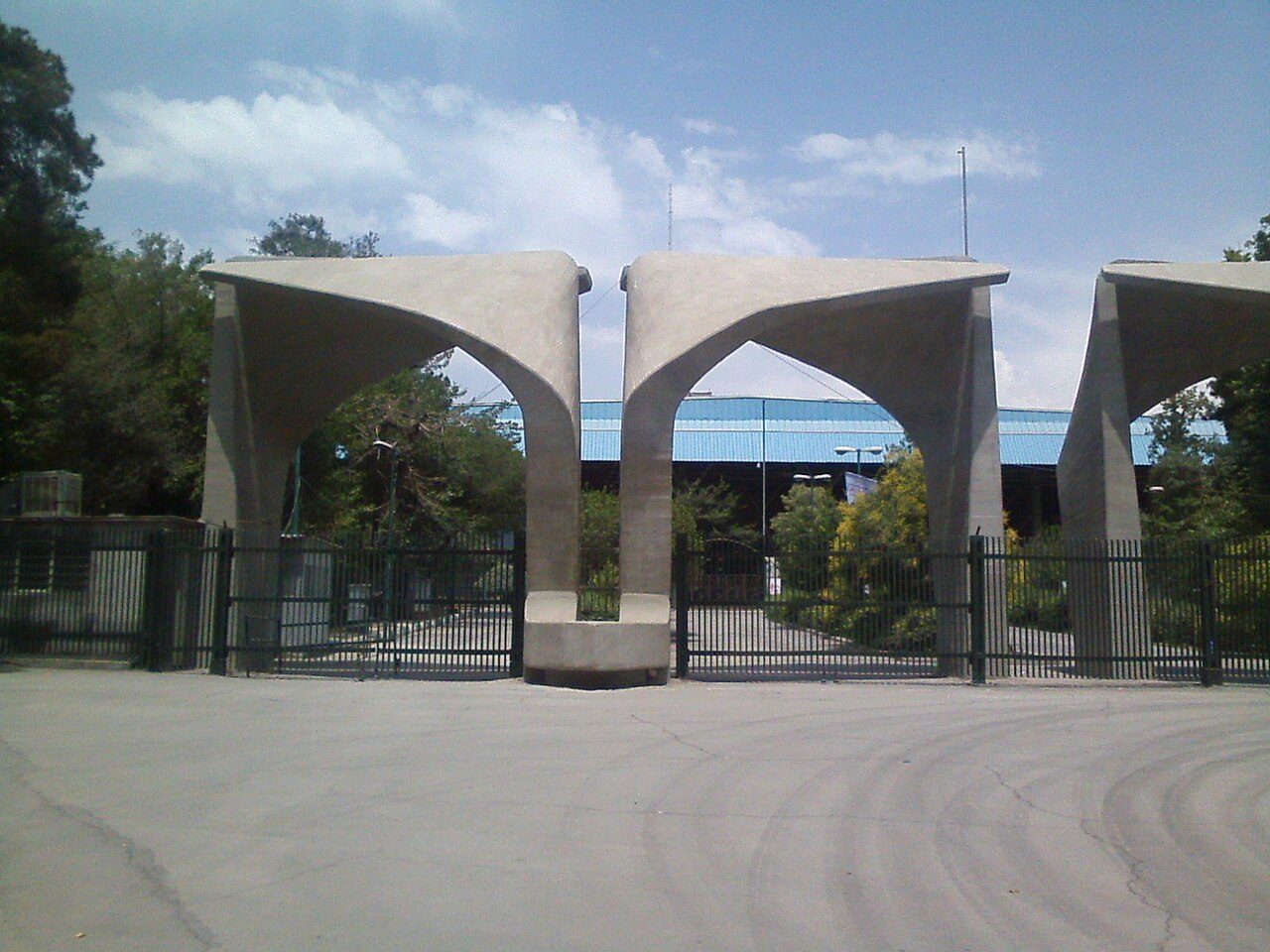
Universities had been centres of opposition to the shah, and after the revolution they became the main base of the organised left. The Mojahedin-e Khalq, the Fadaiyan and smaller Marxist groups ran offices, bookstalls and recruitment tables on campus, and by early 1980 they were winning student elections that the Islamist student associations had dominated a year before. For the clerics around Khomeini, and for the Islamist students who had taken the US embassy, the campuses looked like a rival power centre.
There was also an ideological argument. Many religious thinkers believed that the humanities and social sciences, as taught in Iran, carried Western values and Marxist ideas into Muslim society. On 18 April 1980, in a speech after Friday prayers, Khomeini attacked the universities sharply, and he had already called for a university system free of dependence on East or West. The Revolutionary Council gave the political groups a deadline to close their campus offices.
The clashes of April 1980
In the days after Khomeini’s speech, Islamist students and Hezbollahi supporters moved to clear the groups from the campuses, starting at the Tehran Teacher Training College and spreading to the University of Tehran, Tabriz, Mashhad, Shiraz, Ahvaz and Rasht. Left-wing students resisted, and fighting broke out in several cities. Reports at the time and later accounts put the number of dead at more than twenty, with hundreds injured; exact figures were never established. President Abolhassan Bani-Sadr, who supported the aim of reforming the universities, went to the University of Tehran to announce that the groups must leave.
By June the campuses were empty. Universities and colleges stopped teaching, and their students and teachers were left without classes for what became more than two years.
The Cultural Revolution Headquarters
On 12 June 1980 Khomeini appointed a Cultural Revolution Headquarters (Setad-e Enqelab-e Farhangi) of seven members to plan the reopening. They included the cleric Mohammad-Javad Bahonar, the lawyer Hassan Habibi, the writer Shams Al-e Ahmad, brother of Jalal Al-e Ahmad, and the young philosopher Abdolkarim Soroush. Their task was to decide which subjects should be taught, by whom, and with what books.
The work went on in committees for each discipline. Courses in law, economics, sociology, history and literature were revised to remove what the authorities considered un-Islamic content, and new courses on Islamic thought became compulsory. Engineering and medicine were changed far less. Lecturers judged politically or religiously unsuitable were dismissed or forced to retire, and many left the country. The departure of academics in these years was an early wave of the brain drain that has affected Iran ever since; see the Iranian diaspora.
Reopening on new terms
Some medical and technical faculties reopened in 1982, and most universities had restarted teaching by 1983. Admission now involved ideological screening: applicants were vetted for their beliefs and political background, as well as passing the national entrance examination, the konkur. Quotas were reserved for war volunteers and the families of those killed in the war with Iraq. Students and staff who had belonged to banned groups were barred, and many were among those arrested after June 1981 (see power struggles after the revolution).
Women continued to study, and in later decades women came to make up more than half of university entrants. Some fields, however, were restricted for women at various times, and dress codes were strictly enforced on campus.
In December 1984 the headquarters was replaced by a permanent Supreme Council of the Cultural Revolution, chaired by the president and including senior officials and appointees of the Leader. It issues policy on universities, culture and the media, and its decisions carry the force of law.
Different views of the Cultural Revolution
The Islamic Republic describes the Cultural Revolution as a necessary step to free Iran’s universities from intellectual dependence on the West and to align education with the values of the revolution. Supporters point to the huge expansion of higher education that followed, including the Islamic Azad University founded in 1982 and the growth of provincial universities, which opened study to millions from poorer and more religious families.
Critics, including many former students and lecturers, describe it as a political purge that used cultural language to crush the left and Mojahedin on campus, with lasting damage to the humanities and to academic freedom. Human-rights groups have documented later waves of expulsions of politically active students and the exclusion of Baha’is from higher education. Soroush, the best-known member of the original headquarters, later became a leading reformist thinker and lived in exile; he has said that his role was limited to curriculum planning and that he had no part in the purges or the violence.
Historians link the campaign to the wider consolidation of clerical power in 1980–81. Shaul Bakhash notes that the closure removed the left’s most important organising base just as the conflict with Bani-Sadr and the Mojahedin came to a head. Universities have since remained politically sensitive spaces, as the student protests of 1999 later showed.
Persian words from this page
| انقلاب فرهنگی | enqelâb-e farhangi | cultural revolution |
| دانشگاه | dâneshgâh | university |
| ستاد | setâd | headquarters |
| کنکور | konkur | university entrance exam |
| استاد | ostâd | professor, lecturer |
Sources and further reading
- Shaul Bakhash, The Reign of the Ayatollahs: Iran and the Islamic Revolution (Basic Books, 1984)
- Ali M. Ansari, Modern Iran since 1797: Reform and Revolution (Routledge, 2019)
- Michael Axworthy, Revolutionary Iran: A History of the Islamic Republic (Allen Lane, 2013)
- Ervand Abrahamian, A History of Modern Iran (Cambridge University Press, 2008)
- Nikki R. Keddie, Modern Iran: Roots and Results of Revolution (Yale University Press, 2003)
Want to learn Persian? Get the free Starter Pack
Get the 14-page printable Starter Pack (all 32 letters, a 7-day reading plan, 100 core words and 20 survival phrases) and a short 5-email course. Free.
More in The Islamic Revolution and the Islamic Republic (1979–present)
- Causes of the 1979 Revolution
- Khomeini’s Return and the Fall of the Monarchy
- Ruhollah Khomeini
- The 1979 Referendum and the New Constitution
- The Iran Hostage Crisis (1979–1981)
- Power Struggles after the Revolution
- The Cultural Revolution and University Closures
- The Iran–Iraq War: Causes and Iraqi Invasion
- Khorramshahr: Fall and Liberation
- The Iran–Iraq War, 1982–1986
- The Basij and Child Soldiers in the Iran–Iraq War
- Chemical Weapons in the Iran–Iraq War
- The Tanker War and Iran Air Flight 655
- The Iran–Contra Affair
- The End of the Iran–Iraq War (1988)
- The 1988 Executions of Political Prisoners
- The Death of Khomeini and the Succession of Khamenei (1989)
- Ali Khamenei
- Rafsanjani and Post-War Reconstruction (1989–1997)
- Khatami and the Reform Era (1997–2005)
- The 1999 Student Protests (18 Tir)
- The Ahmadinejad Presidency (2005–2013)
- The 2009 Election and the Green Movement
- Iran’s Nuclear Program
- Sanctions on Iran
- Rouhani and the Nuclear Deal (JCPOA)
- The Protests of 2017–2018 and November 2019
- The Killing of Soleimani and Flight 752 (January 2020)
- Iran and the COVID-19 Pandemic
- The Raisi Presidency and His Death (2021–2024)
- The 2022 Mahsa Amini Protests: “Woman, Life, Freedom”
- Iran and Israel: From Allies to Open Conflict
- The Pezeshkian Presidency
- The Twelve-Day War of June 2025
- The Protests of Late 2025 and January 2026
- The 2026 War with the United States and Israel
- The Killing of Ali Khamenei (28 February 2026)
- Mojtaba Khamenei and the 2026 Succession
- The Iranian Diaspora
- Iran and Hezbollah
- Major Earthquakes in Modern Iran
- Iranian Cinema after 1979