Articles (45)
Gonbad-e Qabus Tower
Gonbad-e Qabus is a brick tomb tower about 53 metres high, built in 1006–1007 for the Ziyarid ruler Qabus ibn Voshmgir near the old city of…
Tomb of Hafez (Hafezieh)
The Tomb of Hafez, the Hafezieh (حافظیه), is the garden in northern Shiraz where the poet Hafez was buried after his death in about 1389–1390. Over…
Eram Garden, Shiraz
Eram Garden (باغ ارم, Bâgh-e Eram) is a historic walled garden in the north-west of Shiraz, with a Qajar-era mansion reflected in a long pool, avenues…
Parthian Coins and What They Tell Us
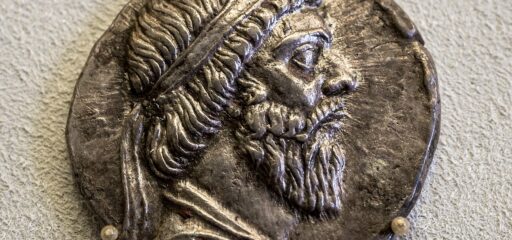
Parthian coins are small silver drachms and larger tetradrachms struck by the Arsacid kings from the 3rd century BCE to 228 CE, nearly all showing the…
Hasht Behesht Palace
Hasht Behesht (هشت بهشت, "Eight Paradises") is a two-storey Safavid garden pavilion in central Isfahan, built in 1669 for Shah Suleiman. It is the last surviving…
Si-o-se Pol and Khaju Bridge
Si-o-se Pol (سی و سه پل, "thirty-three bridges") and the Khaju Bridge (پل خواجو) are the two famous Safavid bridges across the Zayandeh Rud in Isfahan.…
Ali Qapu Palace
The Ali Qapu (عالیقاپو, "the lofty gate") is the Safavid palace gatehouse on the west side of Naqsh-e Jahan Square in Isfahan. Begun under Shah Abbas…
Naqsh-e Jahan Square
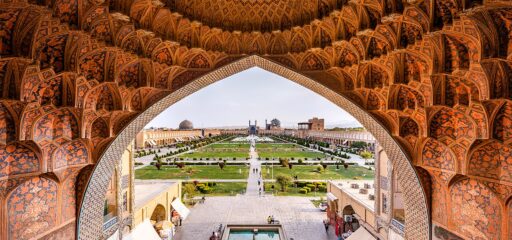
Naqsh-e Jahan Square (میدان نقش جهان) is the great open square at the centre of Isfahan, about 510 metres long, laid out by Shah Abbas I…
Parthian Art and Architecture
Parthian art and architecture (c. 247 BCE–224 CE) blended Greek technique with Iranian and Mesopotamian traditions and produced two lasting innovations: the iwan, a great vaulted…
The Achaemenid Paradise Gardens
The Achaemenid kings and their satraps built walled parks and gardens across the empire, places of fruit trees, water channels, pavilions and hunting grounds. The Iranian…
Sasanian Coins and Silverwork
The Sasanian Empire paid its soldiers, collected its taxes and impressed its neighbours in silver. Its standard coin, the drachm (Middle Persian drahm), was struck for…
The Royal Tombs of Naqsh-e Rostam
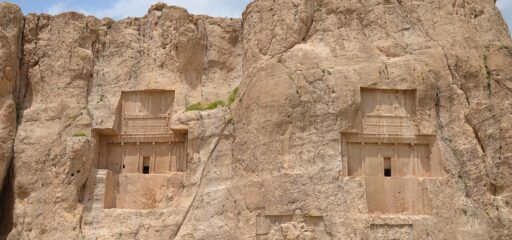
Naqsh-e Rostam is a cliff in Fars, about six kilometres north-west of Persepolis, where four Achaemenid kings were buried in tombs cut high into the rock…
The Palace of Darius at Susa
The palace of Darius I at Susa, in today's Khuzestan province, was the first great royal residence built by the new king after he seized the…
The Tomb of Cyrus through History
The tomb of Cyrus the Great at Pasargadae is a small stone house on six stepped tiers, about 11 metres high, built around 530 BCE for…
Sasanian Cities, Palaces and Bridges
The Sasanian kings were great builders. Between 224 and 651 CE they founded dozens of cities named after themselves, raised palaces with vast brick vaults and…
Sasanian Art: Silver, Reliefs and Silk
Sasanian art is the court art of Iran from 224 to 651 CE: rock reliefs carved on cliffs, silver plates and ewers gilded with royal hunts,…
The Sasanian Reliefs of Naqsh-e Rostam
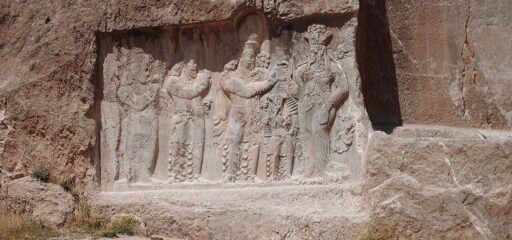
Below the rock-cut tombs of the Achaemenid kings at Naqsh-e Rostam, near Persepolis in Fars, Sasanian kings of the 3rd and 4th centuries CE carved a…
The Battle of the Bridge (634)
The Battle of the Bridge was fought on the Euphrates near the later city of Kufa in late 634, when a Sasanian army under Bahman Jadhuyih…
Qajar Art, Photography and Society
Qajar art is the art of Iran under the Qajar dynasty (1789–1925): large oil portraits of shahs and courtly women, painted lacquer, enamel and tiles, illustrated…
Chehel Sotoun Palace and Its War Paintings
Chehel Sotoun is the garden palace in Isfahan that Shah Abbas II completed in 1647 to receive ambassadors and hold royal banquets. Its great hall is…