The 1954 Consortium Agreement was the oil deal that ended the crisis caused by Iran’s nationalisation of 1951. Signed in September 1954 and ratified by parliament that October, it left the oil formally owned by the National Iranian Oil Company but handed production, refining and export to a group of eight Western companies for 25 years, with profits shared 50–50. It brought oil money back to the shah’s government and set the frame for Iran’s oil economy until 1973.
| Signed | September 1954; approved by the Majlis and Senate in October 1954 |
|---|---|
| Iranian negotiator | Ali Amini, finance minister |
| Shares | BP 40%; five US majors 8% each (40%); Royal Dutch Shell 14%; CFP (France) 6% |
| Term | 25 years, to 1979, with options to extend |
| Profit split | 50–50 between Iran and the consortium |
| Replaced | 1973 by the Sales and Purchase Agreement |
A settlement after the coup
When General Fazlollah Zahedi took power after the coup of August 1953, Iran’s oil had been off the world market for two years and the government was close to bankrupt. The United States gave emergency aid, but a lasting income meant selling oil again. That raised a political problem: the 1951 nationalisation law was popular, and no Iranian government could simply return the industry to the Anglo-Iranian Oil Company.
The answer, worked out by the American envoy Herbert Hoover Jr. with British officials and the major oil companies, was a consortium in which AIOC would be only one member. Washington also wanted American companies inside Iran, and the US Justice Department waived antitrust objections so that the five American majors could join. Negotiations in Tehran in spring and summer 1954 were led on the Iranian side by Finance Minister Ali Amini and on the companies’ side by Howard Page of Standard Oil of New Jersey and others.

Who got what
The consortium, usually known as the Iranian Oil Participants, divided its shares as follows:
- Anglo-Iranian Oil Company, renamed British Petroleum in December 1954: 40 per cent
- Gulf, Socony-Vacuum (later Mobil), Standard Oil of New Jersey (later Exxon), Standard Oil of California and Texaco: 8 per cent each
- Royal Dutch Shell: 14 per cent
- Compagnie Française des Pétroles: 6 per cent
In 1955 each American major gave up one point of its share to a group of smaller US independents, known as Iricon, which held 5 per cent between them.
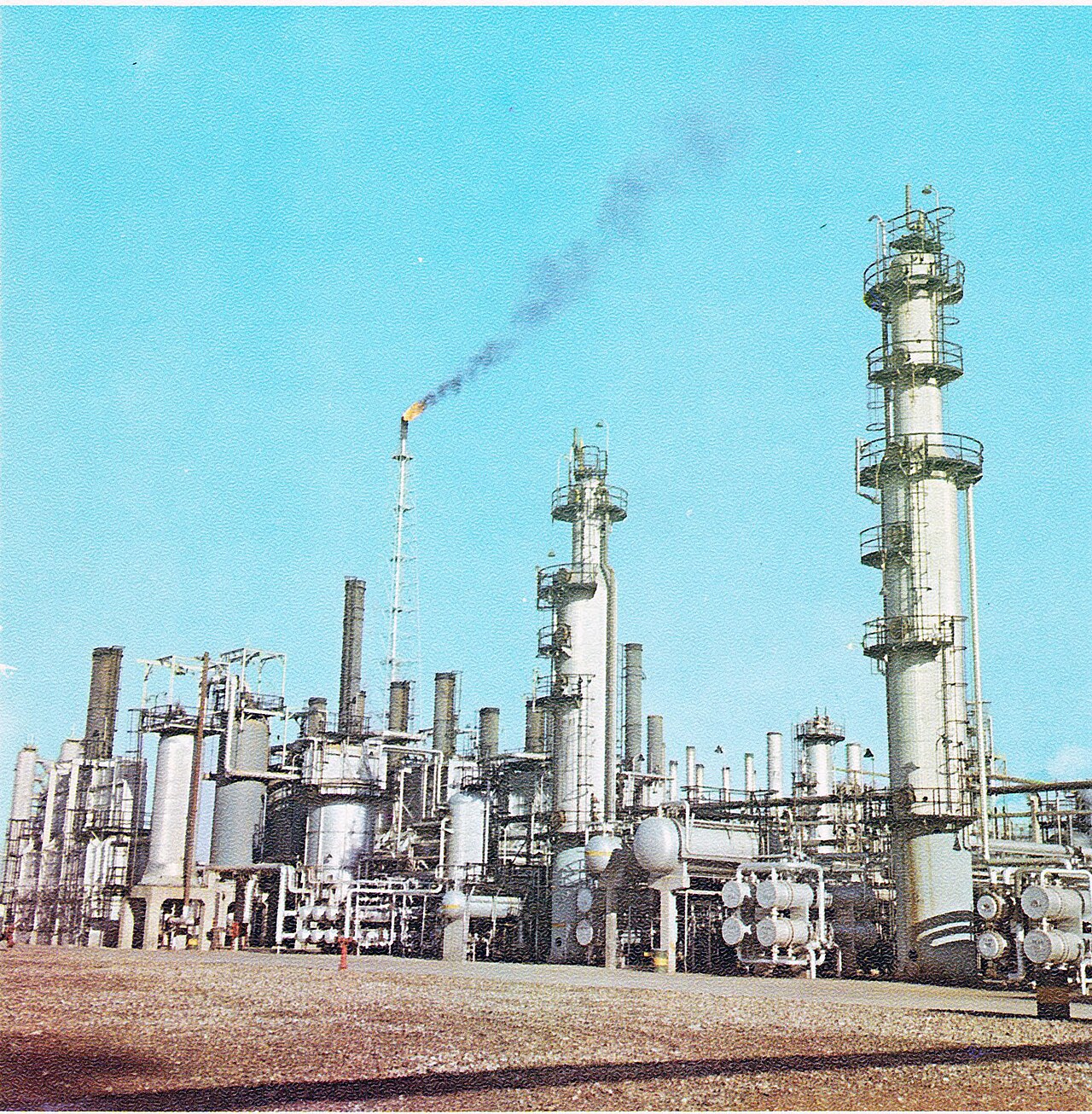
Two operating companies registered in the Netherlands, one for exploration and production and one for refining, ran the oilfields of Khuzestan and the Abadan refinery. NIOC owned the oil and the installations on paper and ran some non-basic services such as housing and local distribution. Iran received half of the profits, in line with the deals then standard in Saudi Arabia, Kuwait and Iraq. Iran also agreed to pay AIOC compensation over ten years, while the other members paid the British company for their shares.
Nationalisation in name only
Critics in Iran saw the deal as a reversal of 1951. National Front supporters argued that foreign companies again decided how much Iranian oil was produced and at what price, which was largely true: output was set by companies that also had oil in Saudi Arabia, Kuwait and Iraq. A small group of deputies spoke against ratification, but the Majlis that approved it in October 1954 had been elected under the new government, and open opposition carried real risk in the months after the coup.
Defenders, then and since, point out that the 50–50 split was far better than the pre-1951 terms, that the British company lost its monopoly, and that Iran had little bargaining power after two years without exports. Historians such as Mary Ann Heiss and James Bamberg present it as the best deal available at the time, while Ervand Abrahamian stresses how much control it gave back to foreign firms.
From partners to customers, 1957–1973
The shah soon worked to widen Iran’s room for manoeuvre. A petroleum law of 1957 let NIOC sign its own deals for areas outside the consortium zone. The first, with the Italian state company ENI under Enrico Mattei, gave Iran an effective 75 per cent share, which alarmed the majors. In the 1960s the shah pressed the consortium repeatedly to raise output and give up unused areas, and Iran became a founding member of OPEC in 1960.
The decisive change came in 1973. Under the Sales and Purchase Agreement, in force from March 1973, NIOC took over ownership and full control of operations, and the consortium companies became long-term buyers of Iranian crude. Only months later the oil price rises of 1973 multiplied Iran’s income. The consortium’s arrangements ended with the revolution of 1979.
- 1951 Oil industry nationalised; boycott begins
- August 1953 Mosaddegh overthrown
- September 1954 Consortium Agreement signed
- October 1954 Ratified by parliament; exports resume
- 1955 Iricon independents receive 5%
- 1957 New petroleum law; NIOC–ENI agreement
- 1960 Iran co-founds OPEC
- 1973 Sales and Purchase Agreement gives NIOC full control
For the crisis that preceded the deal, read the nationalisation of Iranian oil.
Persian words from this page
| کنسرسیوم | konsersiyom | consortium |
| قرارداد | qarârdâd | agreement, contract |
| سهم | sahm | share |
| پالایشگاه | pâlâyeshgâh | refinery |
| خوزستان | Khuzestân | Khuzestan |
Sources and further reading
- James Bamberg, The History of the British Petroleum Company, vol. 2: The Anglo-Iranian Years, 1928–1954 (Cambridge University Press, 1994).
- Mary Ann Heiss, Empire and Nationhood: The United States, Great Britain, and Iranian Oil, 1950–1954 (Columbia University Press, 1997).
- Ervand Abrahamian, A History of Modern Iran (Cambridge University Press, 2008).
- Daniel Yergin, The Prize: The Epic Quest for Oil, Money and Power (Simon & Schuster, 1991).
- Encyclopaedia Iranica, “Anglo-Iranian Oil Company”.
Want to learn Persian? Get the free Starter Pack
Get the 14-page printable Starter Pack (all 32 letters, a 7-day reading plan, 100 core words and 20 survival phrases) and a short 5-email course. Free.
More in The Pahlavi Era (1925–1979)
- Reza Shah Pahlavi
- Reza Shah’s Reforms
- The Trans-Iranian Railway
- Why Persia Became “Iran” in 1935
- The Unveiling Decree of 1936 (Kashf-e Hijab)
- The Anglo-Soviet Invasion of Iran (1941)
- The Persian Corridor and the Tehran Conference
- The Iran Crisis of 1946
- Mohammad Reza Shah’s Early Reign (1941–1953)
- The Tudeh Party
- Mohammad Mosaddegh
- The Nationalisation of Iranian Oil (1951)
- The 1953 Coup in Iran
- Fazlollah Zahedi
- The 1954 Oil Consortium Agreement
- SAVAK: The Shah’s Security Service
- The White Revolution (1963)
- The Uprising of June 1963 and Khomeini’s Exile
- The Hoveyda Years (1965–1977)
- The 2,500-Year Celebration of the Persian Empire (1971)
- The Oil Boom of the 1970s
- Intellectuals and Opposition in the 1960s–70s
- Iran as a Regional Power under the Shah
- Women in Pahlavi Iran
- The Cinema Rex Fire (1978)
- Black Friday (September 1978)
- The Shah Leaves Iran (January 1979)
- Farah Pahlavi
- The Pahlavi Family
- Forough Farrokhzad and Modern Persian Poetry
- Iranian Cinema before 1979