Iranian cinema before the 1979 revolution grew from a handful of silent and early sound films in the 1930s into a large commercial industry by the 1960s, known as film farsi. Alongside it, from 1969, a group of directors including Dariush Mehrjui, Masoud Kimiai, Bahram Beyzai, Sohrab Shahid Saless and Abbas Kiarostami created the first Iranian new wave, whose films won prizes abroad and laid the ground for the internationally known cinema of the Islamic Republic.

The first films, 1900–1940
Film came to Iran with the Qajar court: Mozaffar ad-Din Shah’s photographer filmed scenes on the shah’s European journey in 1900. Public cinemas opened in Tehran in the following decades, at first showing foreign films. The first Iranian feature, the silent comedy Abi and Rabi, was made in 1930 by Ovanes Ohanian, an Armenian-Iranian director who also opened a film school.
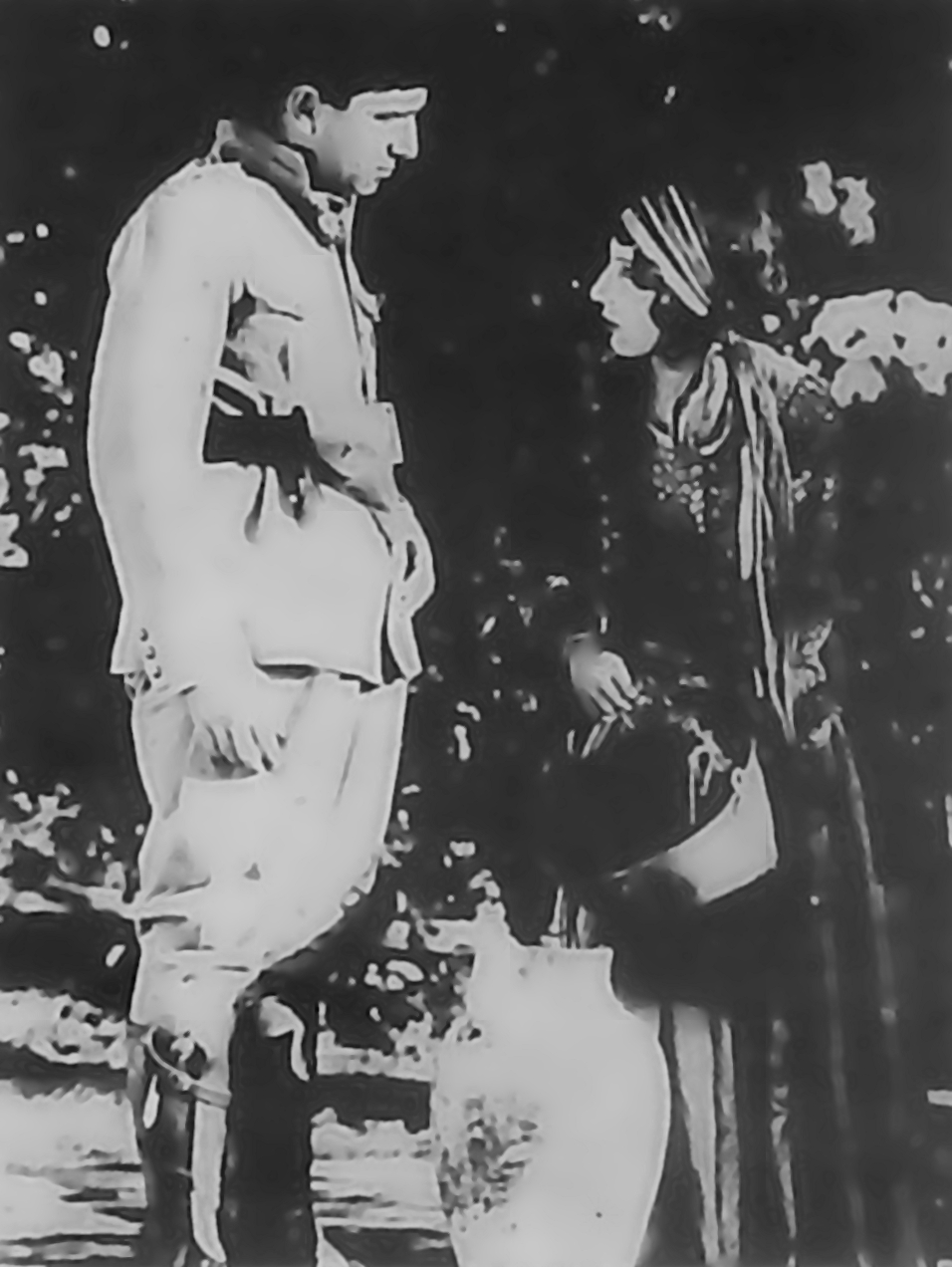
The first Persian-language sound film, Dokhtar-e Lor (دختر لر, The Lor Girl), was made in Bombay in 1933 by the Iranian writer and actor Abdolhossein Sepanta with the Indian producer Ardeshir Irani. Its story of a tea-house girl and a government agent fighting bandits, with songs and a patriotic ending praising the new order of Reza Shah, was a huge success in Iran. Sepanta made several more films in India, including one on Ferdowsi, but production at home stayed tiny until after the Second World War, held back by censorship, a small market and competition from imports.
Film farsi: the popular cinema
After 1945 Iranian studios began producing films in Tehran, led by Esmail Kushan’s Pars Film. Through the 1950s and 1960s output rose to dozens of films a year. Critics later called this commercial cinema film farsi (فیلمفارسی), a dismissive label for melodramas, comedies and musicals built on stock formulas: songs and cabaret dancing, a poor but honest hero, a rich villain, and a happy ending.
The most famous example is Ganj-e Qarun (Croesus’ Treasure, 1965), directed by Siamak Yasemi and starring Mohammad Ali Fardin, a former champion wrestler who became the biggest star of the period. Its tale of a rich father reconciled with his working-class son broke box-office records. Stars such as Fardin, Naser Malek Motiee and the singer and actress Googoosh were household names, and the films are still watched with affection, and some irony, by Iranians today.
The new wave, 1969 onwards
Two films of 1969 are usually taken as the start of a different cinema.
- Qeysar, by Masoud Kimiai, starring Behrouz Vossoughi, told a story of revenge in the old quarters of south Tehran. It used the tough-guy hero of popular film but with a dark, realistic tone, and it was a commercial hit.
- Gav (گاو, The Cow), by Dariush Mehrjui, from a story by Gholam-Hossein Sa’edi, followed a villager, played by Ezzatollah Entezami, who loses his mind and comes to believe he is his dead cow. Shot in black and white on a small budget, it was held back by the censors, then shown at the Venice festival in 1971, where it drew critical praise.
In the 1970s a stream of serious films followed. Bahram Beyzai, a playwright and scholar of Iranian theatre, made Ragbar (Downpour, 1972). Sohrab Shahid Saless made spare, slow films about ordinary lives; his Still Life (1974) won a Silver Bear at the Berlin festival. Amir Naderi, Parviz Kimiavi, Bahman Farmanara and Ali Hatami each developed a personal style. Earlier, the documentaries of Ebrahim Golestan’s studio, including Forough Farrokhzad’s The House Is Black (1962), and Farrokh Ghaffari’s South of the City (1958) had shown what an Iranian art cinema might look like.
The Kanun and Kiarostami
One institution mattered more than its size suggests. The Institute for the Intellectual Development of Children and Young Adults, known as the Kanun (کانون), founded in 1965 under the patronage of Empress Farah, set up a film unit that gave young directors money and freedom to make short films for and about children. Abbas Kiarostami made his first short, Bread and Alley, there in 1970, and continued working for the Kanun after the revolution. Its approach, simple stories, non-professional actors and real locations, became a hallmark of later Iranian cinema.
The state, censorship and festivals
The Pahlavi state both supported and restricted film. The Ministry of Culture and Art funded some productions, and the Tehran International Film Festival, held each year from 1972 to 1977, brought foreign directors and stars to Iran. At the same time censors cut or banned films that showed poverty, political violence or disrespect for authority, and several new wave films were delayed for years. Directors learned to work with symbol and allegory, a habit that continued after 1979.
Religious critics, for their part, condemned cinemas as places of immorality. During 1978 many cinemas were attacked and burned, culminating in the Cinema Rex fire in Abadan in August, in which hundreds died.
What followed
After the revolution, film farsi disappeared: its stars were banned from the screen, and Fardin and Vossoughi’s careers in Iran ended. Several new wave directors, among them Mehrjui, Beyzai, Kiarostami and Naderi, kept working under the new rules or abroad, and they became a bridge to the cinema described on the page about Iranian cinema after 1979.
Persian words from this page
| سینما | sinemâ | cinema |
| فیلم | film | film |
| کارگردان | kârgardân | film director |
| بازیگر | bâzigar | actor |
| گاو | gâv | cow |
| دختر لر | dokhtar-e Lor | the Lor girl |
| گنج قارون | ganj-e Qârun | Croesus’ treasure |
Sources and further reading
- Hamid Naficy, A Social History of Iranian Cinema, vols. 1–2, Duke University Press, 2011.
- Hamid Dabashi, Close Up: Iranian Cinema, Past, Present and Future, Verso, 2001.
- Richard Tapper (ed.), The New Iranian Cinema: Politics, Representation and Identity, I.B. Tauris, 2002.
- Encyclopaedia Iranica, article “Cinema”.
Want to learn Persian? Get the free Starter Pack
Get the 14-page printable Starter Pack (all 32 letters, a 7-day reading plan, 100 core words and 20 survival phrases) and a short 5-email course. Free.
More in The Pahlavi Era (1925–1979)
- Reza Shah Pahlavi
- Reza Shah’s Reforms
- The Trans-Iranian Railway
- Why Persia Became “Iran” in 1935
- The Unveiling Decree of 1936 (Kashf-e Hijab)
- The Anglo-Soviet Invasion of Iran (1941)
- The Persian Corridor and the Tehran Conference
- The Iran Crisis of 1946
- Mohammad Reza Shah’s Early Reign (1941–1953)
- The Tudeh Party
- Mohammad Mosaddegh
- The Nationalisation of Iranian Oil (1951)
- The 1953 Coup in Iran
- Fazlollah Zahedi
- The 1954 Oil Consortium Agreement
- SAVAK: The Shah’s Security Service
- The White Revolution (1963)
- The Uprising of June 1963 and Khomeini’s Exile
- The Hoveyda Years (1965–1977)
- The 2,500-Year Celebration of the Persian Empire (1971)
- The Oil Boom of the 1970s
- Intellectuals and Opposition in the 1960s–70s
- Iran as a Regional Power under the Shah
- Women in Pahlavi Iran
- The Cinema Rex Fire (1978)
- Black Friday (September 1978)
- The Shah Leaves Iran (January 1979)
- Farah Pahlavi
- The Pahlavi Family
- Forough Farrokhzad and Modern Persian Poetry
- Iranian Cinema before 1979