Iranians have called their country Iran for well over a thousand years; “Persia” was the name used by outsiders. In a circular of 25 December 1934 the government of Reza Shah asked foreign states to use “Iran” and “Iranian” in official dealings from Nowruz, 21 March 1935. The change was about sovereignty and national identity, and in 1959 the government ruled that both names could be used.
| Request issued | 25 December 1934, circular from the Ministry of Foreign Affairs to foreign legations in Tehran |
|---|---|
| In force from | 21 March 1935 (Nowruz, 1 Farvardin 1314) |
| Ruler | Reza Shah Pahlavi |
| Later revision | 1959: “Persia” and “Iran” both declared acceptable |
| Persian names | ایران (Irân); پارس (Pârs), فارس (Fârs) |
Two names with different histories
“Persia” comes, through Greek and Latin, from Pārsa, the Old Persian name of the homeland of the Achaemenid kings in the south-west of the plateau. The region is still called Fars, and its people gave their name to the Persian language, فارسی (Fârsi). Greek writers such as Herodotus called the whole empire after this one people, and European languages followed them for two and a half thousand years.
“Iran” has a different origin. It goes back to an ancient word, Avestan airya, by which the early Iranian peoples described themselves. The Sasanian kings of the third to seventh centuries called their realm Ērānšahr, “the land of the Iranians”, and called themselves kings of Ērān and Anērān, of Iranians and non-Iranians. In the Shahnameh of Ferdowsi, completed around 1010, Iran is the name of the land whose kings the poem celebrates. Safavid and Qajar documents speak of the “protected domains of Iran”, ممالک محروسه ایران (mamâlek-e mahruse-ye Irân). Inside the country, then, nothing new was invented in 1935; the change concerned what foreigners called it. The longer story of the word is told in our page on the history of the Persian language.
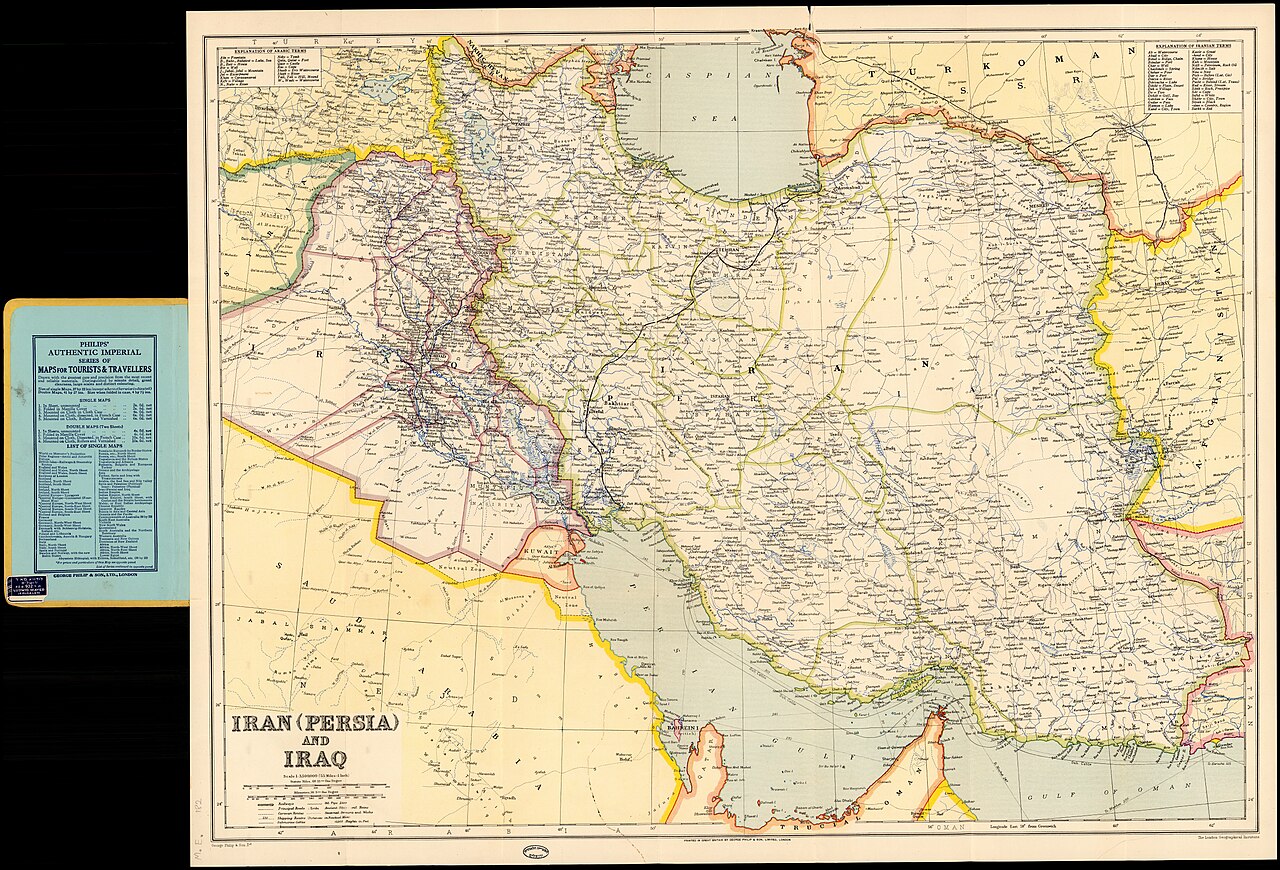

The circular of December 1934
On 25 December 1934 the Iranian Ministry of Foreign Affairs sent a memorandum to the foreign missions in Tehran asking that, from the Iranian New Year of 21 March 1935, the words “Iran” and “Iranian” be used in place of “Persia” and “Persian” in official correspondence. Iranian legations abroad made the same request to the governments where they served. Britain agreed; the Foreign Secretary told the House of Commons in February 1935 that the British minister in Tehran had been instructed to comply. Other governments, the League of Nations and international postal and telegraph bodies followed.
Why Reza Shah’s government wanted it
The government gave no lengthy public explanation, and historians reconstruct its motives from the context.
Sovereignty and the end of “Persia” as a sphere of influence
For Iranian nationalists, “Persia” was the name used in the Anglo-Russian Convention of 1907 that had divided the country into spheres of influence, in the oil concessions, and in the capitulations abolished in 1928. Asking the world to use the country’s own name fitted a reign that wanted to end the era of foreign interference: the same years saw the cancellation of the D’Arcy oil concession in 1932 and the takeover of foreign schools. See the Anglo-Russian Convention for that background.
One nation, not one province
“Persia” names one province and one people. Iran is home to Azerbaijanis, Kurds, Lurs, Arabs, Baluch, Turkmen and others, and a government trying to build a single national identity preferred a name that included them all. “Iran” also tied the Pahlavi state to the Sasanian Ērānšahr, in the same way that the dynasty’s name, Pahlavi, recalled Middle Persian.
Aryan ideas and the German connection
The 1930s were also the years when European ideas about an “Aryan” race were at their height, and Iran’s trade and technical ties with Germany were growing fast. “Iran” is related to the word Aryan, and some writers, including the Iranist Ehsan Yarshater, have said that the suggestion came from the Iranian legation in Berlin, influenced by circles there. Others caution against reading the change mainly through this lens: the name Iran was ancient and long used at home, and the request fitted the nationalism of the reign as a whole. Ali Ansari and Abbas Amanat both place the decision within the broader Pahlavi project of building a modern national identity on the pre-Islamic past.
Confusion, objections and the decision of 1959
The change had costs. Abroad, “Persia” carried associations with poetry, carpets, art and an ancient empire, and many people did not recognise the new name; some confused Iran with its neighbour Iraq. During the Second World War British officials often went on writing “Persia”, partly to avoid that confusion. Scholars complained that the cultural prestige of the old name was being thrown away.
In 1959, after a group of Iranian scholars led by Ehsan Yarshater raised the issue, the government of Mohammad Reza Shah announced that both names were acceptable and could be used interchangeably. In practice “Iran” remained the official political name, while “Persian” survived in phrases such as Persian carpets, Persian cats, Persian cuisine and the Persian language. The country’s full official name changed in 1979 to the Islamic Republic of Iran.
Iran, Persia and Persian today
Most international usage today follows the 1935 request for the state and its citizens. Debates continue over the language: some Iranians, and this site, prefer “Persian” in English, as Yarshater recommended, while others use “Farsi”, the Persian word for the language. Many Iranians abroad, especially in the decades after 1979, have chosen to describe themselves as Persian rather than Iranian, a choice that can be cultural, personal or political. The geographical name Persian Gulf, خلیج فارس (Khalij-e Fârs), was not affected by the 1935 change and remains in standard use. Our page on the flags and symbols of Iran follows a related story of how national identity was presented.
The name change was one of a series of measures in the mid-1930s that tried to reshape how Iranians presented themselves. A few months later the state turned to dress: the brimmed hat in 1935 and the unveiling decree of 1936.
Persian words from this page
| ایران | Irân | Iran |
| ایرانی | Irâni | Iranian |
| پارس | Pârs | Persis, the old name of Fars |
| فارسی | Fârsi | the Persian language |
| ایرانشهر | Irânshahr | “land of the Iranians” (Sasanian Ērānšahr) |
| خلیج فارس | Khalij-e Fârs | Persian Gulf |
Sources and further reading
- Ehsan Yarshater, “Communication: Persia or Iran”, Iranian Studies 22, no. 1 (1989), pp. 62–65.
- Encyclopaedia Iranica, article “Iran i. Lands of Iran” and “Ērān, Ērānšahr” (iranicaonline.org).
- Ali M. Ansari, The Politics of Nationalism in Modern Iran (Cambridge University Press, 2012).
- Abbas Amanat, Iran: A Modern History (Yale University Press, 2017).
- UK Parliament, House of Commons debate, 20 February 1935 (Hansard), statement on the name of Persia.
Want to learn Persian? Get the free Starter Pack
Get the 14-page printable Starter Pack (all 32 letters, a 7-day reading plan, 100 core words and 20 survival phrases) and a short 5-email course. Free.
More in The Pahlavi Era (1925–1979)
- Reza Shah Pahlavi
- Reza Shah’s Reforms
- The Trans-Iranian Railway
- Why Persia Became “Iran” in 1935
- The Unveiling Decree of 1936 (Kashf-e Hijab)
- The Anglo-Soviet Invasion of Iran (1941)
- The Persian Corridor and the Tehran Conference
- The Iran Crisis of 1946
- Mohammad Reza Shah’s Early Reign (1941–1953)
- The Tudeh Party
- Mohammad Mosaddegh
- The Nationalisation of Iranian Oil (1951)
- The 1953 Coup in Iran
- Fazlollah Zahedi
- The 1954 Oil Consortium Agreement
- SAVAK: The Shah’s Security Service
- The White Revolution (1963)
- The Uprising of June 1963 and Khomeini’s Exile
- The Hoveyda Years (1965–1977)
- The 2,500-Year Celebration of the Persian Empire (1971)
- The Oil Boom of the 1970s
- Intellectuals and Opposition in the 1960s–70s
- Iran as a Regional Power under the Shah
- Women in Pahlavi Iran
- The Cinema Rex Fire (1978)
- Black Friday (September 1978)
- The Shah Leaves Iran (January 1979)
- Farah Pahlavi
- The Pahlavi Family
- Forough Farrokhzad and Modern Persian Poetry
- Iranian Cinema before 1979