After the 1979 revolution, Iranian cinema went through near-collapse, strict Islamic regulation and then an unexpected flowering. From the late 1980s directors such as Abbas Kiarostami, Mohsen Makhmalbaf, Jafar Panahi and later Asghar Farhadi won the world’s leading festival prizes and two Academy Awards, with films often about children, ordinary families and moral dilemmas. Throughout, filmmakers have worked under censorship, and several of the best known have been banned, imprisoned or driven into exile.
| Regulator | Ministry of Culture and Islamic Guidance; Farabi Cinema Foundation (founded 1983) |
|---|---|
| Main festival | Fajr International Film Festival, Tehran, held each February |
| Palme d’Or | Kiarostami, Taste of Cherry (1997); Panahi, It Was Just an Accident (2025) |
| Academy Awards | Farhadi, A Separation (2012 ceremony) and The Salesman (2017), best foreign-language film |
Revolution and the burning of cinemas
For many revolutionaries in 1978, cinemas stood for Western influence and moral corruption, and dozens were set on fire during the uprising, the deadliest case being the Cinema Rex fire in Abadan in August 1978. Khomeini, however, said on his return in February 1979 that he was not opposed to cinema itself, only to its misuse, and the new state set out to create an “Islamic” cinema rather than abolish film. The commercial filmfarsi industry of musicals and melodramas described in Iranian cinema before 1979 disappeared, and many stars left the country or were barred from the screen.
Rules for an Islamic screen
In the early 1980s the Ministry of Culture and Islamic Guidance, under minister Mohammad Khatami from 1982, and the Farabi Cinema Foundation, set up in 1983, built a system of state funding, script approval and screening permits. Its rules shaped the look of Iranian films. Women had to wear the hijab on screen even in scenes set at home, where in real life they would not; men and women could not touch; music and dance were tightly limited. Directors learned to work around the rules: one result was the prominence of children as central characters, since stories about children avoided many restrictions on adult relationships. Another was a style of long takes, real locations and non-professional actors that critics compared to Italian neorealism.

The new wave reaches the world
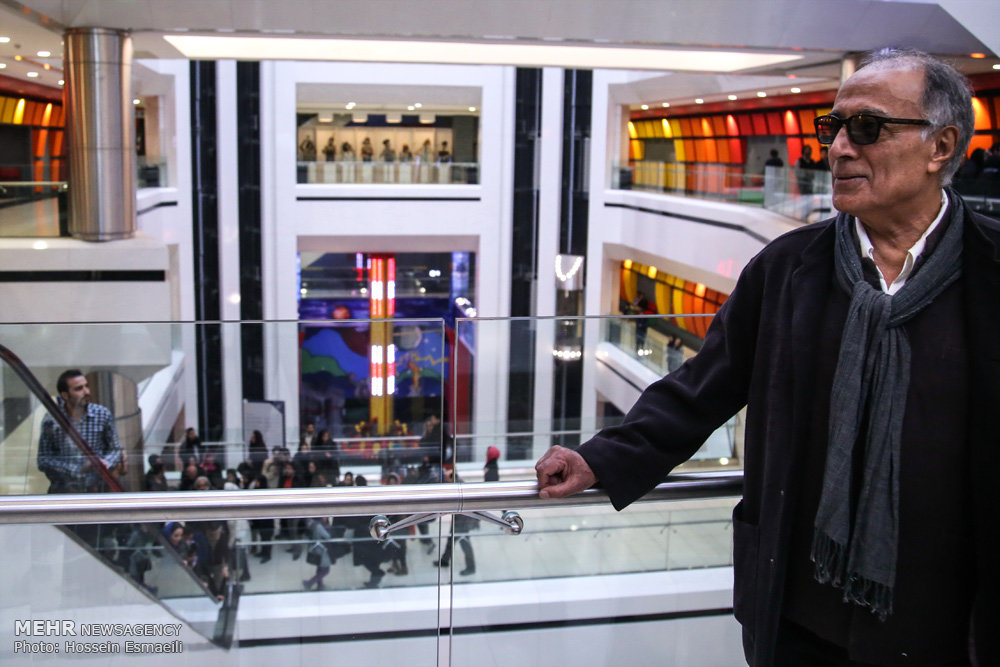
Abbas Kiarostami (1940–2016) had made films since 1970 at the Institute for the Intellectual Development of Children and Young Adults (Kanun). Where Is the Friend’s House? (1987), about a boy trying to return a schoolmate’s notebook, began his Koker trilogy; its sequel And Life Goes On (1992) follows a director searching for his young actors after the 1990 earthquake. Close-Up (1990) restaged the true story of a man who impersonated the director Mohsen Makhmalbaf. In 1997 Taste of Cherry, about a man seeking someone to bury him after his suicide, shared the Palme d’Or at Cannes; it had at first been held back by Iranian censors.
Mohsen Makhmalbaf, a former Islamist militant jailed under the Shah, turned from religious films to searching social dramas such as The Cyclist (1987) and the lyrical Gabbeh (1996). Bahram Beyzai’s Bashu, the Little Stranger (made in 1986), about a boy from the war-torn south taken in by a woman in Gilan, is often named the finest Iranian film of the decade. Majid Majidi’s Children of Heaven (1997), about a brother and sister sharing one pair of shoes, became the first Iranian film nominated for an Oscar.
Women directors and the reform years
The reform era of President Khatami (1997–2005) brought a looser climate. Rakhshan Bani-Etemad, sometimes called the first lady of Iranian cinema, made The May Lady (1998) and Under the Skin of the City (2001); Tahmineh Milani’s Two Women (1999) addressed the limits placed on educated women, and Samira Makhmalbaf made The Apple at 17. Jafar Panahi, a former assistant to Kiarostami, won the Caméra d’Or at Cannes for The White Balloon (1995) and the Golden Lion at Venice for The Circle (2000), a portrait of women in Tehran that was banned at home. More context is in Khatami and the reform era.
Farhadi and international success
Asghar Farhadi’s tightly plotted family dramas brought Iranian cinema its widest audience. About Elly (2009) won the Silver Bear in Berlin; A Separation (2011), about a couple divorcing and a dispute with their housekeeper, won the Golden Bear and in 2012 the first Oscar for an Iranian film. The Salesman (2016) won a second Oscar in 2017; Farhadi stayed away from the ceremony in protest at the US travel ban on Iranians. Domestic audiences, meanwhile, filled cinemas for comedies, social melodramas and “Sacred Defence” films about the Iran–Iraq War, such as those of Ebrahim Hatamikia.
Bans, prison and exile
After the 2009 election protests, Panahi was arrested and in 2010 sentenced to six years in prison and a twenty-year ban on making films. He kept working in secret: This Is Not a Film (2011) was smuggled out of Iran, reportedly on a USB drive hidden in a cake, and Taxi (2015) won the Golden Bear. Mohammad Rasoulof won the Golden Bear for There Is No Evil (2020), about the death penalty; in 2024 he was sentenced to eight years in prison and flogging, fled to Germany, and presented The Seed of the Sacred Fig at Cannes, where it won a special jury prize. Panahi was jailed again in 2022 and released in 2023 after a hunger strike; his It Was Just an Accident, about former prisoners who think they have found their torturer, won the Palme d’Or in May 2025.
Actors have faced pressure too. Golshifteh Farahani left Iran after appearing unveiled in a Hollywood film in 2008; Zar Amir Ebrahimi, who had fled after a private video was leaked, won best actress at Cannes in 2022; and Taraneh Alidoosti, star of The Salesman, was detained in December 2022 after supporting the Woman, Life, Freedom protests. Inside Iran, streaming platforms and home-video series have grown alongside cinemas, and many films are now made abroad by Iranian directors in exile.
Persian words from this page
| سینما | sinamâ | cinema |
| کارگردان | kârgardân | film director |
| بازیگر | bâzigar | actor, actress |
| جشنواره | jashnvâre | festival |
| طعم گیلاس | ta’m-e gilâs | Taste of Cherry |
| جدایی نادر از سیمین | jodâi-ye Nâder az Simin | A Separation (“Nader and Simin’s separation”) |
Sources and further reading
- Hamid Naficy, A Social History of Iranian Cinema, vols. 3–4 (Duke University Press, 2012).
- Hamid Dabashi, Close Up: Iranian Cinema, Past, Present and Future (Verso, 2001).
- Richard Tapper (ed.), The New Iranian Cinema: Politics, Representation and Identity (I.B. Tauris, 2002).
- Negar Mottahedeh, Displaced Allegories: Post-Revolutionary Iranian Cinema (Duke University Press, 2008).
- Festival de Cannes and Berlinale official award archives.
Want to learn Persian? Get the free Starter Pack
Get the 14-page printable Starter Pack (all 32 letters, a 7-day reading plan, 100 core words and 20 survival phrases) and a short 5-email course. Free.
More in The Islamic Revolution and the Islamic Republic (1979–present)
- Causes of the 1979 Revolution
- Khomeini’s Return and the Fall of the Monarchy
- Ruhollah Khomeini
- The 1979 Referendum and the New Constitution
- The Iran Hostage Crisis (1979–1981)
- Power Struggles after the Revolution
- The Cultural Revolution and University Closures
- The Iran–Iraq War: Causes and Iraqi Invasion
- Khorramshahr: Fall and Liberation
- The Iran–Iraq War, 1982–1986
- The Basij and Child Soldiers in the Iran–Iraq War
- Chemical Weapons in the Iran–Iraq War
- The Tanker War and Iran Air Flight 655
- The Iran–Contra Affair
- The End of the Iran–Iraq War (1988)
- The 1988 Executions of Political Prisoners
- The Death of Khomeini and the Succession of Khamenei (1989)
- Ali Khamenei
- Rafsanjani and Post-War Reconstruction (1989–1997)
- Khatami and the Reform Era (1997–2005)
- The 1999 Student Protests (18 Tir)
- The Ahmadinejad Presidency (2005–2013)
- The 2009 Election and the Green Movement
- Iran’s Nuclear Program
- Sanctions on Iran
- Rouhani and the Nuclear Deal (JCPOA)
- The Protests of 2017–2018 and November 2019
- The Killing of Soleimani and Flight 752 (January 2020)
- Iran and the COVID-19 Pandemic
- The Raisi Presidency and His Death (2021–2024)
- The 2022 Mahsa Amini Protests: “Woman, Life, Freedom”
- Iran and Israel: From Allies to Open Conflict
- The Pezeshkian Presidency
- The Twelve-Day War of June 2025
- The Protests of Late 2025 and January 2026
- The 2026 War with the United States and Israel
- The Killing of Ali Khamenei (28 February 2026)
- Mojtaba Khamenei and the 2026 Succession
- The Iranian Diaspora
- Iran and Hezbollah
- Major Earthquakes in Modern Iran
- Iranian Cinema after 1979