Between about 130 and 124 BCE the young Parthian Empire came close to collapse. Phraates II defeated the last great Seleucid invasion in 129 BCE, but he and his successor Artabanus I were both killed fighting nomads from Central Asia, the Saka and the Tochari, who had been driven south by upheavals on the steppe. Their invasions reshaped eastern Iran and gave the region of Sistan its name.
| Phraates II | Ruled c. 132 to c. 127 BCE; son of Mithridates I |
|---|---|
| Artabanus I | Ruled c. 127 to c. 124/123 BCE; uncle of Phraates II |
| Western enemy | Antiochus VII Sidetes, killed in Media 129 BCE |
| Eastern enemies | Saka (Scythians) and Tochari, displaced by the Yuezhi |
| Long-term result | Saka settlement in Drangiana, later called Sakastan (Sistan) |
| Persian names | Farhad (فرهاد), Ardavan (اردوان) |
A young king and a Seleucid counter-attack
When Mithridates I died around 132 BCE, his son Phraates II was probably still young. Babylonian documents of these years name a queen Rinnu, usually understood to be his mother, alongside him, which suggests a period of regency.
The new king soon faced Antiochus VII, who marched east in 130 BCE to win back Mesopotamia and Iran. The course of that campaign, and Antiochus’s death in Media in 129, are told on How the Seleucids Lost Iran. From the Parthian side, what matters is how Phraates won: he released the captive Seleucid king Demetrius II to make trouble in Syria, waited while Antiochus’s soldiers wore out their welcome in the cities of Media, and then struck when the army was dispersed in winter quarters.
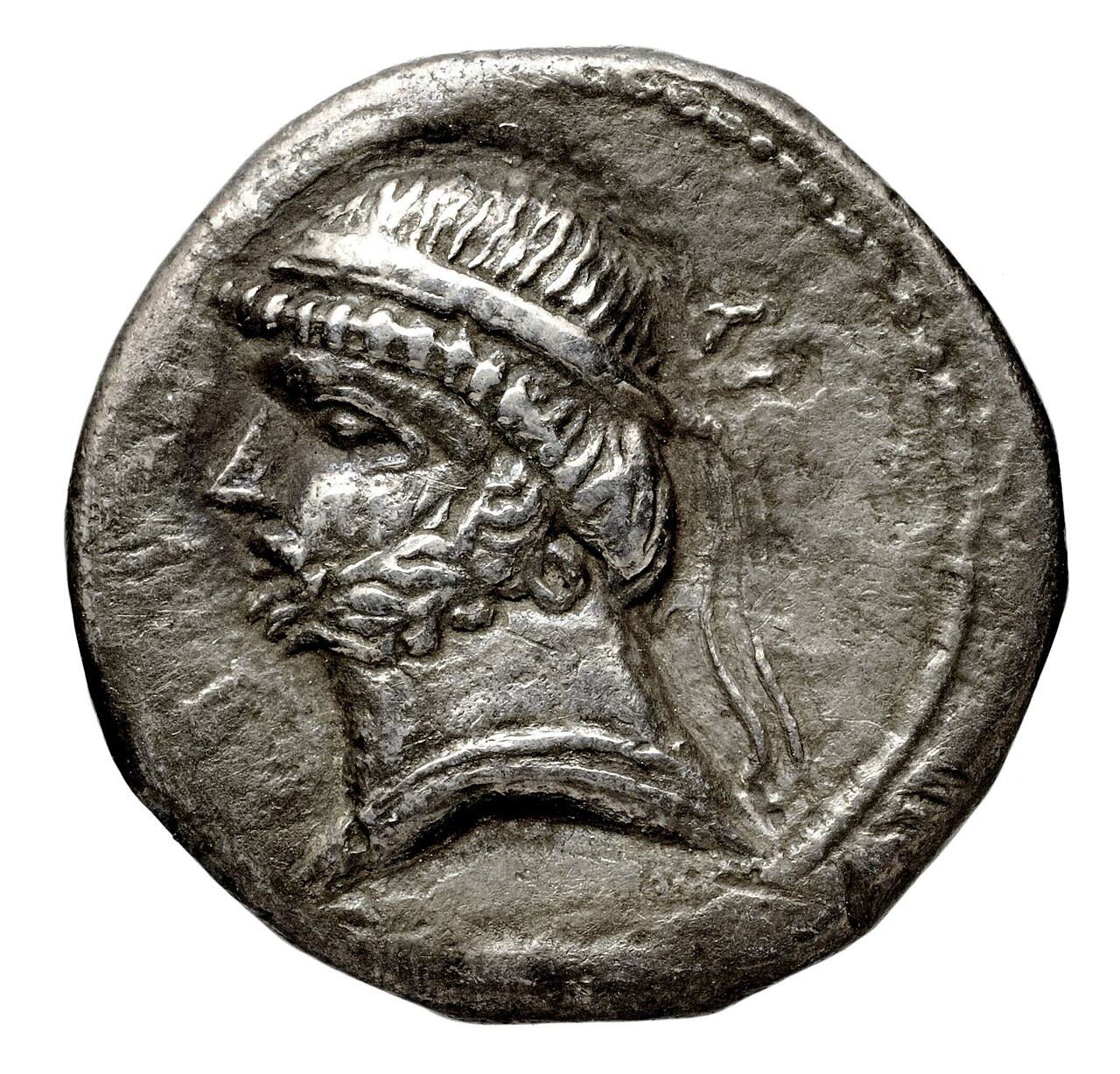

The nomads arrive
Phraates had made one serious mistake. Before the battle, according to Justin, he hired a force of Saka, whom Greek and Roman writers called Scythians, as mercenaries. They arrived after the fighting was over. Phraates refused to pay them for a war they had not fought, and the Saka began to plunder Parthian lands instead.
Why the steppe was moving
The trouble had begun far to the east. In the 2nd century BCE the Xiongnu, a powerful nomad confederation on the borders of China, drove the Yuezhi people out of their lands in what is now Gansu. The Yuezhi moved west and then south, and pushed the Saka ahead of them. By the 130s BCE the Yuezhi had reached the Oxus and the Greek kingdom of Bactria was falling apart. The Chinese envoy Zhang Qian, who visited the Yuezhi around 128 BCE, found them settled north of the Oxus and dominating Bactria (see the Parthians and the Silk Road).
The Parthian heartland in Khorasan and Margiana (the Merv oasis) lay directly in the path of the peoples displaced by this movement. Classical writers name several groups, including the Saka and the Tochari. Exactly how these peoples relate to one another and to the Yuezhi of the Chinese sources is still debated by historians.
The death of Phraates II
Phraates marched east against the invaders around 127 BCE. He took with him Greek soldiers captured from Antiochus’s army, and he left a favourite named Himerus in charge of Mesopotamia. Both decisions went wrong.
Justin says the Greek prisoners had been badly treated and saw their chance in the middle of the battle: they went over to the enemy, the Parthian army was destroyed, and Phraates was killed. In the west, Himerus ruled Babylonia so harshly that ancient writers remembered him as a tyrant, and Hyspaosines, the ruler of Characene at the head of the Persian Gulf, was able to seize Babylon for a time.
Artabanus I and the Tochari
The throne passed to Artabanus I, a son of Phriapatius and so an uncle of Phraates II. He was probably already middle-aged. Little is known of his short reign, except that the nomad war continued. According to Justin, Artabanus fought the Tochari and was wounded in the arm, and died of the wound soon afterwards, around 124 or 123 BCE.
Within a few years, then, two Parthian kings had died in battle against nomads, the eastern provinces had been ravaged, and part of Mesopotamia had fallen to a vassal ruler. The Seleucids had been defeated, but the Arsacid state now looked as fragile as its old rival.
Sakastan: the Saka settle in Iran
Not all the nomads went home. Saka groups moved south and settled in Drangiana, the basin of the Helmand river and Lake Hamun on the modern Iran and Afghanistan border. The land came to be called the country of the Saka: Sakastan, which became Sistan in Middle and New Persian. Some Saka also moved on into Arachosia and north-west India, where Indo-Scythian kings later ruled.
The next Parthian king, Mithridates II, restored Arsacid authority in the east, and Sakastan became part of the empire, probably governed through powerful local families. Many historians connect the great Suren family, whose most famous member defeated Crassus at Carrhae, with this region (see the great houses of Parthia). Later, Indo-Parthian kings ruled the region and lands further east (see the Indo-Parthians and Kushans).
Sistan went on to play a large role in Iranian tradition. In the Shahnameh it is the home of Rostam and his family. Some scholars have suggested that parts of the Rostam cycle reflect Saka heroic stories, but this remains a hypothesis.
Why this crisis matters
Historians see these years as a turning point for two reasons. First, they showed that the empire’s real danger was not only in the west. For the rest of its history, Parthia had to guard the steppe frontier in the north-east while facing Rome in the west, and kings often had to break off campaigns on one front because of trouble on the other. Second, the recovery under Mithridates II turned this vulnerable state into a lasting great power.
- c. 132 BCE Phraates II succeeds Mithridates I
- 130 BCE Antiochus VII invades Mesopotamia
- 129 BCE Antiochus VII killed in Media
- c. 128 BCE Zhang Qian finds the Yuezhi north of the Oxus
- c. 127 BCE Phraates II killed fighting the Saka; Hyspaosines takes Babylon
- c. 124/123 BCE Artabanus I dies of a wound received against the Tochari
Persian words from this page
| فرهاد | Farhâd | Phraates |
| اردوان | Ardavân | Artabanus |
| سکاها | Sakâhâ | the Saka |
| سیستان | Sistân | Sistan |
| مرو | Marv | Merv |
| رستم | Rostam | Rostam |
Sources and further reading
- Justin, Epitome of Pompeius Trogus, Books 38 and 42.
- Diodorus Siculus, Library of History, Book 34/35 (fragments).
- Sima Qian, Shiji, chapter 123 (the account of Zhang Qian).
- Encyclopaedia Iranica, “Arsacids ii. The Arsacid dynasty” and “Sistan”.
- A. D. H. Bivar, “The Political History of Iran under the Arsacids”, The Cambridge History of Iran, vol. 3(1), 1983.
Want to learn Persian? Get the free Starter Pack
Get the 14-page printable Starter Pack (all 32 letters, a 7-day reading plan, 100 core words and 20 survival phrases) and a short 5-email course. Free.
More in The Parthian Empire (247 BCE–224 CE)
- The Parni and Arsaces I
- Nisa: The First Parthian Capital
- Mithridates I and the Making of an Empire
- Phraates II, Artabanus I and the Saka Invasions
- Mithridates II the Great
- The Parthians and the Silk Road
- Parthian Cavalry: Cataphracts and the Parthian Shot
- Surena and the Battle of Carrhae (53 BCE)
- Orodes II and Prince Pacorus
- Mark Antony’s Parthian War
- Phraates IV and the Peace with Augustus
- Queen Musa of Parthia
- Artabanus II of Parthia
- Gotarzes II and Vardanes: A Royal Rivalry
- Vologases I and the War over Armenia
- Trajan’s Invasion of Parthia
- Osroes I and the Parthian Civil Wars
- Roman Campaigns of the 2nd Century: Lucius Verus and Septimius Severus
- The Last Parthian Kings: Vologases V, Vologases VI and Artabanus IV
- The Fall of the Parthian Empire
- Ctesiphon: Capital of Two Empires
- The Great Houses of Parthia
- Religion and Culture in Parthian Iran
- Parthian Art and Architecture
- Parthian Coins and What They Tell Us
- Hatra: The City that Resisted Rome
- The Parthian Language and Its Records
- The Indo-Parthians and Kushans
- The Parthian Legacy