Raw silk was Safavid Iran’s most valuable export in the seventeenth century. Grown mainly in Gilan and Mazandaran on the Caspian coast, it was sold to Europe for silver, first through Ottoman markets and then, after Shah Abbas I opened new routes in the 1610s and 1620s, by sea through the English and Dutch East India Companies and overland through Russia. The struggle to control that trade shaped Safavid diplomacy, warfare and finances.
| Main producing regions | Gilan, Mazandaran, Shirvan, Karabakh and Georgia |
|---|---|
| Main buyers | Ottoman, Venetian, English, Dutch and Russian markets |
| Royal export monopoly | 1619 until Abbas I’s death in 1629 |
| Sea route | Bandar Abbas, via the English (from 1616) and Dutch (from 1623) companies |
| Key middlemen | Armenian merchants of New Julfa |
| Payment | Mostly European and Ottoman silver coin |
A crop from the Caspian
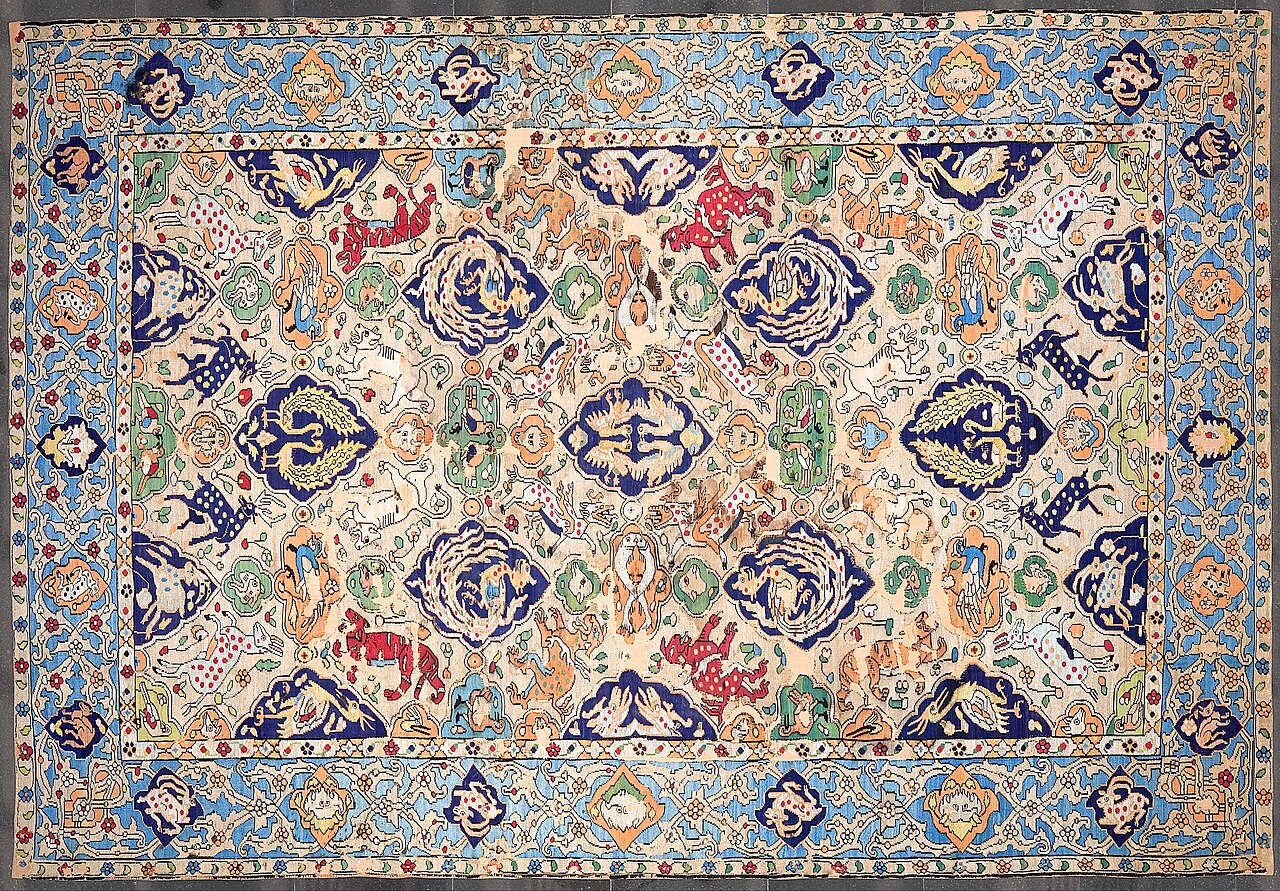
Silkworms need mulberry trees, warmth and damp air, and the green, rainy provinces between the Alborz mountains and the Caspian Sea supplied all three. Peasant families in Gilan raised the worms each spring, unwound the cocoons and sold the raw thread to local dealers and royal agents. Shirvan and Karabakh in the Caucasus, Georgia, and parts of Khorasan also produced silk, but Gilan’s was the most prized. Much was woven at home into the brocades and velvets of Kashan, Yazd and Isfahan, but the bulk was exported raw.
For centuries the main buyers had been the silk-weaving cities of the Ottoman Empire, above all Bursa, and the European merchants who bought at Aleppo and later Izmir. That meant Iran’s chief export passed through the lands of its chief enemy, and the Ottomans collected customs on it. The silk payments demanded in the peace treaties of 1612 and 1618, described in Shah Abbas retakes the west, show how central silk was to relations between the two empires.

Abbas looks for new routes
Shah Abbas I wanted both to deprive the Ottomans of customs revenue and to earn more silver for his treasury. From 1599 he sent embassies to Europe, beginning with the mission of Hossein Ali Beg and the English adventurer Anthony Sherley, and later employing Anthony’s brother Robert. Their proposals mixed an anti-Ottoman alliance with offers of silk. The European courts were polite but did little; the story of the two brothers is told in the Sherley brothers in Persia.
The real openings came from the new trading companies. The English East India Company’s first ship reached Jask in 1616 and the Company soon received a royal decree to trade. The removal of the Portuguese from Hormuz in 1622, told in the capture of Hormuz, cleared the sea route, and Bandar Abbas became the export port. In 1623 the Dutch East India Company (VOC) arrived, and within a few years it was the largest European buyer.
The royal monopoly, 1619–1629
In 1619 Abbas declared the export of silk a royal monopoly. Growers had to sell to the crown at fixed prices, and the crown sold to exporters. According to the historian Rudi Matthee, whose book The Politics of Trade in Safavid Iran is the standard study, the decision came at a moment when Abbas needed cash and wanted to steer silk away from the Ottoman routes. The Armenian merchants of New Julfa, who outbid the English for the right to carry the shah’s silk, became the crown’s main partners; their story is on the New Julfa page.
The monopoly did not outlive its founder. When Abbas died in 1629 a revolt broke out in Gilan under a pretender, Gharib Shah, partly over the burdens of the silk system, and the new shah’s government let the monopoly lapse. From then on the crown sold its own silk to the companies under contract, while private merchants traded the rest.
Silk for silver
Contracts and quarrels
The VOC and the English company both signed agreements obliging them to buy fixed quantities of royal silk at set prices, often higher than the market. In return they gained freedom from customs or reduced tolls. Their records are full of complaints: the silk was too coarse, too expensive, delivered late. The Dutch even blockaded Bandar Abbas in 1645 to force better terms. For the shah, the contracts were a way of turning a harvest into silver.
Where the silver went
Iran had no silver mines of its own worth the name, and the coin brought in for silk, much of it Spanish-American silver that reached Iran through Europe and the Ottoman lands, was essential to the Safavid economy. Yet much of it flowed straight out again, east to India, to pay for cotton cloth, indigo and spices. Matthee and others describe Safavid Iran as a corridor for silver between Europe and India. Shortages of coin were a recurring problem for later Safavid governments.
The northern route
A third route ran north through Russia. The embassy sent by Duke Frederick III of Holstein-Gottorp in 1636–1638, whose secretary Adam Olearius wrote a famous account of Iran, hoped to bring silk up the Volga to the Baltic. It failed, but in 1667 the New Julfa merchants made a trade agreement with Tsar Alexis that did open the Volga route for Armenian silk caravans.
Decline of the trade
By the late seventeenth century Iranian silk faced cheaper competition from Bengal, China and Italy. The VOC turned increasingly to Bengal silk, and the English company bought less. European travellers such as Jean Chardin, who lived in Isfahan in the 1660s and 1670s, still described silk as the basis of Iran’s foreign trade, and their reports are discussed in European travellers in Safavid Persia. But volumes fell, and the collapse of order after 1722 broke the system. Gilan itself was occupied by Russian troops in 1722–1732, during Peter the Great’s Persian campaign, precisely because of its silk.
How historians read it
Older accounts saw Abbas as a far-sighted mercantilist who broke the Ottoman stranglehold. Recent work is more cautious. Matthee stresses that the shah thought mainly in terms of revenue for the royal treasury rather than economic growth, and that the overland routes through Ottoman territory never stopped carrying a large share of the silk. Ina Baghdiantz McCabe and Sebouh Aslanian emphasise that Armenian merchants, not the European companies, handled most of the trade. What is agreed is that silk linked Safavid Iran to the wider world economy more tightly than anything else it produced.
Persian words from this page
| ابریشم | abrisham | silk |
| گیلان | Gilân | Gilan |
| نقره | noqre | silver |
| تجارت | tejârat | trade |
| کاروان | kârvân | caravan |
| توت | tut | mulberry |
Sources and further reading
- Rudi Matthee, The Politics of Trade in Safavid Iran: Silk for Silver, 1600–1730, Cambridge University Press, 1999.
- Niels Steensgaard, The Asian Trade Revolution of the Seventeenth Century, University of Chicago Press, 1974.
- Ina Baghdiantz McCabe, The Shah’s Silk for Europe’s Silver, Scholars Press, 1999.
- Adam Olearius, The Voyages and Travels of the Ambassadors sent by Frederick, Duke of Holstein, to the Great Duke of Muscovy and the King of Persia (English translation 1662).
- Encyclopaedia Iranica, “Silk ii. Trade and production of silk and its use in crafts”.
Want to learn Persian? Get the free Starter Pack
Get the 14-page printable Starter Pack (all 32 letters, a 7-day reading plan, 100 core words and 20 survival phrases) and a short 5-email course. Free.
More in The Safavid Empire (1501–1736)
- Shah Ismail I
- The Qizilbash
- Twelver Shi’ism Becomes Iran’s State Religion
- The Battle of Marv and the Uzbeks
- The Battle of Chaldiran (1514)
- Shah Tahmasp I
- The Ottoman–Safavid War and the Peace of Amasya
- Humayun’s Exile in Persia
- Qazvin: The Second Safavid Capital
- Ismail II and Mohammad Khodabanda
- Shah Abbas the Great
- Shah Abbas’s Military Reforms and the Ghulams
- The Sherley Brothers in Persia
- Isfahan: “Half the World”
- The Building of Naqsh-e Jahan Square
- Shah Abbas Retakes the West: The Ottoman Wars of 1603–1618
- The Capture of Hormuz from the Portuguese (1622)
- New Julfa and the Armenian Merchants
- The Safavid Silk Trade and Europe
- Sheikh Baha’i
- Reza Abbasi
- Shah Safi and the Treaty of Zuhab
- Shah Abbas II
- The Fight for Kandahar
- Chehel Sotoun Palace and Its War Paintings
- Shah Suleiman
- European Travellers in Safavid Persia
- Shah Soltan Hoseyn
- Safavid Art: Carpets, Miniatures and Tiles
- Mulla Sadra and the School of Isfahan
- The Afghan Revolt and the Battle of Gulnabad
- The Siege and Fall of Isfahan (1722)
- Peter the Great’s Persian Campaign (1722–1723)
- Tahmasp II and Hotaki Rule (1722–1732)
- Women of the Safavid Court
- The Safavid Legacy