Women of the Safavid royal family held real power at several moments between 1501 and 1722: as queen mothers who guarded young shahs, as princesses who made and unmade kings, and as wealthy patrons of shrines, schools and caravanserais. The best known are Tajlu Khanum, mother of Tahmasp I, his daughter Pari Khan Khanum and the queen Mahd-e Olya, who all but ruled Iran in 1577–1579.
| Key figures | Tajlu Khanum (d. 1540), Pari Khan Khanum (1548–1578), Mahd-e Olya (Khayr al-Nesa Begum, d. 1579), Dilaram Khanum (d. c. 1647), Maryam Begum (late 17th century) |
|---|---|
| Sources of power | Motherhood of heirs, control of the harem, wealth in land and endowments, links to tribes and families |
| Main period of open power | 1524–1579 |
| Later pattern | Influence inside the harem as princes were raised there, from the 1620s |
What the sources let us see
Safavid chronicles were written by men at court and mention women mostly when they affected politics. Their names are often given only as titles, such as “Begum” or “Khanum”, and few portraits can be linked to a real woman. Much of what historians know comes from endowment deeds, building inscriptions and the reports of European visitors, who rarely entered the harem. The picture is therefore patchy, and it is fullest for the sixteenth century, when royal women acted openly.
Tajlu Khanum: the first queen mother
Tajlu Khanum came from the Mawsillu, a Turkmen tribe of the Aq Qoyunlu confederation, and was the principal wife of Shah Ismail I and mother of his heir, Tahmasp. A story told differently by Ottoman and Safavid writers says she was caught up in the rout at Chaldiran in 1514; some historians think it was another wife who was captured.
When Ismail died in 1524, she helped place the ten-year-old Tahmasp on the throne and became the channel between the boy shah and the feuding Qizilbash chiefs (see the Qizilbash). She paid for work on the shrine of Fatemeh Ma’sumeh at Qom. But her influence came to an end when Tahmasp suspected her of favouring his brother Bahram Mirza. In 1540 he sent her to Shiraz and took her estates, and she died there the same year.
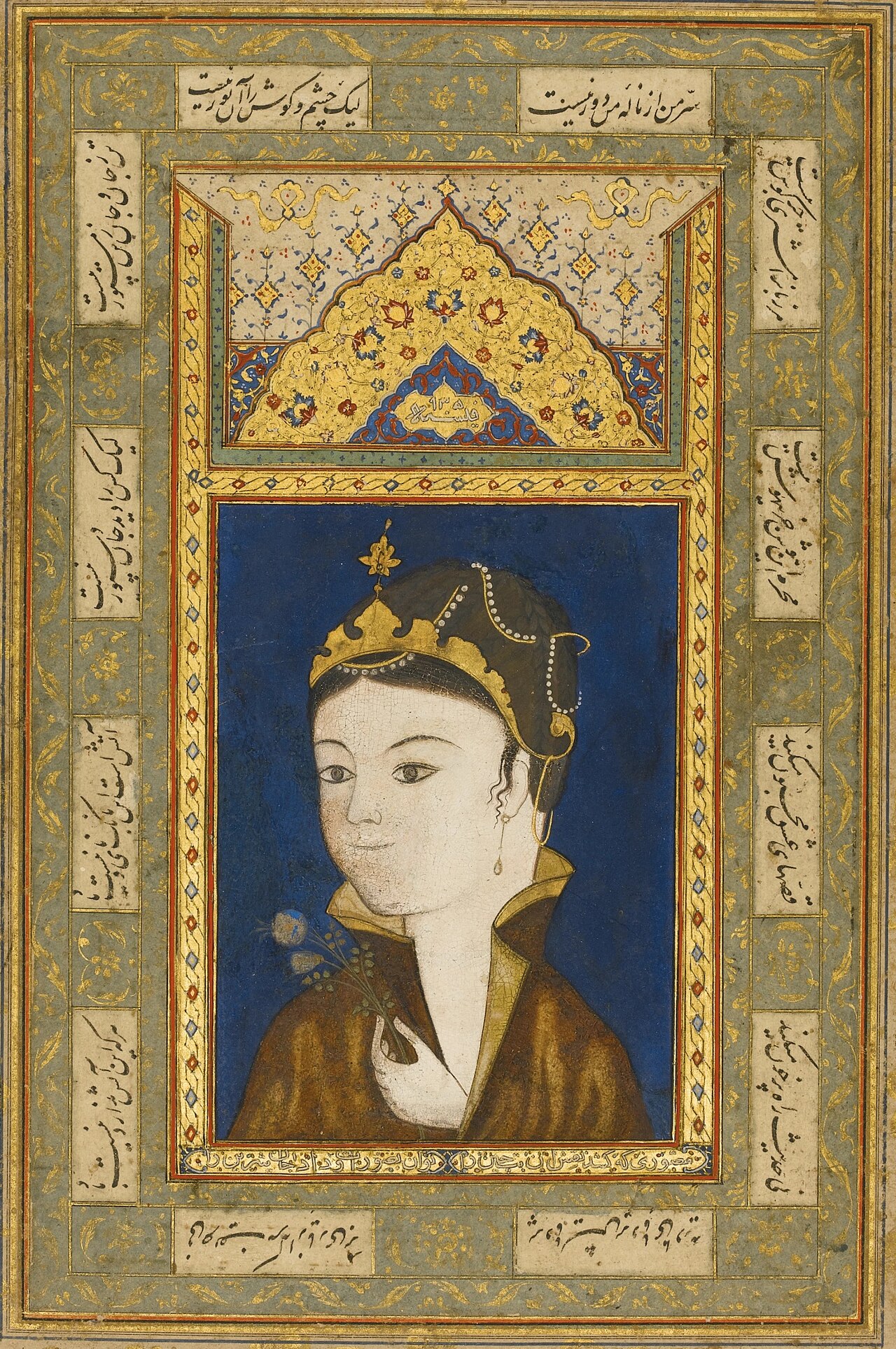

Pari Khan Khanum: the kingmaker
Pari Khan Khanum, born in 1548, was a daughter of Tahmasp I by a Circassian mother. She was educated, wrote poetry, was a patron of poets and was close to her father in his last years. Chroniclers describe her as one of the most capable figures at court.
When Tahmasp died in May 1576, she backed her brother Ismail, then held prisoner in a fortress, against another brother, Haydar Mirza, who had support in the palace. Haydar was killed, and Ismail II came to the throne largely through her efforts. Ismail soon distrusted her and cut back her household. After his sudden death in late 1577 she again took charge of the government for a short time, but the new shah, the half-blind Mohammad Khodabanda, came with his own ambitious wife. Early in 1578 Pari Khan Khanum was killed on the new rulers’ orders. These reigns are described in Ismail II and Mohammad Khodabanda.
Mahd-e Olya: a queen in government
Khayr al-Nesa Begum, known by her title Mahd-e Olya, “the exalted cradle”, came from the family of Mar’ashi sayyids who had ruled in Mazandaran. As wife of Mohammad Khodabanda and mother of the crown prince Hamza Mirza, she directed government in 1578–1579, appointed officials and took part in war councils during the Ottoman war. Her attempts to curb the Qizilbash leaders and to pursue a feud with Mazandaran rivals turned them against her, and in July 1579 a group of Qizilbash chiefs broke into the harem and killed her. She was the last Safavid woman to govern openly.
The harem and the later dynasty
From the reign of Abbas I, princes were no longer sent out as provincial governors but kept in the palace, partly to prevent revolts. Heirs grew up in the harem among women and eunuchs, and when they came to the throne, their mothers and grandmothers had direct access to them. Historians see this as one reason why politics moved behind the palace walls in the seventeenth century.
Dilaram Khanum, a Georgian woman who was mother of Shah Safi and grandmother of Abbas II, became the leading figure of the harem in the 1630s and 1640s. She supported the grand vizier Saru Taqi during Abbas II’s minority. She was also a builder: two schools and a caravanserai in Isfahan were linked to her, and the name “Jaddeh”, grandmother, survives in Isfahan from her foundations.
At the end of the century Maryam Begum, a daughter of Shah Safi and great-aunt of Shah Soltan Hoseyn, was one of the most influential voices at the court of the last shah in Isfahan, and a madrasa in Isfahan bears her name. Her role is part of the story of Shah Soltan Hoseyn.
Wealth and patronage
Royal women owned land, shops and villages, and they used that wealth for pious endowments (vaqf): mosques, schools, shrines, bridges and caravanserais. These gifts were public acts that gave their founders a lasting name and support among clerics and townspeople. Women of the court also gave alms and sponsored the ceremonies of Moharram.
Beyond the palace
Ordinary women appear only in glimpses. Armenian women in New Julfa worked in households tied to the silk trade, and women across Iran spun and wove carpets and textiles. A satirical book from the end of the Safavid period, Aqâ’ed al-nesâ, also called Kolsum Naneh and attributed to the scholar Aqa Jamal Khwansari, mocks the customs and beliefs of Isfahan’s women. Historians such as Kathryn Babayan read it, against its intention, as evidence of a lively women’s culture of gatherings, rituals and shrine visits. The wider story across all periods is told in women in Iranian history.
Persian words from this page
| پریخان خانم | Parikhân Khânom | Pari Khan Khanum |
| مهد علیا | Mahd-e Olyâ | “the exalted cradle”, queen mother |
| حرم | haram | harem, women’s quarters |
| بیگم | beygom | lady, princess |
| وقف | vaqf | pious endowment |
| جده | jaddeh | grandmother |
Sources and further reading
- Shohreh Gholsorkhi, “Pari Khan Khanum: A Masterful Safavid Princess”, Iranian Studies 28 (1995).
- Maria Szuppe, “La participation des femmes de la famille royale à l’exercice du pouvoir en Iran safavide au XVIe siècle”, Studia Iranica 23–24 (1994–1995).
- Kathryn Babayan, “The ‘Aqā’id al-Nisā’: A Glimpse at Safavid Women in Local Isfahani Culture”, in Gavin Hambly (ed.), Women in the Medieval Islamic World (New York, 1998).
- Eskandar Beg Monshi, History of Shah Abbas the Great, trans. Roger Savory (Boulder, 1978).
- Rudi Matthee, Persia in Crisis (London, 2012), on the harem and the later court.
Want to learn Persian? Get the free Starter Pack
Get the 14-page printable Starter Pack (all 32 letters, a 7-day reading plan, 100 core words and 20 survival phrases) and a short 5-email course. Free.
More in The Safavid Empire (1501–1736)
- Shah Ismail I
- The Qizilbash
- Twelver Shi’ism Becomes Iran’s State Religion
- The Battle of Marv and the Uzbeks
- The Battle of Chaldiran (1514)
- Shah Tahmasp I
- The Ottoman–Safavid War and the Peace of Amasya
- Humayun’s Exile in Persia
- Qazvin: The Second Safavid Capital
- Ismail II and Mohammad Khodabanda
- Shah Abbas the Great
- Shah Abbas’s Military Reforms and the Ghulams
- The Sherley Brothers in Persia
- Isfahan: “Half the World”
- The Building of Naqsh-e Jahan Square
- Shah Abbas Retakes the West: The Ottoman Wars of 1603–1618
- The Capture of Hormuz from the Portuguese (1622)
- New Julfa and the Armenian Merchants
- The Safavid Silk Trade and Europe
- Sheikh Baha’i
- Reza Abbasi
- Shah Safi and the Treaty of Zuhab
- Shah Abbas II
- The Fight for Kandahar
- Chehel Sotoun Palace and Its War Paintings
- Shah Suleiman
- European Travellers in Safavid Persia
- Shah Soltan Hoseyn
- Safavid Art: Carpets, Miniatures and Tiles
- Mulla Sadra and the School of Isfahan
- The Afghan Revolt and the Battle of Gulnabad
- The Siege and Fall of Isfahan (1722)
- Peter the Great’s Persian Campaign (1722–1723)
- Tahmasp II and Hotaki Rule (1722–1732)
- Women of the Safavid Court
- The Safavid Legacy