The Sherley brothers were English adventurers who reached the court of Shah Abbas I in 1598 and spent the next three decades trying to build an alliance between Safavid Iran and Christian Europe against the Ottomans. Anthony Sherley’s embassy of 1599 ended in quarrels, while his younger brother Robert served the shah for almost thirty years as soldier and ambassador and died in Iran in 1628.
| The brothers | Thomas (1564–c. 1634), Anthony (1565–c. 1636), Robert (c. 1581–1628) |
|---|---|
| In Iran | Anthony 1598–1599; Robert 1598–1608, 1615, 1627–1628 |
| Served | Shah Abbas I |
| Purpose | An anti-Ottoman alliance and the diversion of the silk trade away from Ottoman routes |
| Main accounts | Anthony Sherley, His Relation of His Travels into Persia (1613); William Parry (1601); Don Juan of Persia (1604) |
A family of gentleman adventurers
The Sherleys (the name is also spelled Shirley) were sons of Sir Thomas Sherley of Wiston in Sussex, a courtier with large debts. All three brothers looked abroad for fortune. Anthony had fought in the Netherlands and France and led a privateering voyage to the Caribbean. In 1598, after an expedition to Italy came to nothing, he set off from Venice for Iran with his brother Robert, then about seventeen, and a band of followers. The middle brother Thomas went privateering in the Mediterranean, was captured by the Ottomans in 1603 and spent three years in prison in Constantinople. He never reached Iran.
Anthony and Robert arrived at Qazvin in December 1598. Abbas, returning from a campaign against the Uzbeks, received them warmly. He was already reshaping his army, and the question of how much the brothers contributed to that is discussed in Shah Abbas’s military reforms. Modern historians, following Roger Savory, think their military role was small. Their real work was diplomatic, and it is that story this page follows.
Anthony’s embassy (1599–1601)
In 1599 Abbas sent Anthony to Europe with a Persian envoy, Hosayn Ali Beg Bayat, carrying letters to the Pope, the Holy Roman Emperor and other Christian rulers. The party travelled through Russia, where it spent months in Moscow, and then to Prague and Rome. On the way Anthony and Hosayn Ali Beg fell out bitterly over precedence and over the gifts entrusted to them. By the time they reached Rome in 1601 the two men were not on speaking terms.
The mission achieved little. Anthony did not go back to Iran. He drifted between the courts of Prague, Venice, Spain and Naples, offering his services and his schemes to anyone who would listen, and died in Spain in poverty around 1636. One of Hosayn Ali Beg’s secretaries, Uruch Beg, converted to Catholicism in Spain and, as Don Juan of Persia, published an account of Iran and the journey in 1604.

Robert, the shah’s ambassador
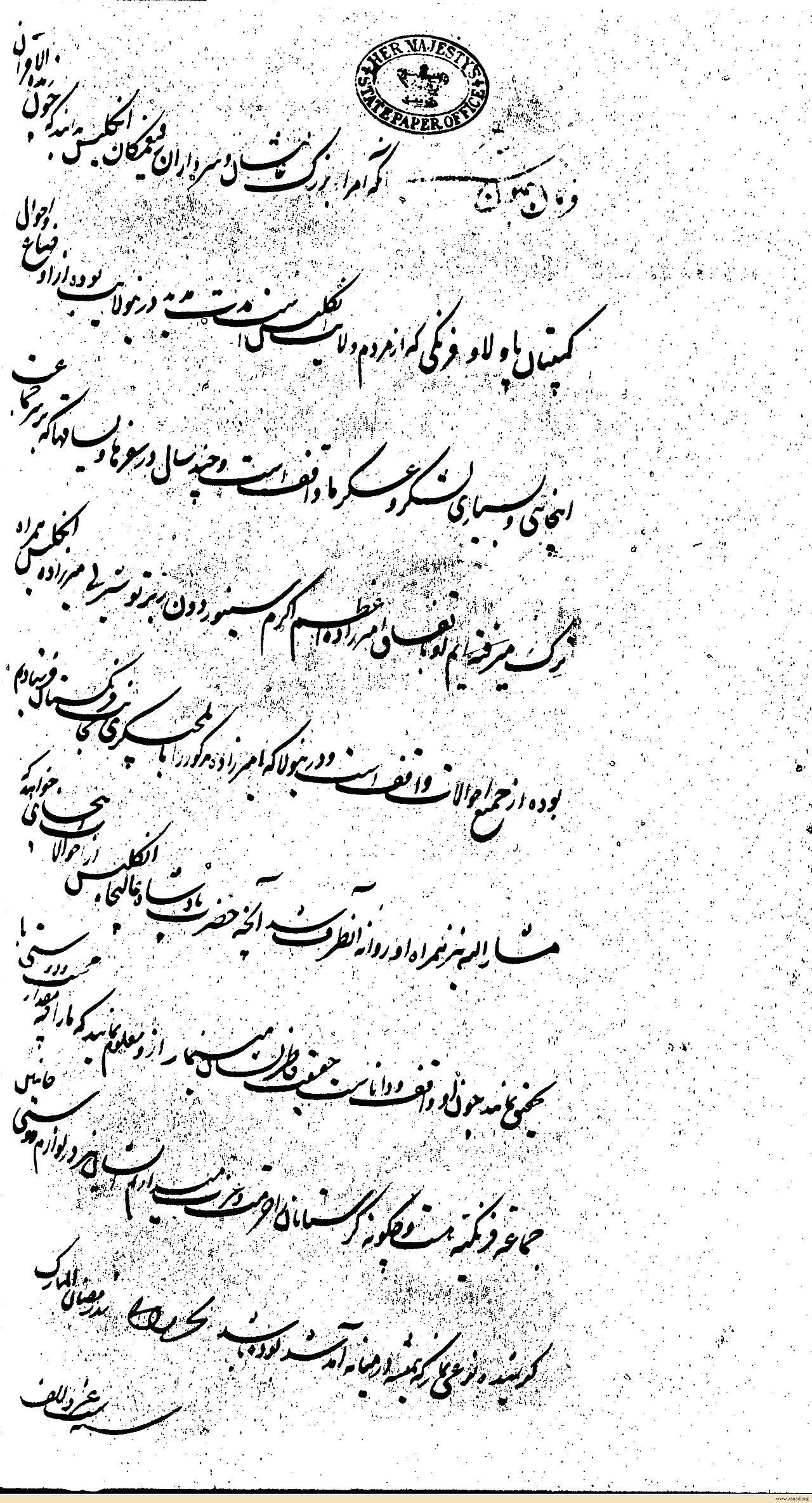
Robert stayed in Iran as a hostage for his brother’s good faith, and for several years he served in Abbas’s wars against the Ottomans. He married a Circassian noblewoman connected to the court, Sampsonia, who took the name Teresia at her Catholic baptism. In 1608 Abbas sent him to Europe as his own ambassador.
Robert’s first embassy lasted until 1613. He visited Kraków, Prague, where the Emperor Rudolf II made him a count palatine, Rome, where Pope Paul V also gave him the title of count, Madrid and finally England, which he reached in 1611. He wore Persian dress and a turban at European courts, which caused a sensation. His aims were an alliance against the Ottomans and a deal to send Iranian silk to Europe by sea instead of through Ottoman territory, a plan that ties into the Safavid silk trade. Spain, then ruling Portugal and its Persian Gulf base at Hormuz, was suspicious; the English East India Company was cautious.
The second embassy and the Naqd Ali Beg affair
After a short return to Iran in 1615, Robert went back to Europe and spent another twelve years at the courts of Spain, Rome and England. In Rome in 1622 the young Anthony van Dyck painted Robert and Teresia in Persian costume, and portraits of the couple by van Dyck hang at Petworth House in Sussex.
His standing collapsed in London in 1626. Abbas had sent a second envoy, Naqd Ali Beg, directly to England, and when the two men met, Naqd Ali Beg denounced Robert as an impostor, tore up his credentials and struck him. Charles I decided to send both men back to Iran with an English ambassador, Sir Dodmore Cotton, to find out the truth. Naqd Ali Beg died on the voyage, reportedly by his own hand. Robert reached the court in 1628, but Abbas, then old and suspicious, received him coldly. Robert died at Qazvin in July 1628, aged about forty-seven. Cotton died a few days later. The journey was recorded by Thomas Herbert, who wrote one of the best English accounts of Safavid Iran.
Teresia left Iran after her husband’s death and settled in Rome, where she lived until 1668. She had Robert’s remains brought to Rome and buried in the church of Santa Maria della Scala, where she was later buried beside him.
Fact and legend
The brothers wrote about themselves, and so did their followers. In 1607 a London play, The Travels of the Three English Brothers, turned them into heroes, and for three centuries English writers credited them with modernising the Persian army. Persian sources say little about them. The modern view sees two talented self-promoters who were useful to Abbas as messengers to Europe at a time when he had few other channels, and whose missions produced letters and ceremonies rather than treaties. The European side of Safavid diplomacy and travel continues in European travellers in Safavid Persia, and the shah who employed them is the subject of Shah Abbas the Great.
Persian words from this page
| سفیر | safir | ambassador |
| فرمان | farmân | royal decree |
| شاه عباس | Shâh Abbâs | Shah Abbas |
| قزوین | Qazvin | Qazvin |
| ابریشم | abrisham | silk |
Sources and further reading
- Anthony Sherley, Sir Antony Sherley His Relation of His Travels into Persia (London, 1613).
- Don Juan of Persia (Uruch Beg), Relaciones (Valladolid, 1604); English translation by Guy Le Strange (1926).
- Roger Savory, “The Sherley Myth”, Iran 5 (1967).
- Encyclopaedia Britannica, “Robert Sherley”.
- D. W. Davies, Elizabethans Errant: The Strange Fortunes of Sir Thomas Sherley and His Three Sons (Ithaca, 1967).
- Sanjay Subrahmanyam, Three Ways to Be Alien: Travails and Encounters in the Early Modern World (Waltham, MA, 2011), on Robert Sherley.
Want to learn Persian? Get the free Starter Pack
Get the 14-page printable Starter Pack (all 32 letters, a 7-day reading plan, 100 core words and 20 survival phrases) and a short 5-email course. Free.
More in The Safavid Empire (1501–1736)
- Shah Ismail I
- The Qizilbash
- Twelver Shi’ism Becomes Iran’s State Religion
- The Battle of Marv and the Uzbeks
- The Battle of Chaldiran (1514)
- Shah Tahmasp I
- The Ottoman–Safavid War and the Peace of Amasya
- Humayun’s Exile in Persia
- Qazvin: The Second Safavid Capital
- Ismail II and Mohammad Khodabanda
- Shah Abbas the Great
- Shah Abbas’s Military Reforms and the Ghulams
- The Sherley Brothers in Persia
- Isfahan: “Half the World”
- The Building of Naqsh-e Jahan Square
- Shah Abbas Retakes the West: The Ottoman Wars of 1603–1618
- The Capture of Hormuz from the Portuguese (1622)
- New Julfa and the Armenian Merchants
- The Safavid Silk Trade and Europe
- Sheikh Baha’i
- Reza Abbasi
- Shah Safi and the Treaty of Zuhab
- Shah Abbas II
- The Fight for Kandahar
- Chehel Sotoun Palace and Its War Paintings
- Shah Suleiman
- European Travellers in Safavid Persia
- Shah Soltan Hoseyn
- Safavid Art: Carpets, Miniatures and Tiles
- Mulla Sadra and the School of Isfahan
- The Afghan Revolt and the Battle of Gulnabad
- The Siege and Fall of Isfahan (1722)
- Peter the Great’s Persian Campaign (1722–1723)
- Tahmasp II and Hotaki Rule (1722–1732)
- Women of the Safavid Court
- The Safavid Legacy