The Afghan revolt that destroyed the Safavid state began in Kandahar in 1709, when the Ghilzai chief Mir Ways Hotak killed the Safavid governor and took the city. In 1722 his son Mahmud marched across Iran with a small army and, on 8 March 1722 at Gulnabad, about 20 kilometres east of Isfahan, routed a Safavid army several times larger. The defeat opened the way to the siege of the capital.
| Revolt begins | April 1709, Kandahar |
|---|---|
| Battle | Gulnabad (Golunabad), east of Isfahan, 8 March 1722 |
| Afghan leader | Mahmud Hotak, son of Mir Ways |
| Safavid commanders | Grand vizier Mohammad Qoli Khan Shamlu; Rostam Khan; Ali Mardan Khan; Seyyed Abdollah, vali of Arabistan |
| Strength | Usually given as about 10,000–11,000 Afghans against 42,000–50,000 Safavid troops with 24 cannon; all figures are estimates |
| Result | Decisive Afghan victory; Isfahan besieged from March 1722 |
Kandahar and the Ghilzai
Kandahar, held by the Safavids since Abbas II took it from the Mughals in 1649 (see Shah Abbas II), was a frontier fortress among Pashtun tribes, chief among them the Ghilzai. They were Sunni Muslims, and the growing anti-Sunni mood at the court of Shah Soltan Hoseyn did nothing to win their loyalty.
In 1704 the shah made Gurgin Khan, a Georgian prince (George XI of Kartli) in Safavid service, governor of Kandahar, with a force of Georgian troops. His rule was harsh. The Ghilzai leader Mir Ways Hotak, who held the office of kalântar among his people, was sent to Isfahan under suspicion. According to the account of the Polish Jesuit Tadeusz Krusinski, written after the fall of Isfahan, Mir Ways used his time at court to study its weakness, and on a pilgrimage to Mecca obtained a religious opinion approving revolt against a Shi’i ruler. These details may have been embellished in the telling, but Mir Ways was allowed to return home.
The revolt of Mir Ways, 1709
In April 1709 Mir Ways and his followers attacked Gurgin Khan’s camp outside Kandahar, killed him and most of his retinue, and then took the city and massacred its Georgian garrison. Safavid armies sent to recover Kandahar failed. In 1711 a force under Gurgin Khan’s nephew Kay Khosrow besieged the city and was destroyed in the retreat; Kay Khosrow was killed.
Mir Ways ruled Kandahar until his death in 1715 without claiming the title of king. His brother, who succeeded him, considered making peace with Isfahan, and in 1717 Mir Ways’s son Mahmud killed him and took power. Around the same time the Abdali Afghans of Herat also rebelled and defeated a Safavid army, so that by 1720 the whole eastern frontier was out of Safavid control.
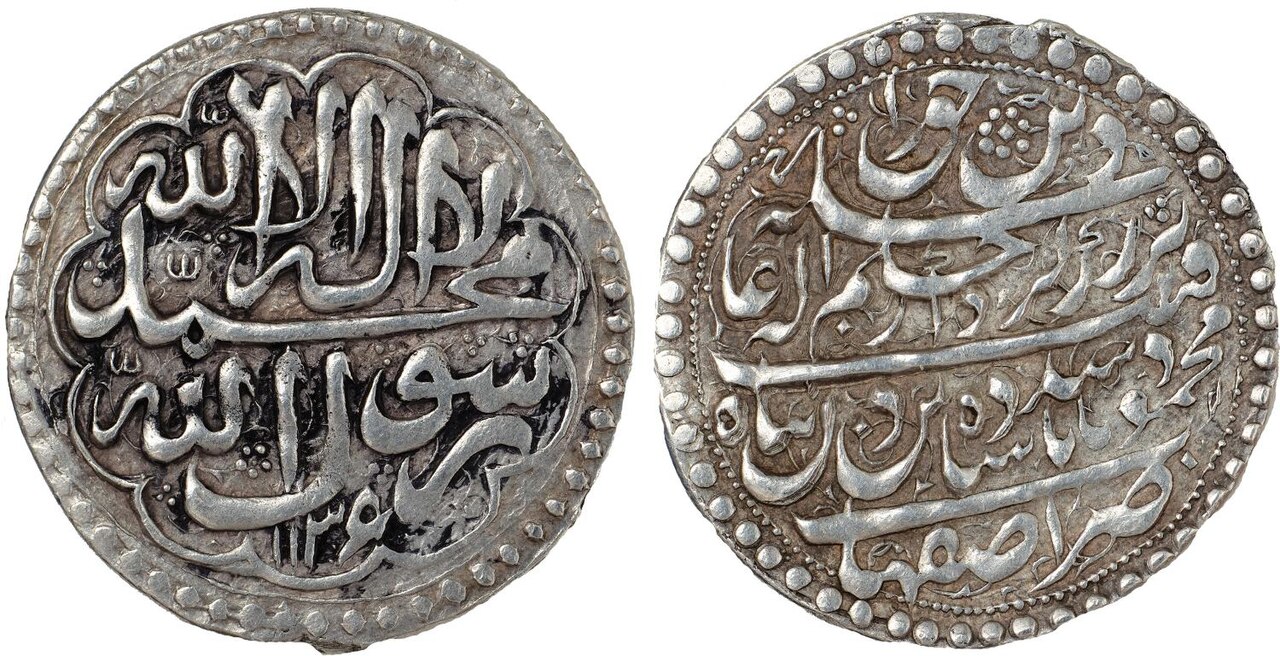

Mahmud’s march on Isfahan
Mahmud first raided south-eastern Iran in 1719–1720 and captured the city of Kerman before pulling back. At court, meanwhile, the grand vizier Fath Ali Khan Daghestani was blinded and dismissed in 1720 after a palace plot, and his relative Lotf Ali Khan, who had been assembling an army at Shiraz, was recalled. The one force that might have stopped the Afghans was broken up by court politics.
In 1721 Mahmud returned. He took Kerman again, though its citadel held out, failed to take Yazd, and then, instead of besieging every town on his way, marched straight across the desert towards the capital. His army was small, mostly cavalry, and far from home. Its best weapon was the zanburak, a light swivel gun mounted on the back of a camel and fired from the kneeling animal, which gave mobile firepower that the Safavid field guns could not match.
The battle of Gulnabad, 8 March 1722
The court in Isfahan was divided. The grand vizier, Mohammad Qoli Khan Shamlu, wanted to stay behind the city walls and let hunger and distance wear the Afghans down; others, including the Georgian prince Rostam Khan, commander of the shah’s ghulam regiments, insisted on fighting at once. The shah let the army march out. It drew up at Gulnabad, east of the city, with a large but poorly coordinated mass of troops and two dozen cannon, served in part by a French officer, Philippe Colombe.
The course of the battle
The reconstruction most often followed, by Laurence Lockhart, draws on Krusinski and on European and Armenian eyewitnesses in Isfahan:
- On the Safavid right, Rostam Khan and Ali Mardan Khan charged the Afghan left and drove it back.
- On the Safavid left, the Arab cavalry of the vali of Arabistan rode round the Afghan flank, but instead of attacking turned to plunder the Afghan baggage camp.
- In the centre, the grand vizier’s main body stood still.
- Mahmud regrouped his men and, using the camel guns, struck at Rostam Khan’s wing and surrounded it. Rostam’s horse stumbled in the mud; he fell and was killed.
- The Afghans then overran the Safavid guns and killed the gunners, Colombe among them. The rest of the Safavid army broke and fled to Isfahan.
Losses on the Safavid side are given as anything from 5,000 to 15,000 dead; Afghan losses are unknown but were much smaller. The numbers come from chroniclers writing soon afterwards and are uncertain, but every account agrees that a large royal army was beaten in a few hours by a much smaller force.
After Gulnabad
Mahmud did not try to storm Isfahan at once. He occupied the royal palace and gardens at Farahabad, outside the walls, and the Armenian suburb of Julfa, whose people paid heavily to be spared, as described in New Julfa and the Armenian merchants. He then began to blockade the city. The seven-month siege, the famine inside and the shah’s surrender in October are told in the siege and fall of Isfahan (1722).
- 1704 Gurgin Khan made governor of Kandahar
- April 1709 Mir Ways kills Gurgin Khan and takes Kandahar
- 1711 Safavid army under Kay Khosrow destroyed
- 1715 Death of Mir Ways
- 1717 Mahmud takes power in Kandahar
- 1719–1720 Mahmud’s first raid; Kerman taken
- 1720 Fall of the grand vizier Fath Ali Khan Daghestani
- 1721 Mahmud’s second march into Iran
- 8 March 1722 Battle of Gulnabad
- March 1722 Siege of Isfahan begins
Explaining the defeat
Contemporaries blamed treachery: the vali of Arabistan was accused of holding back on purpose, and the grand vizier of jealousy towards Rostam Khan. Modern historians, among them Rudi Matthee and Michael Axworthy, see deeper causes. The Safavid army had not fought a major campaign for decades, its pay was in arrears, and it had no single commander. The Afghans, by contrast, were a hardened, mobile force fighting for survival far from home. For Afghan historians, the revolt of Mir Ways is the beginning of an independent Afghan state, a line later continued by Ahmad Shah Durrani. For Iranians, Gulnabad marks the moment when the dynasty of Shah Ismail and Shah Abbas lost the power to defend its own capital, a collapse that would end only with the rise of Nader.
Persian words from this page
| افغان | afghân | Afghan |
| قندهار | Qandahâr | Kandahar |
| شورش | shuresh | revolt |
| زنبورک | zanburak | camel swivel gun |
| توپ | tup | cannon |
| لشکر | lashkar | army |
Sources and further reading
- Tadeusz Krusinski, The History of the Late Revolutions of Persia, English edition 1728.
- The Chronicle of Petros di Sarkis Gilanentz, translated by Caro O. Minasian, 1959.
- Laurence Lockhart, The Fall of the Safavi Dynasty and the Afghan Occupation of Persia, Cambridge University Press, 1958.
- Rudi Matthee, Persia in Crisis: Safavid Decline and the Fall of Isfahan, I.B. Tauris, 2012.
- Michael Axworthy, The Sword of Persia: Nader Shah, from Tribal Warrior to Conquering Tyrant, I.B. Tauris, 2006.
Want to learn Persian? Get the free Starter Pack
Get the 14-page printable Starter Pack (all 32 letters, a 7-day reading plan, 100 core words and 20 survival phrases) and a short 5-email course. Free.
More in The Safavid Empire (1501–1736)
- Shah Ismail I
- The Qizilbash
- Twelver Shi’ism Becomes Iran’s State Religion
- The Battle of Marv and the Uzbeks
- The Battle of Chaldiran (1514)
- Shah Tahmasp I
- The Ottoman–Safavid War and the Peace of Amasya
- Humayun’s Exile in Persia
- Qazvin: The Second Safavid Capital
- Ismail II and Mohammad Khodabanda
- Shah Abbas the Great
- Shah Abbas’s Military Reforms and the Ghulams
- The Sherley Brothers in Persia
- Isfahan: “Half the World”
- The Building of Naqsh-e Jahan Square
- Shah Abbas Retakes the West: The Ottoman Wars of 1603–1618
- The Capture of Hormuz from the Portuguese (1622)
- New Julfa and the Armenian Merchants
- The Safavid Silk Trade and Europe
- Sheikh Baha’i
- Reza Abbasi
- Shah Safi and the Treaty of Zuhab
- Shah Abbas II
- The Fight for Kandahar
- Chehel Sotoun Palace and Its War Paintings
- Shah Suleiman
- European Travellers in Safavid Persia
- Shah Soltan Hoseyn
- Safavid Art: Carpets, Miniatures and Tiles
- Mulla Sadra and the School of Isfahan
- The Afghan Revolt and the Battle of Gulnabad
- The Siege and Fall of Isfahan (1722)
- Peter the Great’s Persian Campaign (1722–1723)
- Tahmasp II and Hotaki Rule (1722–1732)
- Women of the Safavid Court
- The Safavid Legacy