Shah Suleiman (c. 1648–1694) ruled Safavid Iran from 1666 to 1694, first under the name Safi II and then, after a second coronation in 1668, as Suleiman. His long, mostly peaceful reign is known from unusually rich European descriptions, above all Jean Chardin’s, and is often seen as the time when the Safavid state began to weaken from within, as the shah withdrew into the palace and left government to ministers and courtiers.
| Birth name | Safi Mirza, eldest son of Abbas II, born c. 1648 |
|---|---|
| Reign | 1666 to 29 July 1694 |
| Coronations | 1666 as Safi II; 1668 again, as Suleiman |
| Grand vizier | Shaykh Ali Khan Zanganeh (1669–1689) |
| Buildings | Hasht Behesht palace, Isfahan (1669) |
| Successor | Shah Soltan Hoseyn |
Two coronations
When Abbas II died in 1666, the leading officials brought his eldest son out of the harem, where he had lived his whole life, and crowned him as Shah Safi II. The first months went badly. The new shah fell ill, Uzbek raiders attacked Khorasan, and there were reports of famine and earthquake. The court astrologers concluded that the coronation had been held at an unlucky hour. In 1668 the ceremony was performed again, and the shah took a new name, Suleiman, the Persian form of Solomon.
Jean Chardin, a French jeweller in Isfahan at the time, wrote a whole book on these events, Le Couronnement de Soleïmaan, published in 1671. It is one of the most detailed accounts of a Safavid court ceremony we have.
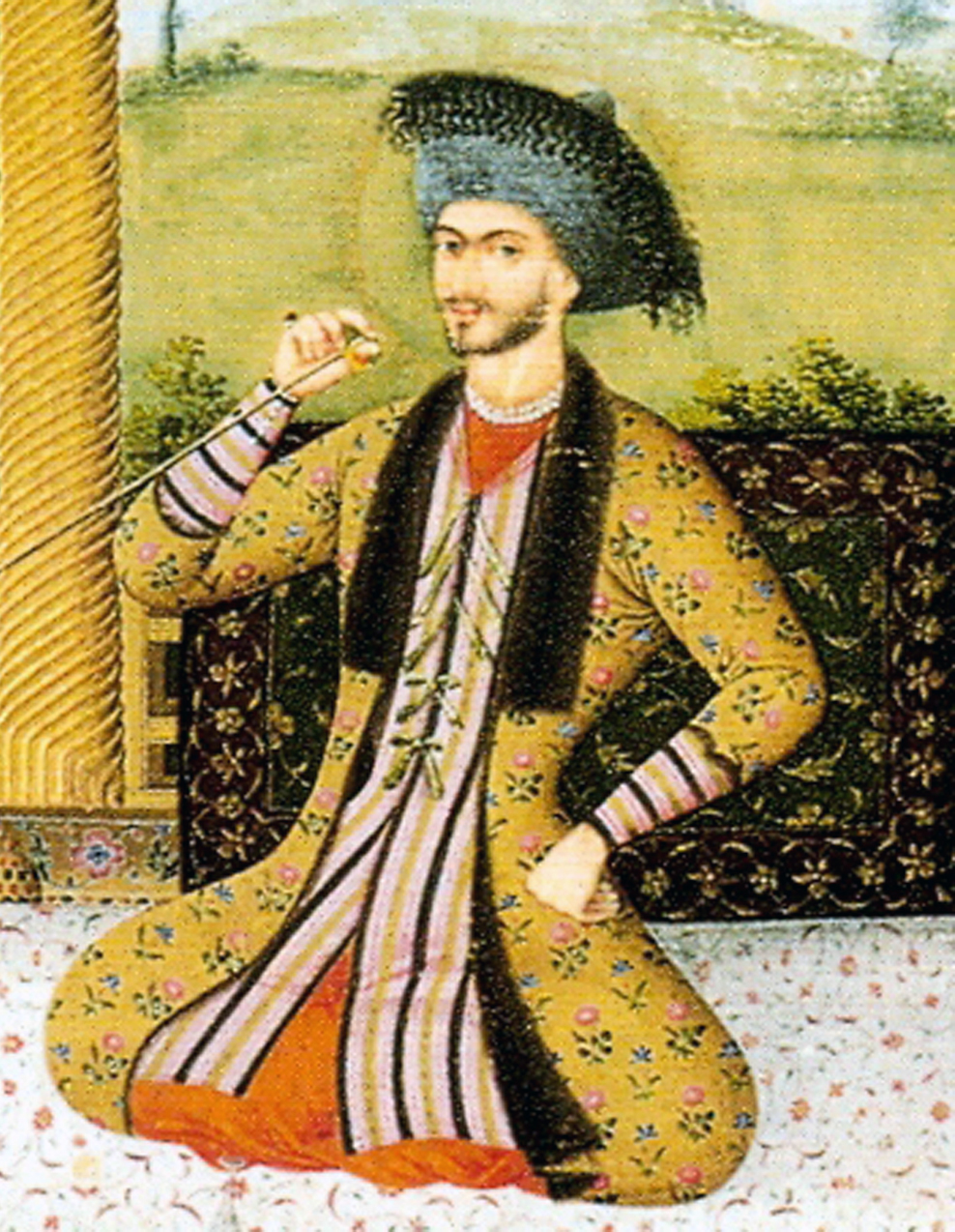

A reign without great wars
Suleiman never led an army. The peace of Zuhab with the Ottomans held, and he refused European pleas to join the war against them after the Ottoman siege of Vienna in 1683, despite envoys from Poland and the papacy. Frontier troubles were dealt with by his commanders, often slowly. In 1668–1669 the Cossack rebel Stenka Razin raided the Caspian coast, sacking towns in Mazandaran and Gilan and defeating a Persian flotilla. Uzbek and Kalmyk raiders struck in Khorasan, and Baluch tribes attacked Kerman. None of these threatened the state, but the slow response showed that the army built by Abbas I was losing its edge.
Government from the inner palace
Suleiman spent most of his time in the palace gardens and harem. Decisions were increasingly made there, among eunuchs, the women of the royal household and favoured courtiers, rather than in the council of state. Officials complained of their difficulty in getting the shah’s attention, and ambitious men worked through the palace eunuchs.
The one strong figure in government was Shaykh Ali Khan Zanganeh, a Kurdish noble who was grand vizier for twenty years from 1669. Chardin and the German physician Engelbert Kaempfer, who was in Isfahan in 1684–1685 with a Swedish embassy, describe him as capable and careful with money, and Chardin tells of him enduring the shah’s drunken humiliations at court. He tried to cut court spending and restore the treasury, at a time when silver was flowing out of Iran and silk income was falling, as described in the Safavid silk trade and Europe.
Court life
The European accounts of this reign are full of court detail: the order of the royal household, the feasts and drinking bouts, the shah’s sudden cruelty when drunk, the rituals of audience. Chardin’s Voyages, first published in full in 1711, describe Isfahan’s markets, schools, coffee houses and customs at length, and are still a basic source for Safavid social history. Kaempfer’s Latin notes on the court, published in 1712, add a more critical view. These writers are introduced in European travellers in Safavid Persia.
The reign produced its own Persian account of the wider world too. In 1685 Suleiman sent an embassy to the king of Siam, and its secretary, Mohammad Rabi’, wrote a description of the journey, The Ship of Sulaiman (Safine-ye Soleymâni), which has been translated into English.
Buildings and religion
In 1669 Suleiman built the Hasht Behesht (“eight paradises”) palace in a garden near the Chahar Bagh avenue of Isfahan, an open pavilion with a central domed hall and tiled walls. It is one of the few Safavid palaces still standing, and is described on the Hasht Behesht Palace page.
In 1687 the shah appointed Mohammad Baqer Majlesi as shaykh al-islam of Isfahan, the city’s leading religious office. Majlesi, a prolific scholar of Shi’i hadith, was hostile to Sufism and to philosophy, and pressed for stricter treatment of non-Muslims. His influence would grow greatly under the next shah, told on the Shah Soltan Hoseyn page.
Death and succession
Suleiman died on 29 July 1694, after years of heavy drinking and illness. A story told by later European writers, notably the Polish Jesuit Tadeusz Krusinski, holds that he left the choice of heir to the nobles, telling them that if they wanted a warrior they should choose one son and if they wanted peace another, and that the eunuchs chose the gentle and pious Soltan Hoseyn because he would be easy to manage. Whether or not the words were spoken, the story reflects how many contemporaries came to see the end of the reign.
A turning point, or a myth of decline
For a long time historians took the European sources at their word and described Suleiman as the shah under whom the Safavid state began to rot. Laurence Lockhart’s classic study of the dynasty’s fall follows this line. More recent historians have questioned it. Andrew Newman points out that the realm was at peace, trade continued and Isfahan was still one of the great cities of Asia; Rudi Matthee, while agreeing that the army and finances were weakening, argues that the problems were structural, not just the result of one ruler’s character. Most would accept that the reign left the state less able to meet a serious crisis, which came under Suleiman’s son.
For the reign before, see Shah Abbas II.
Persian words from this page
| سلیمان | Soleymân | Suleiman, Solomon |
| تاجگذاری | tâjgozâri | coronation |
| منجم | monajjem | astrologer |
| حرم | haram | harem, inner household |
| هشت بهشت | Hasht Behesht | eight paradises |
| سفینه | safine | ship |
Sources and further reading
- Jean Chardin, Le Couronnement de Soleïmaan troisième roy de Perse, Paris, 1671; and Voyages du chevalier Chardin en Perse, 1711.
- Engelbert Kaempfer, Amoenitatum exoticarum, 1712.
- Muhammad Rabi’ ibn Muhammad Ibrahim, The Ship of Sulaiman, translated by John O’Kane, Routledge, 1972.
- Rudi Matthee, Persia in Crisis: Safavid Decline and the Fall of Isfahan, I.B. Tauris, 2012.
- Laurence Lockhart, The Fall of the Safavi Dynasty and the Afghan Occupation of Persia, Cambridge University Press, 1958.
Want to learn Persian? Get the free Starter Pack
Get the 14-page printable Starter Pack (all 32 letters, a 7-day reading plan, 100 core words and 20 survival phrases) and a short 5-email course. Free.
More in The Safavid Empire (1501–1736)
- Shah Ismail I
- The Qizilbash
- Twelver Shi’ism Becomes Iran’s State Religion
- The Battle of Marv and the Uzbeks
- The Battle of Chaldiran (1514)
- Shah Tahmasp I
- The Ottoman–Safavid War and the Peace of Amasya
- Humayun’s Exile in Persia
- Qazvin: The Second Safavid Capital
- Ismail II and Mohammad Khodabanda
- Shah Abbas the Great
- Shah Abbas’s Military Reforms and the Ghulams
- The Sherley Brothers in Persia
- Isfahan: “Half the World”
- The Building of Naqsh-e Jahan Square
- Shah Abbas Retakes the West: The Ottoman Wars of 1603–1618
- The Capture of Hormuz from the Portuguese (1622)
- New Julfa and the Armenian Merchants
- The Safavid Silk Trade and Europe
- Sheikh Baha’i
- Reza Abbasi
- Shah Safi and the Treaty of Zuhab
- Shah Abbas II
- The Fight for Kandahar
- Chehel Sotoun Palace and Its War Paintings
- Shah Suleiman
- European Travellers in Safavid Persia
- Shah Soltan Hoseyn
- Safavid Art: Carpets, Miniatures and Tiles
- Mulla Sadra and the School of Isfahan
- The Afghan Revolt and the Battle of Gulnabad
- The Siege and Fall of Isfahan (1722)
- Peter the Great’s Persian Campaign (1722–1723)
- Tahmasp II and Hotaki Rule (1722–1732)
- Women of the Safavid Court
- The Safavid Legacy