Shah Abbas I rebuilt the Safavid army in the 1590s and 1600s around soldiers who owed loyalty to him alone: slave soldiers, or ghulams, recruited from Georgian, Circassian and Armenian converts, and new corps of musketeers and artillerymen. Paid from crown lands taken from Qizilbash governors, this army ended the tribal chiefs’ hold on the state and won back the provinces lost to the Ottomans and Uzbeks.
| Period | Mainly 1590s–1610s, building on changes begun under Tahmasp I |
|---|---|
| New corps | Gholams (slave cavalry), tofangchis (musketeers), tupchis (artillerymen) |
| Estimated size | Roger Savory suggested 10,000–15,000 gholams, about 12,000 musketeers and about 12,000 artillerymen; other historians give lower figures |
| Leading figure | Allahverdi Khan, a Georgian gholam who became commander-in-chief |
| European visitors | Anthony and Robert Sherley, arrived 1598 |
The problem: an army that ruled the shah
For most of the sixteenth century the Safavid army was the Qizilbash: Turkmen tribal cavalry led by their own chiefs. The chiefs held provinces as governors, kept most of the revenue to pay their men, and fought each other for control of the court. Twice, after the deaths of Ismail I and Tahmasp I, their quarrels almost destroyed the state. In the 1580s, under Mohammad Khodabanda, they murdered the queen and the crown prince while the Ottomans took Tabriz. Abbas, who had been a puppet of rival chiefs as a boy, set out to build an army they could not control.
Gholams: the shah’s own slaves
The raw material already existed. Tahmasp I‘s campaigns in the Caucasus had brought tens of thousands of Georgian, Circassian and Armenian captives into Iran. Boys from these families, and later from new raids and tribute, were converted to Islam and raised in the royal household as gholaman-e khassa-ye sharifa, “slaves of the royal household”. They had no tribe, no lands and no family network in Iran. Their careers depended entirely on the shah.
Abbas turned them into an elite cavalry corps and a pool of loyal officials. Gholams soon held some of the highest posts in the state, including provincial governorships that had once belonged to Qizilbash chiefs. Historians compare the system with the Ottoman Janissaries and the Mamluks of Egypt, though the Safavid gholams were mainly cavalry and never became a closed caste.

Allahverdi Khan and his son
The most famous gholam was Allahverdi Khan, a Georgian convert who rose to command the gholam corps and became governor of Fars in 1595 and then commander-in-chief of the army. He led campaigns against the Uzbeks and the Ottomans, and his name survives in the great bridge he built across the Zayandeh Rud in Isfahan, completed in about 1602 and known today as Si-o-se Pol. His son Imam Qoli Khan succeeded him in Fars and commanded the Safavid forces that took Hormuz from the Portuguese in 1622. Another gholam, Qarachaqay Khan, an Armenian, became one of Abbas’s leading generals.
Musketeers and artillery
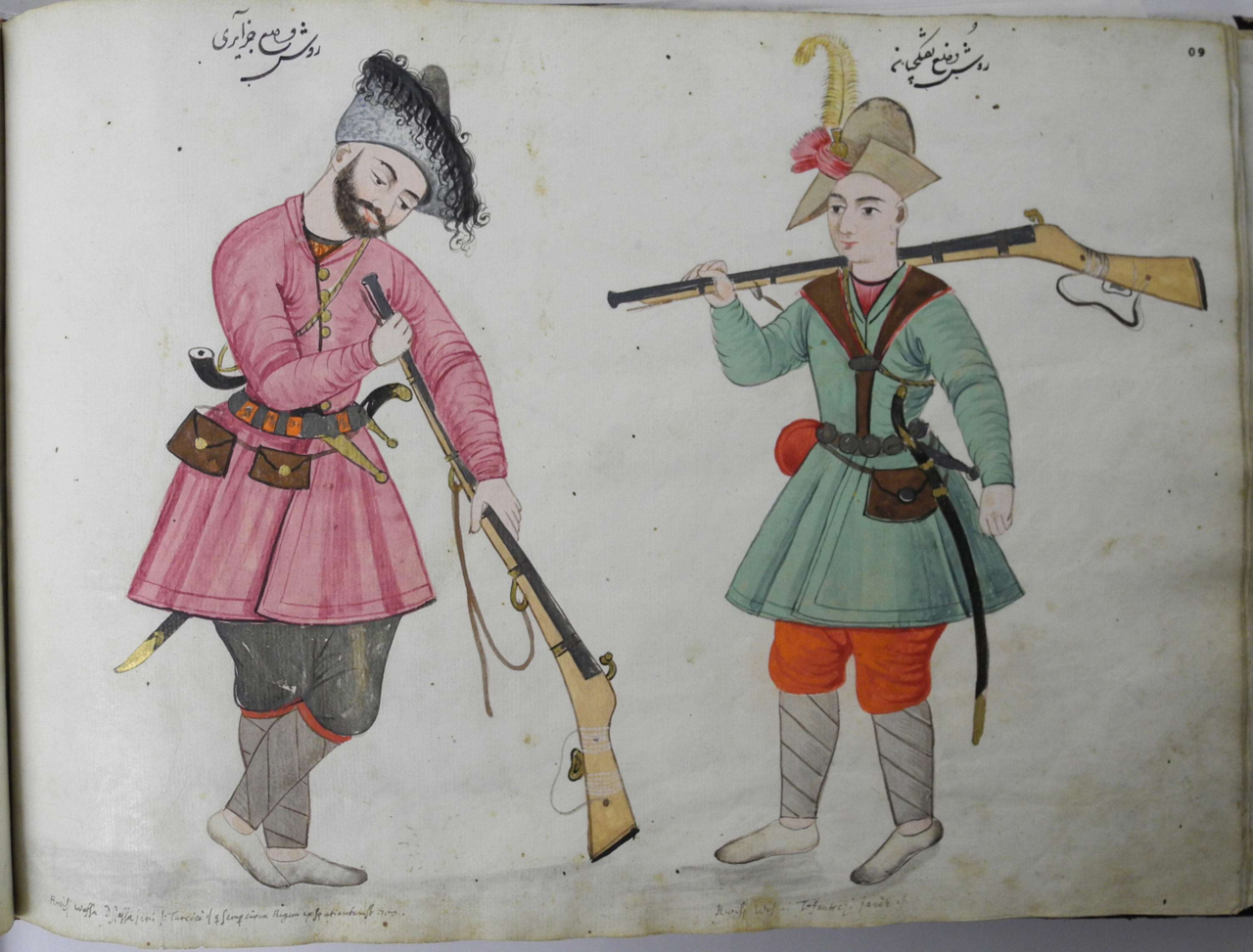
Abbas also expanded the use of firearms, which the Safavids had been slow to adopt since their defeat at Chaldiran. A corps of tofangchis, musketeers, was raised largely from Persian-speaking villagers rather than the Turkmen tribes, both infantry and mounted. A corps of tupchis, artillerymen, was formed to handle cannon. Under their own commanders, the tofangchi-aghasi and the tupchi-bashi, they became regular units of the royal army. Historians note that Safavid artillery remained modest compared with Ottoman guns, and was most useful in sieges.
Paying for it: crown lands
A standing army needed regular pay. Abbas found the money by changing the status of provinces. Lands held by Qizilbash governors, the mamalek, were converted step by step into khassa, crown provinces administered by royal officials, whose revenue went straight to the treasury. The rich silk provinces of Gilan and Mazandaran, conquered in the 1590s, were among the most valuable. The gholams, musketeers and artillerymen were paid from this income, and the shah, not the chiefs, held the purse.
The Qizilbash were not abolished. Their tribal cavalry still made up a large part of the army, and the royal bodyguard of qurchis remained Qizilbash. But they now shared power with the new corps, and their chiefs could be moved, demoted or executed. A later story says Abbas also created a new tribal confederation, the Shahsevan, “those who love the shah”, from loyal tribesmen; the historian Richard Tapper has shown that this account is doubtful and the Shahsevan formed later.
The Sherley brothers: how much did they do?
In December 1598 two English adventurers, Anthony Sherley and his younger brother Robert, arrived at Qazvin with about two dozen companions. They came on their own initiative, hoping to build an alliance of Iran and the Christian powers against the Ottomans. Abbas welcomed them. In 1599 he sent Anthony to Europe with a Persian envoy, Hosayn Ali Beg Bayat. Robert stayed in Iran for several years, married a Circassian noblewoman, Teresia Sampsonia, and later travelled to Europe twice as the shah’s ambassador.
English writers, beginning with the brothers themselves and their companions, claimed that the Sherleys taught the Persians to cast cannon and use firearms and so created the new army. Modern historians reject this. In an article titled “The Sherley Myth” (1967), Roger Savory showed that the reforms were already under way before they arrived and that Iranians had used firearms for decades. The brothers’ real importance lies in diplomacy and in the vivid, self-promoting accounts that made Abbas famous in Europe.
Results
The new army proved itself quickly. It recovered Herat from the Uzbeks in 1598, retook Tabriz in 1603 and Yerevan in 1604, defeated the Ottomans at Sufiyan in 1605, and took Baghdad in 1623; see Shah Abbas retakes the west. Above all, there were no more Qizilbash civil wars.
The system had costs. Converting provinces to crown land made the treasury richer in the short term but weakened local defence and pushed governors to squeeze taxpayers. Gholams formed their own factions at court, and after Abbas the army was neglected during the long peace that followed the Treaty of Zuhab in 1639. When Afghan rebels attacked in 1722, the Safavid army that faced them was a shadow of the one Abbas had built.
Persian words from this page
| غلام | gholâm | slave soldier, royal servant |
| تفنگچی | tofangchi | musketeer |
| توپچی | tupchi | artilleryman |
| قورچی | ghurchi | royal bodyguard |
| خاصه | khâsse | crown land |
| شاهسون | Shâhsevan | “lover of the shah”, a tribal group |
Sources and further reading
- Roger Savory, “The Sherley Myth”, Iran 5 (1967)
- Sussan Babaie, Kathryn Babayan, Ina Baghdiantz-McCabe and Massumeh Farhad, Slaves of the Shah: New Elites of Safavid Iran (I.B. Tauris, 2004)
- Roger Savory, Iran under the Safavids (Cambridge University Press, 1980)
- Richard Tapper, Frontier Nomads of Iran: A Political and Social History of the Shahsevan (Cambridge University Press, 1997)
- Eskandar Beg Monshi, History of Shah ‘Abbas the Great, trans. Roger Savory (Westview, 1978)
Want to learn Persian? Get the free Starter Pack
Get the 14-page printable Starter Pack (all 32 letters, a 7-day reading plan, 100 core words and 20 survival phrases) and a short 5-email course. Free.
More in The Safavid Empire (1501–1736)
- Shah Ismail I
- The Qizilbash
- Twelver Shi’ism Becomes Iran’s State Religion
- The Battle of Marv and the Uzbeks
- The Battle of Chaldiran (1514)
- Shah Tahmasp I
- The Ottoman–Safavid War and the Peace of Amasya
- Humayun’s Exile in Persia
- Qazvin: The Second Safavid Capital
- Ismail II and Mohammad Khodabanda
- Shah Abbas the Great
- Shah Abbas’s Military Reforms and the Ghulams
- The Sherley Brothers in Persia
- Isfahan: “Half the World”
- The Building of Naqsh-e Jahan Square
- Shah Abbas Retakes the West: The Ottoman Wars of 1603–1618
- The Capture of Hormuz from the Portuguese (1622)
- New Julfa and the Armenian Merchants
- The Safavid Silk Trade and Europe
- Sheikh Baha’i
- Reza Abbasi
- Shah Safi and the Treaty of Zuhab
- Shah Abbas II
- The Fight for Kandahar
- Chehel Sotoun Palace and Its War Paintings
- Shah Suleiman
- European Travellers in Safavid Persia
- Shah Soltan Hoseyn
- Safavid Art: Carpets, Miniatures and Tiles
- Mulla Sadra and the School of Isfahan
- The Afghan Revolt and the Battle of Gulnabad
- The Siege and Fall of Isfahan (1722)
- Peter the Great’s Persian Campaign (1722–1723)
- Tahmasp II and Hotaki Rule (1722–1732)
- Women of the Safavid Court
- The Safavid Legacy