Iran lost Herat in stages between 1838 and 1863. Two sieges failed or were reversed by British pressure, the Treaty of Paris of 1857 made Iran renounce the city, and in 1863 the Afghan amir Dost Mohammad took it for Kabul. The rest of the eastern frontier, in Sistan and Baluchestan, was then drawn by British officers in the 1870s and 1900s, giving Iran and Afghanistan the border they share today.
| Herat renounced | Treaty of Paris, 4 March 1857 |
|---|---|
| Herat annexed by Kabul | May 1863, by Dost Mohammad Khan |
| Sistan award | Frederic Goldsmid, 1872 (accepted 1873) |
| Later arbitration | A. H. McMahon, 1903–1905 |
| Border today | About 920 km between Iran’s Khorasan and Sistan-Baluchestan and Afghanistan |
| Persian name of Herat | هرات Herât |

Why Herat mattered to Iran
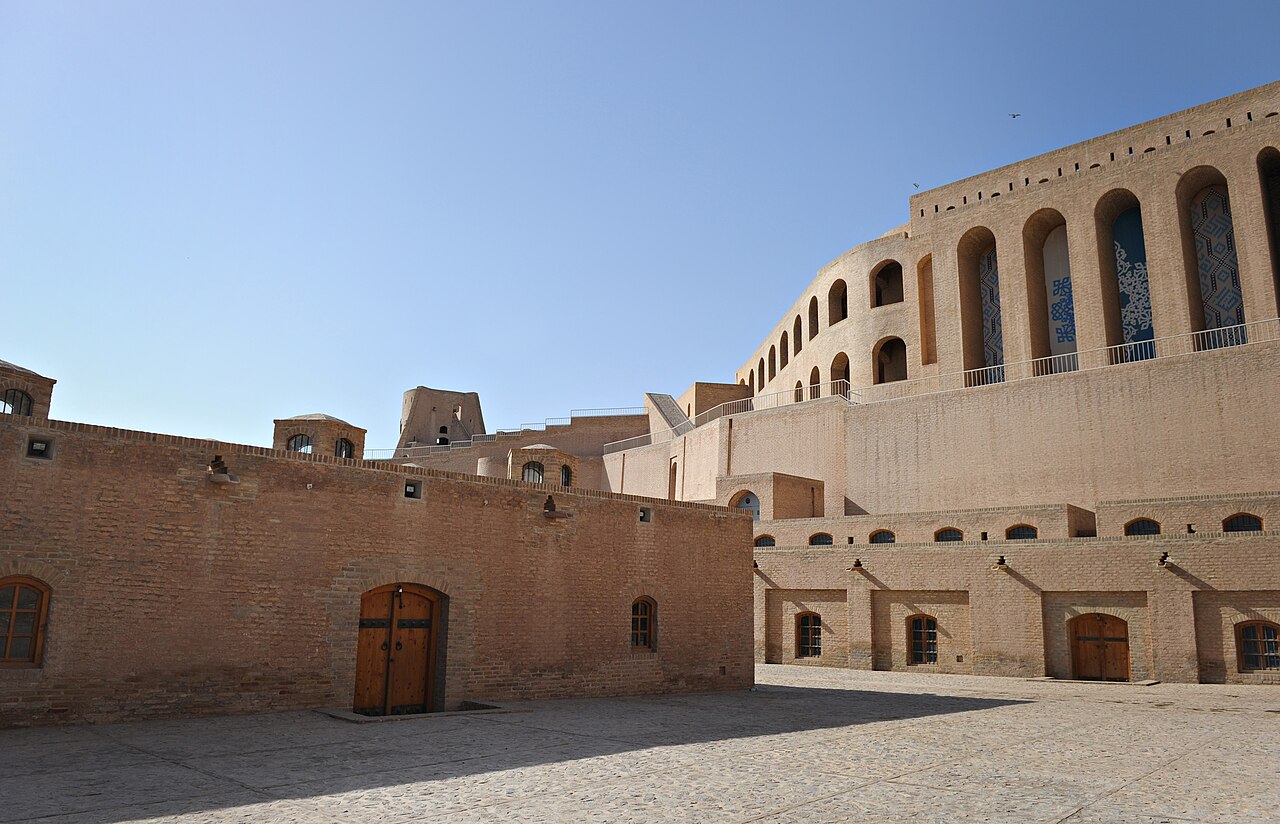
For a thousand years Herat was one of the four great cities of Khorasan, with Nishapur, Merv and Balkh. It was the Timurid capital where Jami wrote and Behzad painted, and under the Safavids it was the seat of the crown prince’s governorship. The Qajars, who claimed the Safavid inheritance, saw it as a lost Iranian province held by Afghan rebels. Its fertile valley on the Hari Rud also controlled the roads between Iran, Central Asia and India.
To Britain, the same position made Herat “the gate of India”. A Herat in the hands of a shah who was under Russian influence seemed a threat to British India. That conflict of views produced two crises in twenty years: Mohammad Shah’s siege of Herat in 1837–1838, and the Anglo-Persian War of 1856–1857. Both ended with British troops landing on the Persian Gulf coast and Iran withdrawing.
The Treaty of Paris and its limits
Under the Treaty of Paris of March 1857 Iran gave up all claims to sovereignty over Herat and Afghanistan and agreed that in future disputes it would ask Britain to mediate before using force. Iranian troops left Herat later in 1857.
The treaty did not, however, hand Herat to Kabul. The city was ruled by Sultan Ahmad Khan, a relative of Dost Mohammad but his rival, who had been placed there with Iranian backing and who kept friendly relations with Tehran. For a few years Herat remained a semi-independent principality between Iran and the Afghan amir.
1863: Dost Mohammad takes Herat
In 1862 Sultan Ahmad Khan seized Farah, which Dost Mohammad considered his. The amir answered by besieging Herat. Iran protested but, bound by the 1857 treaty and unwilling to risk another war with Britain, did not intervene, and the British let the siege go on. After about ten months Herat fell to the Afghans in late May 1863. Dost Mohammad died in the city a few days later, but Herat stayed part of the Afghan kingdom from then on.
For Iran this was the real end of the Herat question. Naser al-Din Shah never again sent an army east, and later Qajar efforts on the frontier were diplomatic, aimed at keeping Sistan and the Baluch lands.
Drawing the line in Sistan: the Goldsmid award
South of Herat lay Sistan, the delta of the Helmand river around the Hamun lakes, an area of villages and irrigated fields claimed by both Iran and Afghanistan. In the 1860s Iranian forces under the governor of Qaenat extended Iran’s control there. When the dispute became serious, both sides accepted British arbitration under Article 6 of the Treaty of Paris.
Major General Frederic Goldsmid, a British officer who had already worked on Iran’s border with the Kalat khanate in Baluchestan (the Makran line of 1871), led a boundary mission in 1870–1872. His award of 1872 divided Sistan along the Helmand:
- Iran kept “Sistan proper”, the populated and irrigated land on the western (left) bank of the river.
- Afghanistan received “outer Sistan” on the right bank, together with the river above the delta.
- Neither side was to build works that would interfere with the water supply of the other.
Neither government was satisfied: Iran had hoped for more land, and Afghanistan had hoped for all of Sistan. Both accepted the award in 1873. The Iran–Afghanistan frontier in Sistan has been known since as the Goldsmid line, though it was later corrected.
McMahon and the water question
The Goldsmid award used the river bed as the border, but the Helmand shifts its course across the flat delta. A change of channel in the 1890s caused new quarrels, and in 1902 the British appointed Colonel Arthur Henry McMahon to settle them. His decisions of 1903–1905 fixed the line along the old river bed with boundary pillars, whatever the river did later, and gave Iran one-third of the Helmand water entering Sistan. The Afghan amir accepted. Mozaffar al-Din Shah rejected the water award, and there were protests in Sistan against the British consul, but the boundary itself stood.
The water dispute outlived the Qajars. Iran and Afghanistan signed a Helmand water treaty in 1973, and the sharing of the river’s water remains a recurring issue between the two countries.
How Iranians remember the loss
In Iranian historical writing the loss of Herat is usually counted with the Caucasus losses of the Treaty of Golestan and the Treaty of Turkmenchay as one of the territorial defeats of the Qajar era, and the frontier is often described as drawn by Britain for its own interests. Afghan historians see the same events as the unification of their state, with Herat restored to an Afghan kingdom. Historians such as Abbas Amanat stress that Qajar ambitions in Herat were real but beyond Iran’s military and financial means once Britain was determined to stop them.
Herat itself kept strong ties with Iran: Persian (Dari) is its language, and trade and migration across the border continue. Herat’s earlier place in Iranian culture belongs to the Timurid renaissance of the post-Mongol era.
Persian words from this page
| هرات | Herât | Herat |
| سیستان | Sistân | Sistan |
| هیرمند | Hirmand | the Helmand river (Persian name) |
| مرز | marz | border |
| خراسان | Khorâsân | Khorasan |
| داوری | dâvari | arbitration |
Sources and further reading
- Encyclopaedia Iranica, “Helmand River iv. In the late 19th and 20th centuries” (Arash Khazeni).
- Encyclopaedia Iranica, “Anglo-Iranian relations ii. Qajar period“.
- Frederic J. Goldsmid (ed.), Eastern Persia: An Account of the Journeys of the Persian Boundary Commission, 1870–71–72 (London, 1876).
- Abbas Amanat, Pivot of the Universe: Nasir al-Din Shah Qajar and the Iranian Monarchy, 1831–1896 (1997).
- Firuz Kazemzadeh, Russia and Britain in Persia, 1864–1914 (Yale, 1968).
Want to learn Persian? Get the free Starter Pack
Get the 14-page printable Starter Pack (all 32 letters, a 7-day reading plan, 100 core words and 20 survival phrases) and a short 5-email course. Free.
More in The Qajar Dynasty (1789–1925)
- Agha Mohammad Khan Qajar
- The Battle of Krtsanisi and Sack of Tiflis (1795)
- Fath-Ali Shah Qajar
- The Qajar Court and Harem
- The Russo-Persian War of 1804–1813
- The Battle of Aslanduz (1812)
- The Treaty of Golestan (1813)
- Abbas Mirza and the First Reforms
- The Russo-Persian War of 1826–1828
- The Treaty of Turkmenchay (1828)
- The Death of Griboyedov (1829)
- Mohammad Shah and the Siege of Herat
- The Bab and the Babi Movement
- Tahirih (Qurrat al-Ayn)
- Naser al-Din Shah Qajar
- Amir Kabir
- Dar al-Funun: Iran’s First Modern School
- The Anglo-Persian War (1856–1857)
- How Iran Lost Herat
- The Great Persian Famine of 1870–1872
- The Reuter Concession (1872)
- Naser al-Din Shah’s Journeys to Europe
- The Tobacco Protest (1891–1892)
- Mirza Malkam Khan and Early Reformers
- The Assassination of Naser al-Din Shah (1896)
- Photography in Qajar Iran
- Mozaffar ad-Din Shah
- Taj al-Saltaneh
- The D’Arcy Concession and the Discovery of Oil (1908)
- The Persian Constitutional Revolution (1905–1911)
- The First Majlis and the Constitution of 1906
- The Anglo-Russian Convention of 1907
- Mohammad Ali Shah and the Bombardment of the Majlis
- The Siege of Tabriz and Sattar Khan
- The Constitutionalists Take Tehran (1909)
- The Bakhtiari and the Revolution
- Morgan Shuster and the Russian Ultimatum (1911)
- Women in the Constitutional Revolution
- Iran in the First World War
- The Persian Famine of 1917–1919
- Mirza Kuchik Khan and the Jangali Movement
- The Anglo-Persian Agreement of 1919
- The 1921 Coup: Reza Khan and Seyyed Zia
- The End of the Qajar Dynasty (1925)
- Qajar Art, Photography and Society