The Anglo-Persian Agreement, announced on 9 August 1919, was a treaty negotiated in secret between the British government, led on this question by the foreign secretary Lord Curzon, and the Iranian cabinet of Vosuq al-Dowleh. It would have placed British advisers in Iran’s government and British officers in its army, funded by a British loan. Iranians widely saw it as making the country a British protectorate in all but name; it was never ratified by the Majlis and was annulled in 1921.
| Announced | 9 August 1919, Tehran |
|---|---|
| British side | Lord Curzon (foreign secretary); Sir Percy Cox (minister in Tehran) |
| Iranian side | Prime minister Vosuq al-Dowleh, with Nosrat al-Dowleh Firuz and Sarem al-Dowleh |
| Main terms | British advisers and officers; loan of £2 million at 7 per cent; railways; tariff revision |
| Status | Never ratified; suspended in 1920; annulled 1921 |
| Persian name | قرارداد ۱۹۱۹ (Qarârdâd-e 1919) |
Britain after the war
At the end of 1918 Iran was in ruins. The war had passed over its western and northern provinces (see Iran in the First World War), the famine of 1917–1919 was still killing thousands, and the government had no money. Russia had collapsed, and British troops were the only foreign forces left across much of the country. The 1907 division into zones had lost its meaning.
Lord Curzon, foreign secretary from 1919, had travelled in Iran as a young man and written a two-volume study, Persia and the Persian Question (1892). He believed that a stable Iran under British guidance would protect India, the oil fields of the Anglo-Persian Oil Company and the routes of the Persian Gulf, and keep out the Bolsheviks. He did not want to annex Iran or declare a protectorate, which would be expensive and politically impossible after the war. He wanted Iran to accept British help on British terms.
Iran’s attempt to present its case at the Paris Peace Conference in 1919 failed, partly because Britain blocked the Iranian delegation. The negotiations with Britain went ahead in Tehran in secret.

What the agreement promised
The agreement opened with a British promise to respect the independence and integrity of Iran. Its practical clauses provided that:
- Britain would supply, at Iran’s expense, expert advisers for the Iranian administration, with real powers;
- Britain would supply officers, munitions and equipment for a new unified army, to be planned by a joint military commission;
- Britain would lend £2 million at 7 per cent interest, secured on the customs and other revenues, to pay for these reforms;
- the two governments would cooperate on building railways and roads, and a joint committee would revise the customs tariff.
A separate letter from Sir Percy Cox promised British support for Iranian claims to compensation for war damage and for border changes.
The payment to the triumvirate
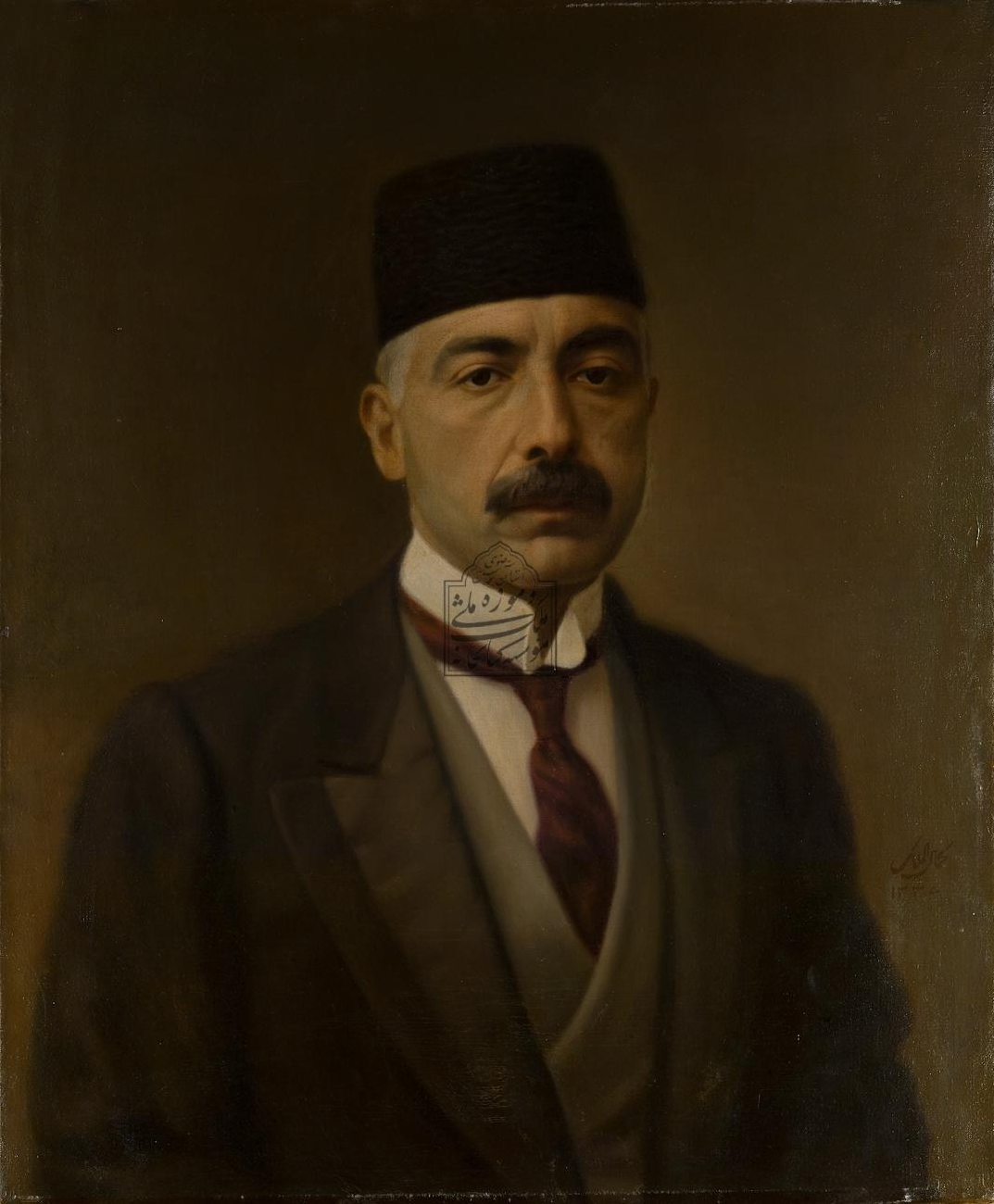
Three ministers carried the negotiations on the Iranian side: Vosuq al-Dowleh, the prime minister; his foreign minister Firuz Mirza Nosrat al-Dowleh; and the finance minister Akbar Mirza Sarem al-Dowleh. Critics called them the triumvirate. They received £131,000 from the British, described as an advance to secure the agreement’s passage. Rumours of the payment spread in Tehran, and it was confirmed in the House of Commons in November 1920. The ministers’ defenders said the money was needed for political expenses; their opponents called it a bribe, and the name stuck.
Opposition at home and abroad
The secrecy of the talks, the scope of the powers given to British advisers and the payment to the ministers turned a wide range of Iranians against the agreement. Nationalist and Democrat politicians, clerics such as Sayyed Hasan Modarres, poets and journalists attacked it, and leaflets and newspapers circulated in Tehran and the provinces. In Tabriz, Shaykh Mohammad Khiabani led a revolt in April 1920 that took over the city for some months; in Gilan the Jangalis of Mirza Kuchik Khan were still in arms.
Abroad, the United States and France criticised the agreement as a step towards a British protectorate, and American newspapers published attacks on it. Soviet Russia denounced it and, in May 1920, landed troops at Anzali.
The constitution required the Majlis to approve any treaty, but no Majlis was sitting. Vosuq’s government held elections for a fourth Majlis but did not convene it, while it put the agreement into effect anyway. A British military mission arrived to plan the new army, a financial mission under Sydney Armitage-Smith began work in the finance ministry, and the first instalment of the loan was paid.
Collapse
By the summer of 1920 the position was untenable. The Soviet landing in Gilan showed that British protection was weak, Ahmad Shah, who had visited London in 1919, kept his distance from the agreement and refused to press for it, and Britain was cutting its military spending. Vosuq resigned in June 1920. The next prime minister, Hasan Pirnia Moshir al-Dowleh, announced that the agreement was suspended until the Majlis could consider it.
The final step came after the coup of February 1921. Sayyed Zia al-Din Tabatabai, the new prime minister, declared the agreement annulled, partly to show that his government was not a British creation, and the fourth Majlis, when it opened in June 1921, approved the annulment.
- Early 1919 Secret negotiations begin in Tehran
- 9 Aug 1919 Agreement announced
- Apr 1920 Khiabani’s revolt in Tabriz
- May 1920 Soviet troops land at Anzali
- Jun 1920 Vosuq resigns; Moshir al-Dowleh suspends the agreement
- Nov 1920 Payment to the ministers confirmed in the House of Commons
- Feb 1921 Seyyed Zia annuls the agreement after the coup
- Jun 1921 Fourth Majlis approves the annulment
How it is judged
For most Iranian historians the agreement is an example of imperial overreach and of ministers who sold their country, and “the 1919 agreement” became a byword in Iranian politics. Some historians take a more mixed view of Vosuq, an able administrator who believed that Iran, bankrupt and occupied, had no better option than British help. Homa Katouzian, who has written the most detailed study of the agreement in English, argues that its failure pushed British officials in Iran towards backing a strong military government instead, which is one context for the coup of 1921. The long relationship is traced on the page on Iran and Britain.
Persian words from this page
| قرارداد | qarârdâd | agreement |
| وثوقالدوله | Vosuq-od-Dowleh | Vosuq al-Dowleh |
| مستشار | mostashâr | adviser |
| وام | vâm | loan |
| لغو | laghv | annulment |
| مدرس | Modarres | Modarres (cleric and deputy) |
Sources and further reading
- Encyclopaedia Iranica, “Anglo-Persian Agreement 1919”: iranicaonline.org
- Homa Katouzian, “The Campaign against the Anglo-Iranian Agreement of 1919”, British Journal of Middle Eastern Studies 25 (1998).
- Houshang Sabahi, British Policy in Persia, 1918–1925 (Frank Cass, 1990).
- George N. Curzon, Persia and the Persian Question (London, 1892).
- Abbas Amanat, Iran: A Modern History (Yale University Press, 2017).
Want to learn Persian? Get the free Starter Pack
Get the 14-page printable Starter Pack (all 32 letters, a 7-day reading plan, 100 core words and 20 survival phrases) and a short 5-email course. Free.
More in The Qajar Dynasty (1789–1925)
- Agha Mohammad Khan Qajar
- The Battle of Krtsanisi and Sack of Tiflis (1795)
- Fath-Ali Shah Qajar
- The Qajar Court and Harem
- The Russo-Persian War of 1804–1813
- The Battle of Aslanduz (1812)
- The Treaty of Golestan (1813)
- Abbas Mirza and the First Reforms
- The Russo-Persian War of 1826–1828
- The Treaty of Turkmenchay (1828)
- The Death of Griboyedov (1829)
- Mohammad Shah and the Siege of Herat
- The Bab and the Babi Movement
- Tahirih (Qurrat al-Ayn)
- Naser al-Din Shah Qajar
- Amir Kabir
- Dar al-Funun: Iran’s First Modern School
- The Anglo-Persian War (1856–1857)
- How Iran Lost Herat
- The Great Persian Famine of 1870–1872
- The Reuter Concession (1872)
- Naser al-Din Shah’s Journeys to Europe
- The Tobacco Protest (1891–1892)
- Mirza Malkam Khan and Early Reformers
- The Assassination of Naser al-Din Shah (1896)
- Photography in Qajar Iran
- Mozaffar ad-Din Shah
- Taj al-Saltaneh
- The D’Arcy Concession and the Discovery of Oil (1908)
- The Persian Constitutional Revolution (1905–1911)
- The First Majlis and the Constitution of 1906
- The Anglo-Russian Convention of 1907
- Mohammad Ali Shah and the Bombardment of the Majlis
- The Siege of Tabriz and Sattar Khan
- The Constitutionalists Take Tehran (1909)
- The Bakhtiari and the Revolution
- Morgan Shuster and the Russian Ultimatum (1911)
- Women in the Constitutional Revolution
- Iran in the First World War
- The Persian Famine of 1917–1919
- Mirza Kuchik Khan and the Jangali Movement
- The Anglo-Persian Agreement of 1919
- The 1921 Coup: Reza Khan and Seyyed Zia
- The End of the Qajar Dynasty (1925)
- Qajar Art, Photography and Society