The Tobacco Protest was a nationwide movement in Iran in 1891–1892 against a monopoly over the country’s tobacco trade that Naser al-Din Shah had granted to a British company. Merchants and clerics led protests in the main cities, and a ruling attributed to the leading Shi’i authority, Mirza Hasan Shirazi, made smoking forbidden; Iranians stopped smoking, and in January 1892 the shah cancelled the concession. It was the first time a popular movement had forced the Qajar crown to reverse a major decision.
| Concession | 20 March 1890, to Major G. F. Talbot |
|---|---|
| Company | Imperial Tobacco Corporation of Persia (the “Régie”) |
| Protests | Spring 1891 to January 1892: Shiraz, Tabriz, Isfahan, Tehran, Mashhad and other cities |
| Fatwa | Early December 1891, attributed to Mirza Hasan Shirazi in Samarra |
| Cancellation | January 1892; boycott lifted 26 January 1892 |
| Cost | £500,000 compensation, paid with Iran’s first foreign loan |
| Persian name | جنبش تنباکو jonbesh-e tanbâku |

A monopoly on every pipe
Tobacco was a mass product in Qajar Iran. Men and women of every class smoked the water pipe (qalyan) and the long pipe (chopoq), and Iranian tobacco, especially the tombak of Isfahan and Shiraz, was exported to the Ottoman Empire and Egypt. Thousands of growers, merchants, shopkeepers and pedlars lived from it.
In March 1890, after his third journey to Europe, the shah granted Major Gerald F. Talbot a fifty-year monopoly over the production, sale and export of all Iranian tobacco. In return Iran was to receive £15,000 a year, a quarter of the annual profits after expenses, and a dividend on the capital. The concession was soon transferred to a company formed in London, the Imperial Tobacco Corporation of Persia. The chief minister Amin al-Soltan supported the deal, and it was widely reported that the shah and senior officials received personal payments from the concessionaire.
Unlike the Reuter Concession of 1872, which dealt with railways and mines that most Iranians had never seen, this one touched every bazaar. Every merchant who dealt in tobacco would have to buy from and sell to the company and its agents.
The protest spreads, 1891
The company’s director, Julius Ornstein, reached Tehran in April 1891 and began setting up offices across the country. Protest started almost at once.
- Shiraz. In May 1891 the cleric Sayyed Ali Akbar Fal-Asiri preached against the concession and was expelled from the city on the shah’s orders. On his way into exile he met the pan-Islamic activist Jamal al-Din Afghani, who wrote a long letter to Mirza Hasan Shirazi urging the clergy to act.
- Tabriz. The bazaar closed, clerics stopped teaching, and placards threatened the company’s agents. The government suspended the concession in Azerbaijan for a time.
- Isfahan. Under the leading mujtahid Aqa Najafi, a boycott of tobacco began even before the fatwa.
- Tehran and Mashhad. Merchants, led by figures such as Hajj Mohammad Kazem Malek al-Tojjar, sent petitions; in Tehran the senior cleric Mirza Hasan Ashtiyani became the movement’s leader.
Russia also protested, arguing that the monopoly broke the free-trade terms of the Treaty of Turkmenchay, and its diplomats quietly encouraged the opposition.
The fatwa from Samarra
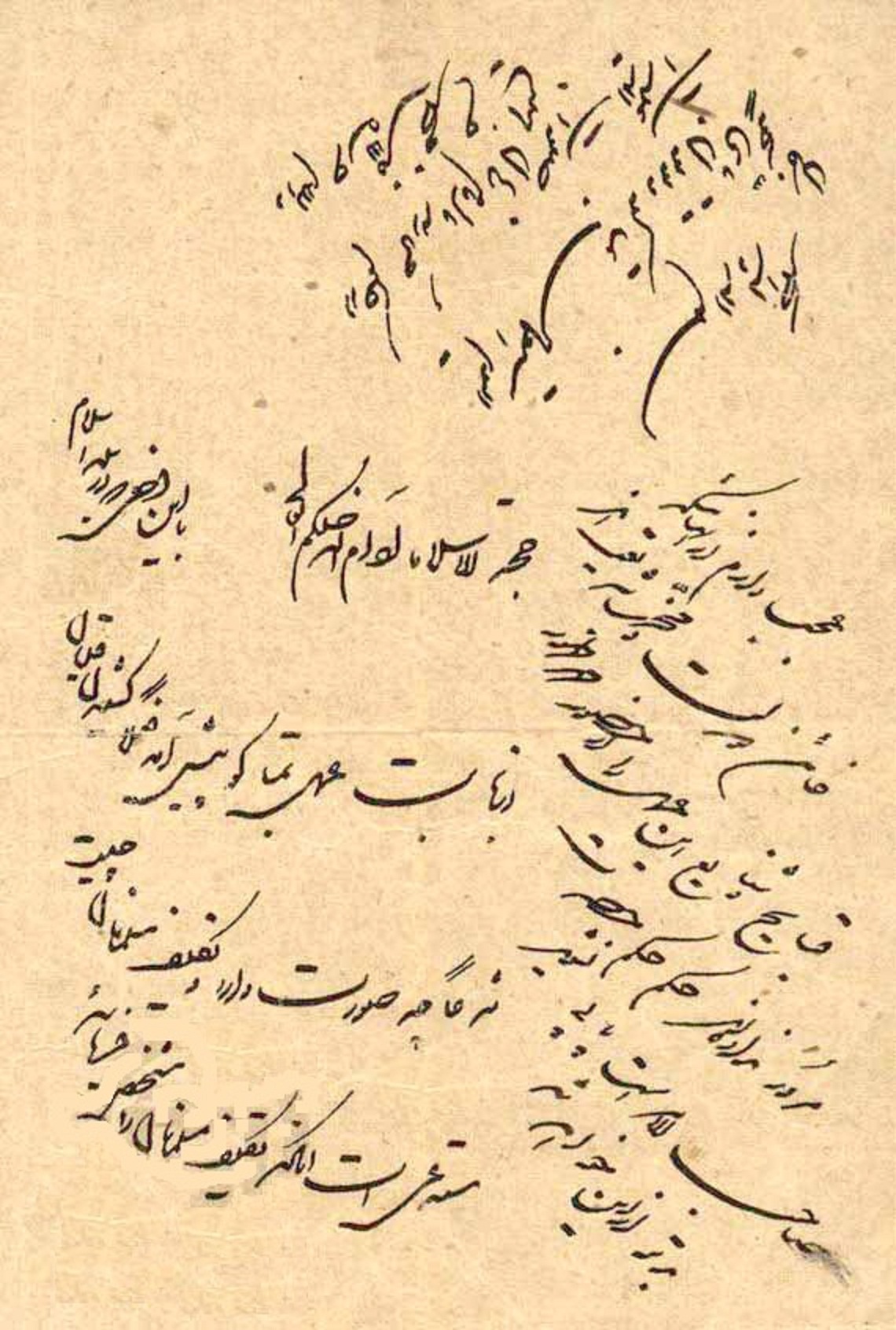
Mirza Mohammad Hasan Shirazi, who lived in Samarra in Ottoman Iraq, was the most widely followed marja’ (source of emulation) of the Shi’i world. In early December 1891 a short ruling in his name began to circulate in Iran. In it, the use of tobacco in any form was declared equivalent to war against the Hidden Imam.
The effect was astonishing. Across the country people stopped smoking, tobacco shops closed, and pipes were broken or put away. Accounts tell that the women of the shah’s own harem gave up the water pipe and that servants in the palace refused to prepare one for the shah. Christians and Jews in some towns are also said to have joined in.
Whether Shirazi wrote the text himself was questioned at the time, and some historians believe it was drafted in Iran by Ashtiyani’s circle and issued in his name. Shirazi did, however, confirm it, and it was he who lifted it.
The confrontation in Tehran
The shah first tried to cancel only the internal part of the monopoly, keeping the export trade with the company. That did not satisfy the protesters. When he ordered Ashtiyani either to smoke in public or to leave the capital, crowds gathered at the cleric’s house and then marched on the royal citadel in early January 1892. Troops fired, and several people were killed. Fearing a wider uprising and finding that the British government would not back the company firmly, the shah gave way and cancelled the concession completely.
On 26 January 1892 a crier in Tehran announced that Shirazi had lifted the ban, and Iranians took up their pipes again.
The price of the victory
The company demanded compensation, and Iran agreed to pay £500,000. Having no reserves, the government borrowed the sum through the British-owned Imperial Bank of Persia, secured on the customs revenues of the southern ports. It was Iran’s first foreign loan, and it opened a chain of borrowing that ran through the reign of Mozaffar al-Din Shah.
Why historians see it as a turning point
Nikki Keddie, in her classic study Religion and Rebellion in Iran, described the protest as the first successful mass movement in modern Iran and a rehearsal for later ones. It brought together three groups whose alliance would recur: the bazaar merchants, the clergy, and reform-minded intellectuals such as Afghani and Malkam Khan. It showed that the senior clergy, especially a marja’ living outside the shah’s reach, could mobilise the whole country. And it showed that foreign economic power could be resisted.
Historians also note what the movement did not do: it did not challenge the monarchy itself. That came fifteen years later, when much the same coalition demanded a constitution in the Constitutional Revolution. Some observers drew another lesson: Afghani’s circle concluded that the shah himself was the problem, a conclusion that led to his assassination in 1896.
Persian words from this page
| تنباکو | tanbâku | tobacco |
| قلیان | qalyân | water pipe |
| فتوا | fatvâ | religious ruling |
| تحریم | tahrim | ban, boycott |
| مرجع تقلید | marja’-e taqlid | source of emulation |
| بازار | bâzâr | bazaar, market |
| امام زمان | Emâm-e Zamân | the Imam of the Age (Hidden Imam) |
Sources and further reading
- Nikki R. Keddie, Religion and Rebellion in Iran: The Tobacco Protest of 1891–1892 (Frank Cass, 1966).
- Encyclopaedia Iranica, “Concessions” (iranicaonline.org).
- Hamid Algar, Religion and State in Iran, 1785–1906: The Role of the Ulama in the Qajar Period (University of California Press, 1969).
- Ervand Abrahamian, Iran Between Two Revolutions (Princeton, 1982).
- Abbas Amanat, Pivot of the Universe: Nasir al-Din Shah Qajar and the Iranian Monarchy, 1831–1896 (1997).
Want to learn Persian? Get the free Starter Pack
Get the 14-page printable Starter Pack (all 32 letters, a 7-day reading plan, 100 core words and 20 survival phrases) and a short 5-email course. Free.
More in The Qajar Dynasty (1789–1925)
- Agha Mohammad Khan Qajar
- The Battle of Krtsanisi and Sack of Tiflis (1795)
- Fath-Ali Shah Qajar
- The Qajar Court and Harem
- The Russo-Persian War of 1804–1813
- The Battle of Aslanduz (1812)
- The Treaty of Golestan (1813)
- Abbas Mirza and the First Reforms
- The Russo-Persian War of 1826–1828
- The Treaty of Turkmenchay (1828)
- The Death of Griboyedov (1829)
- Mohammad Shah and the Siege of Herat
- The Bab and the Babi Movement
- Tahirih (Qurrat al-Ayn)
- Naser al-Din Shah Qajar
- Amir Kabir
- Dar al-Funun: Iran’s First Modern School
- The Anglo-Persian War (1856–1857)
- How Iran Lost Herat
- The Great Persian Famine of 1870–1872
- The Reuter Concession (1872)
- Naser al-Din Shah’s Journeys to Europe
- The Tobacco Protest (1891–1892)
- Mirza Malkam Khan and Early Reformers
- The Assassination of Naser al-Din Shah (1896)
- Photography in Qajar Iran
- Mozaffar ad-Din Shah
- Taj al-Saltaneh
- The D’Arcy Concession and the Discovery of Oil (1908)
- The Persian Constitutional Revolution (1905–1911)
- The First Majlis and the Constitution of 1906
- The Anglo-Russian Convention of 1907
- Mohammad Ali Shah and the Bombardment of the Majlis
- The Siege of Tabriz and Sattar Khan
- The Constitutionalists Take Tehran (1909)
- The Bakhtiari and the Revolution
- Morgan Shuster and the Russian Ultimatum (1911)
- Women in the Constitutional Revolution
- Iran in the First World War
- The Persian Famine of 1917–1919
- Mirza Kuchik Khan and the Jangali Movement
- The Anglo-Persian Agreement of 1919
- The 1921 Coup: Reza Khan and Seyyed Zia
- The End of the Qajar Dynasty (1925)
- Qajar Art, Photography and Society