Naser al-Din Shah was shot dead on 1 May 1896 at the shrine of Shah Abdol-Azim at Rey, just south of Tehran, by Mirza Reza Kermani, a former pedlar and follower of the pan-Islamic activist Jamal al-Din Afghani. The killing came days before the shah’s jubilee celebrations, ended a reign of nearly 48 years, and was carried out by a man who said he was striking at injustice, not seeking power.
| Date | Friday 1 May 1896 (17 Dhu al-Qa’da 1313) |
|---|---|
| Place | Shrine of Shah Abdol-Azim, Rey |
| Assassin | Mirza Reza Kermani (c. 1847–1896) |
| Weapon | A revolver, fired at close range |
| Assassin’s fate | Interrogated, then publicly hanged in Tehran, 12 August 1896 |
| Successor | Mozaffar al-Din Shah |

The man who fired
Mirza Reza was born in Kerman around 1847 and moved to Tehran, where he made a modest living trading in second-hand goods. In the 1880s he fell under the influence of Jamal al-Din Afghani, the itinerant preacher who called on Muslims to unite against European power and against rulers who served it. Afghani had been invited to Iran by the shah, fell out with him, and in 1890 took sanctuary at the very shrine of Shah Abdol-Azim, where he received visitors and attacked the government’s concessions to foreigners. In January 1891 he was dragged out of the shrine and expelled from the country.
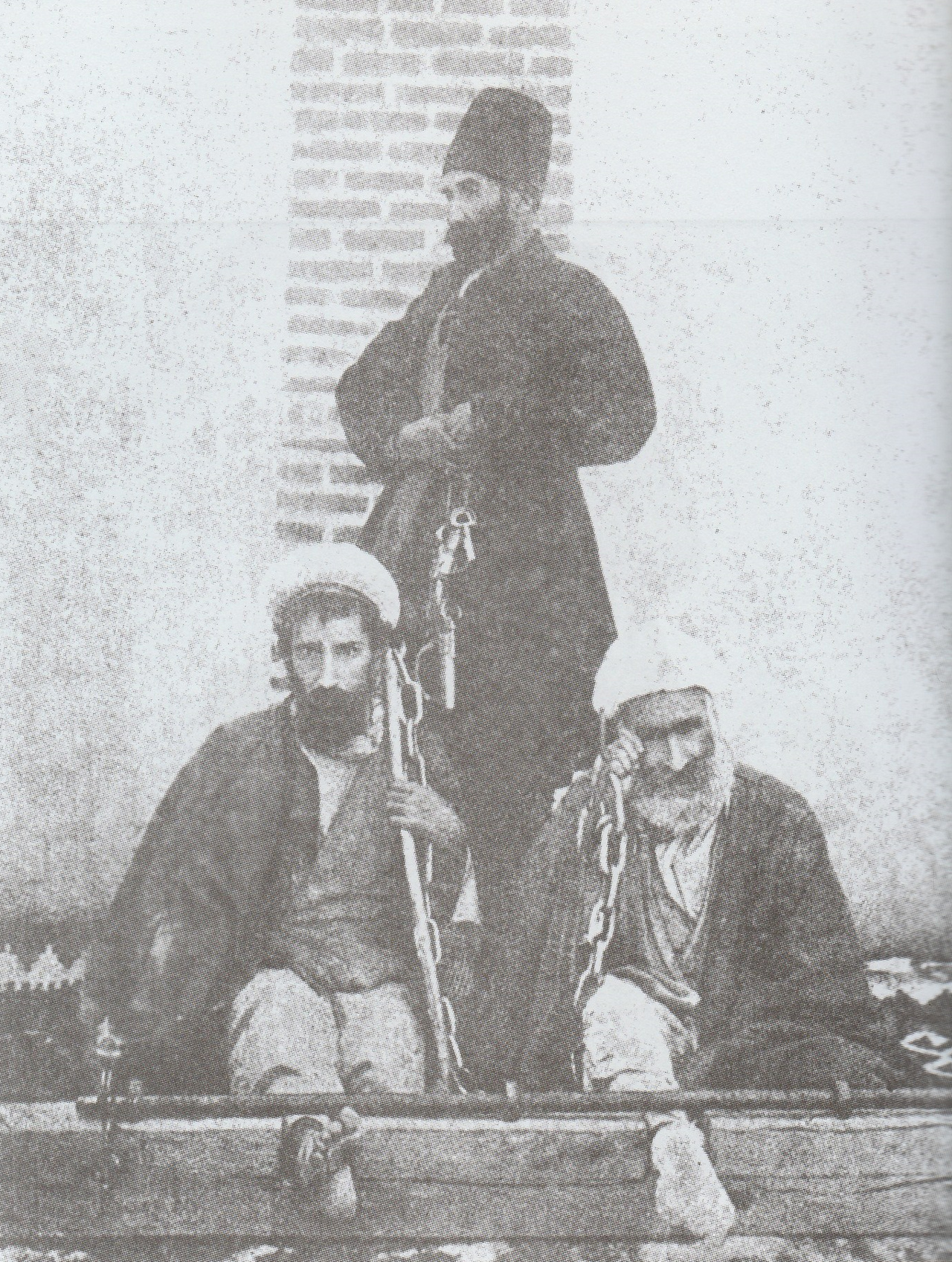
Mirza Reza was one of the men arrested in the crackdown that followed. He spent several years in prison, at times in chains alongside other suspected radicals, and later described the torture and confiscation of his property that he suffered. When he was released he travelled to Istanbul in 1895, where Afghani was living under Ottoman protection, and returned to Iran early in 1896.
1 May 1896
The shah was preparing to celebrate the fiftieth lunar year of his reign, and on the Friday before the festivities he rode out to pray at Shah Abdol-Azim, the shrine at Rey where many Qajars were buried. Mirza Reza was waiting inside. As the shah entered the sanctuary, Mirza Reza approached with a petition in his hand, a common sight, and fired a revolver hidden beneath it or under his cloak. The bullet struck the shah in the chest. He died within minutes, or soon after being carried to a side room, depending on the account.
Mirza Reza was seized on the spot. Some in the crowd wanted to kill him, but he was protected so that he could be questioned.
A dead king in a carriage
The chief minister, Amin al-Soltan, acted quickly to prevent panic and a struggle for the throne. According to the best-known account, he had the shah’s body seated upright in the royal carriage and driven back to Tehran as if the shah were only wounded, while he himself sat beside it. Only once the capital was secured and troops were in place was the death announced. The crown prince, Mozaffar al-Din Mirza, was governor at Tabriz; he travelled to Tehran and was crowned in June 1896.
The interrogation
Mirza Reza was questioned at length, and the record of his interrogation was later published. In it he said he had acted alone and from personal and public grievance: the injustice of the government, the poverty of the people, the selling of the country to foreigners, and his own treatment in prison. He spoke of Afghani as his teacher and said Afghani had told him that the shah must be removed, but he denied that there was a wider plot.
At first the government suspected the Babis, whose members had tried to kill the shah in 1852. Mirza Reza rejected this, and investigators turned to Afghani’s circle instead.
Punishment and its reach
Mirza Reza was publicly hanged in Tehran on 12 August 1896. The photographer Antoin Sevruguin recorded the execution, and the image circulated widely.
The Iranian government asked the Ottomans to hand over Afghani. They refused, but they did surrender three of his Iranian associates in Istanbul, the writers Mirza Aqa Khan Kermani and Shaykh Ahmad Ruhi and the official Khabir al-Molk. They were executed in Tabriz in July 1896 under the supervision of the new crown prince, Mohammad Ali Mirza. Afghani himself died in Istanbul of cancer in March 1897.
What the killing meant
The assassination came at the end of a decade of growing protest, from the Tobacco Protest of 1891–1892 onwards. Historians agree that it was the act of one man rather than an organised revolution, and that it did not change the system: the dynasty passed smoothly to Mozaffar al-Din and the same chief minister stayed in office. What it did change was the sense that the shah was untouchable. Mirza Reza’s statements, copied and circulated, expressed in plain words the grievances that the constitutionalists would raise a decade later.
Views of Mirza Reza remain divided. In some Iranian nationalist and revolutionary writing he is a martyr who struck at tyranny; others see him as a disturbed man used by Afghani, or simply as a murderer. Abbas Amanat’s biography of the shah treats the killing as the closing scene of a reign that had resisted every attempt to share power.
The tomb and the shrine today
Naser al-Din Shah was buried at Shah Abdol-Azim, the place where he died. His carved marble tombstone, showing the shah lying in full dress, was later moved and is now displayed at the Golestan Palace in Tehran. The shrine itself, in the historic town of Rey, is described in the site’s article on the historic city of Rey. For the reign as a whole, see Naser al-Din Shah; the next reign is told in Mozaffar al-Din Shah.
Persian words from this page
| میرزا رضا کرمانی | Mirzâ Rezâ Kermâni | the assassin’s name |
| شاه عبدالعظیم | Shâh Abdol-Azim | the shrine at Rey |
| ترور | teror | assassination |
| عریضه | arize | petition |
| بازجویی | bâzjuyi | interrogation |
| ولیعهد | valiahd | crown prince |
Sources and further reading
- Abbas Amanat, Pivot of the Universe: Nasir al-Din Shah Qajar and the Iranian Monarchy, 1831–1896 (1997).
- Edward G. Browne, The Persian Revolution of 1905–1909 (Cambridge, 1910), which includes a translation of Mirza Reza’s interrogation.
- Nikki R. Keddie, Sayyid Jamal ad-Din “al-Afghani”: A Political Biography (University of California Press, 1972).
- Encyclopaedia Iranica, “Afghani, Jamal-al-Din” (iranicaonline.org).
- Ervand Abrahamian, A History of Modern Iran (Cambridge, 2008).
Want to learn Persian? Get the free Starter Pack
Get the 14-page printable Starter Pack (all 32 letters, a 7-day reading plan, 100 core words and 20 survival phrases) and a short 5-email course. Free.
More in The Qajar Dynasty (1789–1925)
- Agha Mohammad Khan Qajar
- The Battle of Krtsanisi and Sack of Tiflis (1795)
- Fath-Ali Shah Qajar
- The Qajar Court and Harem
- The Russo-Persian War of 1804–1813
- The Battle of Aslanduz (1812)
- The Treaty of Golestan (1813)
- Abbas Mirza and the First Reforms
- The Russo-Persian War of 1826–1828
- The Treaty of Turkmenchay (1828)
- The Death of Griboyedov (1829)
- Mohammad Shah and the Siege of Herat
- The Bab and the Babi Movement
- Tahirih (Qurrat al-Ayn)
- Naser al-Din Shah Qajar
- Amir Kabir
- Dar al-Funun: Iran’s First Modern School
- The Anglo-Persian War (1856–1857)
- How Iran Lost Herat
- The Great Persian Famine of 1870–1872
- The Reuter Concession (1872)
- Naser al-Din Shah’s Journeys to Europe
- The Tobacco Protest (1891–1892)
- Mirza Malkam Khan and Early Reformers
- The Assassination of Naser al-Din Shah (1896)
- Photography in Qajar Iran
- Mozaffar ad-Din Shah
- Taj al-Saltaneh
- The D’Arcy Concession and the Discovery of Oil (1908)
- The Persian Constitutional Revolution (1905–1911)
- The First Majlis and the Constitution of 1906
- The Anglo-Russian Convention of 1907
- Mohammad Ali Shah and the Bombardment of the Majlis
- The Siege of Tabriz and Sattar Khan
- The Constitutionalists Take Tehran (1909)
- The Bakhtiari and the Revolution
- Morgan Shuster and the Russian Ultimatum (1911)
- Women in the Constitutional Revolution
- Iran in the First World War
- The Persian Famine of 1917–1919
- Mirza Kuchik Khan and the Jangali Movement
- The Anglo-Persian Agreement of 1919
- The 1921 Coup: Reza Khan and Seyyed Zia
- The End of the Qajar Dynasty (1925)
- Qajar Art, Photography and Society