W. Morgan Shuster was an American lawyer and financial administrator whom Iran’s second Majlis hired in 1911 to take charge of the country’s finances. His energetic reforms, and his refusal to respect the Russian and British zones of influence, led Russia to issue an ultimatum in November 1911 demanding his dismissal. When the Majlis refused, Russian troops advanced, the government gave in and closed the Majlis on 24 December 1911, bringing the Constitutional Revolution to an end.
| Name | William Morgan Shuster (1877–1960) |
|---|---|
| Office | Treasurer-General of Persia, May–December 1911 |
| Powers granted | Law of the Majlis, 13 June 1911 |
| Russian ultimatums | November 1911; final ultimatum 29 November, 48 hours |
| Majlis rejection | 1 December 1911 |
| Majlis closed | 24 December 1911 |
| His book | The Strangling of Persia (1912) |
Why the Majlis looked to America
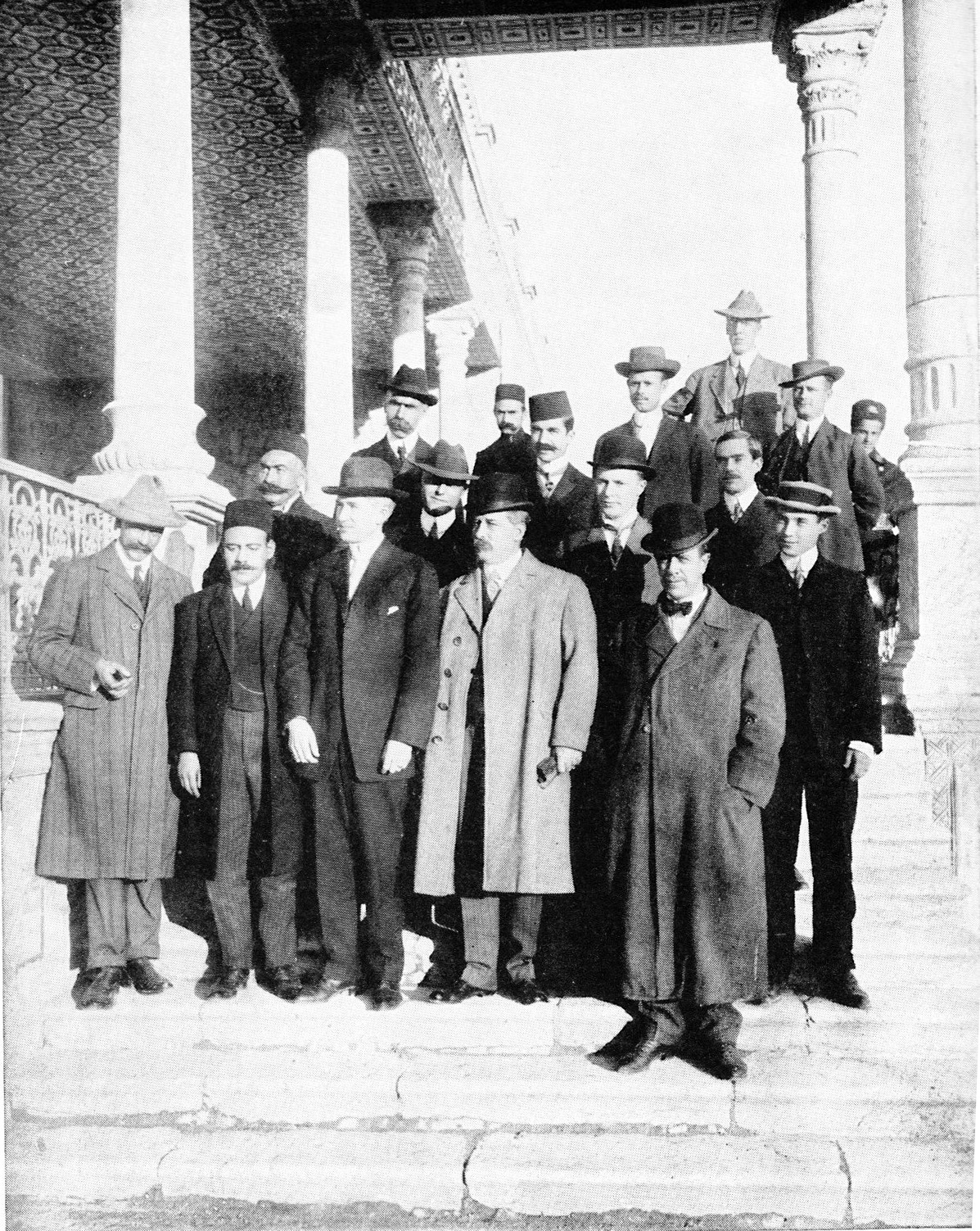
The constitutional government restored after the conquest of Tehran in 1909 had almost no money. Taxes went uncollected or into the pockets of governors and landlords, customs revenues were pledged to Russian and British loans, and the provinces were full of rebels and armed tribes. The deputies wanted foreign experts to reorganise the treasury, but did not want them from Russia or Britain, whose 1907 convention had divided Iran into zones. The United States, a distant power with no stake in Iran, seemed safe. Through the State Department the Iranian legation in Washington recruited Shuster, then 34, who had run the customs service in Cuba under American occupation and served in the colonial government of the Philippines.

Eight months as Treasurer-General
Shuster arrived in Tehran in May 1911 with a small team of American assistants. He insisted on real authority, and on 13 June 1911 the Majlis passed a law that put all the government’s financial affairs under his control. He centralised revenue in the treasury, demanded accounts from ministries and provinces, and began to build a Treasury Gendarmerie of salaried men to collect taxes directly.
He also took sides. He worked closely with the Democrat party in the Majlis and kept his distance from the legations. In his book he described the Russian and British diplomats as acting as though Iran were already theirs, and he treated the zones of influence as having no legal force in Iranian law, which was true but provocative.
The ex-shah returns
In July 1911 the deposed Mohammad Ali Shah landed on the Caspian coast to win back his throne (see Mohammad Ali Shah). His brothers Salar al-Dowleh and Shoa al-Saltaneh raised forces in the west and north. Shuster financed the government armies under Yeprem Khan and the Bakhtiari that defeated the ex-shah’s main force in September.
The quarrel with Russia
Two decisions turned Russian hostility into action. First, Shuster offered command of the Treasury Gendarmerie to Major C. B. Stokes, the British military attaché, a capable officer who spoke Persian. Russia objected that a British officer would command armed men in its zone, and London withdrew Stokes. Second, in October 1911 the government confiscated the estates of the rebel prince Shoa al-Saltaneh in Tehran, and Shuster sent his gendarmes to take possession. Russian consular officials, claiming the property was mortgaged to the Russian bank, confronted them.
Russia demanded an apology, which the Iranian government gave after Russian troops landed at Anzali. Then, on 29 November 1911, came a second ultimatum with a 48-hour limit. It demanded:
- the dismissal of Shuster and of his British assistant Lecoffre;
- a promise that Iran would hire no foreign advisers without the consent of the Russian and British legations;
- payment of the costs of the Russian troops sent to Iran.
Britain, bound to Russia by the 1907 convention and anxious about Germany, did not oppose it.
The Majlis refuses
On 1 December the Majlis met in public and voted to reject the ultimatum. Crowds filled the streets, the bazaar closed and a boycott of Russian goods spread. Shuster later wrote that some three hundred veiled women came to the Majlis with pistols hidden in their clothes and told the deputies they would kill their own husbands and sons, and themselves, rather than see the country’s independence surrendered. The story comes from Shuster himself and its details cannot be checked, but it reflects the real involvement of women’s societies in the crisis (see women in the Constitutional Revolution).
Russian columns moved from Anzali towards Qazvin, a few days’ march from the capital, and in Tabriz, Rasht and Anzali Russian soldiers clashed with local fighters. The cabinet, led by the Bakhtiari chief Samsam al-Saltaneh and backed by the regent Naser al-Molk, concluded that resistance would bring Russian occupation of Tehran. On 24 December 1911, with Yeprem Khan’s police and Bakhtiari horsemen, it closed the Majlis and accepted the ultimatum. Shuster left Iran in January 1912.
Repression in the north
In Tabriz, Russian troops crushed the city’s fighters and hanged a number of constitutionalists, including the respected cleric Seqat al-Eslam, around the day of Ashura in early January 1912. In March 1912 Russian forces in Mashhad shelled the shrine of Imam Reza, where a rebel had taken refuge. No new Majlis met until 1914.
- May 1911 Shuster arrives in Tehran
- 13 Jun 1911 Majlis gives him control of finances
- Jul–Sep 1911 Ex-shah’s return attempt, defeated
- Oct 1911 Shoa al-Saltaneh’s estates seized
- 29 Nov 1911 Russian 48-hour ultimatum
- 1 Dec 1911 Majlis rejects it
- 24 Dec 1911 Government closes the Majlis
- Jan 1912 Shuster leaves; executions in Tabriz
Judgements
Shuster’s book, The Strangling of Persia, published in New York in 1912, blamed Russia, and Britain for standing aside, and made him a hero in Iran. Some later historians are more critical of his methods. They argue that a more cautious adviser might have avoided giving Russia its pretext, and that by allying with one party in the Majlis he became part of its quarrels. Others reply that Russia was set on ending a constitutional government it saw as a threat in its zone, and would have found another reason.
Shuster returned to the United States, became a publisher and later president of the Century Company, and died in New York in 1960. In Iran he is remembered as the first American to play a political role in the country, the starting point of the page on Iran and the United States. The years of war and foreign occupation that followed are described in Iran in the First World War.
Persian words from this page
| شوستر | Shuster | Shuster |
| اولتیماتوم | oltimâtom | ultimatum |
| خزانه | khazâneh | treasury |
| ژاندارمری | zhândârmeri | gendarmerie |
| استقلال | esteqlâl | independence |
Sources and further reading
- W. Morgan Shuster, The Strangling of Persia (New York: Century, 1912).
- Robert A. McDaniel, The Shuster Mission and the Persian Constitutional Revolution (Bibliotheca Islamica, 1974).
- Firuz Kazemzadeh, Russia and Britain in Persia, 1864–1914 (Yale University Press, 1968).
- Janet Afary, The Iranian Constitutional Revolution, 1906–1911 (Columbia University Press, 1996).
- Encyclopaedia Iranica, “Shuster, William Morgan”.
Want to learn Persian? Get the free Starter Pack
Get the 14-page printable Starter Pack (all 32 letters, a 7-day reading plan, 100 core words and 20 survival phrases) and a short 5-email course. Free.
More in The Qajar Dynasty (1789–1925)
- Agha Mohammad Khan Qajar
- The Battle of Krtsanisi and Sack of Tiflis (1795)
- Fath-Ali Shah Qajar
- The Qajar Court and Harem
- The Russo-Persian War of 1804–1813
- The Battle of Aslanduz (1812)
- The Treaty of Golestan (1813)
- Abbas Mirza and the First Reforms
- The Russo-Persian War of 1826–1828
- The Treaty of Turkmenchay (1828)
- The Death of Griboyedov (1829)
- Mohammad Shah and the Siege of Herat
- The Bab and the Babi Movement
- Tahirih (Qurrat al-Ayn)
- Naser al-Din Shah Qajar
- Amir Kabir
- Dar al-Funun: Iran’s First Modern School
- The Anglo-Persian War (1856–1857)
- How Iran Lost Herat
- The Great Persian Famine of 1870–1872
- The Reuter Concession (1872)
- Naser al-Din Shah’s Journeys to Europe
- The Tobacco Protest (1891–1892)
- Mirza Malkam Khan and Early Reformers
- The Assassination of Naser al-Din Shah (1896)
- Photography in Qajar Iran
- Mozaffar ad-Din Shah
- Taj al-Saltaneh
- The D’Arcy Concession and the Discovery of Oil (1908)
- The Persian Constitutional Revolution (1905–1911)
- The First Majlis and the Constitution of 1906
- The Anglo-Russian Convention of 1907
- Mohammad Ali Shah and the Bombardment of the Majlis
- The Siege of Tabriz and Sattar Khan
- The Constitutionalists Take Tehran (1909)
- The Bakhtiari and the Revolution
- Morgan Shuster and the Russian Ultimatum (1911)
- Women in the Constitutional Revolution
- Iran in the First World War
- The Persian Famine of 1917–1919
- Mirza Kuchik Khan and the Jangali Movement
- The Anglo-Persian Agreement of 1919
- The 1921 Coup: Reza Khan and Seyyed Zia
- The End of the Qajar Dynasty (1925)
- Qajar Art, Photography and Society