The Qajar dynasty, which had ruled Iran since the 1790s, ended on 31 October 1925, when the Majlis voted to depose Ahmad Shah and entrust the government to Reza Khan. The vote was the last step in a four-year shift of power from the young shah, who spent much of the period in Europe, to the soldier who had led the coup of 1921. In December 1925 a constituent assembly made Reza Khan the first shah of the Pahlavi dynasty.
| Last Qajar shah | Ahmad Shah (born 1898, reigned 1909–1925, died 1930) |
|---|---|
| Majlis vote | 31 October 1925 (9 Aban 1304) |
| Constituent assembly | 12 December 1925, votes for Reza Khan as shah |
| Coronation of Reza Shah | 25 April 1926 |
| Qajar dynasty | From Agha Mohammad Khan (crowned 1796) to Ahmad Shah |
| Persian name | انقراض قاجاریه (enqerâz-e Qâjâriyeh, the extinction of the Qajars) |
A shah who never ruled
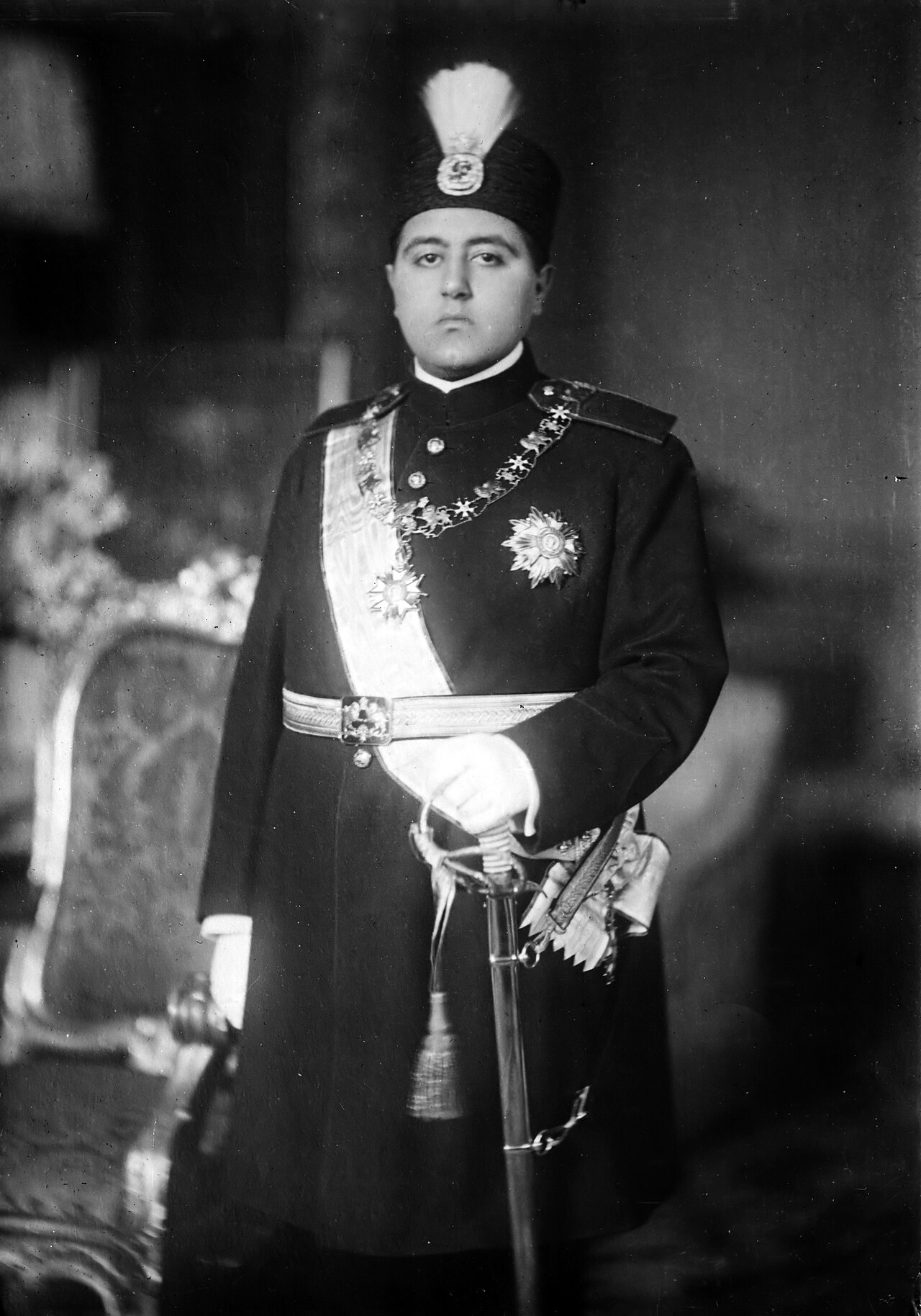
Ahmad Mirza was eleven when the constitutionalists who took Tehran in 1909 put him on his deposed father’s throne. He ruled through regents until his coronation in July 1914, and then through the war, foreign occupation and famine that followed (see Iran in the First World War). He kept to the constitution, which made him popular with some deputies, but he was seen as timid, fond of Europe and interested in money: critics said he sold grain from his estates during the famine. British officials, who considered him unreliable, also paid him a monthly subsidy during and after the war.

The rise of the Sardar Sepah, 1921–1923
After the coup of February 1921 Reza Khan became minister of war and the commander of a new army built from the Cossacks and the gendarmerie. Over the next three years the government ended one regional movement after another: the revolt of Colonel Mohammad-Taqi Khan Pesyan in Mashhad, who was killed in 1921, the Jangalis in Gilan the same year (see the Jangali movement), a gendarmerie revolt in Tabriz led by Abolqasem Lahuti in 1922, and the Kurdish leader Simko in the north-west. He took control of the revenues needed to pay the troops and placed army officers in provincial posts.
Prime ministers came and went, Ahmad Qavam and Hasan Moshir al-Dowleh among them, while the minister of war remained. In October 1923 Ahmad Shah appointed Reza Khan prime minister. Within days the shah left for Europe. He never came back.
The republican campaign of 1924
In March 1924 Turkey abolished the caliphate, a few months after Mustafa Kemal had proclaimed the Turkish Republic. Supporters of Reza Khan in the press and the new fifth Majlis began a campaign to make Iran a republic, with Reza Khan as president. Telegrams arrived from the provinces calling for a republic (جمهوری, jomhuri).
The campaign provoked strong opposition. Senior clerics feared a secular republic on the Turkish model; merchants of the bazaar closed their shops; and the cleric and deputy Sayyed Hasan Modarres led the opposition inside the Majlis. Crowds demonstrated outside the parliament. Reza Khan went to Qom to meet the leading clerics, and on 1 April 1924 he announced that the idea of a republic was dropped. He briefly resigned and left the capital; army commanders threatened to march on Tehran, and the Majlis asked him to return.
1924–1925: the last obstacles
The prime minister used the following year to remove what remained in his way. In July 1924 the killing of the American vice-consul Robert Imbrie by a mob in Tehran allowed him to impose martial law. In late 1924 he marched against Shaykh Khaz’al, the Arab ruler of Mohammareh (today Khorramshahr) in Khuzestan, who had British protection and contacts with the absent shah; Khaz’al submitted without a major battle, and Britain did not intervene. In February 1925 the Majlis gave Reza Khan supreme command of the armed forces, a power the constitution had reserved for the shah.
Ahmad Shah, in Paris, sent messages announcing his return but did not come. In the autumn of 1925 bread shortages and protests in Tehran added to the sense that the monarchy had lost control.
The vote of 31 October 1925
On 31 October 1925 the Majlis met to consider a short bill. It declared the end of the Qajar monarchy “in the name of the happiness of the nation”, entrusted the provisional government to Reza Khan, and called a constituent assembly to decide the future form of government. It passed by a large majority. Modarres protested and walked out. Four deputies spoke against the bill while praising Reza Khan’s service to the country: Hasan Taqizadeh, Hosein Ala, Mohammad Mosaddegh and Yahya Dowlatabadi. They argued that the constitution did not allow parliament to change the dynasty and, in Mosaddegh’s case, that a man as able as Reza Khan was needed as a responsible prime minister, not as an unaccountable shah. The crown prince, Mohammad Hasan Mirza, was sent out of the country within days.
The constituent assembly met in December and on 12 December 1925 amended the constitution to give the crown to Reza Khan and his heirs. He took the oath on 15 December and was crowned at the Golestan Palace on 25 April 1926 (see Golestan Palace).
- Feb 1921 Coup; Reza Khan becomes commander of the army
- Oct 1923 Reza Khan becomes prime minister; Ahmad Shah leaves for Europe
- Mar–Apr 1924 Republican campaign launched and abandoned
- Jul 1924 Imbrie killed; martial law in Tehran
- Nov 1924 Shaykh Khaz’al surrenders
- Feb 1925 Majlis makes Reza Khan commander-in-chief
- 31 Oct 1925 Majlis deposes the Qajar dynasty
- 12 Dec 1925 Constituent assembly makes Reza Khan shah
- 21 Feb 1930 Ahmad Shah dies near Paris
After the fall
Ahmad Shah lived on in France and died at Neuilly, near Paris, in February 1930, aged 32. He was buried in Karbala. The Qajar princes lost their political role, but many of the dynasty’s descendants and its great families remained prominent in Iranian life under the Pahlavis, as officials, diplomats, scholars and artists. Mosaddegh himself was a Qajar on his mother’s side.
Historians differ on how the end came. Pahlavi-era histories presented it as the nation’s choice of a saviour; others stress the pressure of the army and the managed elections that produced the fifth Majlis. Most, including Cyrus Ghani and Homa Katouzian, agree that many Iranians, worn down by war, famine and weak governments, accepted a strong ruler, and that the old elites who might have defended the dynasty had little faith in Ahmad Shah. The story continues with Reza Shah Pahlavi and the wider Pahlavi era.
Persian words from this page
| قاجار | Qâjâr | Qajar |
| انقراض | enqerâz | extinction, end (of a dynasty) |
| جمهوری | jomhuri | republic |
| نخستوزیر | nakhost-vazir | prime minister |
| مجلس مؤسسان | majles-e mo’assesân | constituent assembly |
| پهلوی | Pahlavi | Pahlavi |
Sources and further reading
- Cyrus Ghani, Iran and the Rise of Reza Shah: From Qajar Collapse to Pahlavi Power (I.B. Tauris, 1998).
- Homa Katouzian, State and Society in Iran: The Eclipse of the Qajars and the Emergence of the Pahlavis (I.B. Tauris, 2000).
- Encyclopaedia Iranica, “Aḥmad Shah Qājār”: iranicaonline.org
- Abbas Amanat, Iran: A Modern History (Yale University Press, 2017).
- Ervand Abrahamian, A History of Modern Iran (Cambridge University Press, 2008).
Want to learn Persian? Get the free Starter Pack
Get the 14-page printable Starter Pack (all 32 letters, a 7-day reading plan, 100 core words and 20 survival phrases) and a short 5-email course. Free.
More in The Qajar Dynasty (1789–1925)
- Agha Mohammad Khan Qajar
- The Battle of Krtsanisi and Sack of Tiflis (1795)
- Fath-Ali Shah Qajar
- The Qajar Court and Harem
- The Russo-Persian War of 1804–1813
- The Battle of Aslanduz (1812)
- The Treaty of Golestan (1813)
- Abbas Mirza and the First Reforms
- The Russo-Persian War of 1826–1828
- The Treaty of Turkmenchay (1828)
- The Death of Griboyedov (1829)
- Mohammad Shah and the Siege of Herat
- The Bab and the Babi Movement
- Tahirih (Qurrat al-Ayn)
- Naser al-Din Shah Qajar
- Amir Kabir
- Dar al-Funun: Iran’s First Modern School
- The Anglo-Persian War (1856–1857)
- How Iran Lost Herat
- The Great Persian Famine of 1870–1872
- The Reuter Concession (1872)
- Naser al-Din Shah’s Journeys to Europe
- The Tobacco Protest (1891–1892)
- Mirza Malkam Khan and Early Reformers
- The Assassination of Naser al-Din Shah (1896)
- Photography in Qajar Iran
- Mozaffar ad-Din Shah
- Taj al-Saltaneh
- The D’Arcy Concession and the Discovery of Oil (1908)
- The Persian Constitutional Revolution (1905–1911)
- The First Majlis and the Constitution of 1906
- The Anglo-Russian Convention of 1907
- Mohammad Ali Shah and the Bombardment of the Majlis
- The Siege of Tabriz and Sattar Khan
- The Constitutionalists Take Tehran (1909)
- The Bakhtiari and the Revolution
- Morgan Shuster and the Russian Ultimatum (1911)
- Women in the Constitutional Revolution
- Iran in the First World War
- The Persian Famine of 1917–1919
- Mirza Kuchik Khan and the Jangali Movement
- The Anglo-Persian Agreement of 1919
- The 1921 Coup: Reza Khan and Seyyed Zia
- The End of the Qajar Dynasty (1925)
- Qajar Art, Photography and Society