The D’Arcy Concession was a sixty-year oil concession that Mozaffar ad-Din Shah granted to the British investor William Knox D’Arcy on 28 May 1901, covering about three-quarters of Iran. After seven years of costly and nearly abandoned drilling, oil was struck at Masjed Soleyman in Khuzestan on 26 May 1908, the first commercial oil find in the Middle East. It led to the founding of the Anglo-Persian Oil Company in 1909 and made oil the centre of Iran’s relations with Britain for the next half-century.
| Signed | 28 May 1901, Tehran |
|---|---|
| Concessionaire | William Knox D’Arcy (1849–1917) |
| Area | All of Iran except five northern provinces: Azerbaijan, Gilan, Mazandaran, Astarabad, Khorasan |
| Term | 60 years |
| Iran’s share | £20,000 cash, £20,000 in shares, 16% of annual net profits |
| Discovery | 26 May 1908, Masjed Soleyman, Khuzestan |
| Company | Anglo-Persian Oil Company, founded April 1909 |
| Persian name | قرارداد دارسی qarârdâd-e Dârsi |
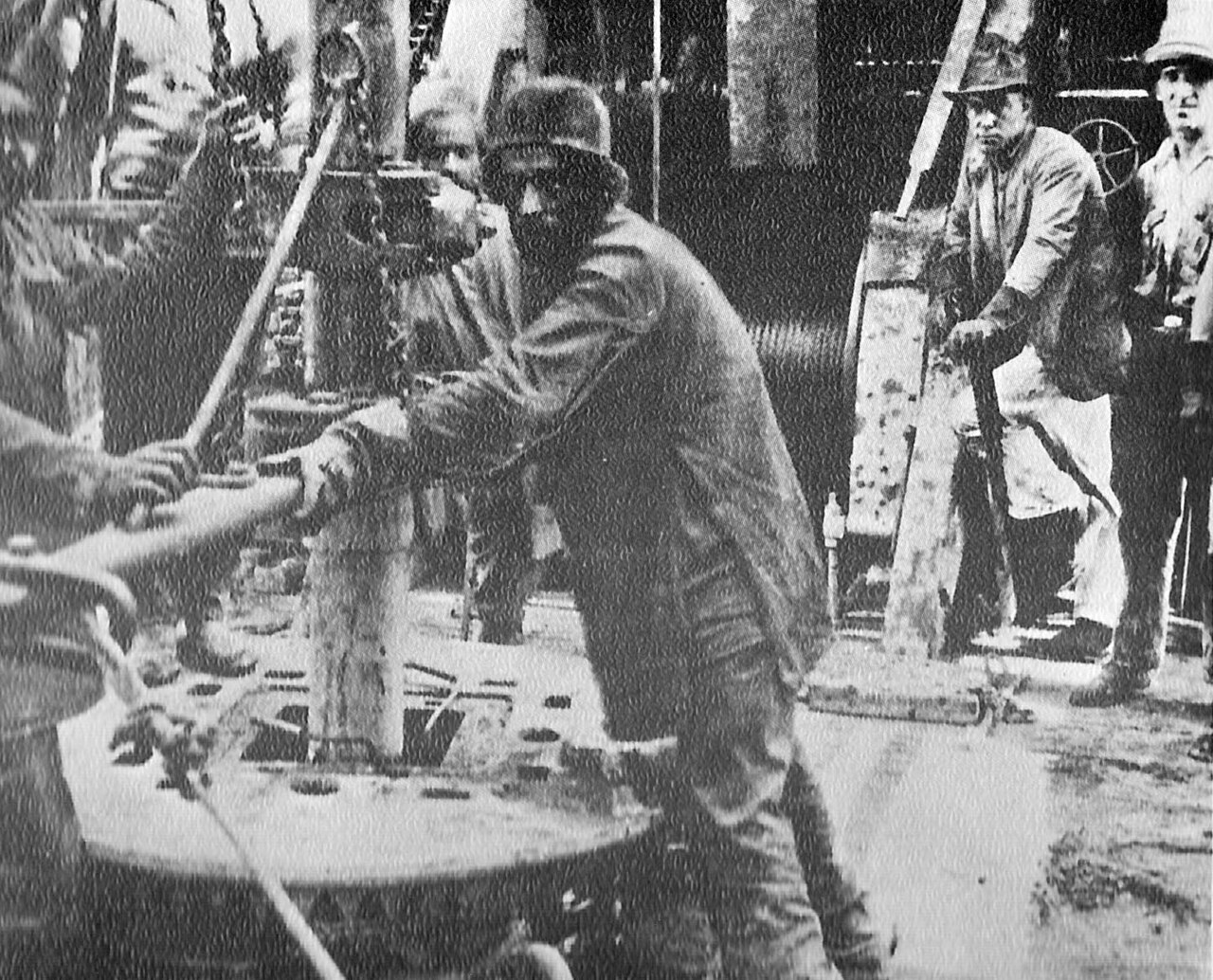

A gold-mine fortune looks for oil
William Knox D’Arcy was an English-born lawyer who had made a fortune in Australia from the Mount Morgan gold mine in Queensland. In 1900 he was approached in London with a proposal from Antoine Kitabgi, an official of the Iranian customs service, and others who believed oil could be found in western Iran, where seepages had been known since antiquity and a French survey by Jacques de Morgan had reported signs of petroleum. Sir Henry Drummond Wolff, a former British minister in Tehran, helped bring the parties together.
The Iranian government badly needed money, as the page on Mozaffar ad-Din Shah explains. D’Arcy’s agent, Alfred Marriott, went to Tehran in 1901 and negotiated with the chief minister Amin al-Soltan. Russia, which saw a British concession as a threat, tried to block the deal; to win the support of officials, D’Arcy’s side made additional payments. The concession was signed on 28 May 1901.
What the concession said
- D’Arcy received the exclusive right for sixty years to explore for, extract, refine and export oil and gas across Iran, apart from the five northern provinces near the Russian border.
- He could lay pipelines to the Persian Gulf.
- Iran would receive £20,000 in cash, £20,000 in paid-up shares, and 16 per cent of the annual net profits of any company formed to work the concession.
- Equipment imported for the work was free of customs duties, and the government was not to grant similar rights to anyone else in the area.
Compared with the Reuter Concession of 1872 it was narrow in scope, and at the time it caused little public stir. Nobody yet knew that oil would be found.
Seven years of drilling
D’Arcy hired George Bernard Reynolds, a British engineer with drilling experience in Sumatra, to lead the work. The first site was Chiah Surkh, in the far west near the Ottoman frontier, reached by mule over mountain tracks. Drilling began at the end of 1902, and a small flow was found in early 1904, but far too little to be worth piping to the coast.
By 1904 D’Arcy had spent much of his fortune. Fearing he would sell to foreign interests, the British Admiralty, already interested in oil as a fuel for warships, helped arrange a rescue. In 1905 the Glasgow-based Burmah Oil Company joined D’Arcy in a new Concessions Syndicate, which took over the costs. Drilling moved south to the Bakhtiari country of Khuzestan. To work there, the syndicate had to agree with the Bakhtiari khans, who controlled the land; in 1905 they were promised a share in a company to work the area and paid to guard the wells.
26 May 1908: Masjed Soleyman
The new site was a valley the local people called Maidan-e Naftun, “the plain of oil”, near the ruins of an ancient fire temple known as Masjed-e Soleyman (Solomon’s mosque). Two wells were begun in early 1908. By spring the Burmah directors had lost patience and sent a letter telling Reynolds to stop work unless he struck oil soon.
Before the order arrived, in the early hours of 26 May 1908, the well known as Number 1 struck oil at a depth usually given as about 1,180 feet (360 metres), and a gusher rose above the derrick. It was the first commercial oil discovery in the Middle East. The well, Masjed Soleyman No. 1, is preserved today as a historic site.
From a well to a company
- April 1909 The Anglo-Persian Oil Company (APOC) is founded in London, with Burmah Oil as the main shareholder.
- 1909 APOC leases land on Abadan Island from Shaykh Khaz’al of Mohammareh for a refinery.
- 1911 A pipeline from Masjed Soleyman to Abadan is completed.
- 1912–1913 The Abadan refinery starts working, soon one of the largest in the world.
- 1914 The British government, led by Winston Churchill at the Admiralty, buys a controlling interest in APOC to secure oil for the Royal Navy.
A town grew up at Masjed Soleyman, and Abadan became an oil city with a refinery, workers’ housing and a mix of Iranian, Indian and British staff, a story continued in Abadan and Khorramshahr.
Why it mattered for Iran
The discovery came during the Constitutional Revolution, when the central government was weak, and it gave Britain a lasting strategic interest in southwest Iran. The 1907 Anglo-Russian agreement had already placed this region in a neutral zone, and British officials now cultivated the Bakhtiari khans and the Shaykh of Mohammareh as local partners.
For Iran, the 16 per cent share soon became a grievance. The company calculated profits in ways that Iranian governments disputed, and royalties were small compared with what Britain earned in taxes and fuel. Reza Shah cancelled the concession in 1932 and signed a new agreement in 1933, extending it to 1993. The quarrel ended only with the nationalisation of Iranian oil in 1951 under Mohammad Mosaddegh. Oil remains central to Iran’s economy, as the page on the economy of Iran describes.
Persian words from this page
| نفت | naft | oil, petroleum |
| چاه نفت | châh-e naft | oil well |
| مسجد سلیمان | Masjed Soleymân | Masjed Soleyman |
| پالایشگاه | pâlâyeshgâh | refinery |
| آبادان | Âbâdân | Abadan |
| قرارداد | qarârdâd | contract, agreement |
| بختیاری | Bakhtiâri | Bakhtiari |
Sources and further reading
- R. W. Ferrier, The History of the British Petroleum Company, vol. 1: The Developing Years, 1901–1932 (Cambridge, 1982).
- Encyclopaedia Iranica, “D’Arcy, William Knox” and “Anglo-Persian Oil Company” (iranicaonline.org).
- Daniel Yergin, The Prize: The Epic Quest for Oil, Money and Power (1991), chapter on Persia.
- Ervand Abrahamian, A History of Modern Iran (Cambridge, 2008).
- Firuz Kazemzadeh, Russia and Britain in Persia, 1864–1914 (Yale, 1968).
Want to learn Persian? Get the free Starter Pack
Get the 14-page printable Starter Pack (all 32 letters, a 7-day reading plan, 100 core words and 20 survival phrases) and a short 5-email course. Free.
More in The Qajar Dynasty (1789–1925)
- Agha Mohammad Khan Qajar
- The Battle of Krtsanisi and Sack of Tiflis (1795)
- Fath-Ali Shah Qajar
- The Qajar Court and Harem
- The Russo-Persian War of 1804–1813
- The Battle of Aslanduz (1812)
- The Treaty of Golestan (1813)
- Abbas Mirza and the First Reforms
- The Russo-Persian War of 1826–1828
- The Treaty of Turkmenchay (1828)
- The Death of Griboyedov (1829)
- Mohammad Shah and the Siege of Herat
- The Bab and the Babi Movement
- Tahirih (Qurrat al-Ayn)
- Naser al-Din Shah Qajar
- Amir Kabir
- Dar al-Funun: Iran’s First Modern School
- The Anglo-Persian War (1856–1857)
- How Iran Lost Herat
- The Great Persian Famine of 1870–1872
- The Reuter Concession (1872)
- Naser al-Din Shah’s Journeys to Europe
- The Tobacco Protest (1891–1892)
- Mirza Malkam Khan and Early Reformers
- The Assassination of Naser al-Din Shah (1896)
- Photography in Qajar Iran
- Mozaffar ad-Din Shah
- Taj al-Saltaneh
- The D’Arcy Concession and the Discovery of Oil (1908)
- The Persian Constitutional Revolution (1905–1911)
- The First Majlis and the Constitution of 1906
- The Anglo-Russian Convention of 1907
- Mohammad Ali Shah and the Bombardment of the Majlis
- The Siege of Tabriz and Sattar Khan
- The Constitutionalists Take Tehran (1909)
- The Bakhtiari and the Revolution
- Morgan Shuster and the Russian Ultimatum (1911)
- Women in the Constitutional Revolution
- Iran in the First World War
- The Persian Famine of 1917–1919
- Mirza Kuchik Khan and the Jangali Movement
- The Anglo-Persian Agreement of 1919
- The 1921 Coup: Reza Khan and Seyyed Zia
- The End of the Qajar Dynasty (1925)
- Qajar Art, Photography and Society