The Great Persian Famine of 1870–1872 was the worst famine of nineteenth-century Iran. After years of low rainfall, harvests failed across the central plateau in 1870 and 1871, and hunger, cholera and typhus followed. Estimates of the dead range from a few hundred thousand to several million; the figure most often used by historians is around 1.5 million, a large share of the country’s population.
| Dates | Worst from 1870 to 1872 (1287–1289 AH) |
|---|---|
| Ruler | Naser al-Din Shah |
| Main causes | Drought, failed harvests, hoarding and speculation, weak administration, epidemics |
| Hardest hit | Fars, Isfahan, Yazd, Mashhad and Khorasan, Zanjan, Hamadan, Kurdistan |
| Death toll | Disputed: from 200,000 to over 2 million in most estimates; about 1.5 million often cited |
| Persian name | قحطی بزرگ qahti-ye bozorg, “the great famine” |
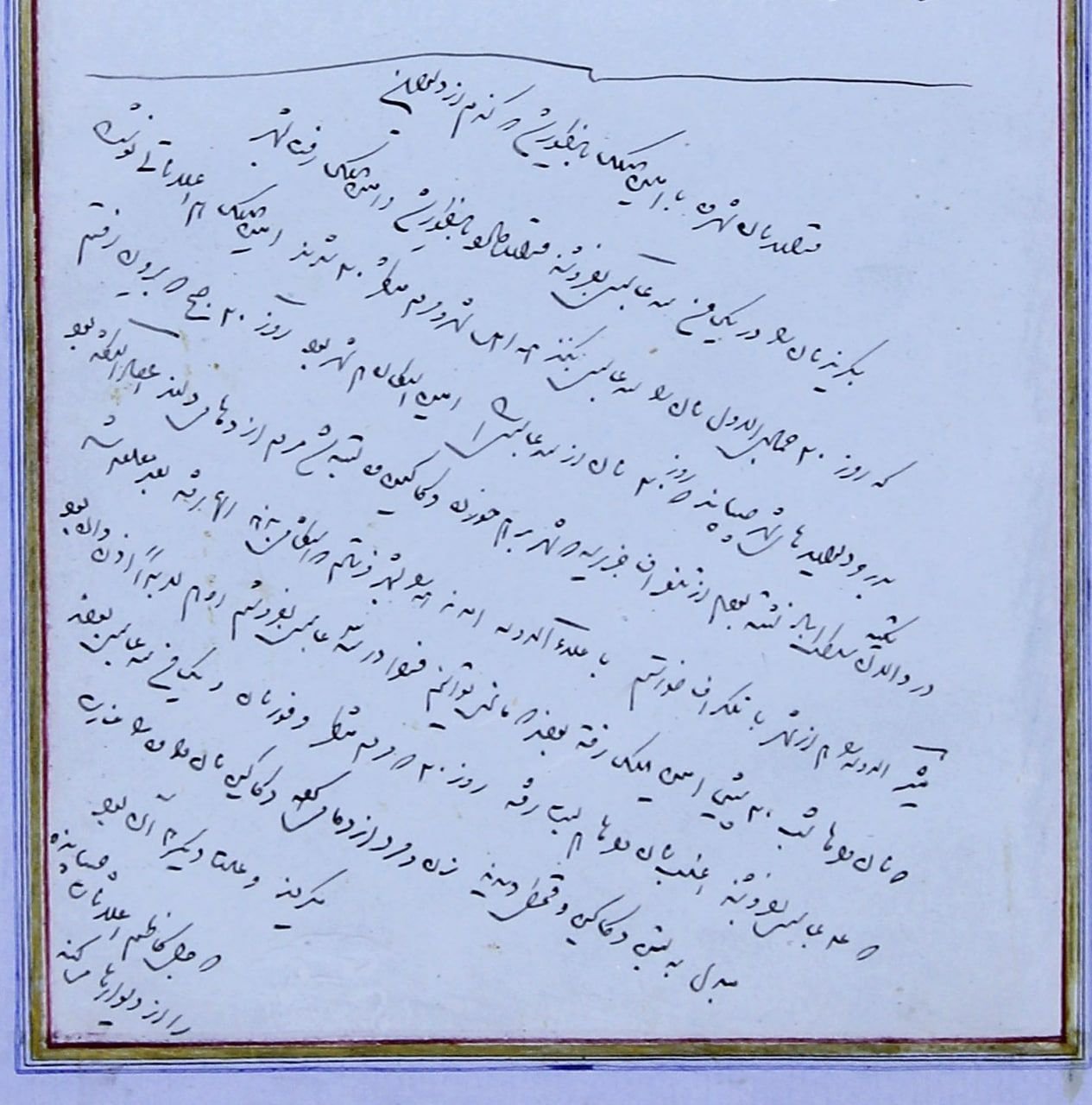

Years without rain
Iran’s food supply depended on winter rain and snow, on the underground channels called qanats, and on springs and rivers fed by the mountains. According to the Encyclopaedia Iranica, rainfall had been below average for most years since 1863–64, and the flow of many qanats and springs had fallen. The rains failed again in 1869–70 and 1870–71. Wheat and barley harvests collapsed over much of the plateau, and the herds of the nomads in Fars and the Zagros died for lack of pasture.
A very cold winter in 1871–72, with heavy snow, then cut the roads. Even where grain existed, it could not be moved to the cities that needed it.
Prices, hoarding and the cities
As harvests failed, the price of grain and bread rose many times over. Landowners, grain dealers and officials who controlled stores held them back to sell later at higher prices. Contemporary reports name clerics and governors among them: in Isfahan, the Iranica article records, the Friday prayer leader and the head of customs blocked shipments of grain, and landowners around Hamadan disguised where their grain came from by routing it through Qom. A ban on grain exports, decreed earlier in the 1860s, was widely evaded.
The poor of the towns, labourers and artisans whose wages could not keep up, suffered most. Crowds of villagers and nomads moved to the cities in search of food; starving people from Fars reached the port of Bushehr. Disease followed hunger. Cholera and typhus spread among weakened people, and many of the deaths in the famine years came from epidemics rather than starvation alone.
What witnesses counted
No census existed, so what we know comes from the reports of British diplomats, telegraph officers, missionaries and travellers, and from Persian chronicles. Their figures are local and often rough, but they give a sense of scale:
- In Zanjan, the American missionary James Bassett reported that 11,630 bodies were counted leaving the city gates over nine months.
- For Mashhad, a British officer estimated 24,000 dead in the city and around 100,000 in the surrounding district.
- Oliver St John, a British telegraph officer, judged that the provinces of Isfahan, Yazd and Mashhad had lost about a third of their people.
- In Tehran, aid from Europe reached the Jewish community only after some 300 of its members had died.
Not everywhere suffered equally. The Persian Gulf coast could import rice by sea; Shahrud drew grain from the fertile Astarabad plain; and Kerman was spared the worst, by some accounts thanks to its governor’s measures.
Relief and the government’s response
The Qajar state had no system for famine relief. In Tehran, the government imported grain and sold it to bakers below cost, and refugees were hired for road building and fortification work. Elsewhere much depended on individual governors, some of whom acted while others profited.
Help also came from abroad, mostly through missionaries and religious communities. A Persian relief fund committee collected money in London, and other appeals were made in Europe and the United States. In Isfahan the English missionary Robert Bruce fed about 7,000 people. Relief was at first directed mainly to Christians and Jews, and later extended to Muslims.
How many died: the debate
The death toll is one of the most argued numbers in Qajar history, partly because the size of Iran’s population before the famine is itself uncertain.
- Contemporary estimates ranged from 200,000–300,000 (Frederic Goldsmid) and about 500,000 (Oliver St John) to 1.5 million (the traveller H. W. Bellew) and 3 million (Bassett).
- Fereydun Adamiyat, the Iranian historian, put the figure at about 2 million.
- Gad Gilbar estimated about 1.5 million, and Shoko Okazaki, in the main English-language study of the famine (1986), accepted a figure of that order.
- Mohammad Gholi Majd has argued for far higher numbers, around two-thirds of the population; most historians reject his method.
Historians also disagree about causes. One view, common in older writing, is that peasants had switched land from grain to cash crops such as opium and cotton, leaving the country short of food. Okazaki argued that this played little part and that the core cause was two years of severe drought, made deadly by hoarding, speculation and a government unable to move grain. Xavier de Planhol summed it up as natural disaster made worse by poor administration.
After the famine
The famine left villages empty and deepened rural poverty for years. It also came just as the shah’s government was looking for foreign capital and ways to develop the country: in 1872 Naser al-Din granted the sweeping Reuter Concession to a British financier. A second catastrophe, the famine of 1917–1919, struck during the First World War. For the wider reign, see Naser al-Din Shah; for the cities most affected, Isfahan and Mashhad.
Persian words from this page
| قحطی | qahti | famine |
| خشکسالی | khoshksâli | drought |
| گندم | gandom | wheat |
| نان | nân | bread |
| احتکار | ehtekâr | hoarding |
| وبا | vabâ | cholera |
| قنات | qanât | underground water channel |
Sources and further reading
- Encyclopaedia Iranica, “Famines“.
- Shoko Okazaki, “The Great Persian Famine of 1870–71”, Bulletin of the School of Oriental and African Studies 49 (1986).
- Gad G. Gilbar, “Demographic Developments in Late Qajar Persia, 1870–1906”, Asian and African Studies 11 (1976).
- Frederic J. Goldsmid (ed.), Eastern Persia: An Account of the Journeys of the Persian Boundary Commission, 1870–71–72 (1876), with eyewitness notes on the famine.
- Abbas Amanat, Iran: A Modern History (2017).
Want to learn Persian? Get the free Starter Pack
Get the 14-page printable Starter Pack (all 32 letters, a 7-day reading plan, 100 core words and 20 survival phrases) and a short 5-email course. Free.
More in The Qajar Dynasty (1789–1925)
- Agha Mohammad Khan Qajar
- The Battle of Krtsanisi and Sack of Tiflis (1795)
- Fath-Ali Shah Qajar
- The Qajar Court and Harem
- The Russo-Persian War of 1804–1813
- The Battle of Aslanduz (1812)
- The Treaty of Golestan (1813)
- Abbas Mirza and the First Reforms
- The Russo-Persian War of 1826–1828
- The Treaty of Turkmenchay (1828)
- The Death of Griboyedov (1829)
- Mohammad Shah and the Siege of Herat
- The Bab and the Babi Movement
- Tahirih (Qurrat al-Ayn)
- Naser al-Din Shah Qajar
- Amir Kabir
- Dar al-Funun: Iran’s First Modern School
- The Anglo-Persian War (1856–1857)
- How Iran Lost Herat
- The Great Persian Famine of 1870–1872
- The Reuter Concession (1872)
- Naser al-Din Shah’s Journeys to Europe
- The Tobacco Protest (1891–1892)
- Mirza Malkam Khan and Early Reformers
- The Assassination of Naser al-Din Shah (1896)
- Photography in Qajar Iran
- Mozaffar ad-Din Shah
- Taj al-Saltaneh
- The D’Arcy Concession and the Discovery of Oil (1908)
- The Persian Constitutional Revolution (1905–1911)
- The First Majlis and the Constitution of 1906
- The Anglo-Russian Convention of 1907
- Mohammad Ali Shah and the Bombardment of the Majlis
- The Siege of Tabriz and Sattar Khan
- The Constitutionalists Take Tehran (1909)
- The Bakhtiari and the Revolution
- Morgan Shuster and the Russian Ultimatum (1911)
- Women in the Constitutional Revolution
- Iran in the First World War
- The Persian Famine of 1917–1919
- Mirza Kuchik Khan and the Jangali Movement
- The Anglo-Persian Agreement of 1919
- The 1921 Coup: Reza Khan and Seyyed Zia
- The End of the Qajar Dynasty (1925)
- Qajar Art, Photography and Society