Britain was never Iran’s neighbour, yet for about 150 years it was one of the two foreign powers that mattered most in Tehran. Its interest began with trade and the defence of India, grew with the discovery of oil in 1908, and reached its height in the occupation of 1941 and the coup of 1953. The memory of that influence is so strong that a Persian phrase blames the British for almost anything that goes wrong.
| First official contact | English East India Company trade with Safavid Iran, from 1616 |
|---|---|
| Main British aims | Defence of India, the Persian Gulf, oil |
| War | Anglo-Persian War, 1856 to 1857 |
| Oil | D’Arcy concession 1901; oil struck at Masjed Soleyman 1908; nationalised 1951 |
| Breaks in relations | 1952 to 1953, 1980 to 1988 (partial), 1989 to 1990, 2011 to 2015 |
Merchants and adventurers
The English first appeared in Safavid Iran as traders and freelancers. The Sherley brothers, who arrived in 1598, offered Shah Abbas military advice and acted as his envoys to Europe. The East India Company began buying silk through the port of Jask in 1616, and in 1622 its ships helped Abbas’s army expel the Portuguese from Hormuz (see the capture of Hormuz). In return the Company won customs revenues at the new port of Bandar Abbas.
Defending India
From 1800 British policy in Iran was run largely from India. John Malcolm’s mission of 1800 sought Iranian help against Afghan raids and the French; treaties of 1809 and 1814 promised British support against European attack, but London did not help when Russia defeated Iran in the war of 1826 to 1828. Britain’s chief fear became Russian influence and Iranian ambitions in Afghanistan. When Mohammad Shah besieged Herat in 1838, a British force landed on Kharg Island; when Naser al-Din Shah took Herat in 1856, Britain declared war, landed at Bushehr and Mohammerah, and forced Iran in the Treaty of Paris of 1857 to give up its claims (see the Anglo-Persian War and the loss of Herat).
British officers from India later drew Iran’s eastern frontiers with Baluchistan and in Sistan in the 1870s and 1900s, and the Indo-European telegraph line, built across Iran in the 1860s, linked London with India.
Concessions and protest
The Qajars sold rights to foreign companies to raise money. The Reuter concession of 1872, granted to a British subject, would have handed over railways, mines and much else; protest at home and Russian pressure forced its cancellation. In 1890 a British company received a monopoly on Iranian tobacco, and the nationwide tobacco protest of 1891 to 1892, backed by a religious ruling against smoking, made the shah cancel it. During the Constitutional Revolution in 1906 thousands of protesters took sanctuary (بست bast) in the grounds of the British legation, but a year later Britain signed the Anglo-Russian Convention dividing Iran into spheres of influence, which many constitutionalists saw as betrayal.

Oil
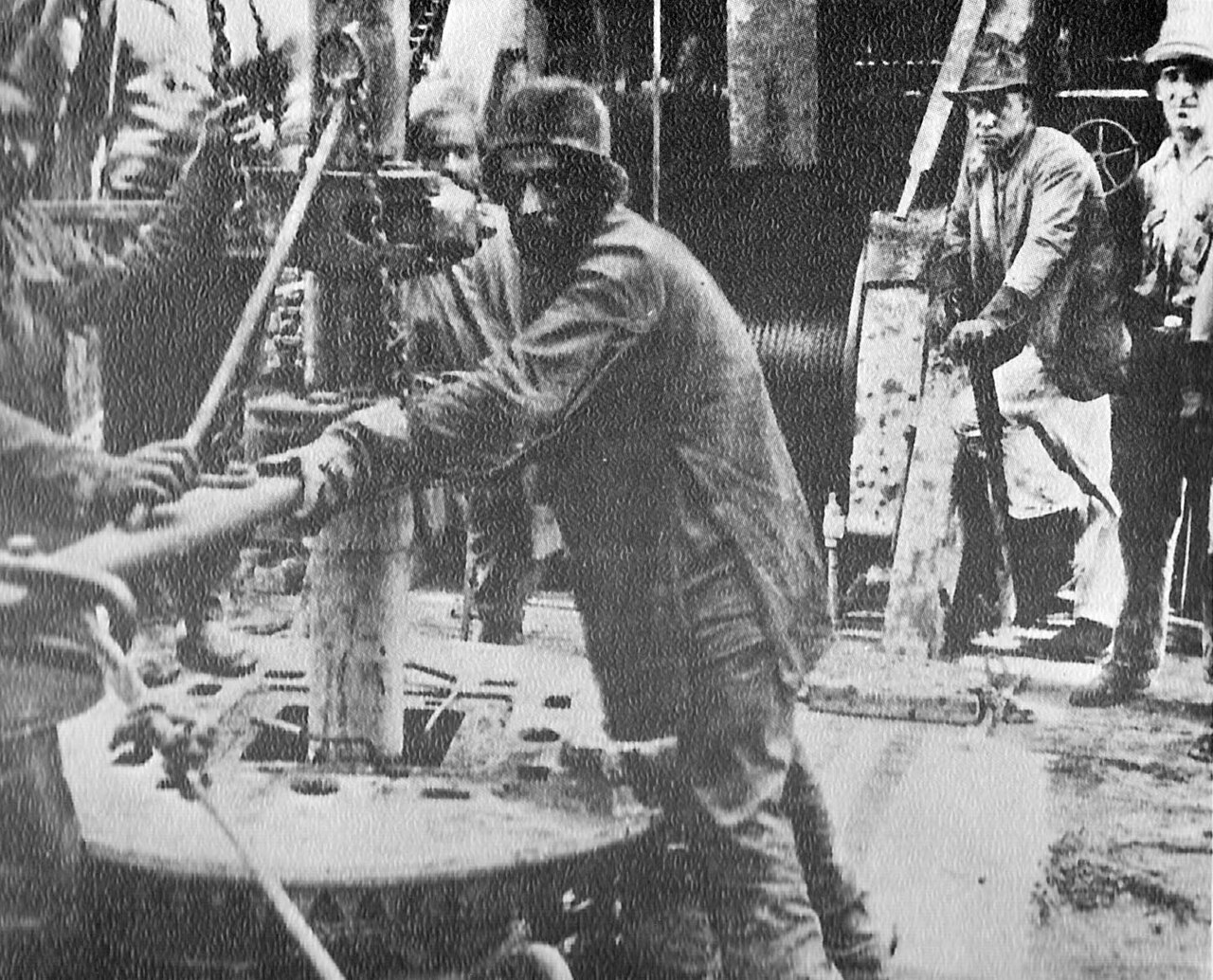
In 1901 William Knox D’Arcy obtained a 60-year concession covering most of Iran (see the D’Arcy concession). Oil was struck at Masjed Soleyman in May 1908, the Anglo-Persian Oil Company was founded in 1909, and in 1914 the British government, led by Winston Churchill at the Admiralty, bought a controlling share to fuel the navy. The refinery at Abadan became one of the largest in the world. Iran received a small share of profits, a grievance that grew for forty years.
From the 1919 agreement to the occupation
After the First World War Lord Curzon tried to make Iran a virtual protectorate through the Anglo-Persian Agreement of 1919, which the Majlis never ratified. British officers in northern Iran, notably General Edmund Ironside, encouraged the Cossack officer Reza Khan, who seized Tehran in the coup of 1921; how far Britain planned the coup is still debated. As Reza Shah he cancelled and renegotiated the oil concession in 1933. In 1941 Britain and the Soviet Union invaded Iran and made him abdicate.
Nationalisation and the 1953 coup
In 1951 the Majlis, led by Mohammad Mosaddegh, nationalised the oil industry. Britain imposed an embargo, took the case to the International Court of Justice, which ruled in 1952 that it had no jurisdiction, and was expelled from Iran. British intelligence then joined the CIA in planning the coup of August 1953 that overthrew Mosaddegh. The company, renamed British Petroleum in 1954, kept a 40 per cent share in the new international consortium, but the United States replaced Britain as the leading Western power in Iran. In 1971 Britain withdrew its forces from the Persian Gulf.
After 1979
Relations with the Islamic Republic have been broken or downgraded several times: after Ayatollah Khomeini’s 1989 fatwa against the British author Salman Rushdie, after protesters stormed the British embassy in Tehran in November 2011 (it reopened in 2015), and through a long dispute over dual nationals held in Iran. Nazanin Zaghari-Ratcliffe, detained in 2016, was released in March 2022 when Britain paid a debt of about 394 million pounds owed since the 1970s for undelivered tanks; Iran denied any link between the two. In January 2023 Iran executed Alireza Akbari, a British-Iranian former deputy defence minister, on spying charges that Britain called politically motivated.
In February 2026 Britain sanctioned Iranian police and Revolutionary Guard officials over the killing of protesters (see the protests of 2025 to 2026). During the US-Israeli war on Iran that began on 28 February 2026 (see the war of 2026), Prime Minister Keir Starmer called the Iranian government “utterly abhorrent” and said it had backed more than 20 “potentially lethal attacks” in the UK over the previous year. On 1 November 2026 Iran’s foreign ministry announced it had designated MI6 a “hostile group” and the Royal Navy and Royal Air Force “terrorist organisations”, describing the step as reciprocal.
“It’s the work of the English”
The phrase کار انگلیسیهاست (kâr-e Engelisi-hâst), “it’s the work of the English”, sums up a belief that Britain secretly arranges Iranian events. Iraj Pezeshkzad’s comic novel My Uncle Napoleon (1973), whose hero sees British plots everywhere, made fun of it and became a famous television series. Historians such as Ervand Abrahamian and Ali Ansari note that the belief grew from real episodes, the 1907 convention, the oil company and 1953, even if it greatly exaggerates British power after the 1950s.
Persian words from this page
| انگلیس | Engelis | England, Britain |
| نفت | naft | oil |
| امتیاز | emtiyâz | concession |
| بست | bast | sanctuary, sit-in |
| سفارت | sefârat | embassy |
| دایی جان ناپلئون | Dâyi Jân Nâpel’on | My Uncle Napoleon |
Britain’s partner in carving up Iran in 1907 is the subject of Iran and Russia; its successor as the leading Western power is covered in Iran and the United States.
Sources and further reading
- Denis Wright, The English amongst the Persians (1977) and The Persians amongst the English (1985).
- Firuz Kazemzadeh, Russia and Britain in Persia (1968).
- Ervand Abrahamian, The Coup: 1953, the CIA, and the Roots of Modern U.S.-Iranian Relations (2013).
- Ali M. Ansari, Modern Iran since 1797: Reform and Revolution (2019).
- Encyclopaedia Iranica, “Great Britain: Relations with Persia” (multi-part article).
Want to learn Persian? Get the free Starter Pack
Get the 14-page printable Starter Pack (all 32 letters, a 7-day reading plan, 100 core words and 20 survival phrases) and a short 5-email course. Free.
More in Themes Across Iranian History (3000 BCE–today)
- A History of the Persian Language
- Zoroastrianism through the Ages
- Shi’a Islam in Iranian History
- The Jews of Iran
- The Armenians of Iran
- Christians of Iran
- The Baha’i Faith in Iran
- The Kurds in Iranian History
- Azerbaijanis in Iranian History
- The History of the Iranian Calendar
- Nowruz through History
- The Persian Garden (Pardis) through History
- Qanats: Iran’s Ancient Water Tunnels
- A History of Persian Carpets
- A History of Persian Architecture
- A History of Persian Painting
- A History of Persian Music
- Science in Iranian History
- Women in Iranian History
- Iran and the Silk Road
- Iran and China through History
- Iran and India through History
- Iran and Greece: Perceptions and Exchanges
- Persia and Rome: Seven Centuries of Rivalry
- Iran and the Ottoman Empire
- Iran and Russia through History
- Iran and Britain through History
- Iran and the United States
- How Iran’s Borders Changed
- The Capitals of Iran through History
- Coins of Iran through History: From the Daric to the Rial
- Flags and Symbols of Iran through History
- Myth and History in the Shahnameh: The Epic’s Kings and the Real Past
- Timeline of Iranian History: Key Dates from Elam to Today
- A History of Persian Cuisine: From Royal Banquets to Chelow Kabab
- A History of Persian Poetry: From Rudaki to Forough
- Wine in Iranian History: From Hajji Firuz to Hafez and Prohibition
- Sports in Iranian History: Polo, the Zurkhaneh and Wrestling
- List of Iranian Dynasties and Rulers