Iran and the United States went from distant friends to close allies to bitter enemies within a century. Americans first came to Iran as missionaries and advisers, admired for having no imperial ambitions; after the CIA-backed coup of 1953 the United States became the shah’s chief patron; and after the 1979 revolution and the hostage crisis the two states had no diplomatic relations at all. The rivalry turned into open war in June 2025 and again from 28 February 2026.
| First treaty | Treaty of Friendship and Commerce, 1856 |
|---|---|
| Turning points | Coup of 1953; revolution and hostage crisis, 1979 to 1981 |
| Diplomatic relations | Broken by the United States in April 1980; not restored |
| Nuclear deal | JCPOA agreed July 2015; US withdrew May 2018 |
| Wars | US strikes on nuclear sites, 22 June 2025; US-Israeli war on Iran from 28 February 2026 |
Missionaries, a martyr and a treasurer
American Presbyterian missionaries settled in Urmia in 1834 and later ran schools and hospitals in Tabriz, Tehran and Hamadan. The two countries signed a treaty of friendship and commerce in 1856, and the first American minister arrived in Tehran in 1883. To many Iranians America looked like a useful third power, without the colonial record of Russia and Britain.
Two Americans strengthened that image. Howard Baskerville, a young teacher at the mission school in Tabriz, joined the constitutionalists during the siege of Tabriz and was killed in April 1909; he is still honoured in the city. In 1911 the Majlis hired William Morgan Shuster as treasurer-general to rescue the state’s finances. His energy alarmed Russia and Britain, and a Russian ultimatum forced him out after eight months; his book The Strangling of Persia told the story to the world. Another American financial adviser, Arthur Millspaugh, ran Iran’s finances in 1922 to 1927 under Reza Khan and again from 1943.
The Second World War and the Cold War
American troops arrived during the Second World War to run the Persian Corridor supply route to the Soviet Union, and the Tehran Conference of 1943 brought Roosevelt, Churchill and Stalin to the capital. In the crisis of 1946 the United States backed Iran’s demand that Soviet troops leave.
The decisive moment was 1953. After Mohammad Mosaddegh nationalised oil, the CIA and British intelligence organised the coup of August 1953 that restored the power of Mohammad Reza Shah. The CIA’s role, long known, was formally acknowledged in documents released in 2013. American firms joined the oil consortium of 1954, and US aid, military advisers and training for the SAVAK security service followed. Many Iranians came to see the shah as an American creation, a view that shaped the revolution.
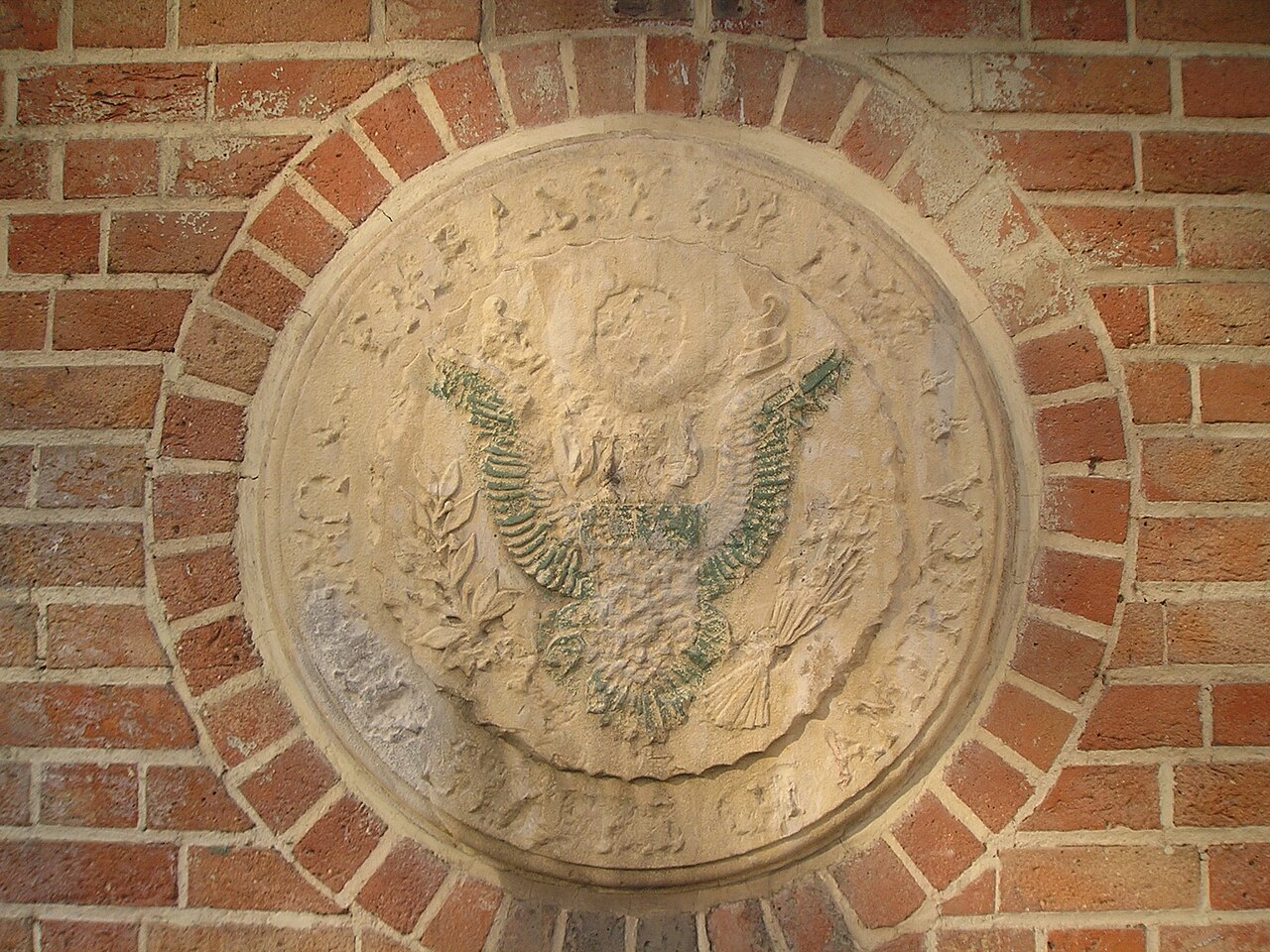

The shah as America’s ally
Under an Atoms for Peace agreement of 1957 the United States supplied Iran’s first research reactor (see Iran’s nuclear programme). The White Revolution of 1963 was welcomed in Washington. In 1964 the Majlis granted legal immunity to American military personnel, and Ayatollah Ruhollah Khomeini was exiled for denouncing it. In the 1970s, as oil money poured in, President Nixon let the shah buy almost any non-nuclear weapon, and Iran became America’s main partner in the Persian Gulf (see Iran as a regional power). Tens of thousands of Iranian students studied in the United States. On New Year’s Eve 1977 President Carter toasted Iran in Tehran as “an island of stability”; a year later the revolution was under way.
Revolution and the hostage crisis
When the exiled shah was admitted to the United States for cancer treatment in October 1979, students who followed Khomeini’s line seized the US embassy in Tehran on 4 November and held 52 Americans for 444 days (see the hostage crisis). Washington broke relations in April 1980, a rescue mission failed in the desert, and the hostages were freed under the Algiers Accords on 20 January 1981, minutes after Ronald Reagan’s inauguration. Khomeini called America the “Great Satan” (شیطان بزرگ).
The war years
During the Iran-Iraq War the United States leaned towards Iraq, yet secretly sold arms to Iran to free hostages in Lebanon, the Iran-Contra affair. In the Tanker War the US Navy escorted Kuwaiti tankers and fought Iranian forces, and on 3 July 1988 the cruiser USS Vincennes shot down Iran Air Flight 655 over the Persian Gulf, killing all 290 people aboard. The United States called it a mistake; Iran called it a deliberate crime.
Sanctions, openings and the nuclear deal
From 1995 the United States imposed a full trade embargo and penalties on foreign firms investing in Iranian oil (see sanctions on Iran). President Mohammad Khatami called for a “dialogue of civilisations”, and the two sides cooperated quietly over Afghanistan in 2001, but in January 2002 President George W. Bush placed Iran in an “axis of evil”. The nuclear dispute dominated the next decade. After secret talks, Hassan Rouhani’s government and the Obama administration, with five other powers, reached the Joint Comprehensive Plan of Action in July 2015. President Trump withdrew in May 2018 and imposed “maximum pressure”. In January 2020 a US drone strike killed General Qasem Soleimani in Baghdad; Iran fired missiles at US bases in Iraq, and in the same night its air defences shot down a Ukrainian airliner by mistake (see Soleimani and Flight 752).
From talks to war, 2025 to 2026
In Trump’s second term, Oman-mediated talks on the nuclear programme began in April 2025. They were overtaken by the Twelve-Day War: Israel attacked Iran on 13 June, and on 22 June US bombers struck the nuclear sites at Fordow, Natanz and Isfahan, the first direct US attack on Iranian territory. UN sanctions were restored in September 2025, and after the mass protests and killings of early 2026 the United States built up its forces in the region.
On 28 February 2026 the United States and Israel launched a full-scale war on Iran, killing Supreme Leader Ali Khamenei on the first day (see the killing of Ali Khamenei). President Trump called on Iranians to “take back” their country; Iran’s UN ambassador called the attack unprovoked aggression. The war brought the closure of the Strait of Hormuz, a US naval blockade, the highest-level direct US-Iranian talks since 1979 (in Islamabad in April), a short-lived interim agreement in June and renewed fighting from July. As of autumn 2026 no settlement had been reached. The full course of events is in the war of 2026, and the new leadership in Mojtaba Khamenei and the 2026 succession.
Two national stories
The two countries tell the relationship differently. Iranian official histories begin with 1953 and see the United States as an imperial power that has sought to overthrow the Islamic Republic ever since. American accounts tend to begin with 1979, the hostages and Iran’s support for armed groups and its nuclear programme. Historians such as Ervand Abrahamian, Ray Takeyh and John Ghazvinian disagree on emphasis but agree that 1953 and 1979 locked both sides into mutual suspicion. Meanwhile Iranian-Americans, estimated at between about half a million and more than a million people, many of whom left after 1979, form one of the largest parts of the Iranian diaspora.
Persian words from this page
| آمریکا | Âmrikâ | America |
| کودتا | kudetâ | coup |
| گروگان | gerogân | hostage |
| شیطان بزرگ | sheytân-e bozorg | “Great Satan” |
| تحریم | tahrim | sanctions |
| سفارت | sefârat | embassy |
Sources and further reading
- W. Morgan Shuster, The Strangling of Persia (1912).
- James A. Bill, The Eagle and the Lion: The Tragedy of American-Iranian Relations (1988).
- Ervand Abrahamian, The Coup: 1953, the CIA, and the Roots of Modern U.S.-Iranian Relations (2013).
- John Ghazvinian, America and Iran: A History, 1720 to the Present (2021).
- Ray Takeyh, Guardians of the Revolution: Iran and the World in the Age of the Ayatollahs (2009).
- US Department of State, Foreign Relations of the United States, 1952-1954, Iran (retrospective volume, 2017).
Want to learn Persian? Get the free Starter Pack
Get the 14-page printable Starter Pack (all 32 letters, a 7-day reading plan, 100 core words and 20 survival phrases) and a short 5-email course. Free.
More in Themes Across Iranian History (3000 BCE–today)
- A History of the Persian Language
- Zoroastrianism through the Ages
- Shi’a Islam in Iranian History
- The Jews of Iran
- The Armenians of Iran
- Christians of Iran
- The Baha’i Faith in Iran
- The Kurds in Iranian History
- Azerbaijanis in Iranian History
- The History of the Iranian Calendar
- Nowruz through History
- The Persian Garden (Pardis) through History
- Qanats: Iran’s Ancient Water Tunnels
- A History of Persian Carpets
- A History of Persian Architecture
- A History of Persian Painting
- A History of Persian Music
- Science in Iranian History
- Women in Iranian History
- Iran and the Silk Road
- Iran and China through History
- Iran and India through History
- Iran and Greece: Perceptions and Exchanges
- Persia and Rome: Seven Centuries of Rivalry
- Iran and the Ottoman Empire
- Iran and Russia through History
- Iran and Britain through History
- Iran and the United States
- How Iran’s Borders Changed
- The Capitals of Iran through History
- Coins of Iran through History: From the Daric to the Rial
- Flags and Symbols of Iran through History
- Myth and History in the Shahnameh: The Epic’s Kings and the Real Past
- Timeline of Iranian History: Key Dates from Elam to Today
- A History of Persian Cuisine: From Royal Banquets to Chelow Kabab
- A History of Persian Poetry: From Rudaki to Forough
- Wine in Iranian History: From Hajji Firuz to Hafez and Prohibition
- Sports in Iranian History: Polo, the Zurkhaneh and Wrestling
- List of Iranian Dynasties and Rulers