Iran and Israel were quiet partners for almost three decades under the last Shah, trading oil, weapons and intelligence. The 1979 revolution turned that relationship into hostility, which for forty years was fought mostly indirectly, through allied armed groups, sabotage and assassinations. From April 2024 it became open war between the two states, culminating in the Twelve-Day War of June 2025 and the wider war that began on 28 February 2026.
| Pahlavi era | De facto recognition in 1950; close unofficial ties until 1979 |
|---|---|
| Break | February 1979: relations cut, Israeli mission handed to the PLO |
| Proxy period | c. 1982–2024: Hezbollah, Palestinian groups, Syria; covert attacks on Iran’s nuclear program |
| First direct strikes | 13–14 April 2024 (Iran on Israel); 19 April 2024 (Israel on Iran) |
| Open wars | 13–24 June 2025; from 28 February 2026 |
The “periphery” partnership, 1950–1979
Iran under Mohammad Reza Shah extended de facto recognition to Israel in 1950, the second Muslim-majority country to do so after Turkey. Formal embassies were never exchanged, but Israel kept a large mission in Tehran. For Israel’s first prime minister, David Ben-Gurion, Iran was a key part of a “periphery doctrine”: alliances with non-Arab states on the edges of the Arab world. For the Shah, Israel was a channel to Washington and a partner against Arab nationalism, above all against Egypt’s Gamal Abdel Nasser and Iraq.
The partnership was practical. Iranian oil flowed to Israel, after 1968 partly through a jointly owned pipeline from Eilat to Ashkelon. Israeli firms built farms and irrigation projects in Iran; Israeli advisers helped train SAVAK, the Shah’s intelligence service; and the two countries cooperated on arms, including a missile project begun in 1977. Many Iranian Jews kept close links with Israel. Opposition clerics, Khomeini among them, denounced the relationship as part of the Shah’s subservience to the West. More on that community is on the page on the Jews of Iran.
The revolution and the break
The revolutionary government cut ties within days of taking power in February 1979. Yasser Arafat of the Palestine Liberation Organization was the first foreign leader to visit, and the former Israeli mission became the Palestinian embassy. Khomeini called Israel an illegitimate state, and in August 1979 he declared the last Friday of Ramadan as International Quds (Jerusalem) Day, still marked by state rallies.
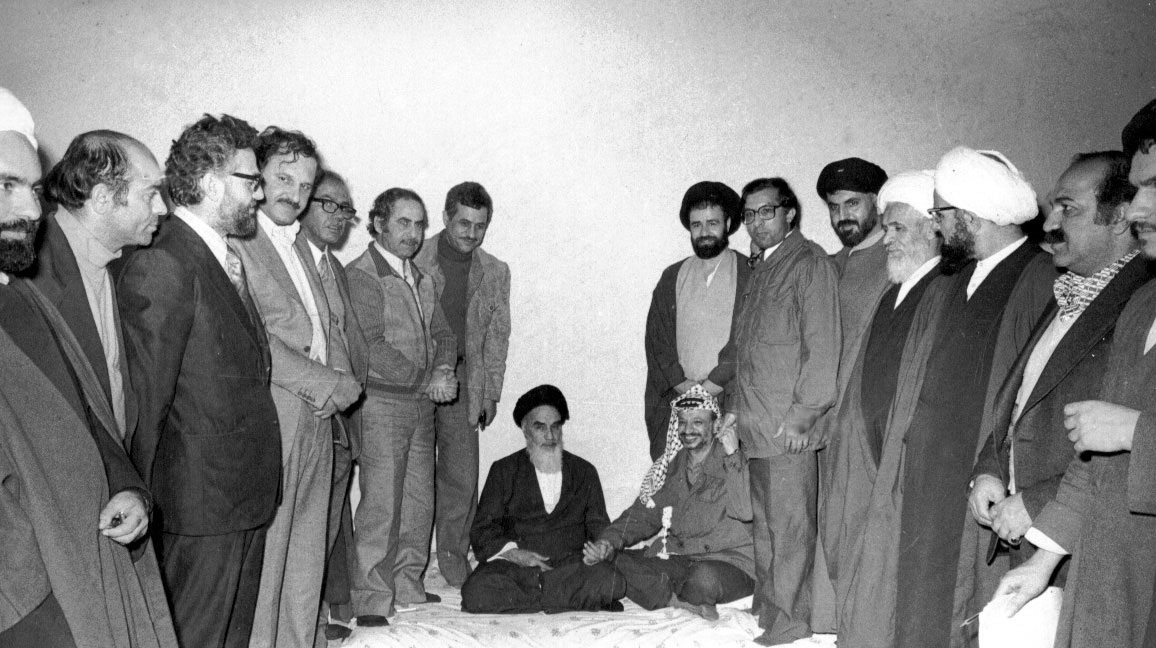

Ideology did not stop pragmatism at once. During the Iran–Iraq War, Israel, which saw Saddam Hussein’s Iraq as the greater danger, sold arms and spare parts to Iran, and Israeli intermediaries played a part in the Iran–Contra affair of 1985–1986.
A war by proxy
When Israel invaded Lebanon in 1982, Iran’s Revolutionary Guards sent advisers to the Bekaa valley and helped create Hezbollah, which became Iran’s most important ally and Israel’s most capable enemy on its northern border (see Iran and Hezbollah). Iran also backed Palestinian Islamic Jihad and, later, Hamas. Argentina’s courts have held Iran and Hezbollah responsible for the 1992 bombing of the Israeli embassy in Buenos Aires and the 1994 bombing of the AMIA Jewish centre there; Iran denies involvement.
From the 2000s the conflict centred on Iran’s nuclear program, which Israeli leaders described as an existential threat and Iran said was peaceful. The Stuxnet computer worm, widely attributed to the United States and Israel, damaged centrifuges at Natanz around 2010. Several Iranian nuclear scientists were assassinated between 2010 and 2012, and in November 2020 the program’s senior figure, Mohsen Fakhrizadeh, was killed near Tehran; Iran blamed Israel, which did not confirm. Mahmoud Ahmadinejad’s questioning of the Holocaust and statements by Iranian leaders predicting Israel’s disappearance were cited by Israel as evidence of intent. In Syria after 2011, Israel carried out hundreds of air strikes on Iranian and allied forces supporting Bashar al-Assad. For the nuclear dimension see Iran’s nuclear program.
2024: from shadow war to direct strikes
The Hamas attack on Israel on 7 October 2023 and the war in Gaza that followed drew in Iran’s allies in Lebanon, Yemen and Iraq. On 1 April 2024 an Israeli strike on the Iranian consular building in Damascus killed several Revolutionary Guards officers, including General Mohammad Reza Zahedi. On the night of 13–14 April Iran responded with its first ever direct attack on Israel, launching around 300 drones and missiles; nearly all were intercepted by Israel, the United States and their partners. On 19 April Israel struck an air defence site near Isfahan.
The cycle intensified. On 31 July 2024 the Hamas political leader Ismail Haniyeh was killed in a guesthouse in Tehran, where he had come for President Pezeshkian’s inauguration. On 27 September an Israeli strike in Beirut killed the Hezbollah leader Hassan Nasrallah together with the Iranian general Abbas Nilforoushan. On 1 October Iran fired about 180 ballistic missiles at Israel, and on 26 October Israel struck air defences and missile production sites inside Iran.
The wars of 2025 and 2026
On 13 June 2025 Israel launched a large air campaign against Iran, killing senior military commanders and nuclear scientists and striking nuclear and military sites. Iran answered with waves of ballistic missiles on Israeli cities. On 22 June the United States bombed the enrichment sites at Fordow and Natanz and the nuclear complex at Isfahan, and a ceasefire took effect on 24 June. Iranian officials later put the death toll in Iran at more than 1,000; Israel reported around 30 people killed by Iranian missiles. The full story is on the page on the Twelve-Day War.
On 28 February 2026 the United States and Israel began a joint air campaign against Iran in which Supreme Leader Ali Khamenei was killed; Hezbollah joined the fighting from Lebanon on 1–2 March. The course of that war, Iran’s response and the attempts to end it are covered on the 2026 war, the killing of Ali Khamenei and Mojtaba Khamenei and the 2026 succession.
How the conflict is explained
Israeli governments have presented the conflict as defence against a state that calls for Israel’s destruction, arms hostile militias on its borders and seeks a nuclear weapon. Iranian leaders present it as resistance to occupation of Palestinian land and to Israeli and American power in the region, and describe their allies as an “axis of resistance”. Many historians stress that the hostility is not ancient: it grew out of the 1979 revolution and was sharpened by competition for influence after the 2003 Iraq war. Iranian public opinion is divided, and many Iranians have expressed little enthusiasm for a confrontation that has been costly at home.
Persian words from this page
| اسرائیل | Esrâil | Israel |
| فلسطین | Felestin | Palestine |
| روز قدس | ruz-e Qods | Quds (Jerusalem) Day |
| محور مقاومت | mehvar-e moghâvemat | axis of resistance |
| موشک | mushak | missile |
| جنگ | jang | war |
Sources and further reading
- Trita Parsi, Treacherous Alliance: The Secret Dealings of Israel, Iran, and the United States (Yale University Press, 2007).
- Ronen Bergman, The Secret War with Iran (Free Press, 2008).
- David Menashri and Trita Parsi, “Israel i. Relations with Iran”, Encyclopaedia Iranica (2007, updated 2012).
- Michael Axworthy, Revolutionary Iran: A History of the Islamic Republic (Penguin, 2013).
- International Atomic Energy Agency, reports on Iran’s safeguards (2024–2025).
Want to learn Persian? Get the free Starter Pack
Get the 14-page printable Starter Pack (all 32 letters, a 7-day reading plan, 100 core words and 20 survival phrases) and a short 5-email course. Free.
More in The Islamic Revolution and the Islamic Republic (1979–present)
- Causes of the 1979 Revolution
- Khomeini’s Return and the Fall of the Monarchy
- Ruhollah Khomeini
- The 1979 Referendum and the New Constitution
- The Iran Hostage Crisis (1979–1981)
- Power Struggles after the Revolution
- The Cultural Revolution and University Closures
- The Iran–Iraq War: Causes and Iraqi Invasion
- Khorramshahr: Fall and Liberation
- The Iran–Iraq War, 1982–1986
- The Basij and Child Soldiers in the Iran–Iraq War
- Chemical Weapons in the Iran–Iraq War
- The Tanker War and Iran Air Flight 655
- The Iran–Contra Affair
- The End of the Iran–Iraq War (1988)
- The 1988 Executions of Political Prisoners
- The Death of Khomeini and the Succession of Khamenei (1989)
- Ali Khamenei
- Rafsanjani and Post-War Reconstruction (1989–1997)
- Khatami and the Reform Era (1997–2005)
- The 1999 Student Protests (18 Tir)
- The Ahmadinejad Presidency (2005–2013)
- The 2009 Election and the Green Movement
- Iran’s Nuclear Program
- Sanctions on Iran
- Rouhani and the Nuclear Deal (JCPOA)
- The Protests of 2017–2018 and November 2019
- The Killing of Soleimani and Flight 752 (January 2020)
- Iran and the COVID-19 Pandemic
- The Raisi Presidency and His Death (2021–2024)
- The 2022 Mahsa Amini Protests: “Woman, Life, Freedom”
- Iran and Israel: From Allies to Open Conflict
- The Pezeshkian Presidency
- The Twelve-Day War of June 2025
- The Protests of Late 2025 and January 2026
- The 2026 War with the United States and Israel
- The Killing of Ali Khamenei (28 February 2026)
- Mojtaba Khamenei and the 2026 Succession
- The Iranian Diaspora
- Iran and Hezbollah
- Major Earthquakes in Modern Iran
- Iranian Cinema after 1979