Iran has one of the longest histories of wine in the world: residue in a jar from Hajji Firuz Tepe in the Zagros, dated to about 5400–5000 BCE, is among the oldest chemical evidence of grape wine anywhere. Wine was part of royal life from the Achaemenids to the Qajars, and it became the central image of Persian poetry, even after Islam forbade it. Since the revolution of 1979, alcohol has been banned for Muslims in Iran.
| Earliest evidence | Hajji Firuz Tepe, c. 5400–5000 BCE; Godin Tepe, c. 3100–2900 BCE |
|---|---|
| Ancient records | Persepolis tablets (c. 500 BCE); wine ostraca of Nisa (Parthian) |
| Poetic tradition | Manuchehri, Khayyam, Hafez and many others |
| Status today | Prohibited for Muslims since 1979; recognised religious minorities may make and drink it privately |
| Persian words | شراب sharâb, می mey, باده bâde |
The first wine: Hajji Firuz and Godin Tepe
In 1968 archaeologists excavating a Neolithic village at Hajji Firuz Tepe, south of Lake Urmia, found six jars sunk into the floor of a house kitchen. Decades later, in 1996, Patrick McGovern and colleagues at the University of Pennsylvania identified tartaric acid and tree resin in the residue: wine flavoured or preserved with terebinth resin, much like modern retsina. At Godin Tepe, a trading post on the Great Khorasan Road near Kangavar, jars of about 3100–2900 BCE with grooves and red stains point to wine stored and poured in the Uruk period. The wild grape grows in the mountains of northern Iran and the Caucasus, and this region is one of the most likely places where it was first domesticated. See prehistoric Iran.
Kings, rations and Herodotus
The Persepolis Fortification Tablets show wine as a regular ration around 500 BCE: workers, officials and travellers on the royal roads drew set amounts, and the royal household received far larger quantities. Herodotus (Book 1.133) famously says the Persians debated important matters when drunk, then reconsidered them sober the next day, and if they first decided something sober they checked it again when drunk. Greek authors also say the king drank only wine from Chalybon, near Aleppo. These stories reflect Greek fascination as much as Persian practice; see Herodotus and Persia.
Under the Parthians the evidence becomes administrative. At Nisa, the early Parthian royal centre, excavators found more than two thousand ostraca, notes on broken jars, most of them recording deliveries of wine from vineyards to the royal stores.
Sasanian banquets and Jamshid’s legend
Sasanian art is full of wine: silver bowls and ewers decorated with vines and dancers, rock reliefs and seals with banquet scenes. The royal banquet, the bazm, was paired with the battle, razm, as the two arenas where a king showed his greatness, a pairing that runs through the Shahnameh. Zoroastrian tradition approved of wine in moderation and warned against drunkenness. A later Persian legend credits the discovery of wine to the court of the mythical king Jamshid: a woman of the harem, wanting to die, drank from a jar of fermented grapes labelled poison and was cured instead, so wine was called shâhdâru, “the king’s medicine”. The story is a legend, but it shows how deeply wine was tied to ideas of kingship (see myth and history in the Shahnameh).

Islam and the courtly cup
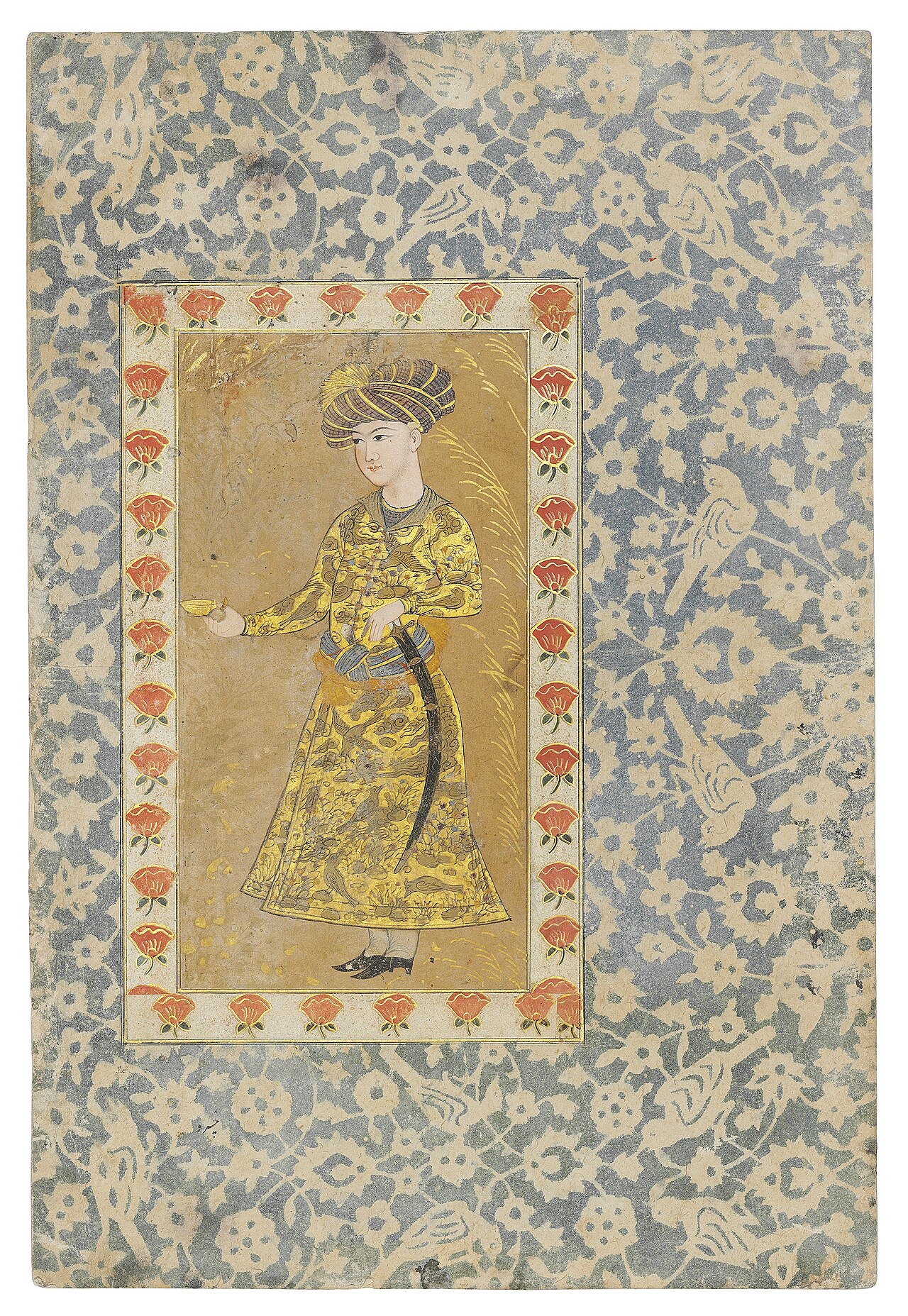
The Quran forbids wine, and Islamic law punishes drinking it. Yet the Iranian courts of the early Islamic centuries kept the old customs. Rudi Matthee notes that the Saffarid and Samanid rulers were known for the gusto with which they drank, and the 11th-century Qabus-nama, a book of advice by the Ziyarid prince Keykavus, has a chapter on how to drink wine properly: in company, at the right hour, and without losing control. Most of the wine itself came from non-Muslims. Zoroastrians, Christians and Jews ran the vineyards and taverns, which is why the tavern-keeper in Persian poetry is often a Magian, a moghbache, and the old wise man of the tavern the pir-e moghân, “elder of the Magi”. See Zoroastrianism through the ages.
Wine in Persian poetry
Wine poetry, inherited from Arabic and Sasanian tradition, became one of the main themes of Persian verse. Court poets such as Manuchehri wrote wine songs for Ghaznavid feasts. The quatrains attributed to Omar Khayyam use wine to answer the shortness of life: drink today, for tomorrow is uncertain. In the ghazals of Hafez, the cupbearer (sâqi), the tavern of ruin (kharâbât) and the cup of Jamshid, which showed the whole world, are images of love, freedom and defiance of the hypocritical preacher.
Whether this wine is real or a symbol of divine love has been argued for six centuries. Sufi poets and commentators read it as spiritual intoxication, and in poets such as Rumi the mystical meaning is clear. For Hafez many modern scholars think the answer is both: the poems work at both levels at once, and that ambiguity was part of their protection. The page on the history of Persian poetry places these poets in context, and our Khayyam quotes and Hafez quotes give some of their wine verses in Persian.
Safavid shahs: repentance and indulgence
The Safavid dynasty, which made Shi’a Islam the state religion, swung between prohibition and heavy drinking. Shah Tahmasp I made a public act of repentance in the 1530s and ordered taverns closed. Shah Abbas I drank with foreign envoys and his courtiers, and Shah Safi and Abbas II were notorious drinkers; drink is said to have shortened both their lives. Soltan Hoseyn began his reign in 1694 by banning wine and smashing the royal cellars, under the influence of the cleric Mohammad Baqer Majlesi, although he is reported to have returned to it later. European travellers such as Jean Chardin praised the wine of Shiraz as the best in Persia (see Safavid travellers). Armenians in New Julfa and Jews in many towns made much of it.
Shiraz and the Syrah myth
Because of its fame, Shiraz is often said to be the origin of the Syrah grape, also sold as Shiraz. DNA studies at the University of California, Davis, in the late 1990s showed that Syrah is a cross of two grapes from south-eastern France, Dureza and Mondeuse Blanche, so the Persian origin story is a legend. The wine of Shiraz itself was made from local varieties, and vineyards for table grapes and raisins still surround the city, as they do Qazvin, Urmia and Malayer.
Since 1979
Under the Pahlavis wine, beer and the grape spirit aragh were made and sold legally, and commercial wineries operated, most famously around Shiraz. After the revolution of 1979 the Islamic Republic banned the production, sale and consumption of alcohol by Muslims. Under the Islamic Penal Code drinking is punishable by flogging, with harsher penalties for repeat offenders and for trading. Recognised non-Muslim minorities, Armenian and Assyrian Christians, Jews and Zoroastrians, may make alcohol for their own use and for rites such as the Eucharist, but not sell it to Muslims (see the Armenians of Iran).
Drinking has not disappeared. A 2011 survey found that 5.7 percent of adults reported having drunk alcohol in the past year, and home-made and smuggled drink is widespread. Because illicit alcohol is often of poor quality, methanol poisoning is a recurring danger: in late 2018, 96 people died in one four-week outbreak, and in early 2020 hundreds died after rumours spread that alcohol protected against COVID-19. Grapes are still grown widely, but for the table, raisins and syrup, and verjuice, not for wine.
Persian words from this page
| شراب | sharâb | wine |
| می | mey | wine (poetic) |
| ساقی | sâqi | cupbearer |
| میخانه | meykhâne | tavern |
| بزم | bazm | feast, banquet |
| انگور | angur | grape |
| پیر مغان | pir-e moghân | elder of the Magi |
Sources and further reading
- Patrick E. McGovern et al., “Neolithic resinated wine”, Nature 381 (1996).
- Herodotus, Histories 1.133.
- Rudi Matthee, The Pursuit of Pleasure: Drugs and Stimulants in Iranian History, 1500–1900 (2005).
- Rudi Matthee, “Alcohol in the Islamic Middle East: Ambivalence and Ambiguity”, Past & Present 222, supplement 9 (2014).
- Kay Kāvus, Qābūs-nāma, trans. Reuben Levy as A Mirror for Princes (1951).
Want to learn Persian? Get the free Starter Pack
Get the 14-page printable Starter Pack (all 32 letters, a 7-day reading plan, 100 core words and 20 survival phrases) and a short 5-email course. Free.
More in Themes Across Iranian History (3000 BCE–today)
- A History of the Persian Language
- Zoroastrianism through the Ages
- Shi’a Islam in Iranian History
- The Jews of Iran
- The Armenians of Iran
- Christians of Iran
- The Baha’i Faith in Iran
- The Kurds in Iranian History
- Azerbaijanis in Iranian History
- The History of the Iranian Calendar
- Nowruz through History
- The Persian Garden (Pardis) through History
- Qanats: Iran’s Ancient Water Tunnels
- A History of Persian Carpets
- A History of Persian Architecture
- A History of Persian Painting
- A History of Persian Music
- Science in Iranian History
- Women in Iranian History
- Iran and the Silk Road
- Iran and China through History
- Iran and India through History
- Iran and Greece: Perceptions and Exchanges
- Persia and Rome: Seven Centuries of Rivalry
- Iran and the Ottoman Empire
- Iran and Russia through History
- Iran and Britain through History
- Iran and the United States
- How Iran’s Borders Changed
- The Capitals of Iran through History
- Coins of Iran through History: From the Daric to the Rial
- Flags and Symbols of Iran through History
- Myth and History in the Shahnameh: The Epic’s Kings and the Real Past
- Timeline of Iranian History: Key Dates from Elam to Today
- A History of Persian Cuisine: From Royal Banquets to Chelow Kabab
- A History of Persian Poetry: From Rudaki to Forough
- Wine in Iranian History: From Hajji Firuz to Hafez and Prohibition
- Sports in Iranian History: Polo, the Zurkhaneh and Wrestling
- List of Iranian Dynasties and Rulers