This is a reference list of the dynasties that ruled Iran, or large parts of it, from Elam to the end of the monarchy in 1979, with their dates, capitals and links to the pages on each. Iran’s best-known dynasties are the Achaemenids (550–330 BCE), the Parthians (c. 247 BCE–224 CE), the Sasanians (224–651), the Safavids (1501–1736), the Qajars (1789–1925) and the Pahlavis (1925–1979), but between them dozens of Arab, Iranian, Turkic and Mongol houses held power, often at the same time in different regions.
Dates are those most often given in modern reference works; many are approximate, and a dynasty’s “start” can mean its founder’s first conquest or his formal coronation. Capitals moved often, especially among the nomadic and Turkic dynasties, whose courts travelled with the seasons. For the same history as a sequence of events, see the timeline of Iranian history; for the cities themselves, the capitals of Iran.
Ancient Iran: Elam to the Sasanians
| Dynasty | Dates | Main capital(s) | Notes |
|---|---|---|---|
| Elam | c. 2700–539 BCE | Susa, Anshan | Pre-Iranian kingdom of the south-west |
| Medes | c. 7th century–550 BCE | Ecbatana (Hamadan) | First Iranian state |
| Achaemenids | 550–330 BCE | Pasargadae, Susa, Persepolis, Babylon, Ecbatana | First Persian Empire |
| Alexander and the Argeads | 330–c. 310 BCE | Babylon | Macedonian conquest |
| Seleucids | 312–c. 141 BCE in Iran | Seleucia on the Tigris, Antioch | Hellenistic successor state |
| Frataraka and kings of Persis | 3rd century BCE–3rd century CE | Persis (Fars) | Local Persian rulers under Seleucids and Parthians |
| Greco-Bactrians | c. 250–c. 130 BCE | Bactra (Balkh) | Greek kingdom of the north-east |
| Parthians (Arsacids) | c. 247 BCE–224 CE | Nisa, Hecatompylos, Ctesiphon | Rivals of Rome |
| Kushans and Indo-Parthians | 1st–3rd centuries CE | Bactria, Gandhara | Eastern neighbours and rivals |
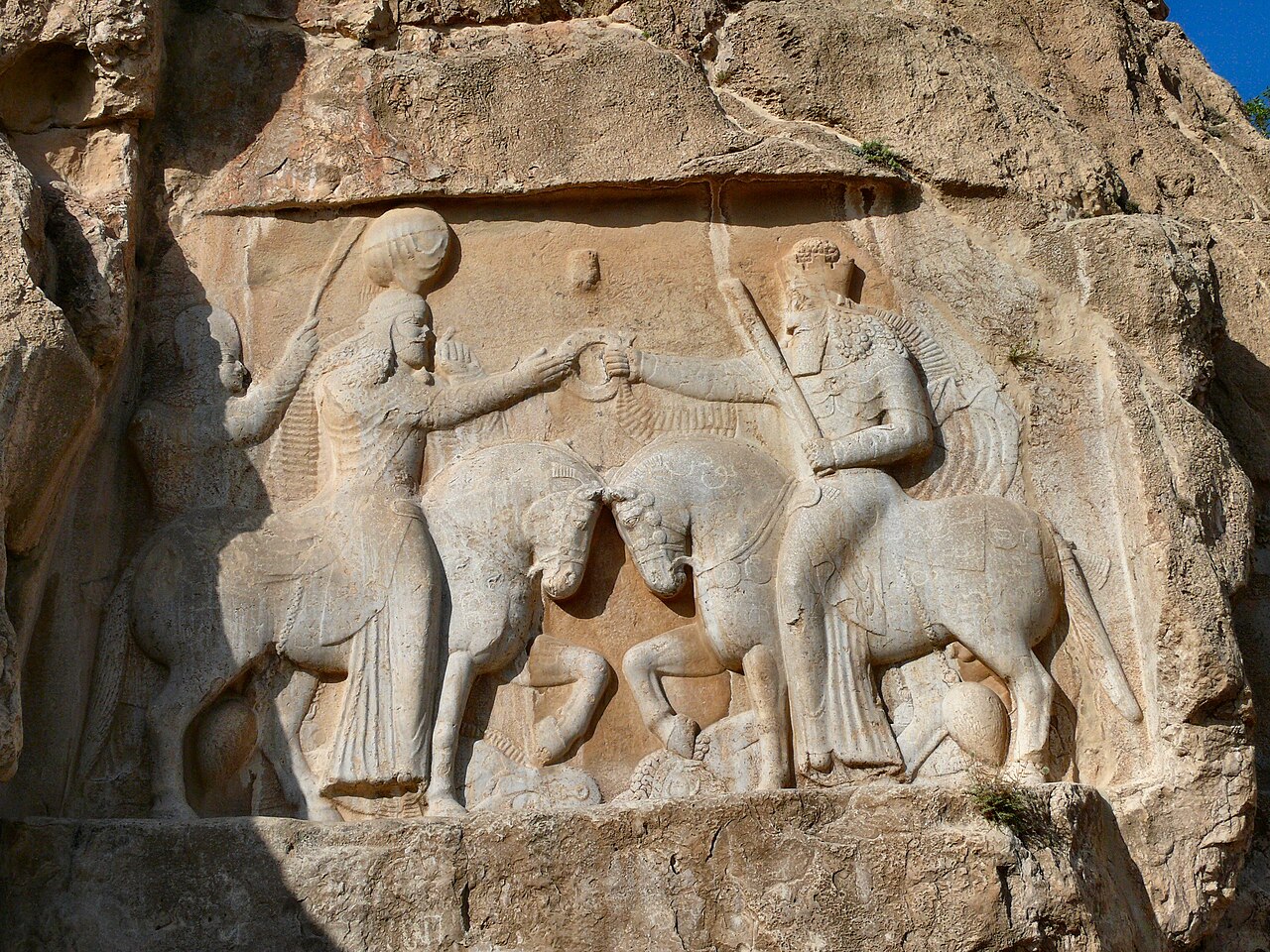
| Sasanians | 224–651 CE | Ctesiphon (also Istakhr, Firuzabad, Bishapur) | Last pre-Islamic empire |

From the Arab conquest to the Mongols
After 651 Iran was part of the caliphate, but from the 9th century real power passed to regional dynasties, first Iranian (the “Iranian intermezzo”), then Turkic. Several of these overlapped: in the 10th century the Samanids held the north-east while the Buyids ruled the west and Baghdad itself.
| Dynasty | Dates | Main capital(s) | Notes |
|---|---|---|---|
| Umayyad caliphate | 661–750 | Damascus | Arab rule; governors at Kufa, Basra, Merv |
| Abbasid caliphate | 750–1258 | Baghdad (Merv 813–819) | Nominal overlords after the 9th century |
| Dabuyids and Bavandids | to 760; 651–1349 | Tabaristan | Local Iranian houses of the Caspian |
| Tahirids | 821–873 | Merv, Nishapur | Abbasid governors of Khorasan |
| Saffarids | 861–1003 | Zaranj (Sistan) | Founded by Ya’qub the Coppersmith |
| Samanids | 819–999 | Bukhara | Patrons of New Persian |
| Alavids | 864–928 | Amol | Zaydi Shi’a state |
| Ziyarids | 931–c. 1090 | Gorgan | Builders of Gonbad-e Qabus |
| Buyids | 934–1062 | Shiraz, Rey, Baghdad | Daylamite Shi’a dynasty |
| Kakuyids | 1008–1051 | Isfahan | Patrons of Avicenna |
| Ghaznavids | 977–1186 | Ghazni, later Lahore | Turkic, Persianate court |
| Great Seljuks | 1037–1194 | Nishapur, Rey, Isfahan, Merv | Turkic sultanate |
| Seljuks of Kerman | 1048–1187 | Kerman | Branch line in the south-east |
| Nizari Ismailis | 1090–1256 | Alamut | Network of mountain fortresses |
| Khwarazmshahs | 1077–1231 | Gurganj, Samarqand | Destroyed by the Mongols |
| Ghurids | c. 1150–1215 | Firuzkuh | Mountain dynasty of Afghanistan |
| Atabegs (e.g. Salghurids of Fars) | 12th–13th centuries | Shiraz, Tabriz, Yazd | Seljuk regents turned rulers |
From the Ilkhans to the Islamic Republic
After the Mongol Ilkhanate broke up in 1335, Iran was divided again until the Safavids reunited it in the early 1500s. The 18th century brought another interval of rival houses, ended by the Qajars, whose capital, Tehran, has remained the capital ever since.
| Dynasty | Dates | Main capital(s) | Notes |
|---|---|---|---|
| Ilkhanate | 1256–1335 | Maragheh, Tabriz, Soltaniyeh | Mongol state of Hulagu’s line |
| Chobanids; Jalayirids | 1335–1357; 1335–1432 | Tabriz, Baghdad | Mongol-era successors |
| Injuids; Muzaffarids | 1335–1357; 1314–1393 | Shiraz, Yazd | Rulers of Fars in Hafez’s time |
| Sarbadars | 1337–1381 | Sabzevar | Shi’a state of Khorasan |
| Timurids | 1370–1507 | Samarqand, Herat | Timur and his heirs |
| Qara Qoyunlu | 1375–1468 | Tabriz | Turkmen confederation |
| Aq Qoyunlu | 1378–1501 | Diyarbakir, Tabriz | Turkmen confederation |
| Safavids | 1501–1736 | Tabriz, Qazvin, Isfahan | Made Shi’ism the state religion |
| Hotakis | 1722–1729 | Isfahan (and Kandahar) | Afghan conquerors |
| Afsharids | 1736–1796 | Mashhad | Nader Shah and his heirs |
| Zands | 1751–1794 | Shiraz | Karim Khan, the “advocate” |
| Qajars | 1789–1925 | Tehran | Turkmen tribal dynasty |
| Pahlavis | 1925–1979 | Tehran | Last monarchy |
| Islamic Republic | 1979– | Tehran | Not a dynasty; led by a Supreme Leader |
Rulers of the main dynasties
The lists below give the kings of the dynasties that ruled all of Iran for long periods. Short-lived claimants and rulers of disputed reigns are left out; full lists appear in the Cambridge History of Iran and in C. E. Bosworth’s The New Islamic Dynasties.
Achaemenid kings
| Ruler | Reign |
|---|---|
| Cyrus II the Great | 559–530 BCE |
| Cambyses II | 530–522 BCE |
| Bardiya (or Gaumata) | 522 BCE |
| Darius I | 522–486 BCE |
| Xerxes I | 486–465 BCE |
| Artaxerxes I | 465–424 BCE |
| Darius II | 423–404 BCE |
| Artaxerxes II | 404–358 BCE |
| Artaxerxes III | 358–338 BCE |
| Artaxerxes IV (Arses) | 338–336 BCE |
| Darius III | 336–330 BCE |
Parthian kings
The Arsacids had more than thirty kings, often with rivals reigning at the same time, and their order is reconstructed mainly from coins (see Parthian coins). Major reigns include Arsaces I (c. 247–217 BCE), Mithridates I (c. 171–132 BCE), Mithridates II (c. 124–88 BCE), Orodes II (c. 57–37 BCE), Phraates IV (c. 37–2 BCE), Artabanus II (c. 10–38 CE), Vologases I (c. 51–78 CE) and the last king, Artabanus IV (c. 213–224 CE).
Sasanian kings (selected)
| Ruler | Reign |
|---|---|
| Ardashir I | 224–c. 242 |
| Shapur I | c. 240–270 |
| Hormizd I; Bahram I | 270–271; 271–274 |
| Bahram II | 274–293 |
| Narseh | 293–302 |
| Shapur II | 309–379 |
| Yazdegerd I | 399–420 |
| Bahram V (Bahram Gur) | 420–438 |
| Yazdegerd II | 438–457 |
| Peroz I | 459–484 |
| Kavad I | 488–496, 498/499–531 |
| Khosrow I Anushirvan | 531–579 |
| Hormizd IV | 579–590 |
| Khosrow II Parviz | 590–628 |
| Yazdegerd III | 632–651 |
Safavid shahs
| Ruler | Reign |
|---|---|
| Ismail I | 1501–1524 |
| Tahmasp I | 1524–1576 |
| Ismail II; Mohammad Khodabanda | 1576–1577; 1578–1587 |
| Abbas I the Great | 1588–1629 |
| Safi | 1629–1642 |
| Abbas II | 1642–1666 |
| Suleiman I | 1666–1694 |
| Soltan Hoseyn | 1694–1722 |
| Tahmasp II; Abbas III | 1722–1732; 1732–1736 |
Qajar and Pahlavi shahs, and the Supreme Leaders
| Ruler | Reign |
|---|---|
| Agha Mohammad Khan | 1789–1797 |
| Fath-Ali Shah | 1797–1834 |
| Mohammad Shah | 1834–1848 |
| Naser al-Din Shah | 1848–1896 |
| Mozaffar al-Din Shah | 1896–1907 |
| Mohammad Ali Shah | 1907–1909 |
| Ahmad Shah | 1909–1925 |
| Reza Shah Pahlavi | 1925–1941 |
| Mohammad Reza Shah Pahlavi | 1941–1979 |
| Ruhollah Khomeini (Supreme Leader) | 1979–1989 |
| Ali Khamenei (Supreme Leader) | 1989–2026 |
| Mojtaba Khamenei (Supreme Leader) | 2026– |
Between the Safavids and the Qajars, Nader Shah ruled 1736–1747 and Karim Khan Zand 1751–1779; Lotf Ali Khan, the last Zand, was defeated by Agha Mohammad Khan in 1794.
Patterns across the list
- Many dynasties were not Persian. Arabs, Turks, Mongols, Turkmens and Afghans ruled Iran for long periods, and almost all adopted Persian as a language of government and culture. See the history of the Persian language.
- Titles changed. Ancient kings were shâhanshâh, “king of kings”; early Islamic rulers called themselves amir or sultan under the caliph; the Mongols used khan; the Safavids revived shah, and the Qajars and Pahlavis used shâhanshâh again.
- Legitimacy was borrowed. New dynasties often claimed descent from older ones: the Samanids from Bahram Chobin, the Buyids from the Sasanians, the Safavids from the Imams. The legendary kings of the Shahnameh served the same purpose.
Persian words from this page
| سلسله | selsele | dynasty |
| پادشاه | pâdeshâh | king |
| شاهنشاه | shâhanshâh | king of kings |
| پایتخت | pâytakht | capital city |
| هخامنشیان | Hakhâmaneshiyân | Achaemenids |
| ساسانیان | Sâsâniyân | Sasanians |
| صفویان | Safaviyân | Safavids |
| قاجار | Qâjâr | Qajar |
Sources and further reading
- C. E. Bosworth, The New Islamic Dynasties: A Chronological and Genealogical Manual (1996).
- The Cambridge History of Iran, vols 2–7 (1968–1991), dynastic tables.
- Touraj Daryaee (ed.), The Oxford Handbook of Iranian History (2012).
- Amélie Kuhrt, The Persian Empire: A Corpus of Sources from the Achaemenid Period (2007).
- Encyclopaedia Iranica, articles on individual dynasties.
Want to learn Persian? Get the free Starter Pack
Get the 14-page printable Starter Pack (all 32 letters, a 7-day reading plan, 100 core words and 20 survival phrases) and a short 5-email course. Free.
More in Themes Across Iranian History (3000 BCE–today)
- A History of the Persian Language
- Zoroastrianism through the Ages
- Shi’a Islam in Iranian History
- The Jews of Iran
- The Armenians of Iran
- Christians of Iran
- The Baha’i Faith in Iran
- The Kurds in Iranian History
- Azerbaijanis in Iranian History
- The History of the Iranian Calendar
- Nowruz through History
- The Persian Garden (Pardis) through History
- Qanats: Iran’s Ancient Water Tunnels
- A History of Persian Carpets
- A History of Persian Architecture
- A History of Persian Painting
- A History of Persian Music
- Science in Iranian History
- Women in Iranian History
- Iran and the Silk Road
- Iran and China through History
- Iran and India through History
- Iran and Greece: Perceptions and Exchanges
- Persia and Rome: Seven Centuries of Rivalry
- Iran and the Ottoman Empire
- Iran and Russia through History
- Iran and Britain through History
- Iran and the United States
- How Iran’s Borders Changed
- The Capitals of Iran through History
- Coins of Iran through History: From the Daric to the Rial
- Flags and Symbols of Iran through History
- Myth and History in the Shahnameh: The Epic’s Kings and the Real Past
- Timeline of Iranian History: Key Dates from Elam to Today
- A History of Persian Cuisine: From Royal Banquets to Chelow Kabab
- A History of Persian Poetry: From Rudaki to Forough
- Wine in Iranian History: From Hajji Firuz to Hafez and Prohibition
- Sports in Iranian History: Polo, the Zurkhaneh and Wrestling
- List of Iranian Dynasties and Rulers