Nowruz (نوروز, “new day”) is the Iranian New Year, celebrated at the spring equinox around 20 or 21 March. Its roots lie in the pre-Islamic, Zoroastrian calendar, it was a great court festival under the Sasanians, and it survived the Arab conquest, Turkic and Mongol rule and the 1979 revolution to become a holiday shared today by some 300 million people from the Balkans to western China.

| Persian name | Nowruz (Nowrūz), “new day” |
|---|---|
| Date | The moment of the vernal equinox (sâl-tahvil), 1 Farvardin, about 20 or 21 March |
| First clear records | Sasanian period (224–651 CE) and early Islamic writers drawing on Sasanian sources |
| Linked festivals | Chaharshanbe Suri (before), Sizdah Bedar (13th day) |
| Recognition | UNESCO Intangible Cultural Heritage list 2009 (extended 2016); UN International Day of Nowruz, 21 March, since 2010 |
This page follows Nowruz through the centuries. For how families celebrate it today, with spring cleaning, visits and the New Year table, read our guide to Nowruz, the Persian New Year and the article on the Haft-sin table.
A festival older than its records
Nowruz is plainly ancient, but its earliest history is a matter of inference. The Zoroastrian religious calendar honoured the creation and the return of life in spring, and many scholars, following Mary Boyce, see Nowruz as the last and greatest of the seasonal festivals of that calendar, tied to the hope of the world’s final renewal. The Avesta itself does not name a festival called Nowruz, and the word is Middle Persian (Nōg rōz) rather than Old Persian.
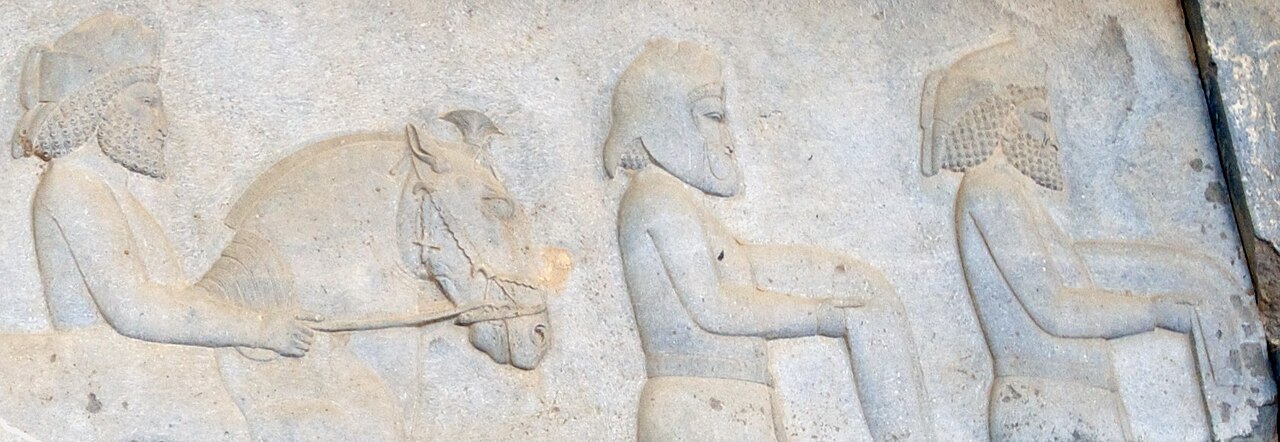
Persepolis is often called a palace built for Nowruz. The idea comes from the reliefs on the Apadana staircases, where delegations from across the empire bring gifts to the king, and from the site’s role as a ceremonial capital (see Building Persepolis). It is an attractive theory, but no Achaemenid inscription or tablet mentions a New Year festival, and historians treat it as a possibility, not a fact. The Achaemenid calendar year did begin in spring, which keeps the idea alive.
Nowruz at the Sasanian court
From the Sasanian era (224–651) the evidence becomes solid. Nowruz and Mehregan, the autumn festival, were the two great feasts of the year. Later writers, who used Sasanian court books, describe the king giving public audience at Nowruz, receiving gifts from nobles and officials and handing out robes and presents in return. The festival stretched over several days, and Muslim authors such as al-Biruni distinguish a “lesser” Nowruz on the first day from a “greater” Nowruz on the sixth.
Because the old Iranian year had 365 days with no leap day, the festival slowly moved through the seasons. By late Sasanian times Nowruz no longer fell in spring, a drift explained on our page on the history of the Iranian calendar.
Surviving the Arab conquest
After the fall of the Sasanians, Nowruz did not disappear. Conquered Iranians kept it, and the new rulers found it useful: some Umayyad governors collected Nowruz gifts from their subjects as an extra levy, a practice later rulers abolished and revived more than once. At the Abbasid court in Baghdad, where Persian officials and customs were everywhere (see Persian influence on the Abbasid Caliphate), caliphs received Nowruz gifts and Arabic poets wrote verses for the day.
The fullest early description comes from al-Biruni, who around 1000 CE collected the festivals of many peoples in his Chronology of Ancient Nations. He records the legends that already surrounded Nowruz and customs such as sprinkling water and exchanging sugar. In the same decades Ferdowsi’s Shahnameh gave the national story: the mythical king Jamshid had his throne lifted into the sky, and the people named that day, the first of Farvardin, Nowruz. This is legend, but it shaped how Iranians themselves understood the festival.
Fixing Nowruz to the spring: the Jalali reform
The festival only returned permanently to the equinox in 1079, when the Seljuk sultan Malik Shah ordered a new solar calendar. A team of astronomers, traditionally said to include Omar Khayyam, set the start of the year at the moment the sun enters Aries. From then on Nowruz meant the true astronomical start of spring, as it still does. A short Persian book of the Seljuk period, the Nowruz-nameh, gathers Nowruz lore and is often attributed to Khayyam, though many scholars doubt that he wrote it.
Shi’a Iran and royal ceremony
Under the Safavids, who made Twelver Shi’ism the state religion, Nowruz kept its place. Shi’a scholars cited a tradition attributed to Imam Ja’far al-Sadiq that praised the day, which helped make the festival respectable in a religious state. European visitors to Isfahan in the 17th century described lavish court celebrations, with gifts presented to the shah.
The Qajar shahs turned the moment of the new year into a formal state ceremony, the New Year salam, held in the Golestan Palace in Tehran (see our article on the Golestan Palace). Courtiers, princes and foreign envoys stood in order of rank while cannon fired to mark the turning of the year, and the shah distributed gold coins. Popular customs that most Iranians know today, such as jumping over bonfires on Chaharshanbe Suri (the eve of the last Wednesday of the year) and spending the thirteenth day outdoors on Sizdah Bedar, are recorded in this period, though both are certainly older.
The 20th century: official holiday and national symbol
In 1925 Iran’s parliament adopted the solar calendar with Farvardin as the first month, making Nowruz the official start of the civil year. The Pahlavi state treated it as a national festival with roots in ancient Iran. The Haft-sin table, with seven items whose names begin with the letter sin, became the standard household display in this period; older sources describe a variety of New Year tables, and the history of the custom before the 19th century is unclear.
After the 1979 revolution some officials were cool towards a festival they saw as pre-Islamic, and Chaharshanbe Suri in particular was discouraged in the early years. Nowruz remained the most important holiday of the year, and the state soon embraced it, with the Supreme Leader and president delivering New Year messages. Schools and offices close for about two weeks, and millions of Iranians travel.
A shared festival across many countries
Nowruz is not only Iranian in the modern political sense. It is the New Year in Afghanistan, Tajikistan and among the Kurds, and a public holiday in Azerbaijan, Uzbekistan, Kazakhstan, Kyrgyzstan and Turkmenistan, among others. In 2009 UNESCO inscribed Nowruz on its list of Intangible Cultural Heritage on a joint nomination, extended in 2016 to twelve countries, and in February 2010 the UN General Assembly declared 21 March the International Day of Nowruz. For Iran’s other festivals and the public holiday calendar, see Iranian festivals and public holidays; for the month names, see the Persian calendar.
- c. 500 BCE Achaemenid year begins in spring; Persepolis reliefs show gift-giving delegations
- 224–651 Nowruz and Mehregan are the two great Sasanian court festivals
- 8th–9th c. Nowruz gifts collected by Umayyad governors; celebrated at the Abbasid court
- c. 1000 Al-Biruni and Ferdowsi record Nowruz customs and legends
- 1079 Jalali calendar fixes Nowruz to the spring equinox
- 1925 Solar Hijri calendar adopted; Nowruz is the official New Year
- 2009–2010 UNESCO inscription and UN International Day of Nowruz
Persian words from this page
| نوروز | Nowruz | New Year, “new day” |
| سال تحویل | sâl-tahvil | the moment the year turns |
| چهارشنبهسوری | Chahârshanbe Suri | fire festival before Nowruz |
| سیزدهبدر | Sizdah Bedar | 13th day outing |
| هفتسین | Haft-sin | New Year table |
| مهرگان | Mehregân | autumn festival |
| جمشید | Jamshid | mythical king |
Sources and further reading
- Al-Biruni, The Chronology of Ancient Nations (al-Athar al-baqiya), trans. C. E. Sachau, 1879.
- Ferdowsi, Shahnameh, the reign of Jamshid.
- Encyclopaedia Iranica, “Nowruz i. In the Pre-Islamic Period” and “Nowruz ii. In the Islamic Period”.
- Mary Boyce, Zoroastrians: Their Religious Beliefs and Practices, Routledge.
- UNESCO Intangible Cultural Heritage, Nowruz, multinational inscription (2009, extended 2016).
Want to learn Persian? Get the free Starter Pack
Get the 14-page printable Starter Pack (all 32 letters, a 7-day reading plan, 100 core words and 20 survival phrases) and a short 5-email course. Free.
More in Themes Across Iranian History (3000 BCE–today)
- A History of the Persian Language
- Zoroastrianism through the Ages
- Shi’a Islam in Iranian History
- The Jews of Iran
- The Armenians of Iran
- Christians of Iran
- The Baha’i Faith in Iran
- The Kurds in Iranian History
- Azerbaijanis in Iranian History
- The History of the Iranian Calendar
- Nowruz through History
- The Persian Garden (Pardis) through History
- Qanats: Iran’s Ancient Water Tunnels
- A History of Persian Carpets
- A History of Persian Architecture
- A History of Persian Painting
- A History of Persian Music
- Science in Iranian History
- Women in Iranian History
- Iran and the Silk Road
- Iran and China through History
- Iran and India through History
- Iran and Greece: Perceptions and Exchanges
- Persia and Rome: Seven Centuries of Rivalry
- Iran and the Ottoman Empire
- Iran and Russia through History
- Iran and Britain through History
- Iran and the United States
- How Iran’s Borders Changed
- The Capitals of Iran through History
- Coins of Iran through History: From the Daric to the Rial
- Flags and Symbols of Iran through History
- Myth and History in the Shahnameh: The Epic’s Kings and the Real Past
- Timeline of Iranian History: Key Dates from Elam to Today
- A History of Persian Cuisine: From Royal Banquets to Chelow Kabab
- A History of Persian Poetry: From Rudaki to Forough
- Wine in Iranian History: From Hajji Firuz to Hafez and Prohibition
- Sports in Iranian History: Polo, the Zurkhaneh and Wrestling
- List of Iranian Dynasties and Rulers