Persian cuisine as it is eaten today, saffron rice with slow-cooked stews and kebabs, took its classic form at the Safavid court in the 16th and 17th centuries, but its roots go back much further: to the royal tables of the Achaemenids, the banquets of Sasanian kings and the Persian cooks of Abbasid Baghdad. Ingredients arrived along the Silk Road and later from the Americas, and the old idea of “hot” and “cold” foods still shapes how Iranians plan a meal.
This page follows that history. For a guide to the dishes themselves, see Persian food: an overview, and for the names of dishes in Persian, our list of Iranian food names.
The Great King’s table
The earliest detailed evidence for Iranian food comes from the Achaemenid capital. The Persepolis Fortification Tablets, written in Elamite around 500 BCE, record rations of barley, flour, wine, beer, sheep, poultry, dates and figs issued to workers, officials and travellers, and much larger amounts for the royal table. Greek authors were fascinated by the scale. Herodotus says that Persians celebrated their birthdays above all other days, roasting a whole ox, horse, camel or donkey, and that they ate few main dishes but many desserts served one after another. A later Greek writer, Polyaenus, preserves a long list said to come from a bronze pillar at Persepolis, giving the daily supplies for the king’s dinner: wheat and barley flour, cattle, horses, geese, doves, dairy, garlic, onions, saffron, cress, oil and wine. Whether the list is authentic is debated, but its contents fit the tablets.
Sasanian banquets and the page who knew everything
A short Middle Persian text, Khosrow and the Page, gives a rare view of Sasanian taste. A young noble is examined by Khosrow I on the best things in life, and his answers rank the finest meats, such as milk-fed kid and fattened poultry, along with sweets, wines, music and flowers. Whatever its literary purpose, it shows a court cuisine of roasted and stewed meat, rice, nuts, dried fruit and sweets that later Persian cooking would recognise. Arabic writers later attached dishes to Sasanian kings; sikbaj, meat stewed with vinegar, was said to be a favourite of Khosrow Anushirvan.
Persian cooks in Baghdad
After the Arab conquest, Persian food crossed into the Arabic-speaking world. The Abbasid capital Baghdad, founded in 762 close to the old Sasanian capital Ctesiphon, adopted Persian court habits wholesale (see Baghdad and Persian culture). The oldest surviving Arabic cookbook, the 10th-century Kitab al-Tabikh of Ibn Sayyar al-Warraq, is full of Persian names: sikbaj from sik, vinegar; zirbaj; judhab, a pudding set under roasting meat to catch its juices; and sanbusaj, the ancestor of the Indian samosa, from Persian sanbuse. Sweet-and-sour flavours from fruit and vinegar, and stews thickened with ground nuts, are a thread from these recipes to modern khoresh.
Gifts of the plateau
Several foods the world eats came from Iran or reached Europe through it. Pistachios grow wild in north-eastern Iran and Central Asia, and the pomegranate was first cultivated in the region between Iran and northern India. Spinach is Persian by name: esfenaj became Arabic isfanakh and then the European word. Saffron has been grown in Iran since antiquity and Iran today produces most of the world’s supply. Rice, by contrast, came late as an everyday food: it was known in Sasanian times but long remained a luxury, grown in the Caspian provinces and Khuzestan, while bread was the staple of most Iranians until modern times.
Hot and cold: food as medicine
Persian physicians inherited Greek humoral medicine and refined it. In the writings of Razi and the Canon of Avicenna, every food has a nature, garm (hot) or sard (cold), and a healthy meal balances the two. The idea is alive in Iranian kitchens: walnuts, dates and honey are “hot”, yoghurt, fish and most fruit “cold”, so yoghurt goes with rich meat and dates with “cold” dishes. Many Iranians still explain an upset stomach as too much of one nature.
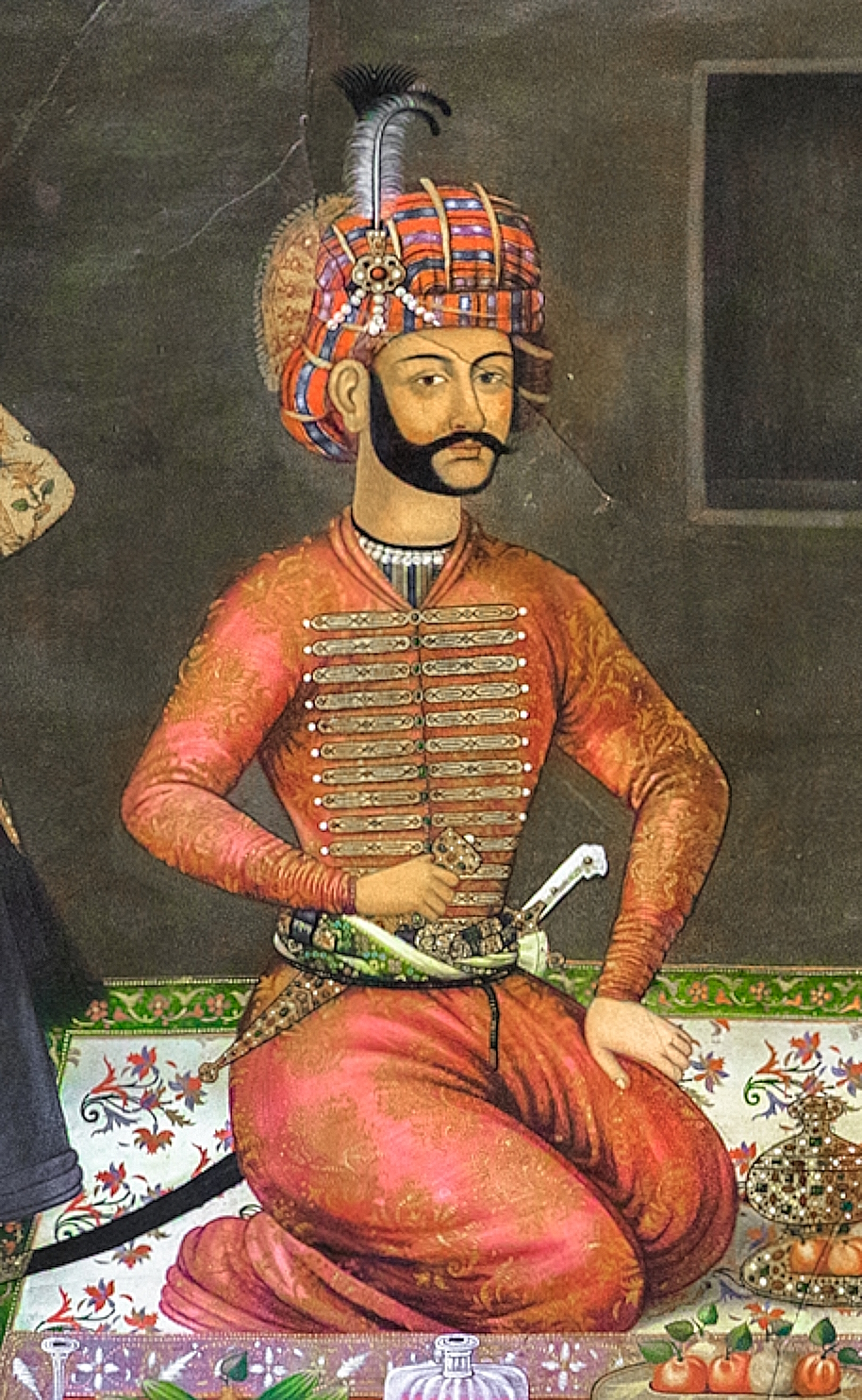

The Safavid court and the birth of polow
The cuisine recognised as classic Persian took shape under the Safavids. Two court cookbooks survive. The Karnameh of Hajji Mohammad Ali Bavarchi Baghdadi, written in 1521 under Shah Ismail I, and the Madat al-Hayat of Nurollah, cook to Shah Abbas I, give dozens of recipes for polow: rice parboiled, drained and steamed with meat, herbs, fruit or saffron. Both treat rice as the centre of the meal, the role it has kept. European visitors such as Jean Chardin described the long cloth (sofre) spread on carpets, the platters of rice in many colours and the sherbets cooled with snow (see Safavid travellers). Isfahan’s coffeehouses, which flourished in the 17th century, were among the most talked-about public places of the city. Wine was part of court life too, a story told on our page on wine in Iranian history.
New arrivals: tomatoes, potatoes and tea
The Qajar period brought plants from the Americas and new drinks. The tomato, still sometimes called gowje farangi, “European plum”, spread in the 19th century and slowly found its way into stews and kebabs. The potato is said to have been introduced by the British envoy Sir John Malcolm in the early 1800s, and was long nicknamed “Malcolm’s plum”. Coffee gave way to tea, which became the national drink in the second half of the 19th century. Around 1900 Mohammad Mirza Kashef al-Saltaneh brought tea plants from India and started cultivation near Lahijan in Gilan, where tea gardens still cover the hills. In Tehran, the bazaar’s chelow kababi restaurants made rice with kebab the city’s favourite meal out, a role it kept through the 20th century.
Food and the calendar
Many dishes belong to a season or a ritual. At Nowruz families eat herbed rice with fish, sabzi polow ba mahi, and the haft-sin table carries samanu, a sweet paste of sprouted wheat. On the longest night, Shab-e Yalda, watermelon and pomegranate are eaten to see out the dark. In Muharram, households and mosques cook nazri, votive food such as gheymeh stew and saffron rice pudding (sholezard), and give it away to neighbours and passers-by, a custom linked to Iran’s Shi’a tradition.
A cuisine at home and abroad
In the 20th century cookbooks for home cooks, women’s magazines and radio programmes spread a national repertoire, and regional dishes from Gilan, Azerbaijan, Khorasan and the Persian Gulf coast became known across the country. After 1979 the Iranian diaspora carried the cuisine to Los Angeles, London, Toronto and beyond; books such as Najmieh Batmanglij’s Food of Life (1986) introduced it to English-speaking readers. Through all this the shape of the meal has stayed recognisable: rice, a stew or kebab, bread, herbs and yoghurt, and a glass of tea to finish.
Persian words from this page
| پلو | polow | rice cooked with other ingredients |
| چلوکباب | chelow kabâb | rice with kebab |
| سفره | sofre | cloth spread for a meal |
| گرم | garm | hot (in food lore) |
| سرد | sard | cold (in food lore) |
| زعفران | za’farân | saffron |
| نذری | nazri | votive food |
| چای | chây | tea |
Sources and further reading
- Herodotus, Histories 1.133 (Persian birthdays and desserts); Polyaenus, Stratagems 4.3.32 (the king’s dinner).
- Encyclopaedia Iranica, articles “Āšpazī (cookery)” and “Čāy (tea)”.
- Nawal Nasrallah (trans.), Annals of the Caliphs’ Kitchens: Ibn Sayyār al-Warrāq’s Tenth-Century Baghdadi Cookbook (2007).
- Rudi Matthee, The Pursuit of Pleasure: Drugs and Stimulants in Iranian History, 1500–1900 (2005).
- Najmieh Batmanglij, Food of Life (1986).
Want to learn Persian? Get the free Starter Pack
Get the 14-page printable Starter Pack (all 32 letters, a 7-day reading plan, 100 core words and 20 survival phrases) and a short 5-email course. Free.
More in Themes Across Iranian History (3000 BCE–today)
- A History of the Persian Language
- Zoroastrianism through the Ages
- Shi’a Islam in Iranian History
- The Jews of Iran
- The Armenians of Iran
- Christians of Iran
- The Baha’i Faith in Iran
- The Kurds in Iranian History
- Azerbaijanis in Iranian History
- The History of the Iranian Calendar
- Nowruz through History
- The Persian Garden (Pardis) through History
- Qanats: Iran’s Ancient Water Tunnels
- A History of Persian Carpets
- A History of Persian Architecture
- A History of Persian Painting
- A History of Persian Music
- Science in Iranian History
- Women in Iranian History
- Iran and the Silk Road
- Iran and China through History
- Iran and India through History
- Iran and Greece: Perceptions and Exchanges
- Persia and Rome: Seven Centuries of Rivalry
- Iran and the Ottoman Empire
- Iran and Russia through History
- Iran and Britain through History
- Iran and the United States
- How Iran’s Borders Changed
- The Capitals of Iran through History
- Coins of Iran through History: From the Daric to the Rial
- Flags and Symbols of Iran through History
- Myth and History in the Shahnameh: The Epic’s Kings and the Real Past
- Timeline of Iranian History: Key Dates from Elam to Today
- A History of Persian Cuisine: From Royal Banquets to Chelow Kabab
- A History of Persian Poetry: From Rudaki to Forough
- Wine in Iranian History: From Hajji Firuz to Hafez and Prohibition
- Sports in Iranian History: Polo, the Zurkhaneh and Wrestling
- List of Iranian Dynasties and Rulers