Shush is a town of about 77,000 people in Khuzestan province, built beside the ruins of Susa, one of the oldest cities in the world and a capital of Elam and of the Persian kings. The modern town grew up around the shrine of the prophet Daniel and a French archaeologists’ castle, and it is the base for visiting Susa, a UNESCO World Heritage Site since 2015, and the Elamite ziggurat of Chogha Zanbil.
| Persian name | شوش (Shush) |
|---|---|
| Province | Khuzestan |
| Population | 77,148 (2016 census, Statistical Centre of Iran) |
| Rivers | The Shaur, beside the town; the Karkheh to the west |
| UNESCO | Susa, inscribed 2015 |
| Distance | About 115 km north of Ahvaz; about 35 km south-west of Dezful |

From ruin mound to town
Susa was inhabited for some 6,000 years, from about 4200 BCE, and served as a capital for the Elamite kings and later for Darius I and his successors. Its long history before Islam is told on our page Susa: 6,000 Years of an Ancient City, and Darius’s palace on The Palace of Darius at Susa. After the Mongol period the city faded away, and for centuries the great mounds were empty except for the shrine of Daniel by the river.
The present town is young. It grew in the 20th century around the shrine, the excavations and the railway: a station on the Trans-Iranian line and the road from Tehran to Khorramshahr both pass through. After the Dez Dam was built upstream in 1959–1963, irrigation turned the surrounding plain into one of Iran’s main farming regions, with wheat, vegetables and large sugar-cane plantations. The town’s population is a mix of Persian- and Arabic-speaking families, and the local Persian has the accent of nearby Dezful.
The Tomb of Daniel
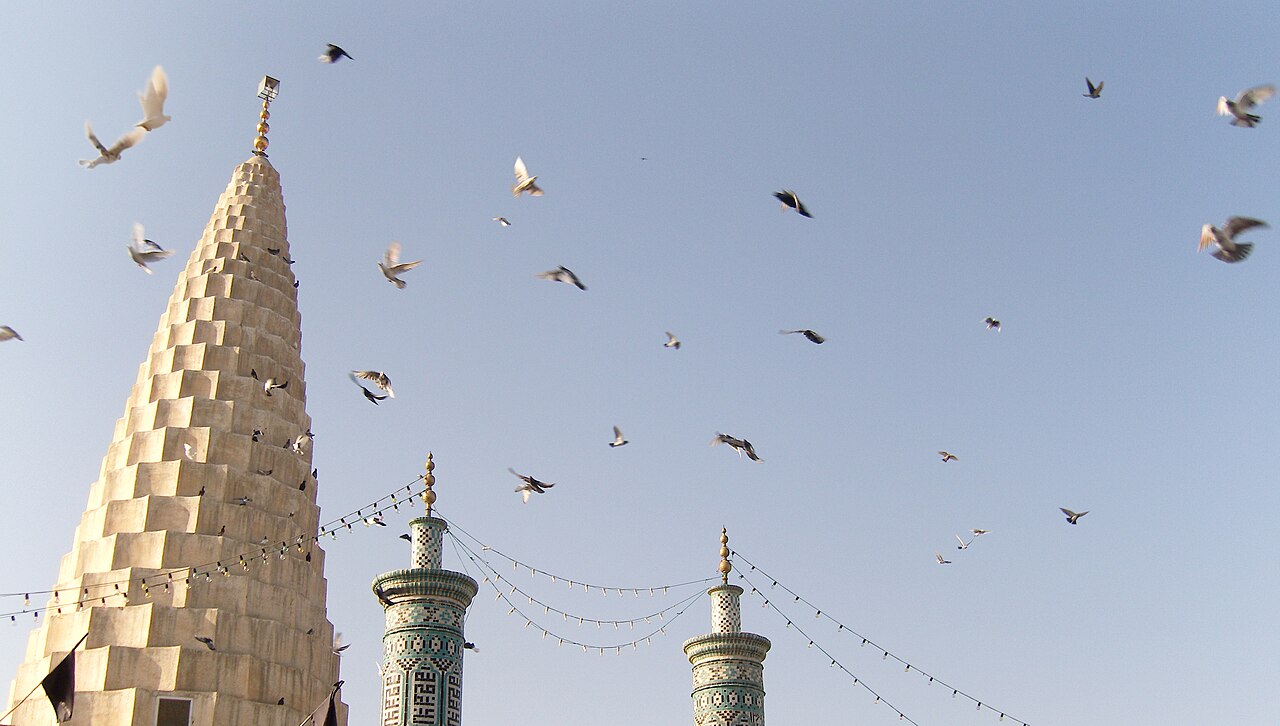
The town’s heart is the shrine of Daniel (دانیال نبی, Dâniyâl-e Nabi), the Hebrew prophet who, according to the Book of Daniel, served at the court of Babylon and Persia and had a vision “at Shushan the palace”. A tradition linking his grave to Susa is old: the 12th-century Jewish traveller Benjamin of Tudela recorded a story that Daniel’s coffin had been hung in a glass case from a bridge over the river so that both banks would share its blessing. The present building, with its distinctive white conical dome stepped in rows of muqarnas, dates mainly from the 19th century and later. It is visited by Muslim pilgrims and, traditionally, by Jews.
The French castle
On the highest mound above the town stands a building that looks like a medieval European fortress. It is the Shush Castle (قلعه شوش), built from 1897 by the French archaeologist Jacques de Morgan as a fortified base for his excavation team, who needed protection from raids. It was built partly with bricks taken from the ancient site, and some carry Elamite inscriptions. The French had held the right to excavate in Persia since the 1880s, when Marcel and Jane Dieulafoy dug at Susa, and many of the finds, including the stele of Hammurabi’s law code and glazed brick friezes of archers, were taken to the Louvre in Paris. That is why visitors to Susa find the most famous objects from it in France.
Visiting the sites
The archaeological site of Susa lies on the edge of town, a short walk from the shrine. You can walk across the Apadana mound, where the stone bases of the columns of Darius’s audience hall have been set back in place, see a copy of a double-bull capital, and look down into the old excavation trenches. A small museum near the site displays pottery and objects found locally. Our places page on the Susa archaeological site describes what is there in detail.
Most visitors also go to Chogha Zanbil, about 40 km to the south-east, the best-preserved Elamite ziggurat and the first Iranian monument on the UNESCO list, in 1979. On the way is Haft Tappeh, another Elamite site with its own museum. The water mills and channels of Shushtar are about an hour’s drive further east.
Shush in the Iran–Iraq War
Shush lies about 60 km from the Iraqi border. When Iraq invaded in September 1980, its forces advanced across the plain west of the Karkheh and shelled the towns of Shush, Dezful and Andimeshk. In March 1982 Iran’s Fath ol-Mobin offensive pushed the Iraqi army back from this area, two months before the recapture of Khorramshahr. War memorials in and around the town recall the fighting; see Abadan and Khorramshahr for the southern front.
Practical notes
Shush is about an hour and a half by road from Ahvaz, which has the nearest major airport, and has its own railway station. Summers are extremely hot, often above 50°C, so the season to visit is from November to March. Many travellers stay in Dezful, Shushtar or Ahvaz and visit Shush, Haft Tappeh and Chogha Zanbil in one long day. Check current opening times and tickets locally, and your own government’s travel advice for Khuzestan.
Persian words from this page
| شوش | Shush | Susa, Shush |
| دانیال نبی | Dâniyâl-e Nabi | the prophet Daniel |
| قلعه | qal’e | castle |
| کرخه | Karkhe | the Karkheh river |
| نیشکر | neyshekar | sugar cane |
| هفتتپه | Haft Tappe | Haft Tappeh, “seven mounds” |
| آپادانا | Âpâdânâ | Apadana, the audience hall |
Sources and further reading
- UNESCO World Heritage Centre, Susa (no. 1455).
- Encyclopaedia Iranica, articles “Susa” and “Daniel”.
- Jean Perrot (ed.), The Palace of Darius at Susa: The Great Royal Residence of Achaemenid Persia (I.B. Tauris, 2013).
- Prudence O. Harper, Joan Aruz and Françoise Tallon (eds.), The Royal City of Susa: Ancient Near Eastern Treasures in the Louvre (Metropolitan Museum of Art, 1992).
- Benjamin of Tudela, The Itinerary, trans. M. N. Adler (1907).
Want to learn Persian? Get the free Starter Pack
Get the 14-page printable Starter Pack (all 32 letters, a 7-day reading plan, 100 core words and 20 survival phrases) and a short 5-email course. Free.
More in Cities of Iran
- Tehran: Iran’s Capital
- Mashhad
- Isfahan
- Shiraz
- Tabriz
- Yazd
- Kashan
- Kerman
- Hamadan
- Qom
- Ahvaz
- Rasht
- Kermanshah
- Urmia
- Ardabil
- Zanjan
- Qazvin
- Sanandaj
- Khorramabad
- Bandar Abbas
- Bushehr
- Zahedan
- Birjand
- Gorgan
- Sari
- Semnan
- Arak
- Ilam
- Yasuj
- Shahr-e Kord
- Bojnurd
- Karaj
- Abadan and Khorramshahr
- Kish Island
- Qeshm Island
- Hormuz Island
- Masuleh
- Abyaneh
- Kandovan
- Bam
- Neyshabur (Nishapur)
- Shush (Susa) Today