In the summer and autumn of 1988, at the end of the Iran–Iraq War, the Islamic Republic secretly executed thousands of political prisoners held in jails across the country. Most were members or supporters of the People’s Mojahedin (MEK); others were leftists judged to have abandoned Islam. Human rights organisations put the number killed at between about 2,800 and 5,000 or more; the Iranian state has never published a figure or fully acknowledged the killings.
| When | Late July to about September 1988 |
|---|---|
| Where | Evin and Gohardasht prisons near Tehran, and prisons in many provincial cities |
| Ordered by | A secret written order from Ayatollah Khomeini, July 1988 |
| Victims | Mainly MEK supporters; also members of the Tudeh party, Fadaiyan and other leftist groups |
| Estimates | 2,800–3,800 (Ayatollah Montazeri’s memoirs); at least about 5,000 (Amnesty International); the MEK claims 30,000 |
| Burials | Mostly unmarked mass graves, including at Khavaran in Tehran |
The background in the summer of 1988
By 1988 Iran’s prisons held thousands of political prisoners arrested during the violent confrontation of 1981–1983 between the new regime and its opponents, above all the MEK (see power struggles after the revolution). Many had already been tried and were serving fixed sentences; some had finished them but had not been released because they would not recant.
On 18 July 1988 Iran accepted the UN ceasefire resolution that ended the war with Iraq (see the end of the Iran–Iraq War). A week later, on 25–26 July, the MEK’s National Liberation Army, armed and supported by Iraq, launched an invasion of western Iran it called Operation Eternal Light (Forugh-e Javidan). Iranian forces crushed it within days in a counter-offensive named Operation Mersad. In the same days Khomeini issued a secret order that those in prison who remained “steadfast” in their support for the MEK were to be put to death.
The “death commissions”
Under the order, panels of three or four officials were set up in Tehran and the provinces. Prisoners called them the “death commissions”. In Tehran the panel included a religious judge, Hossein-Ali Nayyeri; the prosecutor, Morteza Eshraqi; his deputy, Ebrahim Raisi; and a representative of the intelligence ministry, Mostafa Pourmohammadi. Prisoners were brought before them, often blindfolded, for interviews that lasted minutes. MEK prisoners were asked whether they still supported the organisation, which the authorities called the monâfeghin (“hypocrites”), and whether they would denounce it or walk through Iraqi minefields for the Islamic Republic. Those whose answers were judged wrong were hanged, often the same day.
From late August a second round targeted leftist prisoners. They were asked whether they were Muslims, whether they prayed and whether their parents had been believers. Men judged to be apostates were executed; women in the same position were, according to survivors, sentenced to be flogged at prayer times until they agreed to pray. Prisons were closed to visitors for months, and families learned of deaths only later, often by being handed a bag of their relative’s belongings.

Montazeri’s protest
The strongest objection came from inside the system. Ayatollah Hossein-Ali Montazeri, Khomeini’s designated successor, wrote to Khomeini in late July and August 1988 urging him to stop the killings, arguing that they would stain the revolution and violate Islamic law. In a meeting with the Tehran commission on 15 August he told them that history would condemn them. His protest was a main reason he was dismissed as successor in March 1989, opening the way for Ali Khamenei (see the death of Khomeini). In his memoirs Montazeri put the number executed at between 2,800 and 3,800.
In August 2016 Montazeri’s son Ahmad released an audio recording of the 15 August meeting. It caused a stir in Iran. Ahmad Montazeri was prosecuted for publishing it, and Mostafa Pourmohammadi, then justice minister, said he was proud to have carried out God’s command against the MEK.
How many died
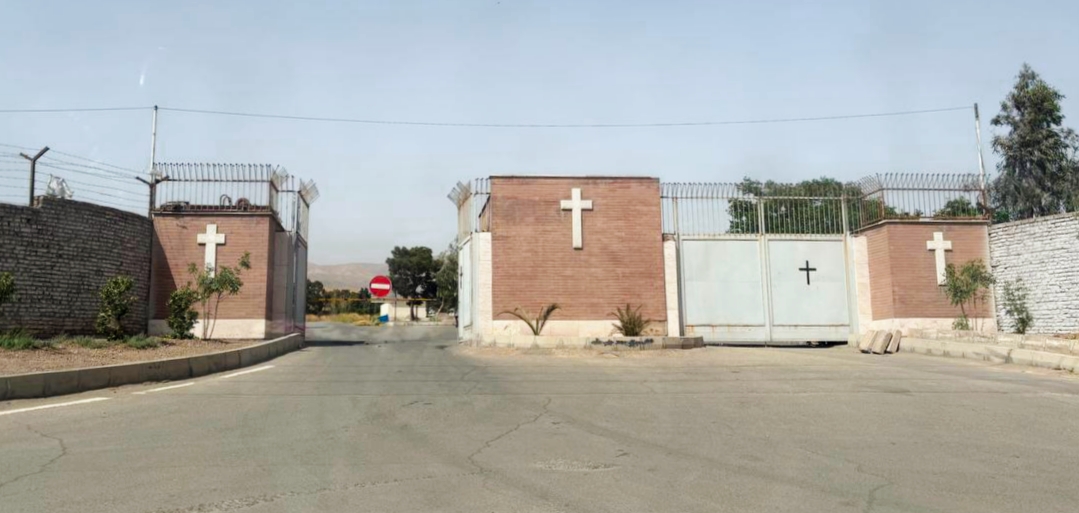
No official figure exists. Estimates rest on lists compiled by survivors, families and opposition groups. Amnesty International, in its 2018 report Blood-soaked Secrets, said that about 5,000 people were believed to have been killed and that the true number could be higher. Human Rights Watch and other organisations give figures in the range of 2,800 to 5,000. The MEK says 30,000 were killed; independent researchers have not confirmed that figure. The bodies of most victims were never returned. In Tehran many were buried in mass graves at Khavaran (خاوران), a site families have visited for decades, and where rights groups say the authorities have tried to destroy evidence.
The official position
Iranian officials have rarely discussed the killings publicly. When they have, they have presented them as legitimate punishment of members of an armed organisation that had allied with Saddam Hussein during the war and carried out bombings and assassinations in Iran. Critics reply that most of those killed were already serving sentences, had no part in the 1988 invasion, and were executed without trial.
Accountability
In November 2019 Swedish police arrested Hamid Nouri, a former official at Gohardasht prison, when he arrived in Stockholm. Under universal jurisdiction, a Swedish court convicted him in July 2022 of war crimes and murder over the 1988 killings and sentenced him to life imprisonment. In June 2024 Sweden released him in a prisoner exchange for the Swedish EU diplomat Johan Floderus and another Swedish citizen held in Iran. In 2024 the UN Special Rapporteur on Iran, Javaid Rehman, presented a report describing the 1988 executions as crimes against humanity. Relatives and survivors continue to call for an independent investigation; many of them link the killings to the later careers of the officials involved, including Raisi’s election as president in 2021.
Persian words from this page
| اعدام | e’dâm | execution |
| زندانی سیاسی | zendâni-ye siâsi | political prisoner |
| هیئت مرگ | hey’at-e marg | death commission |
| منافقین | monâfeghin | “hypocrites” (the state’s term for the MEK) |
| خاوران | Khâvarân | Khavaran cemetery |
| منتظری | Montazeri | Montazeri |
Sources and further reading
- Amnesty International, Blood-soaked Secrets: Why Iran’s 1988 Prison Massacres Are Ongoing Crimes against Humanity (December 2018).
- Ervand Abrahamian, Tortured Confessions: Prisons and Public Recantations in Modern Iran (University of California Press, 1999).
- Geoffrey Robertson, The Massacre of Political Prisoners in Iran, 1988 (Abdorrahman Boroumand Foundation, 2010).
- Hossein-Ali Montazeri, Memoirs (Persian, published 2000).
- UN Special Rapporteur on the situation of human rights in Iran, report on atrocity crimes of the 1980s (2024).
Want to learn Persian? Get the free Starter Pack
Get the 14-page printable Starter Pack (all 32 letters, a 7-day reading plan, 100 core words and 20 survival phrases) and a short 5-email course. Free.
More in The Islamic Revolution and the Islamic Republic (1979–present)
- Causes of the 1979 Revolution
- Khomeini’s Return and the Fall of the Monarchy
- Ruhollah Khomeini
- The 1979 Referendum and the New Constitution
- The Iran Hostage Crisis (1979–1981)
- Power Struggles after the Revolution
- The Cultural Revolution and University Closures
- The Iran–Iraq War: Causes and Iraqi Invasion
- Khorramshahr: Fall and Liberation
- The Iran–Iraq War, 1982–1986
- The Basij and Child Soldiers in the Iran–Iraq War
- Chemical Weapons in the Iran–Iraq War
- The Tanker War and Iran Air Flight 655
- The Iran–Contra Affair
- The End of the Iran–Iraq War (1988)
- The 1988 Executions of Political Prisoners
- The Death of Khomeini and the Succession of Khamenei (1989)
- Ali Khamenei
- Rafsanjani and Post-War Reconstruction (1989–1997)
- Khatami and the Reform Era (1997–2005)
- The 1999 Student Protests (18 Tir)
- The Ahmadinejad Presidency (2005–2013)
- The 2009 Election and the Green Movement
- Iran’s Nuclear Program
- Sanctions on Iran
- Rouhani and the Nuclear Deal (JCPOA)
- The Protests of 2017–2018 and November 2019
- The Killing of Soleimani and Flight 752 (January 2020)
- Iran and the COVID-19 Pandemic
- The Raisi Presidency and His Death (2021–2024)
- The 2022 Mahsa Amini Protests: “Woman, Life, Freedom”
- Iran and Israel: From Allies to Open Conflict
- The Pezeshkian Presidency
- The Twelve-Day War of June 2025
- The Protests of Late 2025 and January 2026
- The 2026 War with the United States and Israel
- The Killing of Ali Khamenei (28 February 2026)
- Mojtaba Khamenei and the 2026 Succession
- The Iranian Diaspora
- Iran and Hezbollah
- Major Earthquakes in Modern Iran
- Iranian Cinema after 1979