Ali Khamenei, Supreme Leader of Iran since 1989, was killed on 28 February 2026 when Israeli and US strikes hit his office compound in central Tehran on the first day of the 2026 war. Iranian state media confirmed his death on 1 March after a day of denials. His death led within days to the choice of his son Mojtaba as his successor.
| Date | 28 February 2026; confirmed by Iran on 1 March 2026 |
|---|---|
| Place | The Leader’s office compound, central Tehran |
| Carried out by | Israel, as part of a joint US–Israeli campaign |
| Also killed | His daughter, a granddaughter, a son-in-law and a daughter-in-law, according to Iranian state media |
| Mourning | 40 days of official mourning |
| Funeral | Postponed in March; held from 4 July 2026 in Tehran, Qom and Iraq, with burial set for Mashhad on 9 July |

A target long considered and once vetoed
Israeli leaders had discussed killing Khamenei before. During the Twelve-Day War of June 2025, according to US officials quoted by Reuters, President Donald Trump vetoed an Israeli plan to kill him. After that war Khamenei appeared in public far less often. Iranian authorities had long prepared for the possibility of his death in a war, but no successor had been publicly named; under the constitution the choice belongs to the Assembly of Experts.
The strike of 28 February
The war of 2026 opened early on Saturday 28 February with strikes across 24 Iranian provinces. Among the first targets was the compound in central Tehran that housed the Leader’s office and residence. Khamenei, aged 86, was killed there along with members of his family and other senior officials. Satellite images published in the following days showed heavy damage to the buildings.
A day of conflicting claims
For most of 28 February the two sides told opposite stories. Israeli officials told reporters that Khamenei was dead, and a senior Israeli official told Reuters that his body had been found. Prime Minister Benjamin Netanyahu spoke of “growing signs” that he had been killed. In Tehran, the foreign ministry spokesman said the Leader was safe, and the Tasnim and Mehr news agencies reported that he remained “steadfast and firm in commanding the field”. Later that day Trump announced on social media that Khamenei had been killed, calling it the “single greatest chance for the Iranian people to take back their Country”.
On Sunday 1 March Iranian state television confirmed the death and declared 40 days of public mourning. Iranian media reported that his daughter Boshra, a granddaughter, his son-in-law and his daughter-in-law, Zahra Haddad-Adel, the wife of Mojtaba Khamenei, had also died in the strike. Reports about his wife, Mansoureh Khojasteh Bagherzadeh, were contradictory: state television said on 2 March that she had died of her injuries, but the Fars news agency later said she was alive.
Succession under fire
Since the post of deputy leader was abolished in 1989, the constitution provides that a temporary council, made up of the president, the head of the judiciary and a senior jurist of the Guardian Council, exercises the Leader’s duties until the Assembly of Experts chooses a new one (see how Iran is governed). The 88-member Assembly met under bombardment, and on 8 March it named Mojtaba Khamenei as the third Supreme Leader. The vote, its circumstances and his role since are covered on Mojtaba Khamenei and the 2026 succession.
Reactions inside Iran and abroad
Reactions divided as sharply as opinions of Khamenei himself had. Thousands of supporters gathered to mourn in Tehran, Mashhad and other cities, holding his portrait. At the same time, some Iranians inside the country and in the diaspora celebrated his death, and celebratory gatherings were held in cities with large Iranian communities abroad, including Sydney.
Governments reacted largely according to their position on the war. US and Israeli leaders presented the killing as a blow against a government responsible for decades of hostility and for the January 2026 killings of protesters. Iranian officials called it a crime that would be answered, and the Revolutionary Guards launched waves of what they called retaliatory strikes. In Pakistan, Iraq, India and other countries with large Shia communities there were mourning rallies and protests against the United States and Israel; in Karachi protesters attacked the US consulate, and in Baghdad demonstrators tried to reach the US embassy. Some legal scholars criticised the deliberate killing of a serving head of state as unlawful and as a dangerous precedent, while supporters of the strike argued that he directed the armed forces at war.
A funeral delayed by war
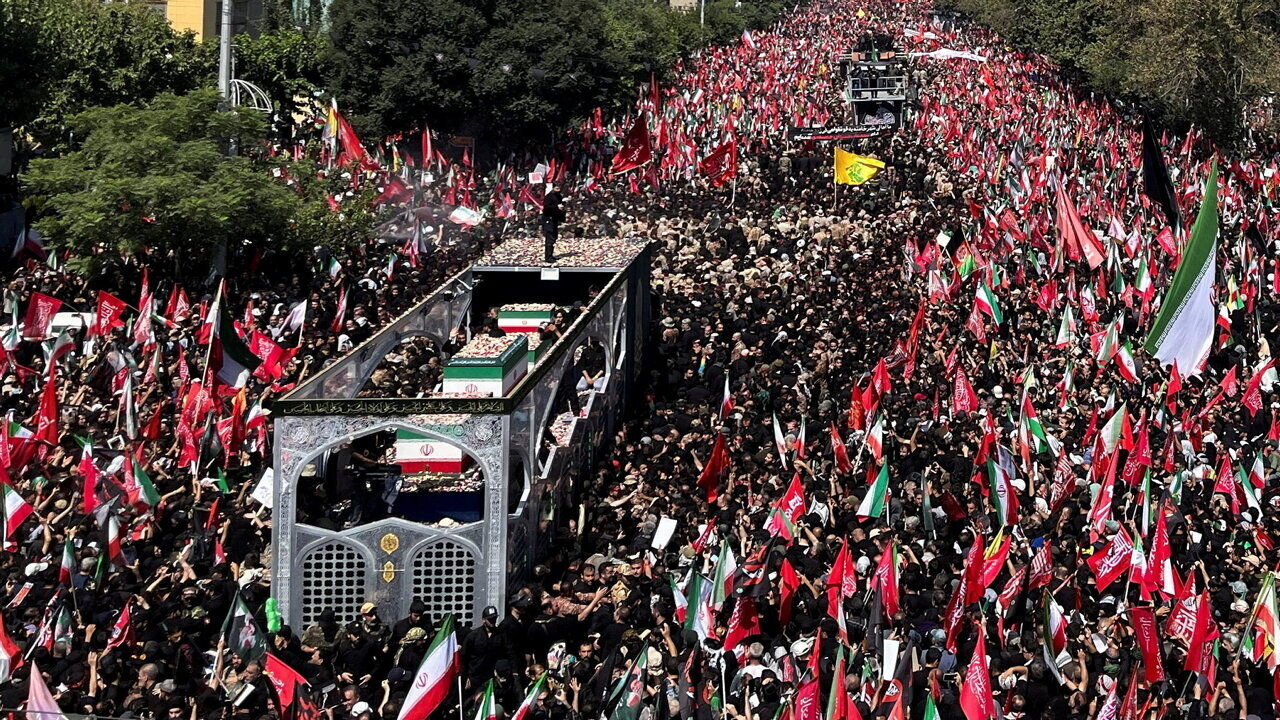
A three-day state funeral was first planned to begin on 4 March in Tehran, but the authorities postponed it as the bombing continued, citing the need to prepare for very large crowds. Commemorations were held on the fortieth day after his death, on 9 April, but there was still no funeral. In June, state media announced a new schedule, and the funeral began in Tehran on 4 July 2026. Ceremonies followed in Qom and in the Iraqi shrine city of Najaf, with burial set for 9 July at the shrine of Imam Reza in his home city of Mashhad (see Mashhad). The funeral took place as the June ceasefire was collapsing, and Trump cited chants against him at the funeral when he threatened new strikes on 10 July.
How the killing has been judged
Analysts disagree about its consequences. Some argued that removing the man who had held final authority for 36 years left the system weaker and more divided at a moment of crisis. Others argued that it allowed the leadership to rally supporters around the language of sacrifice and brought harder-line figures, especially in the Revolutionary Guards, to the fore, making a negotiated end to the war harder. For his life and record, see the main article on Ali Khamenei.
Persian words from this page
| رهبر | rahbar | leader |
| آیتالله | âyatollâh | ayatollah, a senior Shia cleric |
| عزای عمومی | azâ-ye omumi | public mourning |
| تشییع جنازه | tashyi’-e jenâze | funeral procession |
| مجلس خبرگان | majles-e khobregân | Assembly of Experts |
| مشهد | Mashhad | Mashhad, his birthplace |
This page describes events up to July 2026.
Sources and further reading
- Al Jazeera, “Iran confirms Supreme Leader Ali Khamenei dead after US-Israeli attacks”, 1 March 2026
- Reuters, “Daughter and grandchild of Iran’s Khamenei killed in US-Israeli strikes, state media says”, 1 March 2026
- BBC News, “Iran delays Khamenei funeral as US and Israeli bombardment continues”, March 2026
- Al Jazeera, “Iran announces funeral, burial dates for late Supreme Leader Khamenei”, 13 June 2026
- Associated Press, “A timeline of the Iran war and talks aimed at ending it”, July 2026
Want to learn Persian? Get the free Starter Pack
Get the 14-page printable Starter Pack (all 32 letters, a 7-day reading plan, 100 core words and 20 survival phrases) and a short 5-email course. Free.
More in The Islamic Revolution and the Islamic Republic (1979–present)
- Causes of the 1979 Revolution
- Khomeini’s Return and the Fall of the Monarchy
- Ruhollah Khomeini
- The 1979 Referendum and the New Constitution
- The Iran Hostage Crisis (1979–1981)
- Power Struggles after the Revolution
- The Cultural Revolution and University Closures
- The Iran–Iraq War: Causes and Iraqi Invasion
- Khorramshahr: Fall and Liberation
- The Iran–Iraq War, 1982–1986
- The Basij and Child Soldiers in the Iran–Iraq War
- Chemical Weapons in the Iran–Iraq War
- The Tanker War and Iran Air Flight 655
- The Iran–Contra Affair
- The End of the Iran–Iraq War (1988)
- The 1988 Executions of Political Prisoners
- The Death of Khomeini and the Succession of Khamenei (1989)
- Ali Khamenei
- Rafsanjani and Post-War Reconstruction (1989–1997)
- Khatami and the Reform Era (1997–2005)
- The 1999 Student Protests (18 Tir)
- The Ahmadinejad Presidency (2005–2013)
- The 2009 Election and the Green Movement
- Iran’s Nuclear Program
- Sanctions on Iran
- Rouhani and the Nuclear Deal (JCPOA)
- The Protests of 2017–2018 and November 2019
- The Killing of Soleimani and Flight 752 (January 2020)
- Iran and the COVID-19 Pandemic
- The Raisi Presidency and His Death (2021–2024)
- The 2022 Mahsa Amini Protests: “Woman, Life, Freedom”
- Iran and Israel: From Allies to Open Conflict
- The Pezeshkian Presidency
- The Twelve-Day War of June 2025
- The Protests of Late 2025 and January 2026
- The 2026 War with the United States and Israel
- The Killing of Ali Khamenei (28 February 2026)
- Mojtaba Khamenei and the 2026 Succession
- The Iranian Diaspora
- Iran and Hezbollah
- Major Earthquakes in Modern Iran
- Iranian Cinema after 1979