Mojtaba Khamenei, born in Mashhad in 1969, is the second son of Ali Khamenei and became Iran’s third Supreme Leader on 8 March 2026, chosen by the Assembly of Experts eight days after his father was killed in a US–Israeli strike. A mid-ranking cleric with long ties to the Revolutionary Guards, he had never held elected office, and since his appointment he has not appeared in public; he was injured in the strike that killed his father.
| Full name | Seyyed Mojtaba Hosseini Khamenei سید مجتبی حسینی خامنهای |
|---|---|
| Born | 8 September 1969, Mashhad |
| Father | Ali Khamenei, Supreme Leader 1989–2026 |
| Wife | Zahra Haddad-Adel, killed 28 February 2026 |
| Supreme Leader | From 8 March 2026 |
| Chosen by | The Assembly of Experts (88 members) |
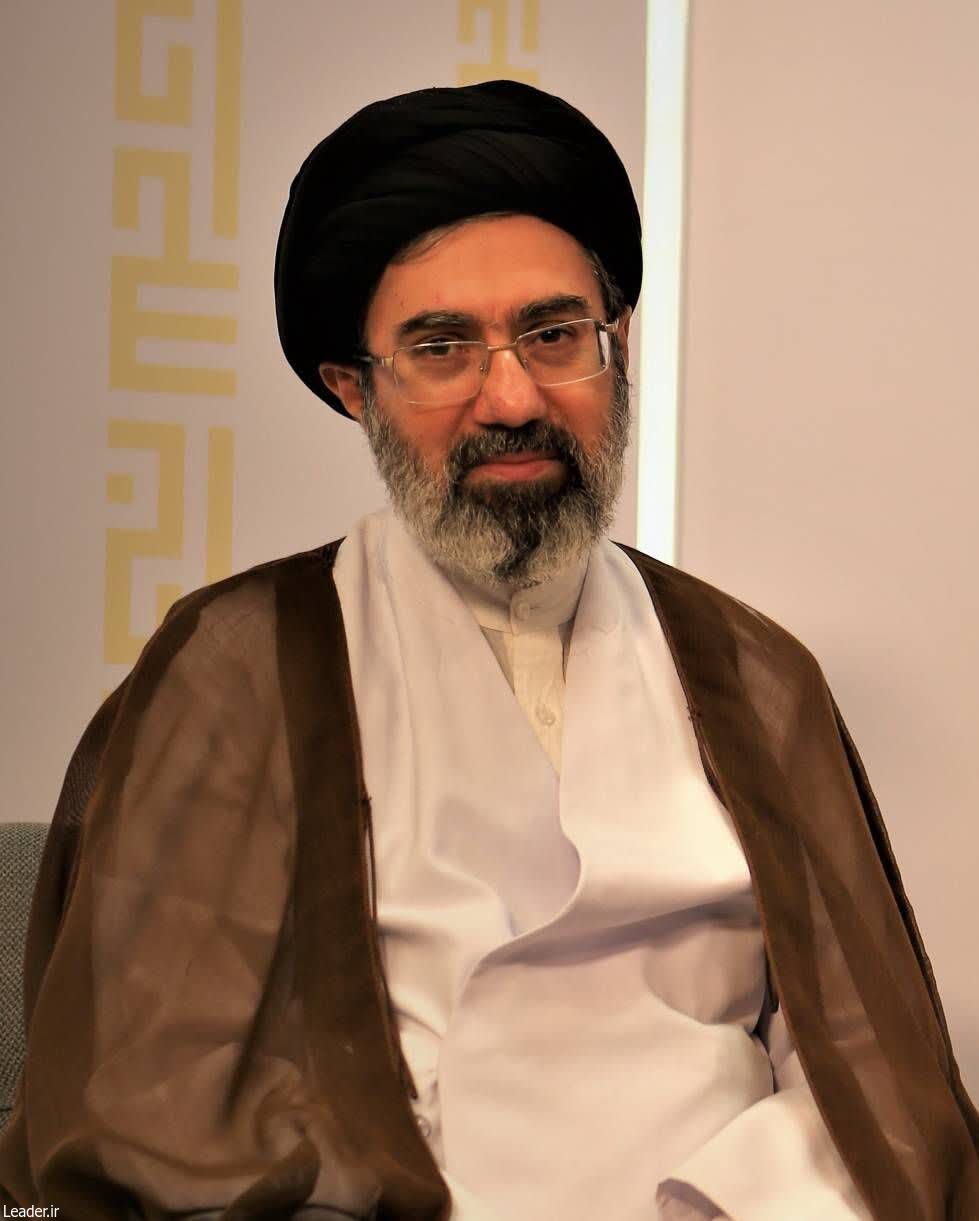

A son of the revolution
Mojtaba Khamenei was born in Mashhad, where his father was then a young cleric active against the shah. He went to school in Tehran and, as a teenager in the late 1980s, served with the Revolutionary Guards’ Habib battalion in the Iran–Iraq War. Several of the men he served with later rose to senior posts in the Guards and the intelligence services, and those ties shaped his career. From 1989, the year his father became Supreme Leader, he studied in the seminaries of Qom, and he later taught advanced jurisprudence there for many years.
He married Zahra Haddad-Adel, a daughter of the conservative politician Gholam-Ali Haddad-Adel, a former speaker of parliament.
Influence behind the scenes
For two decades Mojtaba Khamenei was described as one of the most powerful people in his father’s office, yet he gave no public speeches, sermons or interviews of note, and many Iranians had never heard his voice. Reformists accused him of helping to engineer Mahmoud Ahmadinejad’s disputed re-election in 2009 and of directing the Basij militia against the protests that followed (see the Green Movement); he never publicly answered these accusations. In 2019 the US Treasury placed him under sanctions, saying he represented the Leader in an official capacity despite never having been elected. Bloomberg and other Western media have reported that he controls large business interests through intermediaries, which he has not addressed.
The succession of March 2026
When Ali Khamenei was killed on 28 February 2026 (see the killing of Ali Khamenei), his wife, his sister Boshra and other relatives were killed. Early reports said Mojtaba was not present; Iran’s ambassador to Cyprus later said he had been at the compound and was injured. Under the constitution an interim council took over the Leader’s duties, and the Assembly of Experts, the elected body of senior clerics that chooses the Leader, began meeting under bombardment.
The process was hurried and largely hidden. Members met remotely because in-person sessions were judged too dangerous, and Iranian media reported that the Assembly’s office in Qom was hit by a strike. Foreign media, citing people involved, reported divisions: according to these accounts, senior Revolutionary Guards commanders pressed for Mojtaba Khamenei, while more moderate figures warned that choosing the late Leader’s son would look like a hereditary succession. These reports could not be independently verified.
On Sunday 8 March the Assembly announced that it had chosen Mojtaba Khamenei by a “decisive vote” and called on Iranians, especially the seminaries and universities, to pledge allegiance. State institutions issued statements of loyalty; the defence council said it would obey the new commander-in-chief “until the last drop of our blood”. Commentators noted that a father-to-son succession recalled the hereditary Pahlavi monarchy that the 1979 revolution had overthrown, and some senior clerics questioned his suitability.
Reactions
President Donald Trump had called Mojtaba Khamenei an “unacceptable” choice before the vote, and said afterwards that he was disappointed by it. Inside Iran, supporters of the system presented the rapid choice as proof that the Islamic Republic had survived the loss of its leader, while opponents saw it as confirmation that the Revolutionary Guards now held decisive power.
An unseen leader
Since his appointment Mojtaba Khamenei has not appeared in public. In March Iran’s ambassador to Cyprus confirmed that he had been injured and said he had been lucky to survive. In April Reuters, citing unnamed sources, reported that his wounds were severe; Iranian officials have not published details of his condition. Written statements issued in his name have been read on state television, without any video or audio of him. In March a senior Iranian official told Reuters that he had rejected proposals from intermediaries to reduce tensions with the United States.
He was still not seen in public by the time of his father’s funeral in July 2026. How much day-to-day control he exercises, and how much rests with the Revolutionary Guards and the Supreme National Security Council, is unclear to outside observers. For the structure of power he sits at the top of, see how Iran is governed; for the war that brought him to office, see the 2026 war.
Persian words from this page
| مجتبی | Mojtabâ | Mojtaba (a given name) |
| رهبر | rahbar | leader |
| مجلس خبرگان | majles-e khobregân | Assembly of Experts |
| سپاه پاسداران | sepâh-e pâsdârân | Revolutionary Guards |
| بسیج | basij | Basij militia |
| حوزه علمیه | howze-ye elmiye | Shia seminary |
This page describes events up to July 2026.
Sources and further reading
- Al Jazeera, “Who is Mojtaba Khamenei, Iran’s new supreme leader amid war?”, 8 March 2026
- The Guardian, “Ali Khamenei’s son Mojtaba chosen as Iran’s new supreme leader”, 8 March 2026
- The Guardian, “Mojtaba Khamenei was hurt in strike that killed his father, Iran’s Cyprus ambassador confirms”, 11 March 2026
- Reuters, “Iran’s new supreme leader has severe, disfiguring wounds, sources say”, 11 April 2026
- Associated Press, “A timeline of the Iran war and talks aimed at ending it”, July 2026
Want to learn Persian? Get the free Starter Pack
Get the 14-page printable Starter Pack (all 32 letters, a 7-day reading plan, 100 core words and 20 survival phrases) and a short 5-email course. Free.
More in The Islamic Revolution and the Islamic Republic (1979–present)
- Causes of the 1979 Revolution
- Khomeini’s Return and the Fall of the Monarchy
- Ruhollah Khomeini
- The 1979 Referendum and the New Constitution
- The Iran Hostage Crisis (1979–1981)
- Power Struggles after the Revolution
- The Cultural Revolution and University Closures
- The Iran–Iraq War: Causes and Iraqi Invasion
- Khorramshahr: Fall and Liberation
- The Iran–Iraq War, 1982–1986
- The Basij and Child Soldiers in the Iran–Iraq War
- Chemical Weapons in the Iran–Iraq War
- The Tanker War and Iran Air Flight 655
- The Iran–Contra Affair
- The End of the Iran–Iraq War (1988)
- The 1988 Executions of Political Prisoners
- The Death of Khomeini and the Succession of Khamenei (1989)
- Ali Khamenei
- Rafsanjani and Post-War Reconstruction (1989–1997)
- Khatami and the Reform Era (1997–2005)
- The 1999 Student Protests (18 Tir)
- The Ahmadinejad Presidency (2005–2013)
- The 2009 Election and the Green Movement
- Iran’s Nuclear Program
- Sanctions on Iran
- Rouhani and the Nuclear Deal (JCPOA)
- The Protests of 2017–2018 and November 2019
- The Killing of Soleimani and Flight 752 (January 2020)
- Iran and the COVID-19 Pandemic
- The Raisi Presidency and His Death (2021–2024)
- The 2022 Mahsa Amini Protests: “Woman, Life, Freedom”
- Iran and Israel: From Allies to Open Conflict
- The Pezeshkian Presidency
- The Twelve-Day War of June 2025
- The Protests of Late 2025 and January 2026
- The 2026 War with the United States and Israel
- The Killing of Ali Khamenei (28 February 2026)
- Mojtaba Khamenei and the 2026 Succession
- The Iranian Diaspora
- Iran and Hezbollah
- Major Earthquakes in Modern Iran
- Iranian Cinema after 1979