The Iran–Iraq War ended with a UN-brokered ceasefire that took effect on 20 August 1988, after Iran accepted Security Council Resolution 598 on 18 July 1988. Neither side gained territory after eight years of fighting, and the war left hundreds of thousands dead. Ayatollah Khomeini said accepting the ceasefire was “more deadly than drinking poison”, a phrase Iranians still quote.
| Resolution 598 adopted | 20 July 1987 (UN Security Council, unanimously) |
|---|---|
| Iran accepts | 18 July 1988, by letter to the UN Secretary-General |
| Ceasefire in force | 20 August 1988, monitored by UNIIMOG |
| Border result | Return to the pre-war frontier of the 1975 Algiers Agreement |
| Persian names for the war | Jang-e tahmili (the Imposed War), Defa’-e moqaddas (the Sacred Defence) |
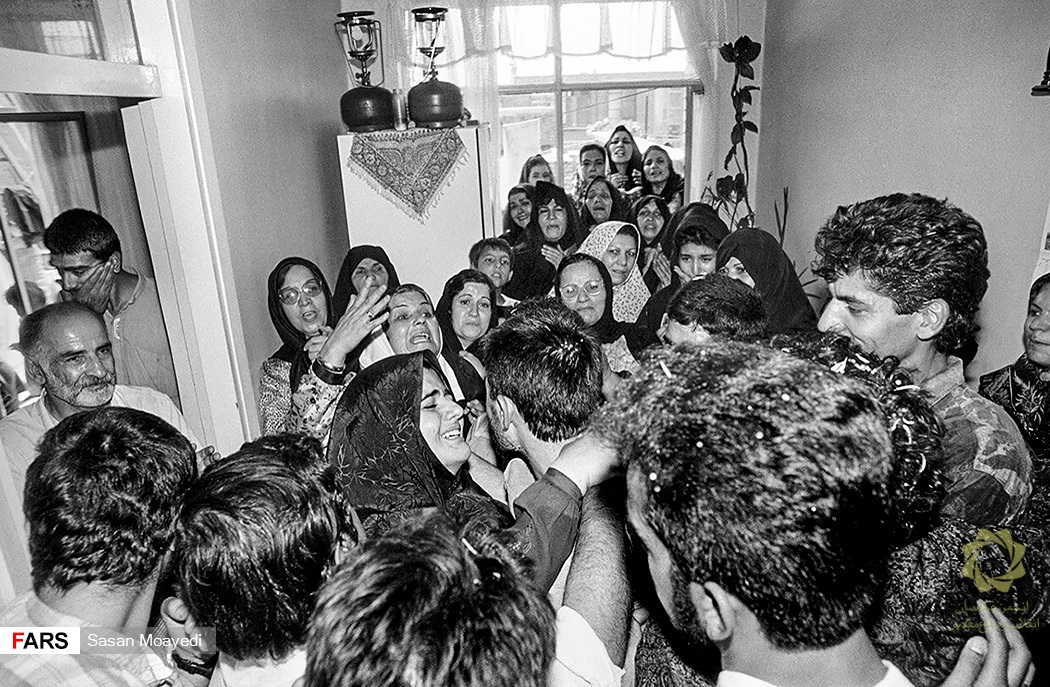

A resolution Iran refused for a year
By 1987 the war had become a costly stalemate. Iran had taken the Fao peninsula in 1986 but failed to capture Basra in the long battles of early 1987. In New York, the five permanent members of the Security Council, who rarely agreed during the Cold War, drafted a resolution that demanded an immediate ceasefire, a withdrawal to international borders, an exchange of prisoners, and an impartial body to look into who was responsible for the conflict.
Iraq accepted Resolution 598 quickly. Iran did not reject it outright, but it set a condition: the world should first name Iraq as the aggressor. Tehran felt that the UN had stayed silent when Iraq invaded in September 1980 and when it used chemical weapons, and it did not trust a resolution that treated both sides alike. For about a year Iran kept fighting while diplomats argued over the order in which the resolution’s points would be carried out.
The military collapse of spring 1988
The balance turned against Iran in the first half of 1988. Iraq, rearmed with help from the Gulf states, the Soviet Union and France, and receiving US intelligence, launched a series of well-prepared offensives:
- Feb–Apr 1988 The “War of the Cities”: Iraq fires about 200 modified Scud missiles at Tehran and other cities; many Tehran residents leave the capital.
- 17–18 April 1988 Iraq retakes the Fao peninsula in about 36 hours, using chemical weapons. On 18 April the US Navy sinks or damages several Iranian ships in Operation Praying Mantis.
- May–June 1988 Iraq recaptures Shalamcheh, the Majnun islands and the area around Mehran.
- 3 July 1988 USS Vincennes shoots down Iran Air Flight 655 over the Persian Gulf, killing all 290 people on board.
- 18 July 1988 Iran informs the UN that it accepts Resolution 598.
- 20 July 1988 Khomeini’s message on the ceasefire is read on state radio.
- 20 August 1988 The ceasefire takes effect.
The shoot-down of Flight 655, described on the page about the Tanker War, convinced many in Tehran that the United States was ready to enter the war openly on Iraq’s side. Iran was also short of money: oil prices had fallen, and its tanker trade was under attack.
The “cup of poison”
The decision was taken by a small group of leaders around Khomeini, with Majlis Speaker Akbar Hashemi Rafsanjani, then acting commander-in-chief, playing a central part. Mohsen Rezaee, commander of the Revolutionary Guards, had sent a letter listing what victory would require: years more of fighting and large amounts of new weapons. The government’s economic officials reported that the country could not pay for this.
Khomeini’s message, read out on 20 July 1988, did not hide his feelings. He said that taking the decision was more deadly to him than drinking from a جام زهر (jam-e zahr, a cup of poison), and that he accepted it only because it served the interests of the revolution. The words were a shock to soldiers and families who had been told for years that the war would end only with the fall of Saddam Hussein.
Fighting after the ceasefire was agreed
The last weeks were among the bloodiest. Iraq advanced again into Khuzestan in late July before pulling back. On 25 July 1988 the armed opposition group the People’s Mojahedin (MEK), based in Iraq, launched an offensive into western Iran called Forough-e Javidan (Eternal Light). Iranian forces stopped it near Kermanshah in an operation called Mersad. Shortly afterwards the government secretly executed thousands of political prisoners, a subject covered on the page about the 1988 executions.
The human and economic cost
Exact figures do not exist, and the estimates differ widely:
- Iranian official sources put Iran’s military and civilian dead at roughly 190,000 to 220,000.
- Many Western historians give a total of about 500,000 dead for both countries together; some estimates go as high as a million or more.
- Hundreds of thousands were wounded, and tens of thousands of Iranians suffered lasting harm from chemical weapons (see chemical weapons in the war).
- About two million Iranians had been displaced from the border provinces, and cities such as Khorramshahr and Abadan were in ruins.
Iranian economists and officials have put the material damage in the hundreds of billions of dollars; such figures depend heavily on how lost oil revenue and lost growth are counted, so they are best treated as rough orders of size.
Prisoners, borders and the unfinished peace
A ceasefire is not a peace treaty, and no full peace treaty was ever signed. The real settlement came out of a different crisis. In August 1990, as he prepared to defend his invasion of Kuwait, Saddam Hussein wrote to Iran accepting the 1975 Algiers Agreement and pulling his forces back from the remaining Iranian territory they held.
Prisoner exchanges began that month. Iran’s returning prisoners of war were called آزادگان (azadegan, “the freed ones”). Some had been held for close to ten years. Exchanges and searches for the remains of the missing continued for decades; the last large exchange took place in 2003.
Iran’s demand that Iraq be named as the aggressor was partly met in December 1991, when UN Secretary-General Javier Pérez de Cuéllar reported to the Security Council that Iraq’s attack of September 1980 could not be justified under international law. Iran never received the war reparations it sought.
How Iranians remember the end of the war
In Iran the war is remembered in murals, cemeteries for the “martyrs”, museums, films and an annual Sacred Defence Week that begins on 31 Shahrivar (around 22 September), the date of the Iraqi invasion. The ceasefire itself is remembered more quietly, and its meaning is argued over. For the state it was a defensive victory: Iran lost no land and the Islamic Republic survived. Critics, including some veterans, ask why Iran fought on for six years after it liberated Khorramshahr in 1982, and whether the 1988 terms could have been had much earlier and at a lower cost. Historians such as Pierre Razoux and Dilip Hiro have shown how close Iran’s front came to breaking in the summer of 1988.
The end of the war cleared the way for the great changes of 1989: the death of Khomeini and the succession of Khamenei, and Rafsanjani’s reconstruction programme. For the earlier fighting, see the war from 1982 to 1986 and the Basij volunteers.
Persian words from this page
| جنگ تحمیلی | jang-e tahmili | the Imposed War |
| دفاع مقدس | defâ’-e moqaddas | the Sacred Defence |
| قطعنامه | qat’nâme | resolution |
| آتشبس | âtash-bas | ceasefire |
| جام زهر | jâm-e zahr | cup of poison |
| آزادگان | âzâdegân | returned prisoners of war |
Sources and further reading
- UN Security Council Resolution 598 (20 July 1987), and the Secretary-General’s report to the Council of 9 December 1991.
- Pierre Razoux, The Iran-Iraq War (Harvard University Press, 2015).
- Dilip Hiro, The Longest War: The Iran-Iraq Military Conflict (Routledge, 1991).
- Efraim Karsh, The Iran–Iraq War 1980–1988 (Osprey, 2002).
- Michael Axworthy, Revolutionary Iran: A History of the Islamic Republic (Penguin, 2013).
Want to learn Persian? Get the free Starter Pack
Get the 14-page printable Starter Pack (all 32 letters, a 7-day reading plan, 100 core words and 20 survival phrases) and a short 5-email course. Free.
More in The Islamic Revolution and the Islamic Republic (1979–present)
- Causes of the 1979 Revolution
- Khomeini’s Return and the Fall of the Monarchy
- Ruhollah Khomeini
- The 1979 Referendum and the New Constitution
- The Iran Hostage Crisis (1979–1981)
- Power Struggles after the Revolution
- The Cultural Revolution and University Closures
- The Iran–Iraq War: Causes and Iraqi Invasion
- Khorramshahr: Fall and Liberation
- The Iran–Iraq War, 1982–1986
- The Basij and Child Soldiers in the Iran–Iraq War
- Chemical Weapons in the Iran–Iraq War
- The Tanker War and Iran Air Flight 655
- The Iran–Contra Affair
- The End of the Iran–Iraq War (1988)
- The 1988 Executions of Political Prisoners
- The Death of Khomeini and the Succession of Khamenei (1989)
- Ali Khamenei
- Rafsanjani and Post-War Reconstruction (1989–1997)
- Khatami and the Reform Era (1997–2005)
- The 1999 Student Protests (18 Tir)
- The Ahmadinejad Presidency (2005–2013)
- The 2009 Election and the Green Movement
- Iran’s Nuclear Program
- Sanctions on Iran
- Rouhani and the Nuclear Deal (JCPOA)
- The Protests of 2017–2018 and November 2019
- The Killing of Soleimani and Flight 752 (January 2020)
- Iran and the COVID-19 Pandemic
- The Raisi Presidency and His Death (2021–2024)
- The 2022 Mahsa Amini Protests: “Woman, Life, Freedom”
- Iran and Israel: From Allies to Open Conflict
- The Pezeshkian Presidency
- The Twelve-Day War of June 2025
- The Protests of Late 2025 and January 2026
- The 2026 War with the United States and Israel
- The Killing of Ali Khamenei (28 February 2026)
- Mojtaba Khamenei and the 2026 Succession
- The Iranian Diaspora
- Iran and Hezbollah
- Major Earthquakes in Modern Iran
- Iranian Cinema after 1979