The protests of late 2025 and January 2026 began on 28 December 2025, when shopkeepers in Tehran closed their businesses over the collapse of the rial, and grew within days into a nationwide movement against the Islamic Republic. The crackdown that followed, concentrated on the nights of 8 and 9 January 2026 under an internet blackout, was the deadliest in Iran since the 1979 revolution: the government put the dead at 3,117, while rights groups and UN experts said the true toll was far higher.
| Began | 28 December 2025, Tehran |
|---|---|
| Peak | 8 to 9 January 2026 |
| Trigger | Fall of the rial, inflation of about 40 per cent |
| Deaths | 3,117 (Iranian government, January 2026); more than 6,000 confirmed by HRANA by late January; estimates of 20,000 to over 30,000 from a UN expert and medical networks |
| Detained | More than 27,600 (HRANA, late January 2026) |

An economy under strain
By the end of 2025 Iranians were living with inflation of around 40 per cent, a currency that kept losing value and repeated shortages of electricity and water. The country had just been through the Twelve-Day War with Israel and the United States in June, and in September 2025 UN sanctions were restored, adding to the American measures already in place (see sanctions on Iran). For ordinary families the result was simple: wages bought less every month. For the background on the currency, see the rial and the toman.
From the bazaar to the provinces
The first protests, on Sunday 28 December 2025, were by shopkeepers and traders in Tehran angry at the government’s handling of the currency slide. The bazaar has a long political history in Iran: merchants’ strikes helped bring down the shah in 1978. Within two days students at at least ten universities had joined, and protests spread to provincial towns.
The first deaths were reported on 31 December and 1 January. The semi-official Fars news agency said three people were killed in Azna in Lorestan province and two in Lordegan in Chaharmahal and Bakhtiari, and state television said a 21-year-old member of the Basij militia had been killed in Kouhdasht. President Masoud Pezeshkian at first struck a conciliatory tone, saying the protesters had legitimate demands about living costs, and the government offered dialogue.
8 and 9 January: the blackout and the killings
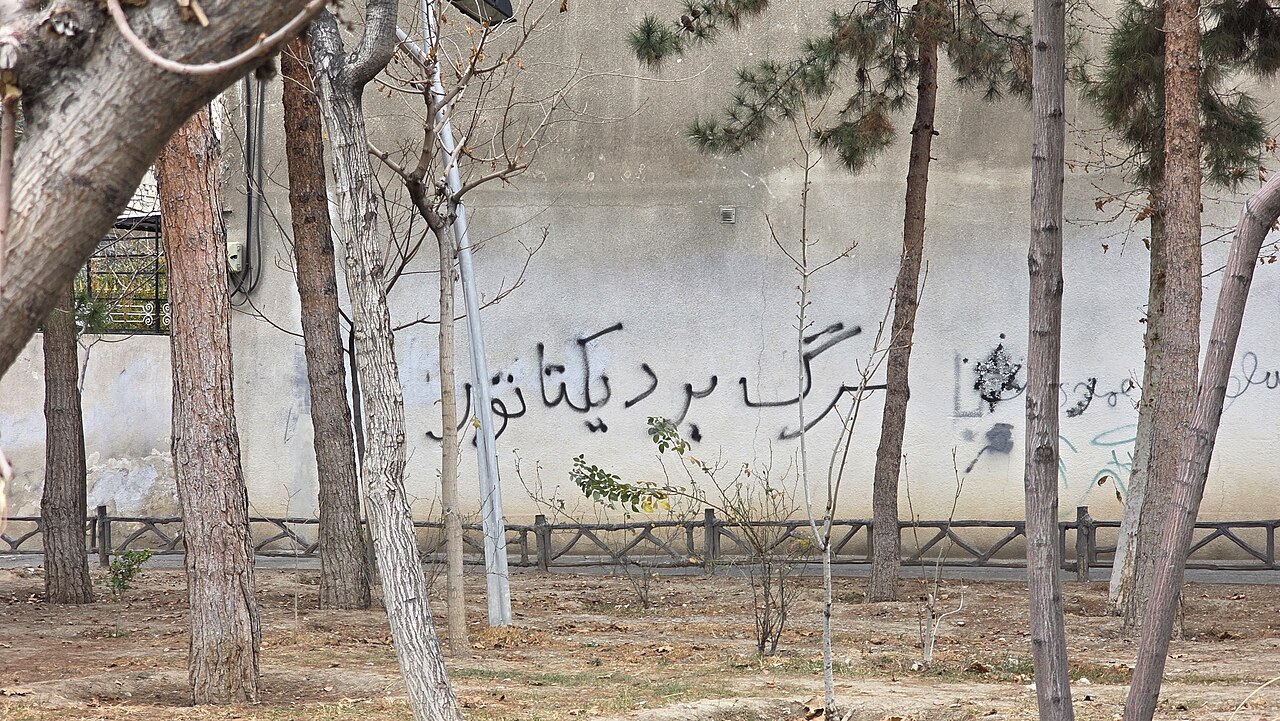
The slogans soon moved beyond prices to the political system and the Supreme Leader, Ali Khamenei. Many reports linked the sharp escalation on 8 January to a call by the exiled Reza Pahlavi, son of the last shah, for coordinated protests. That day the authorities cut internet and telephone services across the country, in what the Associated Press later described as the most comprehensive internet blackout in Iran’s history.
Under the blackout, security forces opened fire on crowds in Tehran and many other cities. Most of the killing, according to the UN and human rights organisations, took place on the nights of 8 and 9 January. Witnesses and medical staff who later reached foreign media described overwhelmed hospitals, morgues full of bodies and families pressed to bury their dead quickly. The Iranian government acknowledged that people had died but blamed armed “terrorists” and “rioters” that it said were trained and funded by the United States and Israel.
Counting the dead
Because of the blackout, no figure has been independently verified, and the estimates differ by a factor of ten:
- Iranian government: 3,117 dead, announced in January 2026. Officials said 2,427 of them were civilians and security personnel and the rest were “terrorists”.
- HRANA (Human Rights Activists News Agency, US-based): 5,137 deaths confirmed by 23 January, with more than 12,000 further cases under review; more than 6,000 confirmed by 27 January. It also counted more than 27,600 people detained.
- UN Special Rapporteur on Iran, Mai Sato: said the toll could reach 20,000 or more, based on reports from doctors inside Iran.
- Medical networks: a group of more than 80 health workers in 12 provinces told the Guardian that, compared with normal hospital figures, the toll could exceed 30,000.
Reactions abroad
On 23 January 2026 the UN Human Rights Council, meeting in emergency session in Geneva, adopted a resolution condemning the “violent crackdown on peaceful protests”, by 25 votes to 7 with 14 abstentions; China, India and Pakistan voted against. The UN High Commissioner for Human Rights, Volker Türk, told the council that the brutality was continuing. Iran’s envoy rejected the resolution and accused Western governments of hypocrisy, pointing to the damage done by their sanctions.
US President Donald Trump threatened action over the killings and ordered naval forces towards Iran, and later claimed that Iran had called off the executions of hundreds of detainees, a claim Iran’s top prosecutor denied. Iran accused Washington of using the protests as a pretext for regime change.
Trials and executions
The head of the judiciary promised swift trials for those arrested. From March 2026 the authorities began executing people convicted in connection with the unrest, including a man convicted of killing a policeman, according to Reuters. Iran Human Rights, an Oslo-based group, said executions had surged in 2026, and Amnesty International said dozens of protesters faced the death penalty.
What came next
The protests were followed within weeks by war. When the United States and Israel attacked Iran on 28 February 2026, President Trump listed the killing of protesters among his reasons and urged Iranians to “take back” their country; Iranian officials called this proof that the unrest had been foreign-backed. The war, the killing of Ali Khamenei and the long blackout overshadowed the movement, but the January killings remain central to how many Iranians view the state. Earlier waves are covered on the protests of 2017 to 2019 and “Woman, Life, Freedom” in 2022.
Persian words from this page
| بازار | bâzâr | bazaar, market |
| اعتراض | e’terâz | protest |
| تورم | tavarrom | inflation |
| ریال | riyâl | rial |
| بسیج | basij | Basij militia (literally “mobilisation”) |
| اعدام | e’dâm | execution |
This page describes events up to May 2026.
Sources and further reading
- Al Jazeera, “Several killed as Iran protests over rising cost of living spread”, 1 January 2026
- Al Jazeera, “Iran rejects UN rights resolution condemning protest killings”, 24 January 2026
- Associated Press, reporting on the official and HRANA death tolls, January 2026
- The Guardian, “Disappeared bodies, mass burials and ‘30,000 dead’: what is the truth of Iran’s death toll?”, 27 January 2026
- The Guardian, on executions of protesters during the war, 2 April 2026
Want to learn Persian? Get the free Starter Pack
Get the 14-page printable Starter Pack (all 32 letters, a 7-day reading plan, 100 core words and 20 survival phrases) and a short 5-email course. Free.
More in The Islamic Revolution and the Islamic Republic (1979–present)
- Causes of the 1979 Revolution
- Khomeini’s Return and the Fall of the Monarchy
- Ruhollah Khomeini
- The 1979 Referendum and the New Constitution
- The Iran Hostage Crisis (1979–1981)
- Power Struggles after the Revolution
- The Cultural Revolution and University Closures
- The Iran–Iraq War: Causes and Iraqi Invasion
- Khorramshahr: Fall and Liberation
- The Iran–Iraq War, 1982–1986
- The Basij and Child Soldiers in the Iran–Iraq War
- Chemical Weapons in the Iran–Iraq War
- The Tanker War and Iran Air Flight 655
- The Iran–Contra Affair
- The End of the Iran–Iraq War (1988)
- The 1988 Executions of Political Prisoners
- The Death of Khomeini and the Succession of Khamenei (1989)
- Ali Khamenei
- Rafsanjani and Post-War Reconstruction (1989–1997)
- Khatami and the Reform Era (1997–2005)
- The 1999 Student Protests (18 Tir)
- The Ahmadinejad Presidency (2005–2013)
- The 2009 Election and the Green Movement
- Iran’s Nuclear Program
- Sanctions on Iran
- Rouhani and the Nuclear Deal (JCPOA)
- The Protests of 2017–2018 and November 2019
- The Killing of Soleimani and Flight 752 (January 2020)
- Iran and the COVID-19 Pandemic
- The Raisi Presidency and His Death (2021–2024)
- The 2022 Mahsa Amini Protests: “Woman, Life, Freedom”
- Iran and Israel: From Allies to Open Conflict
- The Pezeshkian Presidency
- The Twelve-Day War of June 2025
- The Protests of Late 2025 and January 2026
- The 2026 War with the United States and Israel
- The Killing of Ali Khamenei (28 February 2026)
- Mojtaba Khamenei and the 2026 Succession
- The Iranian Diaspora
- Iran and Hezbollah
- Major Earthquakes in Modern Iran
- Iranian Cinema after 1979