The Twelve-Day War was the first open, direct war between Israel and Iran. It began with Israeli air strikes on 13 June 2025, drew in the United States, which bombed three Iranian nuclear sites on 22 June, and ended with a ceasefire on 24 June 2025. It killed about a thousand people in Iran and several dozen in Israel, and it set the stage for the much larger war of 2026.
| Dates | 13 to 24 June 2025 |
|---|---|
| Parties | Israel and Iran; the United States joined with strikes on 22 June |
| Operation names | Rising Lion (Israel), True Promise III (Iran), Midnight Hammer (US) |
| Deaths in Iran | 1,060 (Iranian government); 1,190 (HRANA, a US-based rights group) |
| Deaths in Israel | 28 by the ceasefire, according to Israeli authorities |
| Persian name | جنگ دوازدهروزه (jang-e davâzdah-ruze) |

Why June 2025
For decades Iran and Israel had fought through allies and covert operations rather than head on. That changed in April and October 2024, when the two states fired missiles at each other directly for the first time (see Iran and Israel: from allies to open conflict). Through spring 2025 the United States and Iran held indirect talks on the nuclear programme, mediated by Oman, while Israel argued that Iran was close to being able to build a bomb.
On 12 June 2025 the board of the International Atomic Energy Agency found Iran in breach of its safeguards obligations. Israel attacked the next morning, before a planned round of US–Iran talks could take place. The background on enrichment, the IAEA and the 2015 deal is on Iran’s nuclear programme; this page covers the war itself.
13 June: the opening strikes
Israel’s first wave hit the Natanz enrichment site, missile bases and air defences, and targeted the homes of senior commanders and nuclear scientists. Among those killed were the chief of the armed forces general staff, Mohammad Bagheri; the commander of the Revolutionary Guards, Hossein Salami; the Guards’ aerospace commander, Amir Ali Hajizadeh; and the nuclear scientists Fereydoun Abbasi and Mohammad Mehdi Tehranchi. Israel said the operation was pre-emptive and aimed at stopping Iran from building nuclear weapons and long-range missiles. Iran called it an act of aggression against a sovereign state.
Iran’s missile campaign
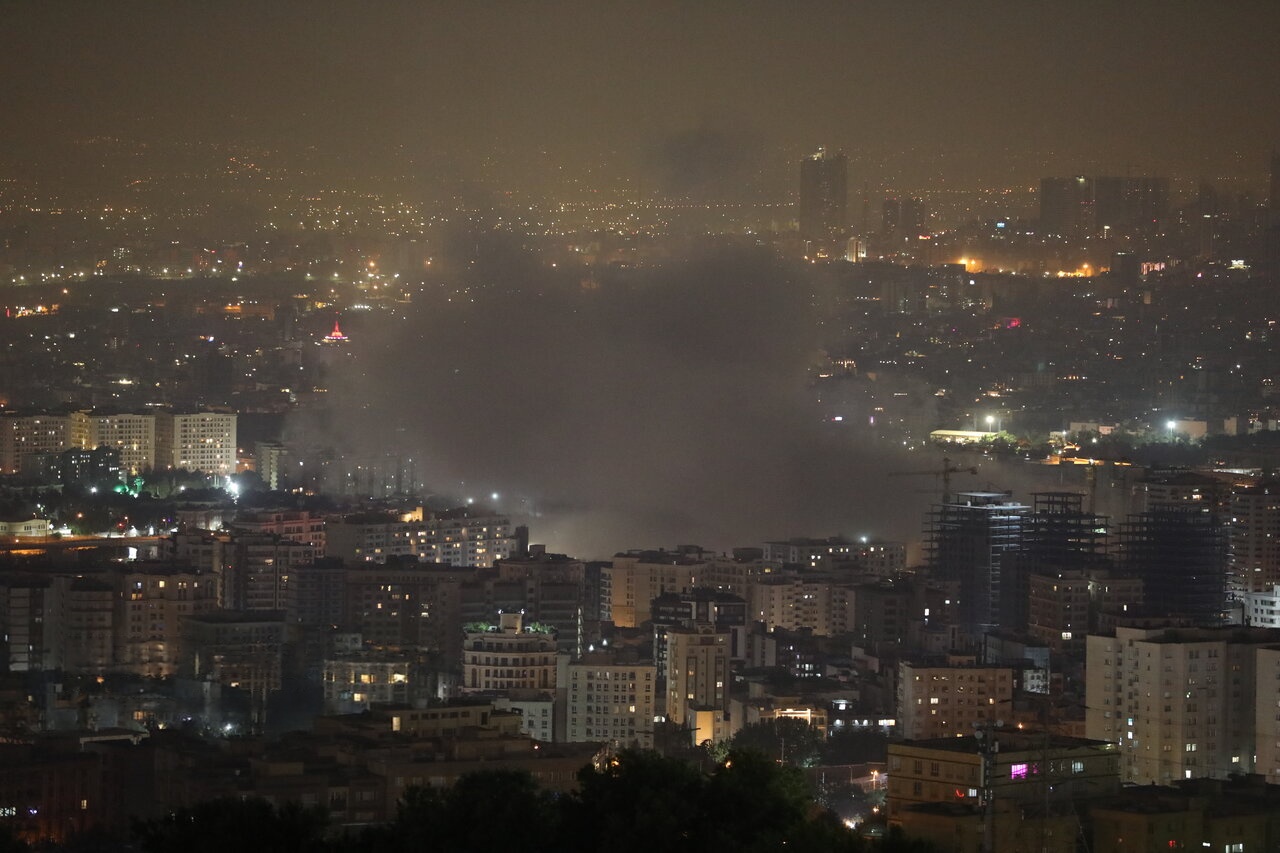
Iran answered the same night with waves of ballistic missiles and drones, which it called Operation True Promise III. Over the twelve days it fired several hundred missiles and more than a thousand drones at Israel. Most were intercepted by Israeli and US air defences, but missiles struck apartment blocks in central Israel, the oil refinery in Haifa, the Weizmann Institute of Science and Soroka hospital in Beersheba. Israel continued to bomb military, nuclear and government targets across Iran, including in Tehran, Isfahan, Tabriz and Kermanshah, and on 23 June struck Tehran’s Evin prison, where Iran’s judiciary said dozens of people were killed.
22 June: the United States enters
On 22 June 2025 the United States joined the war with Operation Midnight Hammer. B-2 bombers dropped heavy bunker-busting bombs on the underground enrichment plant at Fordow and on Natanz, and submarine-launched cruise missiles hit the nuclear site at Isfahan. President Donald Trump said the sites had been “obliterated”. Iranian officials acknowledged serious damage, while a preliminary US intelligence assessment reported in the American press suggested the programme had been set back by months rather than years; the White House rejected that assessment. What happened to Iran’s stock of highly enriched uranium remained unclear.
On 23 June Iran fired missiles at Al Udeid, the largest US air base in the region, in Qatar. Iran had given advance warning, and no one was killed. Hours later Trump announced a ceasefire between Israel and Iran.
The ceasefire of 24 June
Both sides kept firing into the early hours of 24 June, and each accused the other of violations, but the truce held. Each claimed victory: Israel and the US said they had crippled Iran’s nuclear and missile programmes, while Iran said it had shown it could strike back and had not given up enrichment.
- 12 June 2025 IAEA board finds Iran in breach of its safeguards obligations
- 13 June Israel launches Operation Rising Lion; Iran retaliates with missiles and drones
- 22 June US bombs Fordow, Natanz and Isfahan
- 23 June Iran fires missiles at Al Udeid base in Qatar; Israel strikes Evin prison
- 24 June Ceasefire takes hold
- 2 July Iran suspends cooperation with the IAEA under a new law
- Late September UN sanctions on Iran restored through the “snapback” process
The human cost and how it was counted
Casualty figures come from the parties and from rights groups, and they differ. In Iran, the government’s Foundation of Martyrs and Veterans Affairs said after the war that at least 1,060 people had been killed. HRANA, a US-based Iranian rights group, counted 1,190 dead, including 436 civilians and 435 members of the security forces, and 4,475 wounded. Israeli authorities reported 28 people killed in Israel by the time of the ceasefire, most of them civilians, a figure that rose afterwards as some of the injured died. Thousands of people were wounded in both countries and tens of thousands in Iran left their homes, at least for a time.
How governments reacted
The positions split along familiar lines. Israel said it had acted in self-defence against an existential threat, and the leaders of the G7, meeting in Canada on 16 June, said Israel had the right to defend itself and that Iran must never have a nuclear weapon. Iran said Israel and the United States had violated the UN Charter and international law by attacking safeguarded nuclear facilities. Russia, China and most Arab and Muslim-majority governments condemned the Israeli strikes, and the UN Secretary-General repeatedly called for de-escalation.
Consequences
The war left Iran’s air defences and parts of its military leadership badly damaged. In early July 2025 Iran suspended cooperation with the IAEA, accusing the agency of having helped its enemies, and inspectors left the country. Iranian security services arrested hundreds of people accused of spying for Israel, and several of those convicted were executed. In late August Britain, France and Germany triggered the return of UN sanctions, which took effect at the end of September (see sanctions on Iran).
Inside Iran the war added to a deep economic crisis, which fed the protests of late 2025 and January 2026. Eight months later the United States and Israel attacked again, in the far larger war of 2026, which began with the killing of Ali Khamenei. US officials later reported that Trump had vetoed an Israeli plan to kill Khamenei during the June 2025 war.
Persian words from this page
| جنگ | jang | war |
| آتشبس | âtash-bas | ceasefire |
| موشک | mushak | missile |
| پهپاد | pahpâd | drone |
| فردو | Fordow | Fordow (enrichment site) |
| نطنز | Natanz | Natanz (enrichment site) |
This page describes events up to September 2025.
Sources and further reading
- Associated Press, “Iran says death toll from war with Israel rises to 1,060” (with HRANA figures)
- Associated Press, reporting on the terms of the June 2025 ceasefire
- Al Jazeera, live coverage of the Iran–Israel war, June 2025
- International Atomic Energy Agency, Board of Governors resolution on Iran, 12 June 2025
- Reuters, reporting on US strikes on Fordow and Iran’s damage assessment, July 2025
Want to learn Persian? Get the free Starter Pack
Get the 14-page printable Starter Pack (all 32 letters, a 7-day reading plan, 100 core words and 20 survival phrases) and a short 5-email course. Free.
More in The Islamic Revolution and the Islamic Republic (1979–present)
- Causes of the 1979 Revolution
- Khomeini’s Return and the Fall of the Monarchy
- Ruhollah Khomeini
- The 1979 Referendum and the New Constitution
- The Iran Hostage Crisis (1979–1981)
- Power Struggles after the Revolution
- The Cultural Revolution and University Closures
- The Iran–Iraq War: Causes and Iraqi Invasion
- Khorramshahr: Fall and Liberation
- The Iran–Iraq War, 1982–1986
- The Basij and Child Soldiers in the Iran–Iraq War
- Chemical Weapons in the Iran–Iraq War
- The Tanker War and Iran Air Flight 655
- The Iran–Contra Affair
- The End of the Iran–Iraq War (1988)
- The 1988 Executions of Political Prisoners
- The Death of Khomeini and the Succession of Khamenei (1989)
- Ali Khamenei
- Rafsanjani and Post-War Reconstruction (1989–1997)
- Khatami and the Reform Era (1997–2005)
- The 1999 Student Protests (18 Tir)
- The Ahmadinejad Presidency (2005–2013)
- The 2009 Election and the Green Movement
- Iran’s Nuclear Program
- Sanctions on Iran
- Rouhani and the Nuclear Deal (JCPOA)
- The Protests of 2017–2018 and November 2019
- The Killing of Soleimani and Flight 752 (January 2020)
- Iran and the COVID-19 Pandemic
- The Raisi Presidency and His Death (2021–2024)
- The 2022 Mahsa Amini Protests: “Woman, Life, Freedom”
- Iran and Israel: From Allies to Open Conflict
- The Pezeshkian Presidency
- The Twelve-Day War of June 2025
- The Protests of Late 2025 and January 2026
- The 2026 War with the United States and Israel
- The Killing of Ali Khamenei (28 February 2026)
- Mojtaba Khamenei and the 2026 Succession
- The Iranian Diaspora
- Iran and Hezbollah
- Major Earthquakes in Modern Iran
- Iranian Cinema after 1979