Iran’s nuclear programme began in the 1950s under the shah with American help and grew, after the 1979 revolution, into the country’s most serious dispute with the outside world. Iran has always said its aims are peaceful and that uranium enrichment is its right under the Nuclear Non-Proliferation Treaty; the United States, Israel and European governments have feared it was building the capacity for nuclear weapons. The dispute shaped sanctions, a landmark deal in 2015 and, in 2025 and 2026, open war.
| Start | 1957 civil nuclear cooperation agreement with the United States |
|---|---|
| NPT | Signed 1968, ratified 1970 |
| Main sites | Bushehr (power reactor), Natanz and Fordow (enrichment), Isfahan (conversion), Arak (heavy-water reactor), Tehran Research Reactor |
| Agency | Atomic Energy Organization of Iran, founded 1974 |
| Persian term | غنیسازی (ghani-sazi), enrichment |
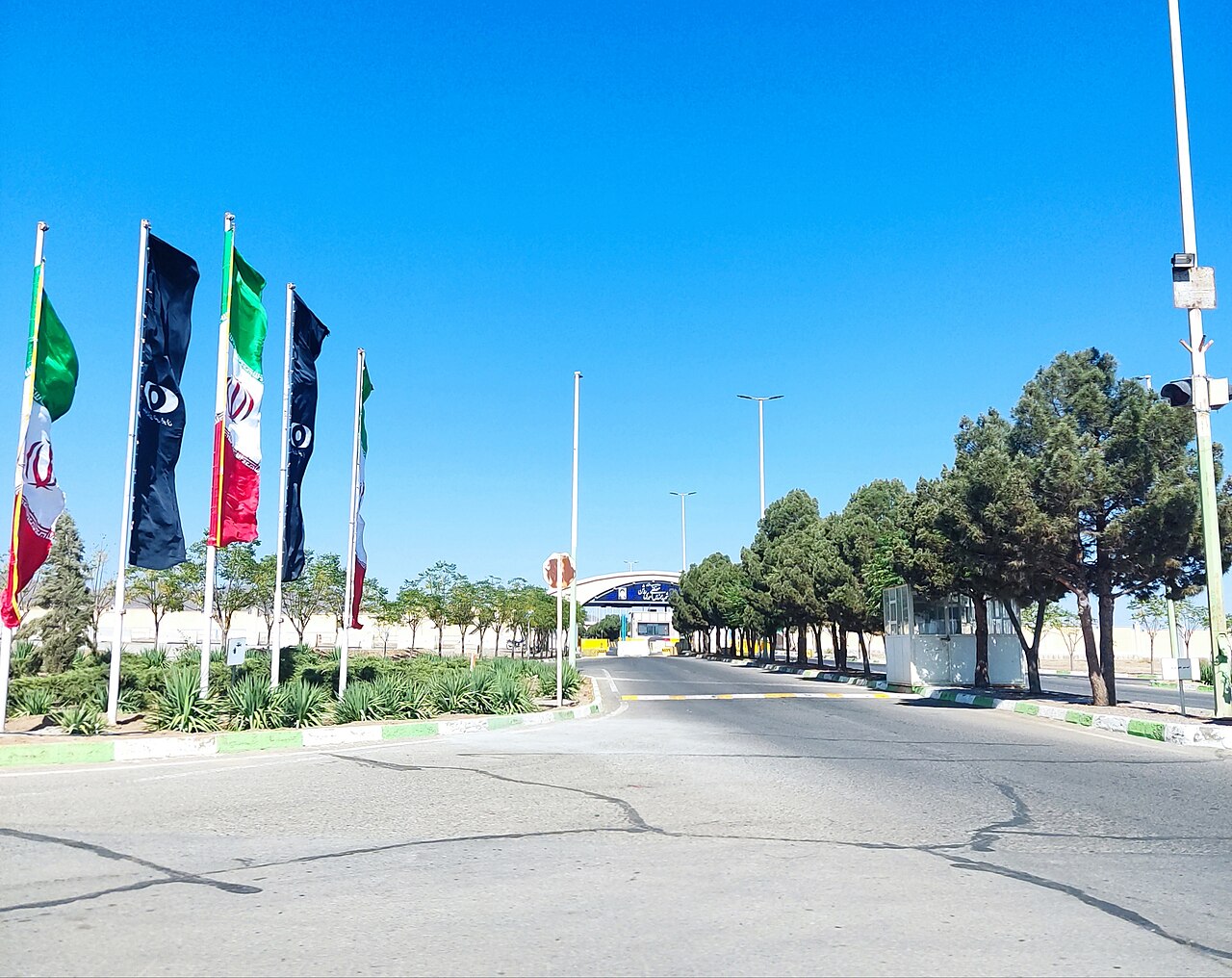

The shah’s atoms
Under the US “Atoms for Peace” programme Iran signed a civil nuclear agreement in 1957. The United States supplied a small research reactor at Tehran University, which started in 1967. Iran signed the Non-Proliferation Treaty in 1968. After the oil boom of 1973 Mohammad Reza Shah set up the Atomic Energy Organization of Iran and planned some twenty power reactors. The German firm Kraftwerk Union began building two at Bushehr on the Persian Gulf in 1975, and Iran bought a share in a French enrichment consortium. Western governments at the time welcomed the business, though some US officials worried privately about the shah’s long-term intentions.
Revolution, war and a hidden restart
After 1979 the new government halted the programme, and Bushehr was later bombed by Iraq. During the Iran–Iraq War, and after Iraq’s use of chemical weapons, attitudes in Tehran changed. In the late 1980s Iran obtained centrifuge designs and parts through the network of the Pakistani scientist A. Q. Khan. In 1995 Russia agreed to finish the Bushehr reactor, which was connected to the grid in 2011.
Natanz is revealed, 2002
In August 2002 an exile opposition group, the National Council of Resistance of Iran, revealed an undeclared enrichment plant under construction at Natanz and a heavy-water plant at Arak. IAEA inspections followed. Under President Khatami, Iran agreed with Britain, France and Germany to suspend enrichment in 2003–2005 while talks went on. Later IAEA reports and a 2007 US intelligence estimate concluded that Iran had run a structured programme of nuclear weapons research, known as the AMAD plan, that was largely halted in 2003; the IAEA’s 2015 assessment said some related activities continued until 2009. Iran denies ever seeking weapons, and officials cite a religious ruling by Ali Khamenei forbidding them.
Enrichment, sanctions and sabotage, 2005–2013
Under President Ahmadinejad Iran resumed conversion and enrichment and expanded Natanz. The IAEA reported Iran to the UN Security Council, which passed sanctions resolutions from 2006 to 2010. In 2009 Western leaders revealed a second enrichment site, Fordow, built inside a mountain near Qom. The programme was also attacked covertly: the Stuxnet computer worm, widely attributed to the United States and Israel, damaged centrifuges at Natanz around 2009–2010, and several Iranian nuclear scientists were assassinated between 2010 and 2012, killings Iran blamed on Israel. See sanctions on Iran.
The 2015 deal and its collapse
Talks under President Rouhani produced the Joint Comprehensive Plan of Action (JCPOA) in July 2015. Iran agreed to enrich only to 3.67 per cent, to cut its stockpile and centrifuges, redesign the Arak reactor and accept extensive inspections, in return for sanctions relief. The IAEA repeatedly confirmed Iran’s compliance. In May 2018 President Donald Trump withdrew the United States from the deal and reimposed sanctions. From 2019 Iran stepped back from its limits, and in 2021, after an explosion at Natanz and the killing of the scientist Mohsen Fakhrizadeh, it began enriching to 60 per cent, close to the roughly 90 per cent used for weapons. The full story is on Rouhani and the nuclear deal.
2025: strikes on Fordow, Natanz and Isfahan
By mid-2025 the IAEA estimated that Iran held about 440 kilograms of uranium enriched to 60 per cent. On 12 June 2025 the IAEA Board of Governors found Iran in breach of its safeguards obligations for the first time in twenty years. The next day Israel began air strikes on Iranian nuclear and military sites, starting what became known as the Twelve-Day War. On 22 June 2025 the United States bombed Fordow, Natanz and Isfahan, using heavy bunker-busting bombs on Fordow. A ceasefire followed on 24 June. The extent of the damage, and the fate of the enriched uranium, were disputed between US officials, Iranian officials and independent analysts. In early July 2025 Iran suspended cooperation with the IAEA and inspectors left the country. In late August Britain, France and Germany triggered the JCPOA’s “snapback” mechanism, and UN sanctions were restored at the end of September 2025; Iran, Russia and China said they regarded the move as legally void. Details are on the Twelve-Day War of June 2025.
2026: war
On 28 February 2026, amid renewed talks over the programme, the United States and Israel launched a much larger air campaign against Iran, striking nuclear and missile infrastructure and killing Leader Ali Khamenei. The US and Israeli governments described the war as necessary to stop Iran obtaining a nuclear weapon; the UN Secretary-General and many governments condemned the strikes as a breach of international law. Questions about Iran’s remaining nuclear material, inspections and future enrichment became central to the ceasefire talks that followed. See the 2026 war and Iran and Israel.
Why Iranians have argued about it
Inside Iran the programme was long presented as a symbol of scientific progress and independence, and polls in the 2000s and 2010s suggested broad public support for civilian nuclear power. Critics within Iran, including some economists and former officials, asked whether the benefits were worth the cost in sanctions, isolation and, finally, war. Outside Iran, debate has centred on whether diplomacy, sanctions or force best prevents a bomb, and on whether military action delays a programme or pushes a country towards weapons. Historians such as Ray Takeyh and Seyed Hossein Mousavian, a former Iranian negotiator, have offered very different accounts of the same events.
Persian words from this page
| انرژی هستهای | enerzhi-ye haste’i | nuclear energy |
| غنیسازی | ghani-sâzi | enrichment |
| اورانیوم | orâniyom | uranium |
| نطنز | Natanz | Natanz |
| فردو | Fordow | Fordow |
| بوشهر | Bushehr | Bushehr |
Sources and further reading
- IAEA, “Final Assessment on Past and Present Outstanding Issues regarding Iran’s Nuclear Programme” (GOV/2015/68, December 2015), and the Director General’s reports on Iran (2025).
- US National Intelligence Council, Iran: Nuclear Intentions and Capabilities (National Intelligence Estimate, November 2007).
- UN Security Council Resolution 2231 (2015).
- Seyed Hossein Mousavian, The Iranian Nuclear Crisis: A Memoir (Carnegie Endowment, 2012).
- David Patrikarakos, Nuclear Iran: The Birth of an Atomic State (I.B. Tauris, 2012).
- Reuters, AP and BBC reporting on the June 2025 strikes and the 2026 war.
Want to learn Persian? Get the free Starter Pack
Get the 14-page printable Starter Pack (all 32 letters, a 7-day reading plan, 100 core words and 20 survival phrases) and a short 5-email course. Free.
More in The Islamic Revolution and the Islamic Republic (1979–present)
- Causes of the 1979 Revolution
- Khomeini’s Return and the Fall of the Monarchy
- Ruhollah Khomeini
- The 1979 Referendum and the New Constitution
- The Iran Hostage Crisis (1979–1981)
- Power Struggles after the Revolution
- The Cultural Revolution and University Closures
- The Iran–Iraq War: Causes and Iraqi Invasion
- Khorramshahr: Fall and Liberation
- The Iran–Iraq War, 1982–1986
- The Basij and Child Soldiers in the Iran–Iraq War
- Chemical Weapons in the Iran–Iraq War
- The Tanker War and Iran Air Flight 655
- The Iran–Contra Affair
- The End of the Iran–Iraq War (1988)
- The 1988 Executions of Political Prisoners
- The Death of Khomeini and the Succession of Khamenei (1989)
- Ali Khamenei
- Rafsanjani and Post-War Reconstruction (1989–1997)
- Khatami and the Reform Era (1997–2005)
- The 1999 Student Protests (18 Tir)
- The Ahmadinejad Presidency (2005–2013)
- The 2009 Election and the Green Movement
- Iran’s Nuclear Program
- Sanctions on Iran
- Rouhani and the Nuclear Deal (JCPOA)
- The Protests of 2017–2018 and November 2019
- The Killing of Soleimani and Flight 752 (January 2020)
- Iran and the COVID-19 Pandemic
- The Raisi Presidency and His Death (2021–2024)
- The 2022 Mahsa Amini Protests: “Woman, Life, Freedom”
- Iran and Israel: From Allies to Open Conflict
- The Pezeshkian Presidency
- The Twelve-Day War of June 2025
- The Protests of Late 2025 and January 2026
- The 2026 War with the United States and Israel
- The Killing of Ali Khamenei (28 February 2026)
- Mojtaba Khamenei and the 2026 Succession
- The Iranian Diaspora
- Iran and Hezbollah
- Major Earthquakes in Modern Iran
- Iranian Cinema after 1979