Abadan and Khorramshahr are neighbouring cities at the head of the Persian Gulf in Khuzestan province, about 15 km apart on the Arvand Rud (Shatt al-Arab), Iran’s border river with Iraq. Abadan grew from a palm-covered island into a British-built oil town around the refinery opened in 1912, while Khorramshahr, the old port of Mohammerah, became the most famous battlefield of the Iran–Iraq War when it fell to Iraq in 1980 and was retaken in 1982.
| Persian names | آبادان (Âbâdân), خرمشهر (Khorramshahr) |
|---|---|
| Province | Khuzestan |
| Population | Abadan 231,476; Khorramshahr 133,097 (2016 census, Statistical Centre of Iran) |
| Rivers | Arvand Rud (Shatt al-Arab), Karun, Bahmanshir |
| Known for | The Abadan refinery, the 1951 oil crisis, the Cinema Rex fire, the siege of Abadan and the battle for Khorramshahr |
| Distance | About 130 km south of Ahvaz |
Two cities on one delta
The Karun, Iran’s largest river by volume, meets the Arvand Rud at Khorramshahr. Below the confluence, the land between the Arvand and the Bahmanshir channel forms Abadan Island, a flat strip of date gardens and tidal flats. Abadan sits on its western shore, facing Iraq across the water; Khorramshahr lies a short drive north, where ships could turn up the Karun towards Ahvaz.
The two places have different histories. Khorramshahr is the older port and was for most of the 19th century the seat of the Arab sheikhs of the Ka’b and later the Muhaysin, who ruled the area with wide autonomy. Abadan was a small settlement until oil arrived. Today they are often treated as a pair: one road, one free trade zone and one shared memory of the war.

Abadan: a refinery town
After the Anglo-Persian Oil Company struck oil at Masjed Soleyman in 1908, it needed a place to refine crude and load tankers. It leased land on Abadan Island from Sheikh Khaz’al of Mohammerah, began building in 1909, and the refinery was working by 1912. A pipeline brought crude down from the oilfields. By 1938 Abadan was the largest oil refinery in the world.
The company built the town around the plant. Senior British staff lived in planned districts of bungalows, lawns and clubs such as Braim, while Iranian and Indian workers were housed in poorer quarters or in the crowded old town that grew up outside the company area. The architectural historian Mark Crinson has described Abadan as a colonial company town, and the gap in pay and housing between foreign and Iranian staff fed the resentment that came to a head in 1951. The Abadan Institute of Technology, founded in 1939 to train engineers for the refinery, still exists as a campus of the Petroleum University of Technology.
The 1951 crisis
When the Majles nationalised the oil industry under Prime Minister Mohammad Mosaddegh in 1951, Abadan was at the centre of the dispute. Refining stopped, Britain imposed a blockade on Iranian oil, and the remaining British staff left the island in October 1951. The refinery stayed largely idle until the 1954 consortium agreement. The full story is on our page on the nationalisation of Iranian oil.
The Cinema Rex fire
On 19 August 1978 the Cinema Rex in Abadan was set on fire during a screening, with the doors locked. Several hundred people died; figures usually cited range from about 377 to 430. Many Iranians at the time blamed SAVAK, and the fire turned public opinion sharply against the Shah in the months before the revolution. After 1979 the trial pointed to a group of religious militants. See the Cinema Rex fire for the evidence and the debate.
Khorramshahr: from Mohammerah to the war
Under the name Mohammerah, the port was claimed by both the Ottoman and Persian governments until the Treaty of Erzurum of 1847 confirmed it as Persian. Sheikh Khaz’al, its ruler from 1897, was a powerful ally of the British in the oil era. In 1924 and 1925 Reza Khan’s army ended his rule, and the town was renamed Khorramshahr, “the joyful city”. Its port and the railway that reached it made it Iran’s busiest harbour before 1980; the 1976 census counted 146,706 people.
The fall of the city, 1980
Iraq invaded Khuzestan on 22 September 1980. Khorramshahr was defended by a small force of soldiers, Revolutionary Guards and local volunteers, who fought street by street for more than a month. The city fell in late October 1980. Iranians came to call it Khuninshahr, “city of blood”. Abadan, across the Karun, was cut off on three sides and shelled for almost a year, but it was never taken. Iranian forces broke the siege in September 1981.
Liberation, 1982
On 24 May 1982, at the end of Operation Beit ol-Moqaddas, Iranian forces recaptured Khorramshahr, taking thousands of Iraqi prisoners. The day, 3 Khordad in the Iranian calendar, is still marked each year in Iran. The battle and its political meaning are covered on our page Khorramshahr: Fall and Liberation, and the wider war in the causes of the Iran–Iraq War.
The cost was enormous. The 1986 census recorded no residents in Khorramshahr at all. Rebuilding began after the 1988 ceasefire, and by 2016 the population had returned to about 133,000. The Abadan refinery, badly damaged by shelling, was also rebuilt and resumed production.
What visitors see today
Most of what draws Iranian visitors here is connected with the war. In Khorramshahr, the Jameh Mosque survived the occupation with damage and became a national symbol of the city’s recapture; it has been restored and is the town’s best-known building. War memorials and a museum of the “Sacred Defence” stand near the river, and groups of students and veterans come on organised trips to the former front lines, known in Iran as Rahian-e Nur.
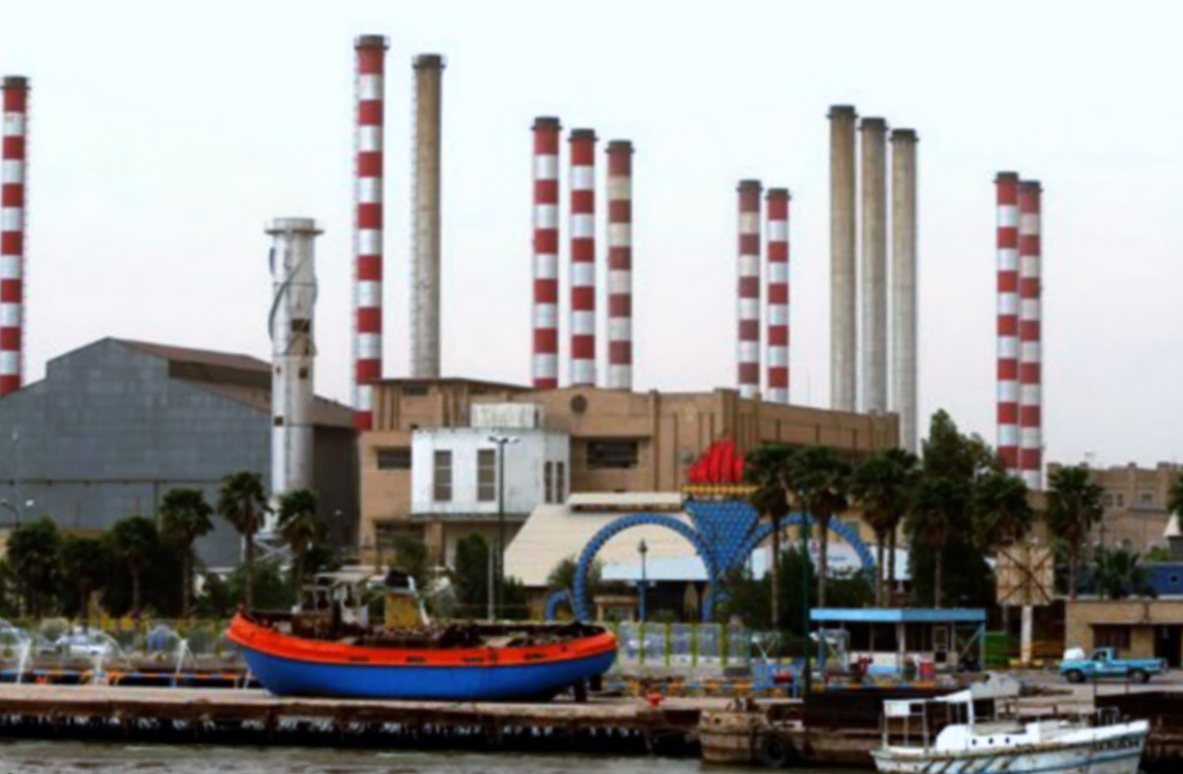
In Abadan, the refinery dominates the skyline and cannot be visited, but you can still see the brick houses and wide streets of the old company districts, some of the oldest modern buildings in the country. The riverside promenade looks across the Arvand to the Iraqi shore. Abadan has a reputation among Iranians for its food: fried fish, spicy ghalieh mahi (fish stew with tamarind and herbs) and, above all, Abadani falafel sold from street stands.
Both cities lie inside the Arvand Free Zone, set up to encourage trade through the area. Khorramshahr is also home to one of the few remaining communities of Mandaeans, an ancient Gnostic religious group who traditionally lived along the rivers of southern Iraq and Khuzestan.
Climate and getting there
Summers are among the hottest and most humid in Iran, with temperatures often above 45°C; the comfortable season is from November to March. Abadan has an airport with domestic flights, and both cities are linked by road to Ahvaz. Because they sit on an international border, check your own government’s travel advice before planning a trip, and confirm current transport schedules locally.
For more on the province, see our pages on Ahvaz and Shush (Susa).
Persian words from this page
| آبادان | Âbâdân | Abadan |
| خرمشهر | Khorramshahr | Khorramshahr, “joyful city” |
| محمره | Mohammareh | Mohammerah, the old name of Khorramshahr |
| اروندرود | Arvand Rud | the Shatt al-Arab |
| کارون | Kârun | the Karun river |
| پالایشگاه | pâlâyeshgâh | refinery |
| خونینشهر | Khunin-shahr | “city of blood” |
Sources and further reading
- Encyclopaedia Iranica, articles “Abadan” and “Khorramshahr”.
- Mark Crinson, “Abadan: planning and architecture under the Anglo-Iranian Oil Company”, Planning Perspectives 12 (1997).
- Ervand Abrahamian, A History of Modern Iran (Cambridge University Press, 2008).
- Pierre Razoux, The Iran-Iraq War (Harvard University Press, 2015).
- Statistical Centre of Iran, 2016 National Population and Housing Census.
Want to learn Persian? Get the free Starter Pack
Get the 14-page printable Starter Pack (all 32 letters, a 7-day reading plan, 100 core words and 20 survival phrases) and a short 5-email course. Free.
More in Cities of Iran
- Tehran: Iran’s Capital
- Mashhad
- Isfahan
- Shiraz
- Tabriz
- Yazd
- Kashan
- Kerman
- Hamadan
- Qom
- Ahvaz
- Rasht
- Kermanshah
- Urmia
- Ardabil
- Zanjan
- Qazvin
- Sanandaj
- Khorramabad
- Bandar Abbas
- Bushehr
- Zahedan
- Birjand
- Gorgan
- Sari
- Semnan
- Arak
- Ilam
- Yasuj
- Shahr-e Kord
- Bojnurd
- Karaj
- Abadan and Khorramshahr
- Kish Island
- Qeshm Island
- Hormuz Island
- Masuleh
- Abyaneh
- Kandovan
- Bam
- Neyshabur (Nishapur)
- Shush (Susa) Today