Urmia (Persian Orumiyeh) is the capital of West Azerbaijan province in north-western Iran, a city of about 740,000 people on a fertile plain between the Zagros border mountains and Lake Urmia, once the largest lake in the Middle East. For more than a century it was the main centre of Iran’s Assyrian Christians and of Western missionary work in the country, and today it is a largely Azerbaijani-speaking city with Kurdish, Assyrian and Armenian communities.
| Persian name | ارومیه (Orumiyeh) |
|---|---|
| Former name | Rezaiyeh (from the 1920s to 1979) |
| Province | West Azerbaijan (capital) |
| Population | 736,224 (city, 2016 census, Statistical Centre of Iran) |
| Elevation | About 1,330 m |
| Languages heard | Azerbaijani Turkish, Kurdish, Persian, Assyrian Neo-Aramaic, Armenian |
| Distance | About 150 km west of Tabriz across the lake; about 50 km from the Turkish border |

The plain between the lake and the mountains
The Urmia plain is watered by rivers coming down from the mountains on the Turkish border, and it has been farmed for thousands of years. Hasanlu, the Iron Age citadel famous for its gold bowl, lies at the south end of the lake, and the region belonged to the Mannaean kingdom and Urartu before the Medes; see the Mannaeans, Urartu and north-west Iran. Some medieval Muslim writers placed the birthplace of Zoroaster at Urmia; this is a later tradition, not evidence, and historians place the prophet much further east.
The city was a provincial centre under the Seljuks and their successors. Its best-known medieval building is the Seh Gonbad (“three domes”), a twelfth-century tomb tower with carved stucco decoration, and the Friday Mosque has a fine Ilkhanid-period stucco mihrab. Under the Safavids and Qajars, chiefs of the Afshar tribe governed Urmia for long periods, while the Qajar crown prince ruled the whole of Azerbaijan from Tabriz.
Christian Urmia
For much of its history, the plain around Urmia had one of the largest Christian populations in Iran. Most were Assyrians of the Church of the East, who speak a modern form of Aramaic; there were also Armenians and, later, Assyrian Catholics and Protestants.
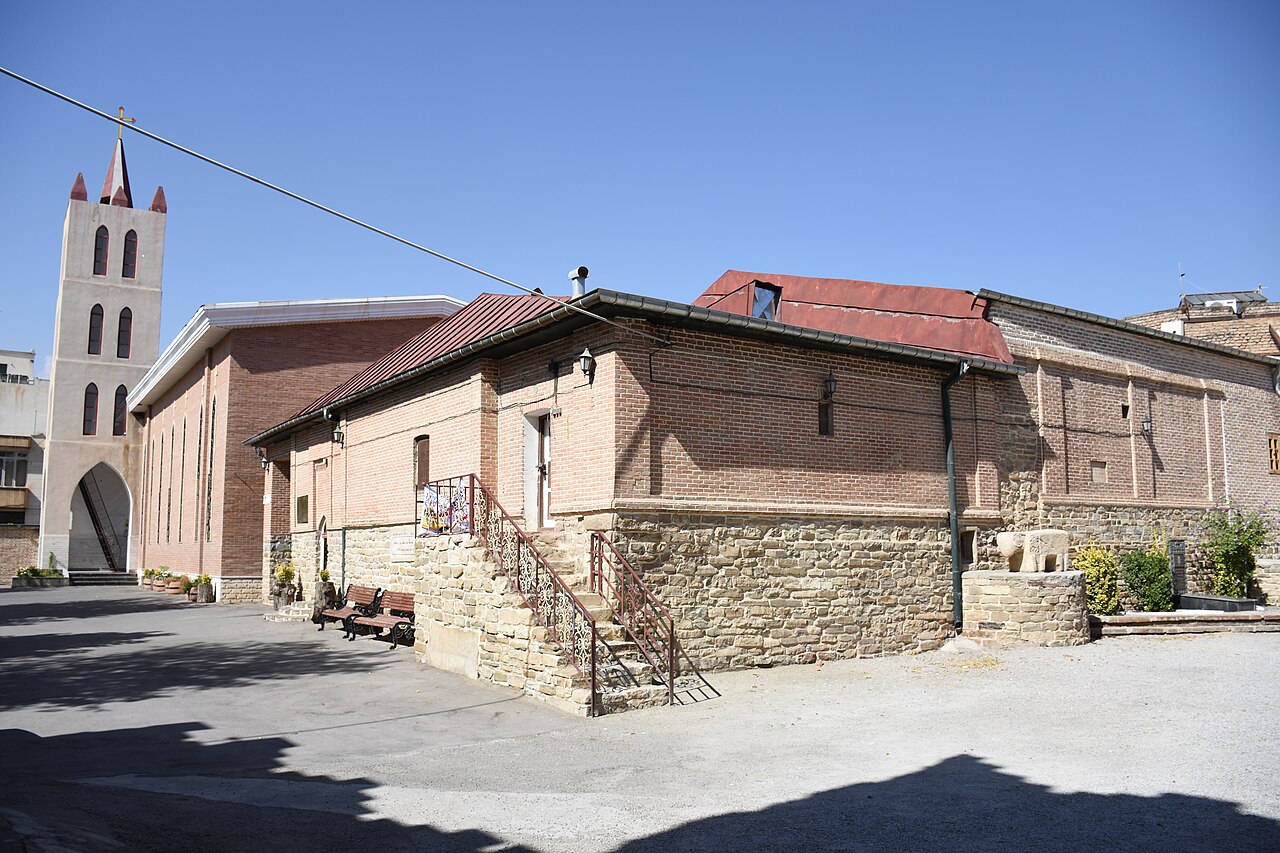
The Church of Saint Mary
The Church of Saint Mary, known locally as Nane Maryam, is the city’s oldest church and is claimed as one of the oldest in the world. A local tradition says that one of the Magi who visited the infant Jesus was buried here. The present building is a low, plain stone church that has been rebuilt many times, and its early date cannot be confirmed archaeologically.
Missionaries and the first printing press
American Presbyterian missionaries, led by Justin Perkins, settled in Urmia in 1835. They opened schools and a hospital and set up a printing press, and with Assyrian scholars they turned the spoken Aramaic of Urmia into a written literary language. Their monthly Zahrire d-Bahra (“Rays of Light”), first printed in 1849, is often called the first periodical published in Iran. French Lazarist Catholic missionaries and later Anglican and Russian Orthodox missions followed.
War and exodus, 1914 to 1918
During the First World War the Urmia plain was fought over by Ottoman, Russian and Kurdish forces. Assyrians and Armenians suffered massacres, famine and epidemics, and many thousands died. In March 1918 the Assyrian patriarch Mar Shimun XIX Benyamin was killed by the Kurdish chieftain Simko Shikak, and in the summer of 1918 most of the surviving Christians fled south to the British lines at Hamadan and then to refugee camps in Iraq. Estimates of the total dead vary widely, and the episode is part of what Assyrians remember as the Seyfo. The community never recovered its former size. See Christians of Iran for the wider story.
Rezaiyeh and the modern city
Under Reza Shah the city was renamed Rezaiyeh in his honour; the old name returned after the 1979 revolution. In 1945 and 1946 it was briefly drawn into the Soviet-backed Azerbaijan People’s Government based in Tabriz. Since then it has grown into a large provincial capital with a university, a busy border trade with Turkey and an economy based on farming. The Urmia plain is famous for its apples, grapes and raisins, and for tobacco.
Lake Urmia: shrinking and recovery
Lake Urmia, دریاچه ارومیه (daryâcheh-ye Orumiyeh), is a salt lake east of the city and a national park. From the 1990s onward it shrank dramatically, losing most of its surface area by the mid-2010s, as dams and wells took river water for farming and droughts hit the region. Salt flats were exposed, and the flamingos and brine shrimp of the lake were badly affected. A restoration programme started in 2013 slowed the decline, and the water level has risen and fallen since. A causeway and bridge built across the lake in the 2000s shortened the road from Urmia to Tabriz. The lake has its own page: Lake Urmia: salt lake crisis and recovery.
What to see
- The Church of Saint Mary and the Assyrian quarter around it.
- The Seh Gonbad tomb tower and the Friday Mosque with its stucco mihrab.
- The covered bazaar, one of the longer Qajar bazaars of north-west Iran.
- The western shore of the lake, a short drive east of the city, with its salt flats and, in wet years, flamingos.
- Further afield, the Armenian monastic ensembles of St Thaddeus and St Stepanos, north of Urmia, and the Sasanian sanctuary of Takht-e Soleyman to the south-east.
Getting there
Urmia has an airport with flights from Tehran and Mashhad, and good roads to Tabriz across the lake causeway. Winters on the plain are cold and snowy; late spring and early autumn are the best seasons. For border crossings, opening hours and safety, check current official information and your own government’s travel advice.
Persian words from this page
| ارومیه | Orumiyeh | Urmia |
| دریاچه | daryâcheh | lake |
| نمک | namak | salt |
| کلیسا | kelisâ | church |
| آشوری | Âshuri | Assyrian |
| سه گنبد | Seh Gonbad | “three domes” |
| انگور | angur | grape |
Sources and further reading
- Encyclopaedia Iranica, “Urmia” and “Assyrians in Iran”.
- Encyclopaedia Iranica, “Iran vii. Non-Iranian languages (10). Aramaic” (iranicaonline.org).
- Justin Perkins, A Residence of Eight Years in Persia, among the Nestorian Christians, New York, 1843.
- Hannibal Travis, Genocide in the Middle East, Carolina Academic Press, 2010, on the events of 1914 to 1918.
- Statistical Centre of Iran, General Population and Housing Census 2016 (1395).
Want to learn Persian? Get the free Starter Pack
Get the 14-page printable Starter Pack (all 32 letters, a 7-day reading plan, 100 core words and 20 survival phrases) and a short 5-email course. Free.
More in Cities of Iran
- Tehran: Iran’s Capital
- Mashhad
- Isfahan
- Shiraz
- Tabriz
- Yazd
- Kashan
- Kerman
- Hamadan
- Qom
- Ahvaz
- Rasht
- Kermanshah
- Urmia
- Ardabil
- Zanjan
- Qazvin
- Sanandaj
- Khorramabad
- Bandar Abbas
- Bushehr
- Zahedan
- Birjand
- Gorgan
- Sari
- Semnan
- Arak
- Ilam
- Yasuj
- Shahr-e Kord
- Bojnurd
- Karaj
- Abadan and Khorramshahr
- Kish Island
- Qeshm Island
- Hormuz Island
- Masuleh
- Abyaneh
- Kandovan
- Bam
- Neyshabur (Nishapur)
- Shush (Susa) Today