Zahedan is the capital of Sistan and Baluchestan, Iran’s largest and poorest province, in the far south-east of the country. It is a young city: a century ago it was a village called Duzdab at the end of a railway from British India. Today it is the main city of Iran’s Baluch people and one of the country’s largest Sunni Muslim centres, sitting about 40 km from the point where Iran, Pakistan and Afghanistan meet.
| Persian name | زاهدان (Zâhedân) |
|---|---|
| Province | Sistan and Baluchestan (capital) |
| Population | 587,730 (city, 2016 national census) |
| Elevation | about 1,350 m |
| Former name | Duzdab, until the late 1920s |
| Main languages | Baluchi, Persian (Sistani dialect), Brahui in some families |

From Duzdab to Zahedan
Until the early twentieth century there was no town here, only a spring in a dry valley below the Malek Siah hills. Its name, Duzdab (دزداب), is usually explained as “thieves’ water” or “stolen water”. The settlement grew because of the First World War. British forces extended a railway west from Quetta in British Baluchistan to watch the Persian frontier and supply troops, and Duzdab became its western terminal.
Reza Shah renamed the town Zahedan, “the ascetics” (plural of zâhed), in the late 1920s, and in the 1930s it replaced older towns as the administrative centre of the province. That choice reflected the railway, the road to Pakistan and the town’s position between Sistan in the north and Baluchestan in the south. The old broad-gauge line to Quetta still ends here, and since 2009 a standard-gauge line has linked Zahedan with Kerman and the rest of the Iranian network, so the city is the point where two railway gauges meet.
Sistan and Baluchestan: two regions in one province
The province joins two very different lands. Sistan, to the north around Zabol, is the delta of the Helmand river and the Hamun lakes: farmland in good years, dust and drought in bad ones. It has a long history. The Bronze Age city of Shahr-e Sukhteh, the Burnt City, lies near Zabol, and medieval Sistan was the homeland of the Saffarids, who built one of the first Persian-speaking states after the Arab conquest. In the Shahnameh, Sistan is the land of Rostam’s family.
Baluchestan, to the south, is mountain and desert running down to the Gulf of Oman coast at Chabahar. Its people are mostly Baluch, who also live across the borders in Pakistan and Afghanistan. Zahedan stands between the two, and its population mixes Baluch families, Sistanis and Persian speakers who came as officials, traders and workers.
A Sunni and Baluch city
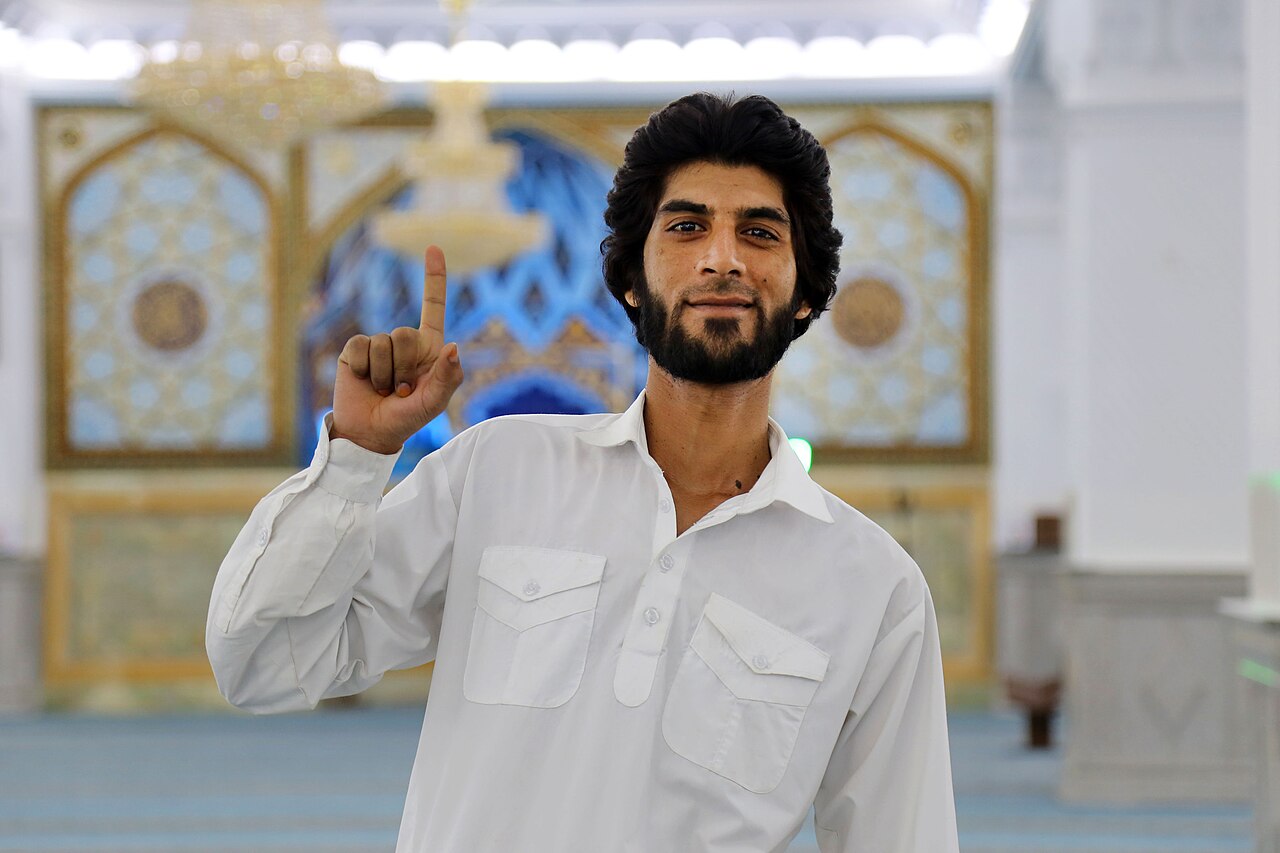
Most of Iran is Shia, but most Baluch are Sunni Muslims of the Hanafi school, and Zahedan is the largest Sunni city in the country. The Makki Mosque (مسجد مکی) in the city centre is one of the biggest Sunni mosques in Iran, and next to it stands the Darul Uloom, an influential Sunni seminary. Friday prayers at the Makki Mosque draw large crowds, and its prayer leaders are prominent voices for Iran’s Sunni community. For the wider picture of faith in the country, see religion in Iran today.
The railway also brought South Asian traders, and Zahedan still has a Sikh gurdwara, a rare sight in Iran and a reminder of the merchants from British India who settled along the line. Bazaars in the city trade goods from Pakistan, and Baluch embroidery, with its dense needlework on dress panels and cuffs, is the best-known local craft.
Security and unrest
Sistan and Baluchestan has long been the most troubled part of Iran. It has the country’s lowest income levels, water shortages and heavy smuggling across the borders, and armed groups have carried out attacks on security forces in the province for many years. On 30 September 2022, during the nationwide protests of that year, security forces opened fire on protesters near the Makki Mosque after Friday prayers. Amnesty International reported that at least 82 people were killed that day; Iranian officials said forces were responding to an armed attack on a police station. The day is widely remembered in the province as “Bloody Friday”.
Many governments advise their citizens against travel to Sistan and Baluchestan, and some advise against all travel to Iran. Anyone considering a visit should read their own government’s current travel advice before planning anything, and check entry rules through official sources. General guidance is on our page of practical tips for travelling to Iran.
Landscape around the city
Zahedan sits on a high, dry plain, with hot summers and cold winter nights. To the south, past Khash, rises Taftan (تفتان), a volcano of about 3,940 m that still gives off sulphurous gas from vents near its summit. To the north, roughly 200 km away, the Hamun wetlands near Zabol and the flat-topped hill of Kuh-e Khajeh, with ruins from the Parthian and Sasanian periods, belong to Sistan’s older world. When the Helmand brings water, the Hamun is one of the largest freshwater wetlands on the Iranian plateau; in drought years it dries into a source of dust storms, a major environmental problem for the region.
Why Zahedan matters
For a learner of Persian, Zahedan is a useful counterweight to the picture of Iran built from Isfahan, Shiraz and Tehran. It shows a border city shaped by a railway rather than a dynasty, a Sunni majority in a Shia state, and a province where Baluchi is the language of the home. The ethnic groups of Iran page explains where the Baluch fit among Iran’s peoples, and the 31 provinces page places Sistan and Baluchestan on the map.
Persian words from this page
| زاهدان | Zâhedân | Zahedan (“the ascetics”) |
| زاهد | zâhed | ascetic |
| دزد | dozd | thief |
| سیستان و بلوچستان | Sistân va Baluchestân | Sistan and Baluchestan |
| بلوچ | Baluch | Baluch |
| مسجد | masjed | mosque |
| تفتان | Taftân | Taftan (volcano) |
Sources and further reading
- Encyclopaedia Iranica, “Baluchistan” (several authors), on the history and people of the region.
- Encyclopaedia Iranica, “Sistan”.
- Statistical Centre of Iran, National Population and Housing Census 2016 (1395).
- Amnesty International, “Iran: At least 82 Baluchi protesters and bystanders killed in bloody crackdown”, October 2022.
- UNESCO World Heritage List, “Shahr-i Sokhta” (inscribed 2014).
Want to learn Persian? Get the free Starter Pack
Get the 14-page printable Starter Pack (all 32 letters, a 7-day reading plan, 100 core words and 20 survival phrases) and a short 5-email course. Free.
More in Cities of Iran
- Tehran: Iran’s Capital
- Mashhad
- Isfahan
- Shiraz
- Tabriz
- Yazd
- Kashan
- Kerman
- Hamadan
- Qom
- Ahvaz
- Rasht
- Kermanshah
- Urmia
- Ardabil
- Zanjan
- Qazvin
- Sanandaj
- Khorramabad
- Bandar Abbas
- Bushehr
- Zahedan
- Birjand
- Gorgan
- Sari
- Semnan
- Arak
- Ilam
- Yasuj
- Shahr-e Kord
- Bojnurd
- Karaj
- Abadan and Khorramshahr
- Kish Island
- Qeshm Island
- Hormuz Island
- Masuleh
- Abyaneh
- Kandovan
- Bam
- Neyshabur (Nishapur)
- Shush (Susa) Today