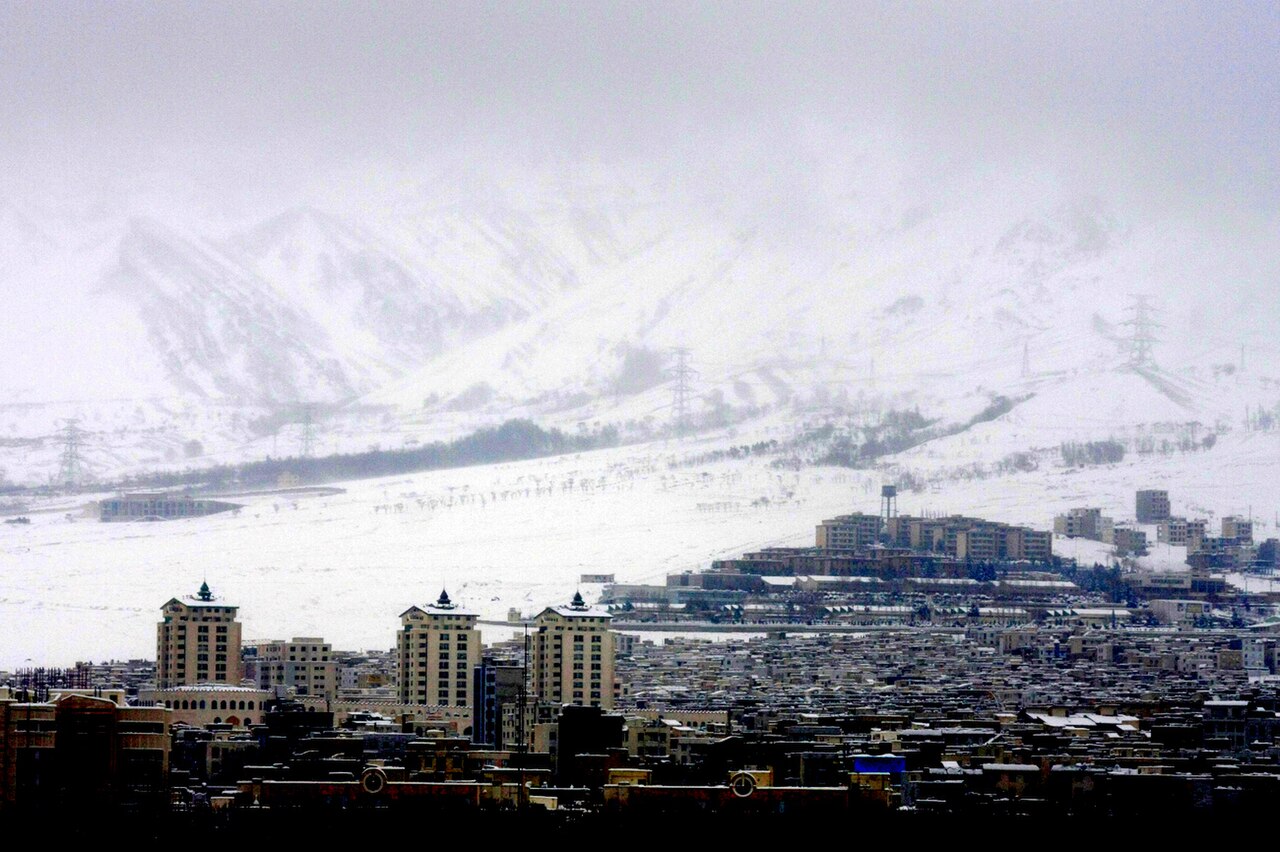
Karaj is the capital of Alborz province and, with 1.59 million people in the 2016 census, the fourth-largest city in Iran. It lies about 40 km west of Tehran where the Karaj river leaves the Alborz mountains, and for most of its history it was a stop on the road west from Tehran. In the late twentieth century it grew into a vast city of commuters, factories and new districts, and in 2010 it became the capital of its own province.
| Persian name | کرج (Karaj) |
|---|---|
| Province | Alborz (capital since the province was created in 2010) |
| Population | 1,592,492 (city, 2016 national census); the wider urban area is larger |
| Elevation | about 1,300 m |
| River | Karaj river (رود کرج) |

A caravan stop on the road west
Before the twentieth century Karaj was a village and halting place on the road from Tehran and Rey to Qazvin and Tabriz, with a bridge over the river and gardens fed by its water. Its oldest monument is a Safavid caravanserai of the type usually credited to Shah Abbas, a brick courtyard with rooms for travellers and stables, which stands in the centre of the modern city. More on these roadside inns is on our page on Iran’s caravanserais.
Under the Qajars, whose capital was now Tehran, the court used the valley for hunting and summer retreats. The Soleymaniyeh palace, built for the family of Fath-Ali Shah in the early nineteenth century, survives in the grounds of the University of Tehran’s agricultural college, which moved to Karaj in the Pahlavi period and helped give the town a reputation for farming research.
River, dam and the Chalus road
The Karaj river comes down from the high Alborz through a deep valley north of the city. In 1961 the Amir Kabir Dam, often just called the Karaj Dam, was completed about 20 km upstream; its reservoir has supplied a large share of Tehran’s drinking water ever since, and the dam made Karaj important to the capital in a new way.
The valley also carries the Chalus road (جاده چالوس), built in the 1930s under Reza Shah, which climbs from Karaj through the Kandovan tunnel at over 2,500 m and then drops through forest to the Caspian coast at Chalus. It is one of the most dramatic drives in Iran and the classic route for Tehranis heading north for the weekend; our blog post on the north of Iran (Shomal) describes where it leads. Traffic is heavy at weekends and holidays, and the road can close in snow.
From suburb to province
Karaj grew slowly until the 1960s, then very fast. Industry moved out of Tehran along the western highway, and land and housing were cheaper than in the capital. Planned districts such as Gohardasht and Mehrshahr were laid out in the 1960s and 1970s, and after the 1979 revolution and during the Iran-Iraq War migrants from all over Iran settled here. Between the 1970s and the 2010s Karaj went from a town of tens of thousands to well over a million people.
For decades Karaj was administered as part of Tehran province. In 2010 Alborz province (البرز) was created from Tehran’s western counties, with Karaj as capital. Many residents still commute to Tehran every day by car, bus or the suburban metro line that links the two cities.
The Morvarid Palace
An unusual building in Mehrshahr is the Morvarid (“pearl”) Palace, built in the 1960s and 1970s for Princess Shahnaz Pahlavi, daughter of Mohammad Reza Shah, and her husband. It was designed by Taliesin Associated Architects, the practice formed by Frank Lloyd Wright’s associates after his death, and its curving forms and domes look nothing like other buildings of the period in Iran. After the revolution it passed to the state; access has been limited and changes over time, so check before planning a visit.
Karaj today
Karaj is mostly a city for living and working rather than sightseeing. Its population mixes people from every region and language group of Iran, including large Azerbaijani, Kurdish and Gilaki communities. Its parks along the river, the botanical collections of the agricultural college, and the mountain villages of the Karaj valley give some relief from traffic and air pollution, which are serious problems in winter. For the sights of the capital next door, see our Tehran city page and the blog post on the best places to visit in Tehran; Qazvin lies an hour or so further west.
Persian words from this page
| کرج | Karaj | Karaj |
| البرز | Alborz | Alborz (mountains, province) |
| رود | rud | river |
| سد | sadd | dam |
| جاده | jâdde | road |
| کاروانسرا | kârvânsarâ | caravanserai |
| مروارید | morvârid | pearl |
Sources and further reading
- Encyclopaedia Iranica, “Karaj”.
- Statistical Centre of Iran, National Population and Housing Census 2016 (1395).
- Ervand Abrahamian, A History of Modern Iran (Cambridge University Press, 2008), on Pahlavi-era urban growth.
- Abbas Amanat, Iran: A Modern History (Yale University Press, 2017).
Want to learn Persian? Get the free Starter Pack
Get the 14-page printable Starter Pack (all 32 letters, a 7-day reading plan, 100 core words and 20 survival phrases) and a short 5-email course. Free.
More in Cities of Iran
- Tehran: Iran’s Capital
- Mashhad
- Isfahan
- Shiraz
- Tabriz
- Yazd
- Kashan
- Kerman
- Hamadan
- Qom
- Ahvaz
- Rasht
- Kermanshah
- Urmia
- Ardabil
- Zanjan
- Qazvin
- Sanandaj
- Khorramabad
- Bandar Abbas
- Bushehr
- Zahedan
- Birjand
- Gorgan
- Sari
- Semnan
- Arak
- Ilam
- Yasuj
- Shahr-e Kord
- Bojnurd
- Karaj
- Abadan and Khorramshahr
- Kish Island
- Qeshm Island
- Hormuz Island
- Masuleh
- Abyaneh
- Kandovan
- Bam
- Neyshabur (Nishapur)
- Shush (Susa) Today