The Armenian Monastic Ensembles of Iran are three Armenian Christian sites in the far north-west of the country: the Monastery of St Thaddeus, the Monastery of St Stepanos and the Chapel of Dzordzor. Built and rebuilt between roughly the 7th and the 19th centuries, they stand in the south-eastern borderlands of historic Armenia and were inscribed together as a UNESCO World Heritage Site in 2008. St Thaddeus, believed to hold the tomb of the apostle, is still a place of pilgrimage every summer.
| Sites | St Thaddeus (Qara Kelisa), St Stepanos, Chapel of Dzordzor |
|---|---|
| Provinces | West Azerbaijan (St Thaddeus, Dzordzor) and East Azerbaijan (St Stepanos) |
| Church | Armenian Apostolic |
| UNESCO | Inscribed 2008 (site 1262) |
| Living tradition | The annual pilgrimage to St Thaddeus was added to UNESCO’s list of Intangible Cultural Heritage in 2020 |

Armenians on the edge of Iran
For more than two thousand years Armenia and Iran have been neighbours, rivals and partners, and the border between them has moved many times. These monasteries lie in what was once the south-eastern part of the Armenian world, an area that became part of Safavid Iran in the 16th and 17th centuries. In 1604–1605 Shah Abbas I deported much of the Armenian population of the region to the interior, an event that led to the founding of New Julfa in Isfahan and left these monasteries without most of their congregations. Their survival owes much to the Armenian Church, to local communities and, in the 19th and 20th centuries, to the Iranian state. For the wider story see The Armenians of Iran.
The Monastery of St Thaddeus
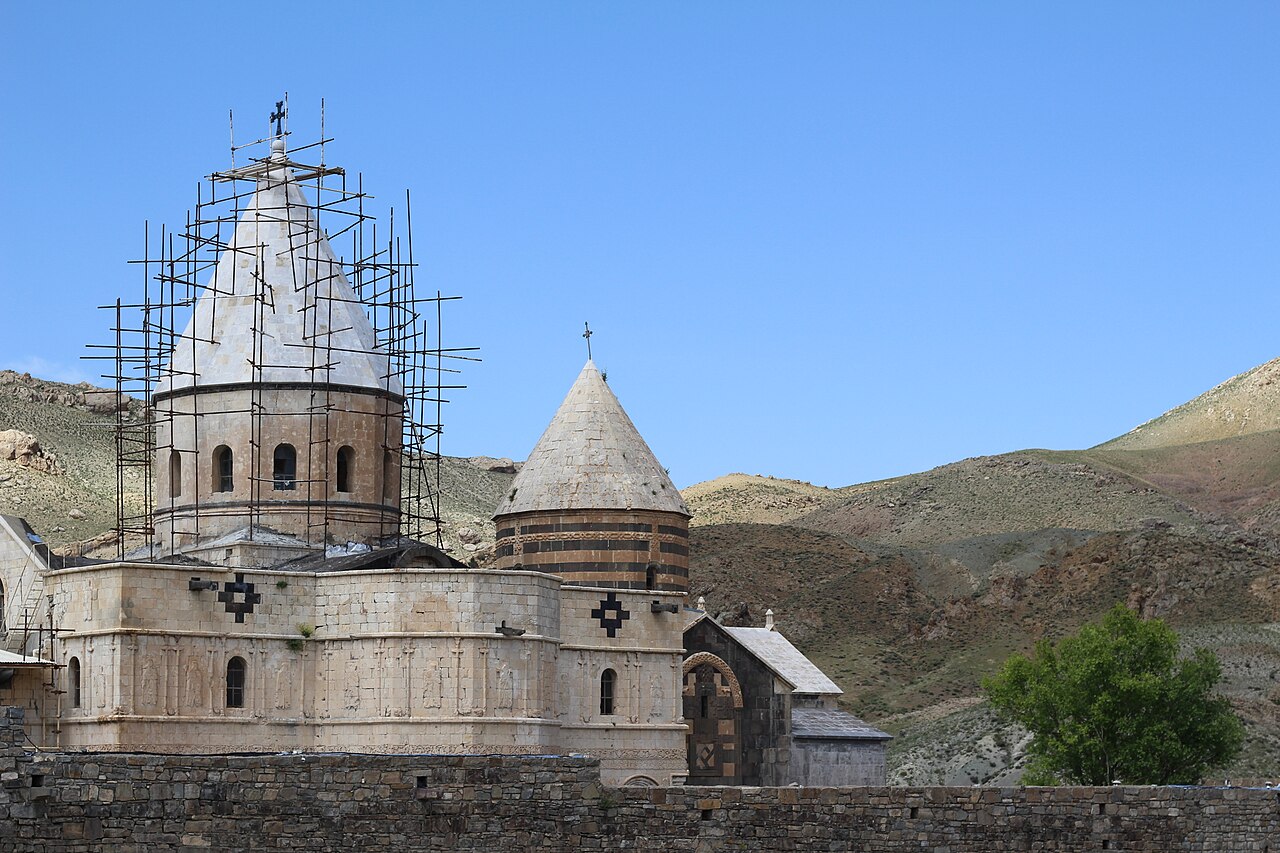
St Thaddeus (قره کلیسا, Qara Kelisa) stands alone on a hillside in Chaldiran county, about 20 km from the town of Siah Cheshmeh, with its conical domes visible from far away. According to Armenian tradition, the apostle Thaddeus (Jude) preached in Armenia, was martyred in the 1st century and was buried here, and a church was built over his grave. The date of the first building is not known.
The monastery was damaged in the Mongol invasions of the 13th century and badly by an earthquake in 1319, and little of the original structure survives. The oldest part, around the altar, is built of dark stone, which is probably why Turkish speakers called it Qara Kelisa, often translated “the Black Church”. In the early 19th century, with the support of the Qajar crown prince Abbas Mirza, the monastery was repaired and a large new western church was added in pale sandstone, its walls carved with crosses, angels and inscriptions. The contrast between the dark old church and the light new one is the first thing you notice.
Every year in July, Armenians from Iran and abroad gather here for the feast of St Thaddeus. For three days the empty hillside fills with tents, services and families, the one time the monastery comes alive as it once was.

The Monastery of St Stepanos
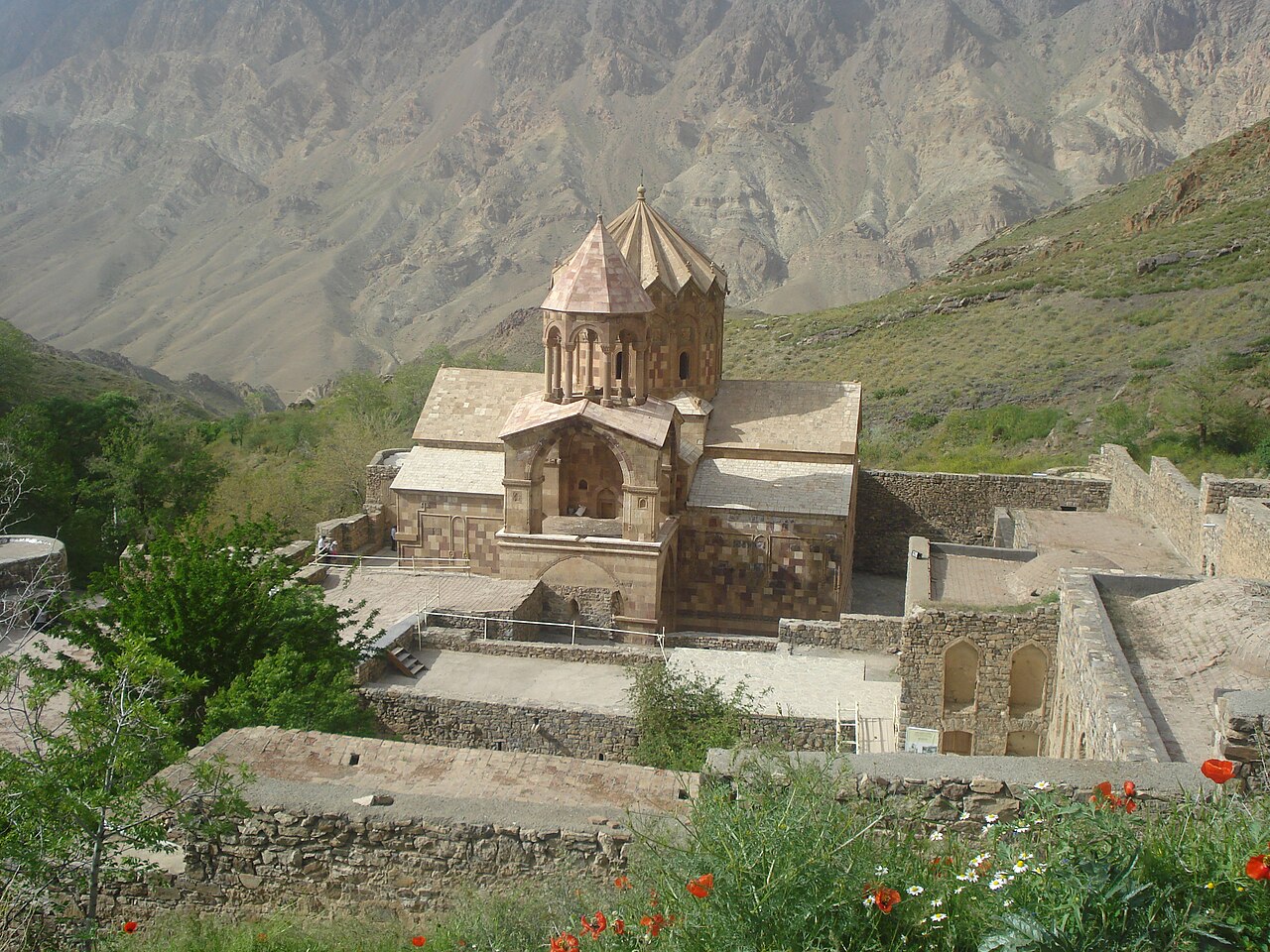
St Stepanos (Surb Stepanos, also called Maghardavank) sits in a green, wooded side valley of the Aras river, about 15 km north-west of Jolfa, right on the border with Nakhchivan. Tradition links it to St Bartholomew; a monastery existed by the 9th century. It was rebuilt in the 14th century, became an important centre of learning and manuscript painting in the 14th and 15th centuries, and was restored again in the Safavid period after war and earthquakes.
The church, with its tall drum and conical dome, is covered in carved reliefs: crosses, saints, angels and geometric bands, in the reddish and grey stone of the valley. A fortified wall with towers surrounds it, and the ruins of monks’ cells, a bell tower and service buildings stand inside. The drive along the Aras gorge to get here, with Nakhchivan on the other bank, is part of the experience.
The Chapel of Dzordzor
The Chapel of the Holy Mother of God at Dzordzor, in Maku county, is the only surviving building of a monastery that flourished in the 14th century. The small cross-shaped chapel, with a drum and conical dome, was probably built between about 1315 and 1342 under a bishop of St Thaddeus. When a dam was built on the Zangmar river in 1987–1988, the chapel was taken down stone by stone, with help from Armenian experts, and rebuilt about 600 m away above the reservoir.
Practical notes
- Getting there: the sites are far apart and poorly served by public transport. A car with a driver is the easiest way. St Thaddeus and Dzordzor are usually visited from Maku or Khoy, St Stepanos from Jolfa or Tabriz.
- Border areas: St Stepanos and Dzordzor are close to international borders. Carry your passport and follow any instructions from officials.
- Pilgrimage: if you visit St Thaddeus during the July pilgrimage, remember it is a religious event. Dress modestly and ask before photographing people.
- When: late spring to autumn. Winter in these highlands is cold and snowy.
- Tickets and hours: check current official information.
- Safety: follow your own government’s travel advice for Iran, including any advice on border areas.
Armenian heritage elsewhere in Iran includes Vank Cathedral in Isfahan. For the region, see our guides to Tabriz and Urmia.
Persian words from this page
| کلیسا | kelisâ | church |
| صومعه | sowme’eh | monastery |
| ارمنی | armani | Armenian |
| مسیحی | masihi | Christian |
| رود ارس | Rud-e Aras | the Aras river |
| زیارت | ziyârat | pilgrimage |
Sources and further reading
- UNESCO World Heritage Centre, “Armenian Monastic Ensembles of Iran” (inscribed 2008).
- UNESCO Intangible Cultural Heritage, “Pilgrimage to the St. Thaddeus Apostle Monastery” (inscribed 2020).
- Moses of Khoren (Movses Khorenatsi), History of the Armenians, for the tradition of Thaddeus’s mission and martyrdom.
- Encyclopaedia Iranica, “ARMENIA AND IRAN iii. Armenian Religion“.
Want to learn Persian? Get the free Starter Pack
Get the 14-page printable Starter Pack (all 32 letters, a 7-day reading plan, 100 core words and 20 survival phrases) and a short 5-email course. Free.
More in Top Places to Visit in Iran
- Naqsh-e Jahan Square
- Shah (Imam) Mosque, Isfahan
- Sheikh Lotfollah Mosque
- Ali Qapu Palace
- Jameh Mosque of Isfahan
- Si-o-se Pol and Khaju Bridge
- Vank Cathedral
- Hasht Behesht Palace
- Naqsh-e Rostam
- Eram Garden, Shiraz
- Nasir al-Molk (Pink) Mosque
- Tomb of Hafez (Hafezieh)
- Tomb of Saadi (Saadieh)
- Shah Cheragh Shrine
- Arg of Karim Khan
- Fin Garden, Kashan
- Historic Houses of Kashan
- Jameh Mosque of Yazd
- Yazd Fire Temple and Towers of Silence
- Dowlatabad Garden and Windcatcher
- Amir Chakhmaq Complex
- Golestan Palace
- National Museum of Iran
- Treasury of National Jewels
- Tehran Grand Bazaar
- Milad Tower
- Imam Reza Shrine, Mashhad
- Tomb of Ferdowsi, Tus
- Tomb of Omar Khayyam, Neyshabur
- Tomb of Avicenna, Hamadan
- Ganjnameh Inscriptions, Hamadan
- Behistun (Bisotun): Visiting the Site
- Taq-e Bostan: Visiting the Site
- Tabriz Historic Bazaar
- Takht-e Soleyman
- Armenian Monastic Ensembles of Iran
- Sheikh Safi al-Din Shrine, Ardabil
- Dome of Soltaniyeh
- Alamut Castle
- Falak-ol-Aflak Castle
- Shushtar Historical Hydraulic System
- Chogha Zanbil: Visiting the Ziggurat
- Susa Archaeological Site
- Arg-e Bam
- Ganjali Khan Complex, Kerman
- Shazdeh Garden, Mahan
- Rayen Castle
- Dasht-e Lut (Lut Desert)
- Maranjab Desert and Caravanserai
- Varzaneh Desert
- Mount Damavand
- Hyrcanian Forests
- Lake Urmia
- Badab-e Surt Springs
- Ali Sadr Cave
- The Kaluts of Shahdad
- Qeshm Geopark
- Hormuz Island Colours
- Visiting Persepolis: A Day Trip from Shiraz
- Visiting Pasargadae
- Persian Caravanserais
- The Qanat of Gonabad
- Meymand Village
- Sasanian Sites of Fars: Firuzabad, Bishapur and Sarvestan
- Gonbad-e Qabus: Visiting the Tower
- Zayandeh Rud and Isfahan’s Bridges
- Tochal and Darband: Hiking Above Tehran
- Mount Sabalan
- Skiing in Iran: Dizin and Shemshak
- Golestan National Park