The archaeological site of Susa, on the edge of the town of Shush in Khuzestan, is a group of great earth mounds that hide more than 6,000 years of settlement, from the first villages through the Elamite and Achaemenid capitals to the Islamic town. What visitors see today are excavated foundations, above all the palace of Darius the Great, and a 19th-century French castle on the highest mound. Susa has been a UNESCO World Heritage Site since 2015.
| Persian name | شوش (Shush) |
|---|---|
| Settled | From about 4200 BCE to the late Middle Ages |
| Main visible remains | Achaemenid palace of Darius I (built from c. 518 BCE), Darius Gate, palace of Artaxerxes II |
| Excavated by | French missions from 1884, above all Jacques de Morgan from 1897 |
| UNESCO | World Heritage List, 2015 |

The city’s long history is told on Susa: 6,000 years of an ancient city, and the modern town, the Tomb of Daniel and the story of the castle on Shush. This page helps you read the ruins on the ground.
Four mounds, four quarters
The French excavators named the main mounds by what they thought lay beneath them, and the names have stuck:
- The Acropolis, the highest mound, in the south-west, with the oldest levels and the temples of the Elamite city. The castle stands on it.
- The Apadana mound, in the north, with the palace of Darius.
- The Royal City (Ville Royale), the large mound to the east, with houses and streets of many periods.
- The Artisans’ Town, a further area to the east.
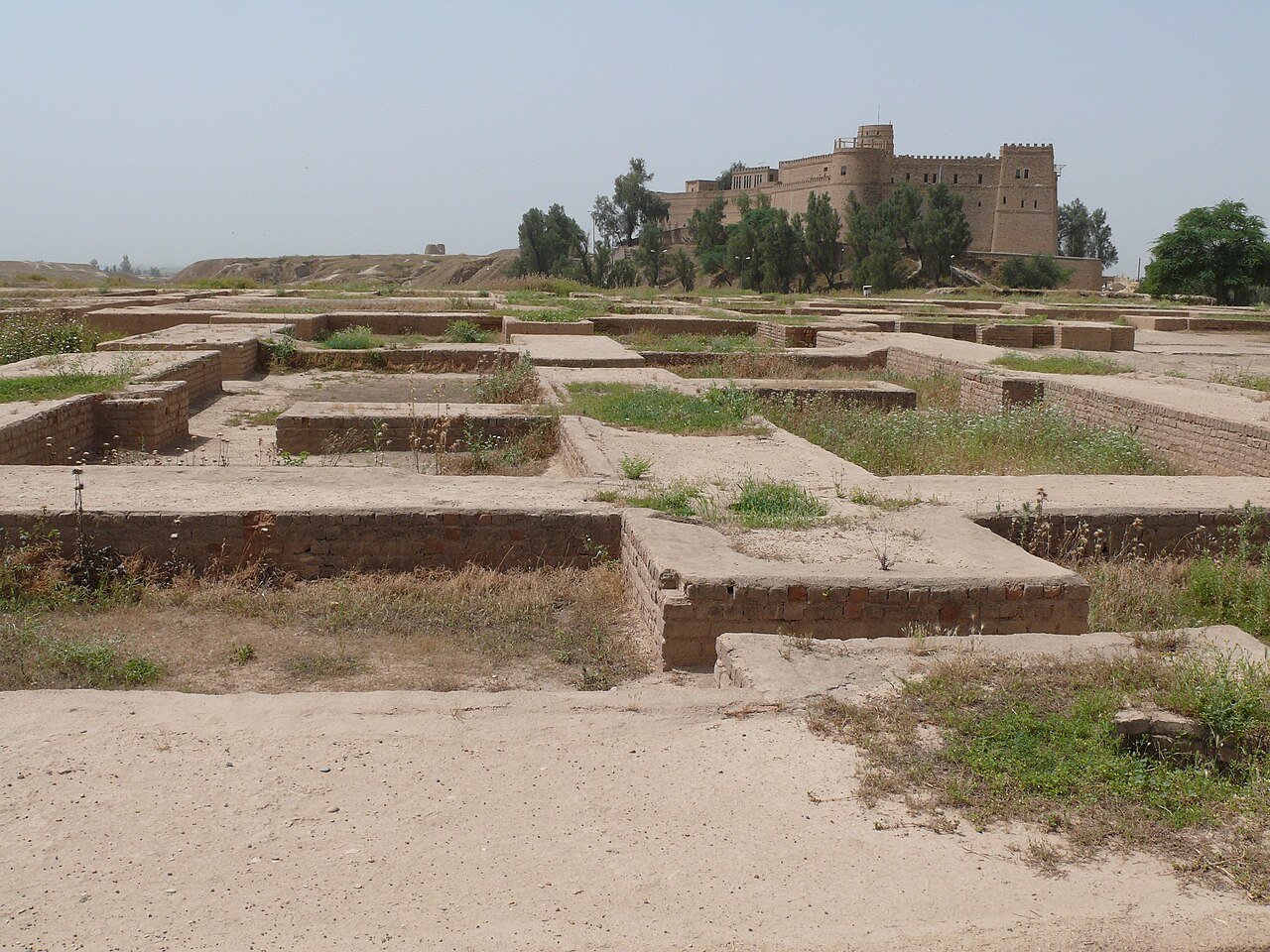
Most of what you walk over is the Apadana mound. The other areas are mainly old trenches and spoil heaps, but from the castle hill you can see how big the city once was.
The palace of Darius
After he took power in 522 BCE, Darius I chose Susa as one of his main capitals and built a new palace on a terrace of packed earth. Its foundation charter, found in several copies in Old Persian, Elamite and Babylonian, lists where the materials and workers came from: cedar from Lebanon, gold from Sardis and Bactria, ivory from Ethiopia and India, and stonecutters from Ionia and Sardis. The design and decoration are discussed in the Palace of Darius at Susa.
The residential palace
South of the audience hall lie the brick foundations of the king’s residence, laid out in the Babylonian manner around three large courtyards, with rooms opening off them. The walls have been consolidated to knee or waist height, so you can walk the plan and follow how one court led to the next. In the courtyards the floors were once paved, and the walls were faced with the glazed brick panels of archers, lions and winged creatures that are now in the Louvre and in the National Museum of Iran.
The Apadana
To the north is the square audience hall, the Apadana, which had 36 stone columns on bell-shaped bases. Several of the bases have been set back in place, and broken drums and fragments of the double-bull capitals lie around the site. Standing among them, it is easy to picture the height of the roof; the columns rose some 20 metres. The hall burned in the reign of Artaxerxes I and was rebuilt by Artaxerxes II, as his own inscription on column bases records.
The Darius Gate
East of the palace is the base of a monumental gatehouse. In 1972 excavators found here a headless statue of Darius made in Egypt, with inscriptions in Egyptian hieroglyphs and in cuneiform listing the peoples of the empire. The original is in the National Museum of Iran in Tehran.
Across the Shaur river
West of the main site, on the far bank of the small Shaur river, are the remains of a separate palace built by Artaxerxes II in the 4th century BCE. Less is visible, but it is interesting for its different plan, and fewer visitors make the walk.
The castle and the museum
The castle on the Acropolis was built from 1897 for Jacques de Morgan’s excavation team. It is closed or partly closed at times, but its brick walls reuse old bricks from the site, some of them with Elamite inscriptions, so look closely at the masonry. The small Susa museum near the site entrance shows finds that stayed in Iran, from painted pottery of the earliest period to Elamite and Achaemenid pieces. The most famous objects from Susa, including the stele of Hammurabi’s law code, which an Elamite king brought here as war booty from Babylonia, and the stele of Naram-Sin, are in the Louvre in Paris.
Practical notes
- The site is on the edge of Shush and walkable from the Tomb of Daniel. Allow two to three hours.
- Visit between November and March if possible. There is little shade on the mounds.
- Many travellers combine Susa with Chogha Zanbil, Haft Tappeh and Shushtar. Check current opening hours and tickets locally.
Persian words from this page
| شوش | Shush | Susa |
| داریوش | Dâriush | Darius |
| آپادانا | Âpâdânâ | Apadana |
| کاخ | kâkh | palace |
| تپه | tappe | mound, hill |
| ستون | sotun | column |
Sources and further reading
- UNESCO World Heritage Centre, Susa.
- Jean Perrot (ed.), The Palace of Darius at Susa: The Great Royal Residence of Achaemenid Persia (London, 2013).
- Prudence O. Harper, Joan Aruz and Françoise Tallon (eds), The Royal City of Susa: Ancient Near Eastern Treasures in the Louvre (Metropolitan Museum of Art, 1992).
- Amélie Kuhrt, The Persian Empire: A Corpus of Sources from the Achaemenid Period (London, 2007), for the Susa foundation charter.
- Encyclopaedia Iranica, “Susa”.
Want to learn Persian? Get the free Starter Pack
Get the 14-page printable Starter Pack (all 32 letters, a 7-day reading plan, 100 core words and 20 survival phrases) and a short 5-email course. Free.
More in Top Places to Visit in Iran
- Naqsh-e Jahan Square
- Shah (Imam) Mosque, Isfahan
- Sheikh Lotfollah Mosque
- Ali Qapu Palace
- Jameh Mosque of Isfahan
- Si-o-se Pol and Khaju Bridge
- Vank Cathedral
- Hasht Behesht Palace
- Naqsh-e Rostam
- Eram Garden, Shiraz
- Nasir al-Molk (Pink) Mosque
- Tomb of Hafez (Hafezieh)
- Tomb of Saadi (Saadieh)
- Shah Cheragh Shrine
- Arg of Karim Khan
- Fin Garden, Kashan
- Historic Houses of Kashan
- Jameh Mosque of Yazd
- Yazd Fire Temple and Towers of Silence
- Dowlatabad Garden and Windcatcher
- Amir Chakhmaq Complex
- Golestan Palace
- National Museum of Iran
- Treasury of National Jewels
- Tehran Grand Bazaar
- Milad Tower
- Imam Reza Shrine, Mashhad
- Tomb of Ferdowsi, Tus
- Tomb of Omar Khayyam, Neyshabur
- Tomb of Avicenna, Hamadan
- Ganjnameh Inscriptions, Hamadan
- Behistun (Bisotun): Visiting the Site
- Taq-e Bostan: Visiting the Site
- Tabriz Historic Bazaar
- Takht-e Soleyman
- Armenian Monastic Ensembles of Iran
- Sheikh Safi al-Din Shrine, Ardabil
- Dome of Soltaniyeh
- Alamut Castle
- Falak-ol-Aflak Castle
- Shushtar Historical Hydraulic System
- Chogha Zanbil: Visiting the Ziggurat
- Susa Archaeological Site
- Arg-e Bam
- Ganjali Khan Complex, Kerman
- Shazdeh Garden, Mahan
- Rayen Castle
- Dasht-e Lut (Lut Desert)
- Maranjab Desert and Caravanserai
- Varzaneh Desert
- Mount Damavand
- Hyrcanian Forests
- Lake Urmia
- Badab-e Surt Springs
- Ali Sadr Cave
- The Kaluts of Shahdad
- Qeshm Geopark
- Hormuz Island Colours
- Visiting Persepolis: A Day Trip from Shiraz
- Visiting Pasargadae
- Persian Caravanserais
- The Qanat of Gonabad
- Meymand Village
- Sasanian Sites of Fars: Firuzabad, Bishapur and Sarvestan
- Gonbad-e Qabus: Visiting the Tower
- Zayandeh Rud and Isfahan’s Bridges
- Tochal and Darband: Hiking Above Tehran
- Mount Sabalan
- Skiing in Iran: Dizin and Shemshak
- Golestan National Park